Support WBUR
Commentary
The coat my mother never wore

Shortly before Thanksgiving 2018, I bought my 87-year-old mother a winter coat — a silvery-gray one that matched her hair. None of us could remember the last time she had left the house, spoken in full sentences or walked without assistance, but my father hoped that a new ultra-light coat might change things. He couldn’t — or wouldn’t — accept that Parkinson’s wasn’t like a cold or a broken limb. It couldn’t be cured by rest, drinking fluids or fresh air. Surely, he thought, something could still be done.
Having been close to others with progressive or terminal illnesses, I did not share his optimism. But it felt cruel to dash my father’s hope, so I hung the coat in the front hall closet, as if it were a talisman that could bring us a miracle.
My mother died peacefully, late in the morning that December 24. By the time the men from the funeral home arrived, it was already dark outside. I thought my mother would have felt bad that she’d made people work on Christmas Eve, but when the two fellows turned out to be both appropriately solemn and jolly, I thought she’d have felt honored to be wheeled down her front walk and out to the hearse on a festive occasion.
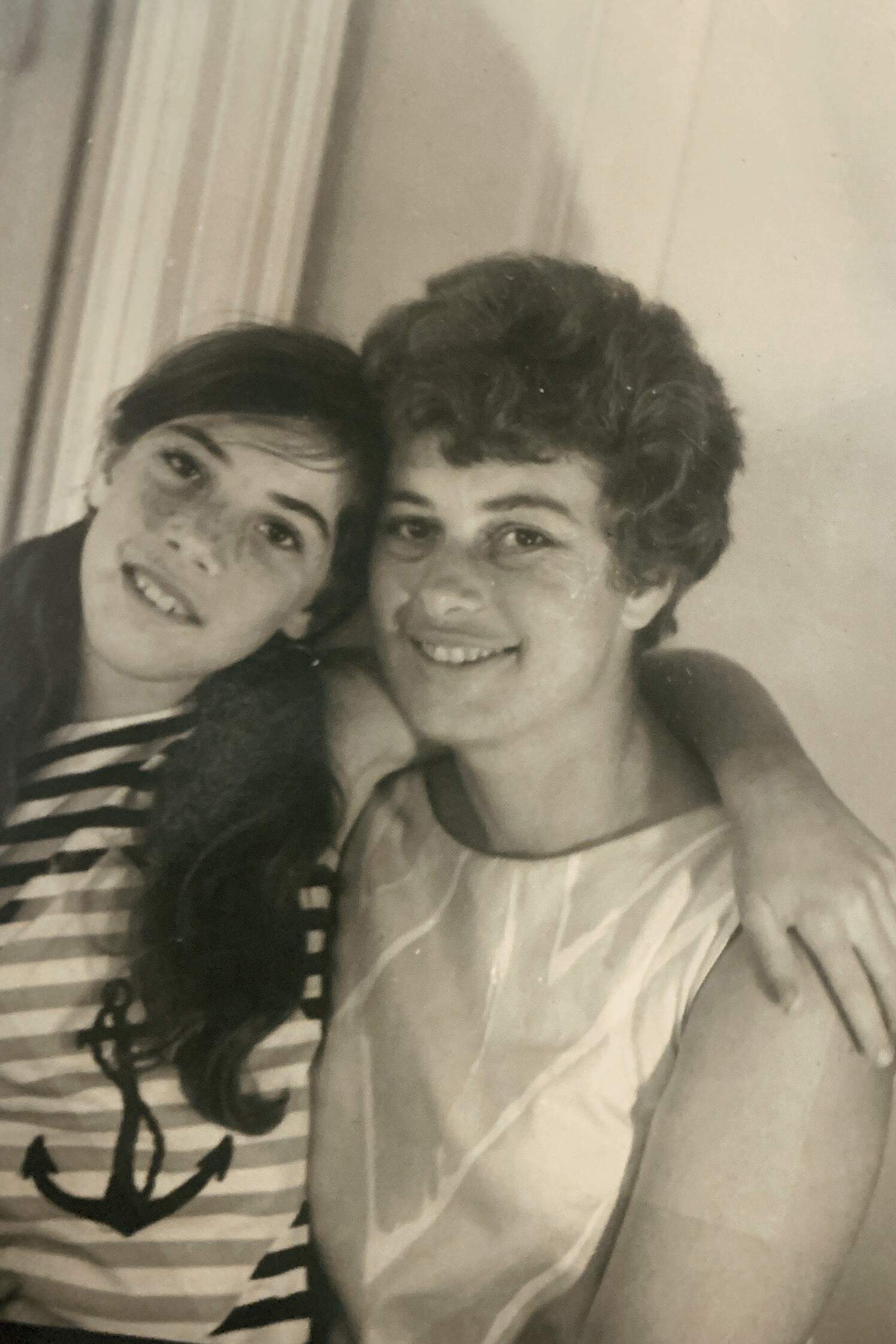
After they drove off, I stood for a while on the cement walk. I wrapped my arms around my sweater-clad body and let the bone-cold air seep in. The street was empty. The night was star-lit. Being my mother’s daughter had not been easy; in that quietude, I heard what I can only describe as the final measures of a long, complex symphony.
And then there were many things to be done. Call the relatives. Email the friends. Arrange for the hospice bed to be taken away. Receive visitors who brought condolences, cakes and casseroles. Prop up my father who sobbed at the sight of the single drinking glass my mother had been able to hold those last weeks.
It was January before I had the chance to drive to the mall to return the coat.
I marched to the back of the store and handed the coat to the tall, broad-shouldered clerk behind the counter. “I’d like to return this. It was never worn,” I said, pointing to the tags still dangling from the sleeves.
“When was the date of purchase? Receipt?”
“I don’t have the receipt,” I replied. “My mother died. I bought her this, but she never wore it.”
He scanned the tags and consulted the screen for information on my purchase. Then he looked up from his computer and shook his head. “It’s been more than 30 days. No refund.”
I stared at him, speechless, as his blank expression confirmed he didn’t understand. What was 30 days? Time, for me, had split into before and after. My mother was gone. I wanted something back in return. Not money, but something more than ashes in a box on the mantel. Something more than photos and memories and well-intentioned phrases of consolation. But it was late, and I was too tired to argue. Head down, I walked away.
That night, I lay awake, thinking about my mother’s stubbornness. In our family, she was famous for talking her way onto fully booked flights and into sold-out theater performances. As a teenager, I found it mortifying — the way she’d hold up lines and push for exceptions, as if rules didn’t apply to her. Her persistence embarrassed me then. But now, I saw it differently. It wasn’t just about getting her way. Challenging the status quo was a matter of pride, evidence that she could bend the world to her will. It was also testimony to her belief that individuals are stronger than bureaucracies.
What was I going to do with the coat? It didn’t fit me. Even if it had fit, the coat was new, and unlike the worn clothes still hanging in my mother’s bedroom, held no memories for me and therefore had no sentimental value. I’d tried giving it to my sister and my mother’s caregivers, but none of them needed it. I could have donated it, but grief was making me fixate on the small things, compelling me to find something I could control. Returning the coat from whence it came could make one small thing right, and help me begin to restore a sense of order. Besides, it was what she’d want me to do.
Being my mother’s daughter had not been easy; in that quietude, I heard what I can only describe as the final measures of a long, complex symphony.
Well, I could be stubborn too. The next morning, I got back in the car and gripped the steering wheel, summoning my mother’s demeanor: respectful but unyielding. This time, I would speak to the manager. I would advocate for customer loyalty, retail bereavement clauses or sheer humanity. When I saw my reflection in the mall’s glass doors, I squared my shoulders. If necessary, I would be annoying enough that they’d break the rules just to get rid of me.
Inside, a different clerk stood behind the counter. He was short and curly-haired. I approached him, holding out the ultralight coat that had taken on such weight in my imagination. “I know it’s been awhile. I don’t have a receipt,” I stammered.
He smiled, his teeth gleaming under the overhead lights. Below me, I felt the floor shift. “Sure,” he said. “I can give you a full refund.”
It was that simple. I handed over the never-worn coat and waited patiently while he processed the return, putting the money back on my card.
Empty-handed, I walked out of the store. My mother’s stubbornness, the same quality that had once embarrassed me, now felt like a welcome inheritance. I’ve needed it in the months and years that have followed — not just to navigate grief, but to honor my mother with the determination that can turn a no into a yes.
Follow Cognoscenti on Facebook and Instagram. And sign up for our weekly newsletter.