Support WBUR
Jimmy Carter’s humility hurt his political career. It also made him remarkable
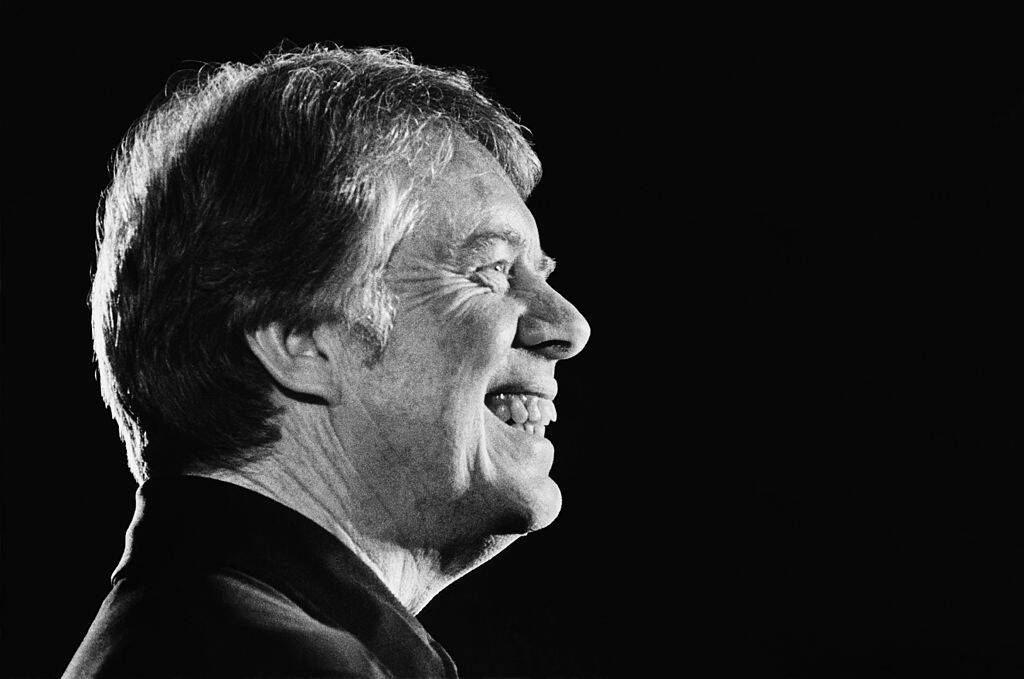
Being in the presence of Jimmy Carter was an antidote to cynicism — though the same earnestness that I admired may have also been the cause of his political undoing. The oldest-living American president died at his home in Plains, Georgia at 100 on December 29.
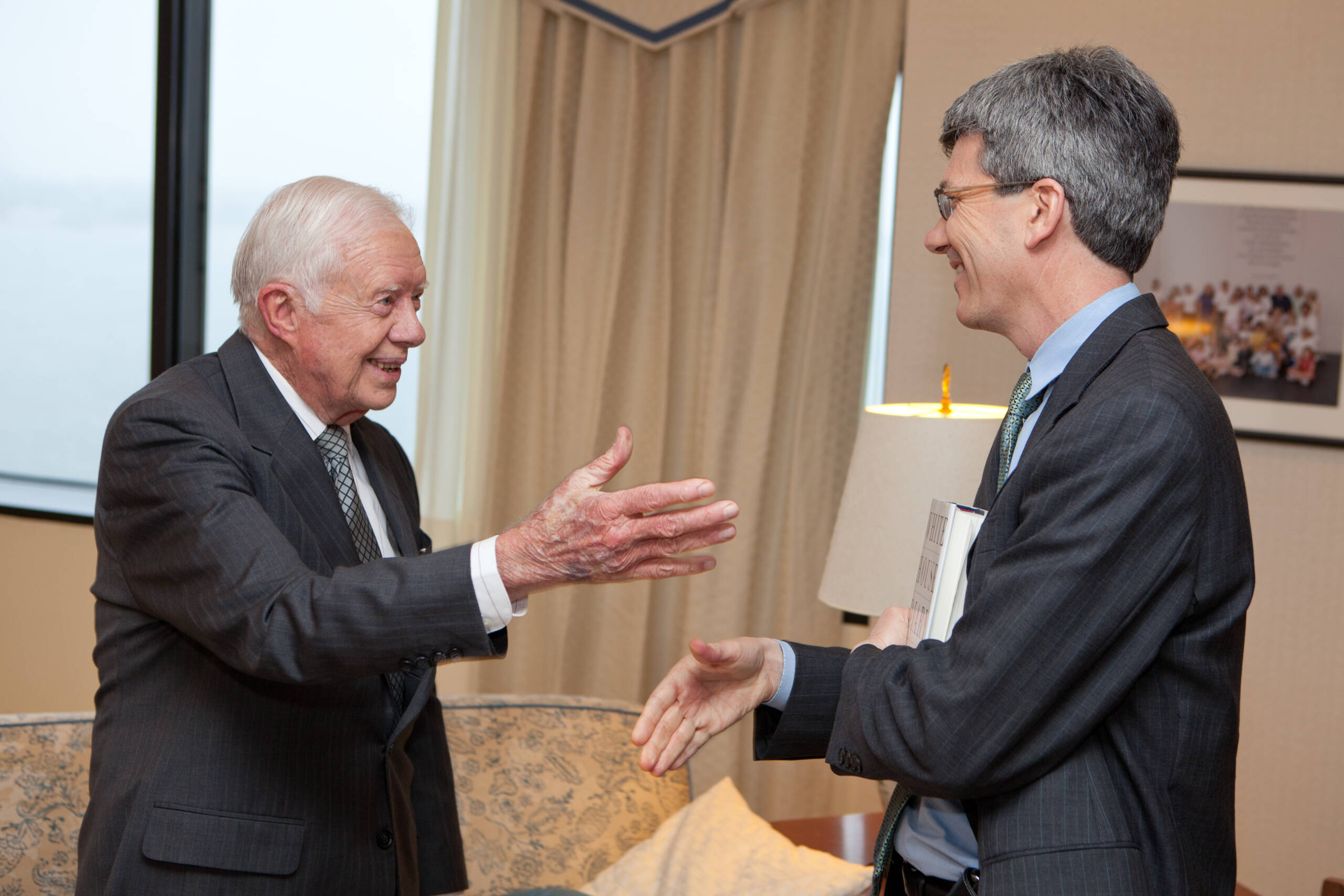
As director of the Kennedy Library, when I first suggested inviting President Carter to Boston, my colleagues scoffed. They assumed he would still hold a grudge over Sen. Ted Kennedy’s decision to challenge him in the 1980 Democratic presidential primary.
But all three invitations the library extended to president and Mrs. Carter were accepted. And in our interactions, I found them both to be unlike any public figures I’ve ever known.
This week, as we mourn his loss, I hope these remembrances might illuminate what made him, initially, a victorious presidential candidate but ultimately one who failed in his bid for re-election.
I came of age in the early 1970s, a turbulent time for our nation with the implosion of the Nixon presidency, the 1973 oil crisis and the fall of Saigon. The country thirsted for new leadership and Carter promised to tell the truth, obey the law and keep the peace. As biographer Kai Bird recently wrote, “A post-Watergate, post-Vietnam War era of disillusionment with the notion of American exceptionalism was the perfect window of opportunity for a man who ran his campaign largely on the issue of born-again religiosity and personal integrity.”
“I’ll never lie to you,” Carter promised. And although his lawyer joked that Carter would lose “the liar vote,” he defeated Gerald Ford. Many pundits blamed Ford’s loss on his decision to pardon Richard Nixon so it was surprising (and magnanimous) that Carter’s first words after taking the oath of office were of reconciliation: “For myself and for our nation, I want to thank my predecessor for all he has done to heal our land.”
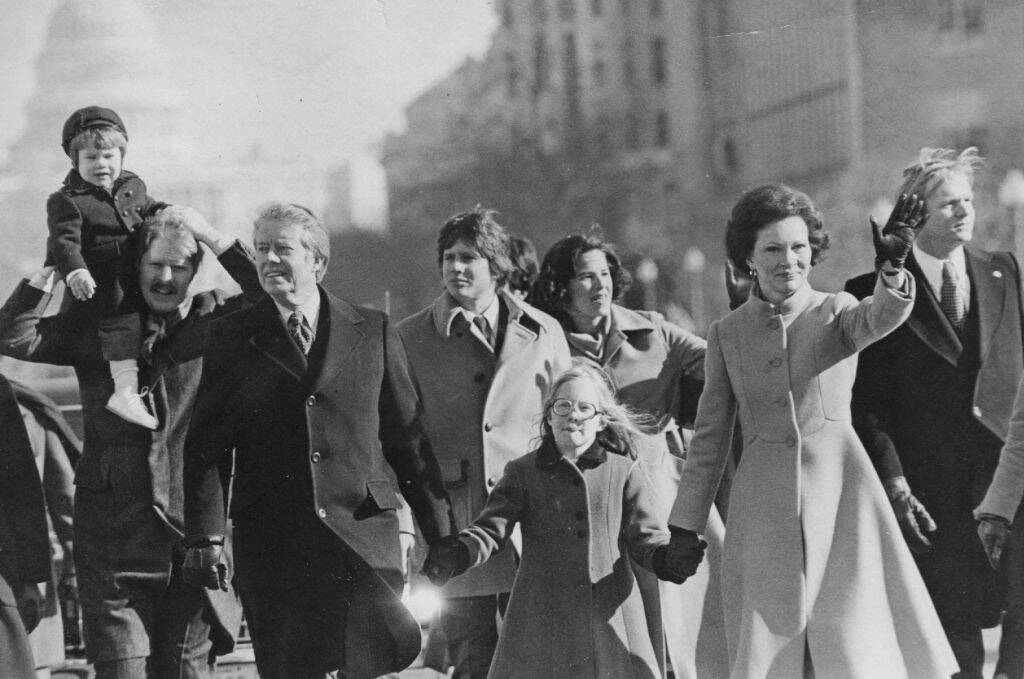
After the inauguration, President Carter strolled along the parade route with his wife and daughter — the first time a president walked the pavement of Pennsylvania Avenue from the Capitol to the White House, symbolizing his desire “to breathe new life into the presidency” and reduce “the imperial status of the president".
Few American political leaders — past or present — embody the Carters’ earnest conviction to do good. Their faith in each other was equally remarkable.
During her husband’s first campaign for governor, for example, Rosalynn Carter discovered segments of Georgia’s population that were unfamiliar to her. One day she toured a mental health asylum and was horrified by the patients’ living conditions. Rather than heading home, she traveled to a campaign event and joined a line of prospective voters waiting to shake her husband’s hand. “What are you doing here?” he asked when he saw her.
“I’m a citizen of this state, too.” she replied. “And I want to know what you are going to do as governor to improve the delivery of mental health services.” He responded that if elected, he would like her to lead that effort. Mental health advocacy became Rosalynn Carter’s signature issue.
Few American political leaders — past or present — embody the Carters’ earnest conviction to do good.
A key to their success was the skillful manner in which they applied their religious conviction “to do unto others” across the globe. From the 1978 Middle East Peace Accords to their post-presidential work as “freelance ambassadors,” improving health care and strengthening democracies in Africa, Asia and Latin America, the Carters worked faithfully (and together) for decades. “Rosalynn and I have deep roots in Plains,” explained Carter, “but we never forget our profound connections to the millions of others with whom we share this Earth.”
On the morning of her husband’s inauguration, Rosalynn Carter described feeling calm, knowing that the man who was about to take the presidential oath was the very same person who had mopped up water in their garage after a water pipe burst the day before.
At the Kennedy Library in 2011, Carter admitted his modesty might have hurt his political standing. He expressed regret over decisions to trim the trappings of his office, such as selling the presidential yacht and directing that “Hail to the Chief” not be played every time he made a public entrance. “I found out quickly that the American people want an element of monarchy in the White House,” he said. “They felt I was too much of a peanut farmer and not enough of an aristocrat.”
Two activists I admire, Jenny Finney Boylan and Bill McKibben, have both expressed misgivings about Carter’s political acumen while emphasizing their admiration for his ideals. In particular, they highlighted his “Crisis of Confidence” speech of 1979. “Human identity is no longer defined by what one does, but by what one owns,” Carter said. “But we've discovered that owning things and consuming things does not satisfy our longing for meaning. We've learned that piling up material goods cannot fill the emptiness of lives which have no confidence or purpose.”
Unfortunately, as Finney Boylan points out, Americans didn’t want to hear that truth, “We didn’t want a guide to bettering our souls. We didn’t want to sacrifice for the common good,” she writes. “We wanted to be told that we were great. Sometimes, we wanted people to lie to us.”
Like Finney Boylan, I find it hard not to fault President Carter for losing to Ronald Reagan in 1980. In his latest book, McKibben describes that election as one of the most consequential of our lifetimes. While the largest share of responsibility falls on Carter’s shoulders, Ted Kennedy’s campaign in the Democratic primary certainly weakened Carter’s chances. And recent revelations have strengthened allegations that Republican operatives attempted to sabotage Carter’s campaign by persuading the Iranian government to not release the American hostages until after the election.
But I will always remember Jimmy Carter for the sense of decency that he brought to the Oval Office and for his tireless post-presidential efforts to do good throughout the world. If, as I age, I have lost any faith at all, it is in the American people and our ability or desire to elect leaders who will, once again, tell the truth, obey the law and keep the peace.
Follow Cognoscenti on Facebook and Instagram. And sign up for our weekly newsletter.