Support WBUR
Commentary
How do we make sense of a world that disregards sexual violence?
I was at a conference in Los Angeles a few years ago where the primary topic of conversation was how states should address the hundreds of thousands of rape kits that have been shelved for decades, without any investigation. After one of the breakout sessions, a survivor of rape approached and asked me: Is rape actually a crime?
My answer: It’s not a given in America, or other parts of the world. In the U.S., rape is our least reported major felony, and our least successfully prosecuted. Only 4% of reported rape cases ever see the inside of a court room, and only a small portion of those result in a conviction. It’s one of the things that drove me to write a book about sexual violence in America, where rape and sexual assault are not treated as brutal crimes, but as a wearying dance of he said/she said and fervent denials where victim’s voices are largely disregarded.
Rape is the only thing that’s both a weapon of war and offered up for a sure-fire laugh at a comedy club. When rape is framed by accused perpetrators as either a “misunderstanding” or an “outright lie,” their assertions are often enough for most people to nod their heads in agreement. As such, rape and sexual abuse are not taken seriously by many of our most important institutions. It is not by chance that the victims of this violent felony are mostly women, children and individuals from marginalized populations.
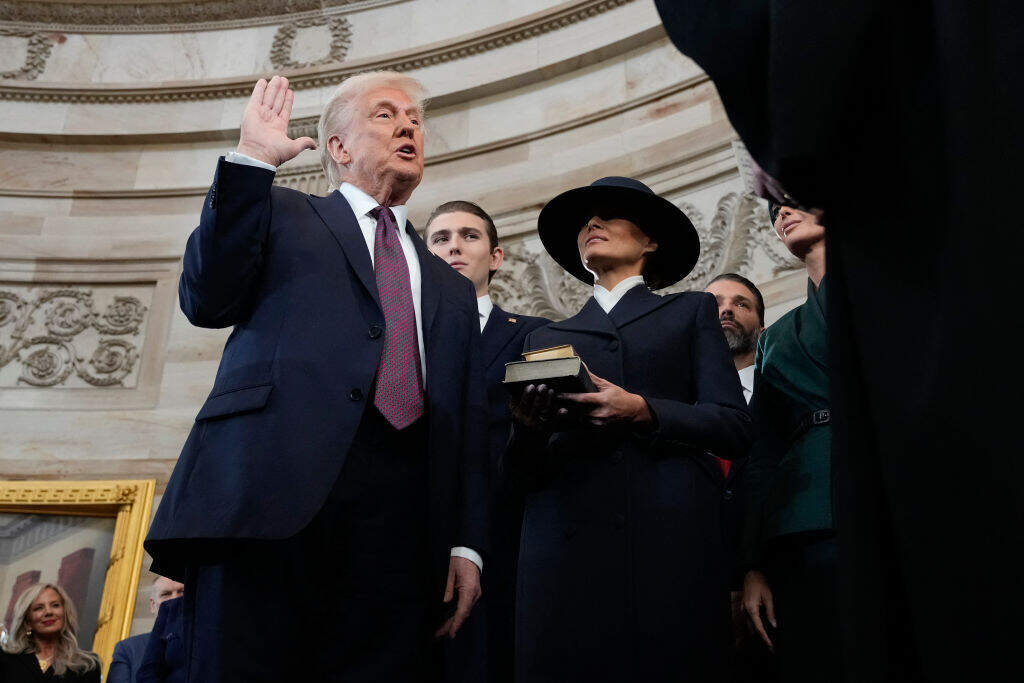
I’ve been thinking about this, with the return to the White House of Donald Trump, who won a plurality of votes even though he is an adjudicated sexual abuser. It’s also been top of mind since Trump nominated of Pete Hegseth to be our secretary of defense. Hegseth was accused of rape by a woman who suspected she had been drugged, an allegation he denies, among other things. There are also new allegations that Hegseth was abusive toward his second wife. Not surprisingly, one of the senators who wanted to push the nomination forward stated the accuser “had an axe to grind,” using the same tactics those accused of rape and sexual assault do. The focus is not on Hegseth’s alleged behavior but on her: She has an agenda; she can’t be trusted; further review of her lies is a waste of our time.
Rape is the only thing that’s both a weapon of war and offered up for a sure-fire laugh at a comedy club.
Our response to sexual victimization — and our tendency to minimize it — goes back hundreds of years. Ironically, sexual crimes committed against women were taken most seriously when they were considered crimes against their husbands; when the assault of a woman was seen as a harm to her husband’s property, when it was a stain on his honor. When rape was perceived as affecting men by proxy, it was addressed with more gravity than it is now.
But how do we make sense of a world in which there is a basic disregard of the crushing experience of gender-based violence? Time and again, when there is a choice between a man’s denial and a woman’s assertion of sexual violation, our society chooses the former. It feels as if our society has determined that the victim has already been harmed, so why “ruin” someone else’s life? This deluded thinking is possible because the act of calling out sexual violence is so often framed as a miscommunication or an allegation made to garner attention or money.
The effects of rape and sexual assault are serious and costly. The economic and mental health consequences are profound. The estimated lifetime cost of being raped is over $120,000 per victim, a cumulative economic burden of nearly $3.1 trillion in the United States. A study looking at the long-term economic consequences of rape on victims found that “sexual assault and the related trauma response can disrupt survivors employment in several ways, including time off, diminished performance, job loss, and inability to work.” Victims are at high risk of developing a substance use disorder, anxiety, depression and post-traumatic stress disorder, including a form of PTSD that is chronic. These often affect their ability to work and function in daily life.

It is inaccurate — and harmful — to minimize the impact of sex crimes and dismiss accountability of those who have been accused. We see devastating examples of this in states that have made abortion illegal, with no exceptions for rape and incest. Now Vice President JD Vance explained his position in a 2022 interview:
“It’s not whether a woman should be forced to bring a child to term, it’s whether a child should be allowed to live, even though the circumstances of that child’s birth are somehow inconvenient or a problem to the society.”
Any victim will tell you that the terror and lasting trauma resulting from rape is not “inconvenient.” It is life altering. Forcing women to carry her rapist’s baby is a form of government-approved torture. Nowhere in Vance’s comments is the experience of women who become pregnant from a sexual assault made relevant. She is not given status as a human being who has endured a life-changing trauma and violent crime, but someone who should stop complaining.
Sexual assault victims are, unfortunately, familiar with feeling invisible. We are accustomed to being described as unreliable or dishonest when we talk about our experiences. I won’t say we are used to it, but we are no longer surprised.
In a country where we have prided ourselves on various pillars of freedom, women’s agency and bodily autonomy are diminishing. Men who degrade women are ascendant. How we continue to look at rape and sexual assault is one gauge of whether and by how much our basic rights are being slowly chipped away at and, perhaps, at risk of being lost altogether.
Victims of sexual assault are called survivors for a reason. We may not feel healed, we may not feel heard, we may not feel safe — but we know giving into despair and helplessness will not serve us. Acquiescing to being silent is a danger we cannot and will not accept.
Follow Cognoscenti on Facebook and Instagram. And sign up for our weekly newsletter.