Support WBUR
Commentary
I needed more than my mother could give
It was a warm spring afternoon when I called my mom to tell her that my writing partner, Emma, and I had been invited by the brand Marchese to try on dresses for the movie premier of “The Nanny Diaries,” based on the novel we had co-authored. “You are a lucky girl,” my mother said. “A lucky, lucky, lucky, lucky, lucky girl.”
It stopped feeling good after about the second “lucky.”
This was a trap I often fell into, calling my mother, excited to share something that I imagined most mothers would be thrilled to hear about, only to be met with indifference—or worse. No matter if it was selling a book or finding a great pair of shoes at a major markdown (her favorite pastime), I was, inevitably, Charlie Brown kicking the football.
My mother wasn’t always like this. If she considered me too lucky, it could be argued that she’d also been lucky, when others were not. Born half Jewish (to a Catholic mother) in 1938 Vienna, she survived. Once in America, she surmounted the relentless challenges of an impoverished immigrant upbringing, only to go onto incredible academic and professional success and die in her Park Avenue apartment, surrounded by the antiques she had lovingly and expertly curated.
And, of course, she was also unlucky.
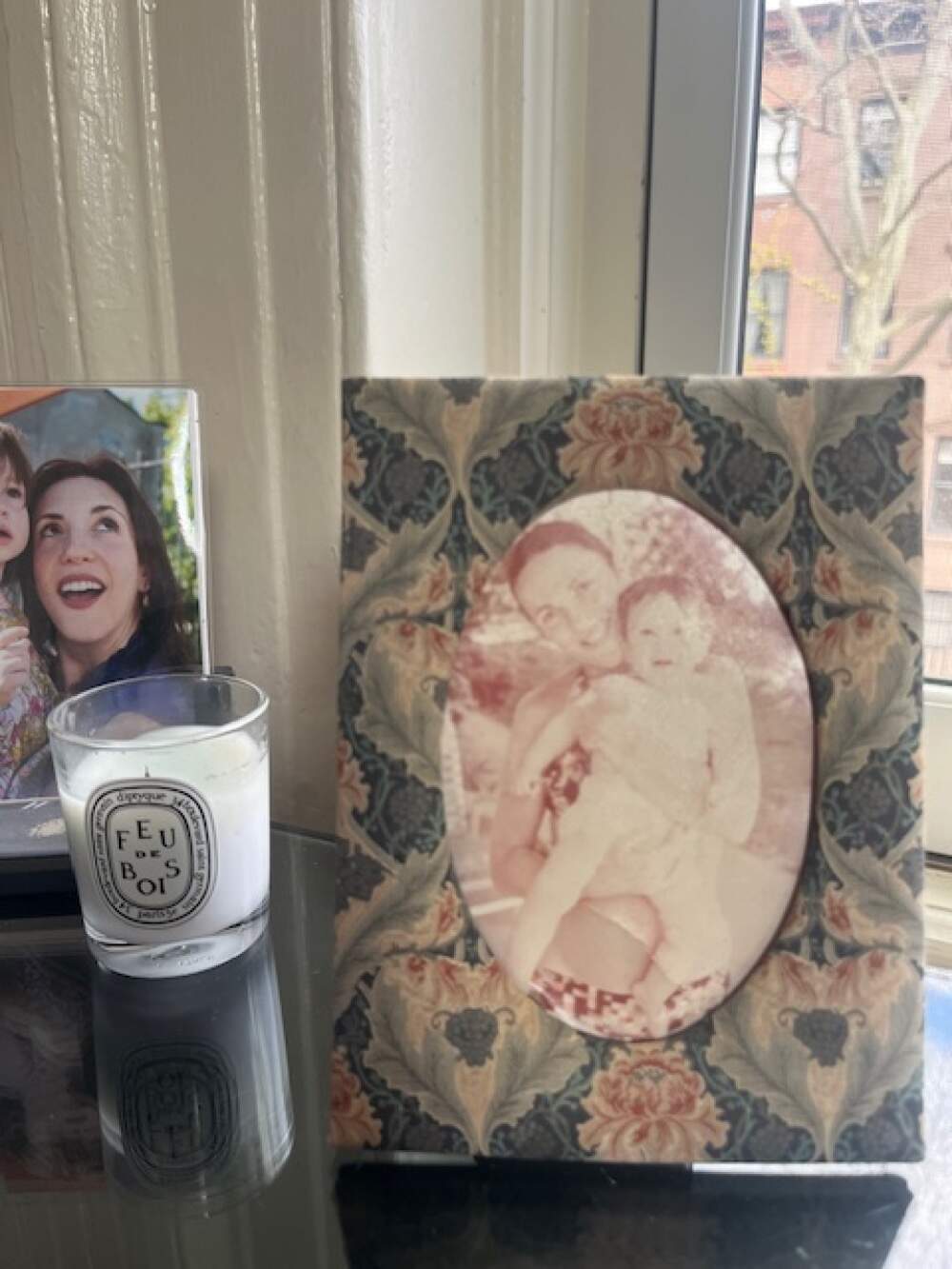
My mother was very vain. Her toes were always painted geranium red to distract from how her elegant feet turned slightly inward. “Rickets,” she explained to me once as we lay side by side in the sun staring at our toes. “Omi forgot to feed me on the boat to America.”
This was a narrative I accepted for many years. I had never fled anywhere; it sounded chaotic. One could easily imagine forgetting to do many things while packed in with thousands of other desperate, terrified people who’d been left with only what they could carry.
Decades later I became a mother myself, and for the first time developed serious doubts about the “forgetfulness” narrative. Babies are highly effective communicators. It’s hard to forget to care for them. So, I wondered, did my Catholic grandmother “forget” to feed her half-Jewish baby? Or, having lost all of the trappings of middle-class life that she thought she’d married into, did she unconsciously want to relieve herself of her one tie to a man who had gone overnight from savior to millstone? Or did she become so catatonic from trauma that she was unable to meet my mother’s basic needs? Did my mother eventually go silent? Whichever way, luck did not factor into it.
One afternoon, toward the end of her life, I was sitting at my mother’s bedside when she said, “You only knew your grandmother later, when she was pretty crazy, but she was a wonderful mother.”
I pricked up, because this seemed to contradict the image that had been painted, all my life, of a woman who made my mother go to school in thrifted clothes with other people’s names embroidered on them. A woman who famously climbed on a stool to give my mother a black eye when my mother outgrew her. And whose later years were marked first by hoarding and then agoraphobia—which, though equally exasperating, at least put a damper on the hoarding.
“She was?” I asked.
“Oh, yes. She could sew anything; she re-soled her own shoes. She finished their basement, mixed and poured the concrete herself. She never touched or held me, but she was a terrific cook. She would take two whole days to make strudel and then share it with everyone in the neighborhood. The dough was so thin you could read through it.”
Um, I wanted to say, go back to the middle part. But I didn’t. Whatever narrative my mother was re-weaving in her final months, I didn’t want to disturb it.
Once my mother became sick, that unmet craving to be cared for opened like a sinkhole under the foundation of her self-sufficient personality. It was bottomless, her need to be the center of our attention in the way in which she had been robbed since birth. We could only ever be poor substitutions.
I realized, it was not coming. Whatever I had waited for my whole life was not coming.
Over those 14 years that she was sick, there was no amount of sitting in emergency rooms, sitting bedside, bringing soup, running errands, rubbing feet or renting movies that could ever make up for the silence once imposed on a starving infant.
What it looked like, instead, was relentless discontent and an ingratitude that, eventually, disincentivized me to try. She was angry—understandably. At 64, she had been unlucky. I agreed: It was unfair. And yet there were times when, still only in my twenties, I wanted a mother. I wanted to be mothered. But that was no longer available.
The fact of this finally became clear when, during a period of remission, the movie based on my book came out, and my parents made no plans to see it. I was standing on the corner of 86th Street and Lexington Avenue, the same corner where I had first met Emma, my mother’s soup in hand, when the bus with Scarlett Johansen’s beautiful face went by (she was starring in the film based on my book), my name teeny tiny below.
I realized, it was not coming. Whatever I had waited for my whole life was not coming. Standing there, paper bag in hand, I felt the truth of it wash over my entire body. And after the wave of truth came the wave of pain. And then—a wave of peace.
It was not coming. There was no soup, no book, no discounted shoes, no triumph, no accomplishment that could ever get my mother to love me the way I had needed to be loved.
I was free. Free to make a new choice. I would not transfer that hole onto my own future daughter, I decided. It would never be her job to make me feel seen, loved, held or cared for. She could do those things, maybe, someday if she wanted to, not because I demanded it. In that moment, I broke the cycle. I would mourn what I hadn’t been lucky enough to receive, and then let it go.
On the other side of that revelation, my life filled rapidly with more love than I had ever known. First from the man I would go onto marry and the wonderful friends he would bring into my life, and then our daughter, her friends, their parents, our Havanese—his friends, their parents—my life is full.
Today, when I wake in the dark to the distant sound of my daughter’s alarm, I scoop the dog from his place by my feet as my husband pulls me in for our morning cuddle. This is how I start every day, sandwiched between those who love me. And the first thought I have?
“I’m so lucky.”
Follow Cog on Facebook and Instagram. And sign up for our newsletter, sent on Sundays. We share stories that remind you we're all part of something bigger.