Support WBUR
Essay
Remembering Malcolm-Jamal Warner — and Theo Huxtable
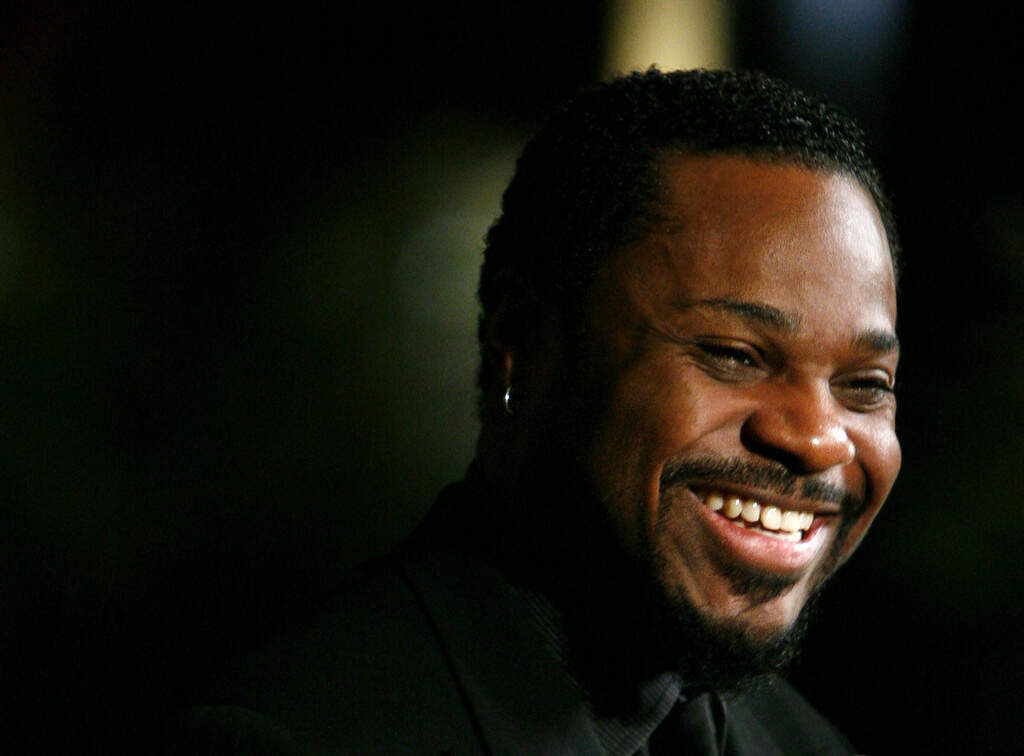
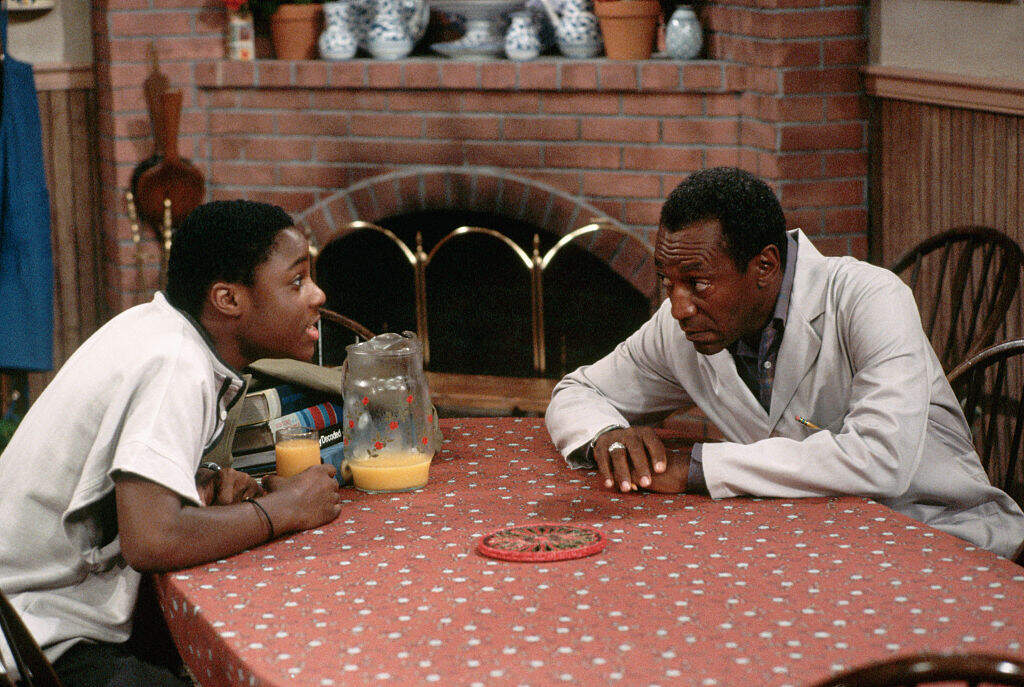
Malcolm-Jamal Warner’s passing hit me harder than I could have anticipated it would. I had to dig through my own feelings to figure out why. When “The Cosby Show” — and Warner’s character, Theo Huxtable — debuted on NBC on September 20, 1984, Warner was only 14. “The Cosby Show,” which depicted an upper middle-class Black family living in Brooklyn Heights, was a ground-breaking show.
The father (Heathcliff “Cliff” Huxtable), played by Bill Cosby, was an obstetrician whose office was in the lower level of the house and the mother (Clair Huxtable), played by Phylicia Rashad, was a successful lawyer. This was a tremendous gamble in the early to mid-80s. Warner played the academically underachieving teenage son of two Black professionals with advanced degrees in a home where he was the lone boy.
Ultimately, all of us Black boys watching identified with Theo. He was on prime time on NBC and his father was played by Bill Cosby, who often appeared on the cover of Ebony and Jet, as well as TV Guide and every major publication you could think of. Warner was the approximate age of my big brother Dave, and we were experiencing the year hip-hop broke into the mainstream.
“Style Wars,” a documentary film about hip-hop culture debuted in 1983. The next year gave us “Breakin,’" “Beat Street,” “Graffiti Rock,” and “Body Rock,” and “Breakin’ 2: Electric Boogaloo” on television and in movie theaters. These hits brought breakdancing, scratching, rapping and beatboxing to the masses, defining Black cool for a new generation the way jazz, doo-wop, soul/R&B and funk had for previous generations. All that attention meant Malcolm-Jamal Warner — who was named after civil rights activist Malcolm X and jazz luminary Ahmad Jamal — was in a precarious situation. He had to represent all young Black men on the highest-rated show on television while still appealing to middle America. He couldn’t demean or embarrass us under the watchful eyes of Bill Cosby and show consultant, Harvard Medical School’s Dr. Alvin Poussaint.
Every week for eight years, we watched Theo disappoint Cliff Huxtable academically and athletically. We watched him try to impress a girl with an expensive designer shirt, get an ear piercing that becomes infected, give an acceptance speech on behalf of his father, go above and beyond to prove to his parents that a marijuana joint wasn’t his, breakdance in the living room and rap and beatbox as part of a presentations for school.
We also watched Warner sneak his own rap demos onto the show, rock an airbrushed sweater and overalls, incorporate hip-hop groups like De La Soul into the storyline and get guest roles for his friends Special Ed and Ed Lover from “Yo! MTV Raps.” I’ll never forget when he hosted the October 18, 1986, episode of “Saturday Night Live” with Run DMC as the musical guest with a special appearance by a young Spike Lee, fresh off his new film “She’s Gotta Have It.” My mom let me stay up late to watch it.
Warner was such an inspirational figure to young people; in 1988, he released a book titled “Theo And Me: Growing Up Okay,” which used excerpts from his fan mail to discuss the more serious side of adolescence (dating, drugs, etc.).
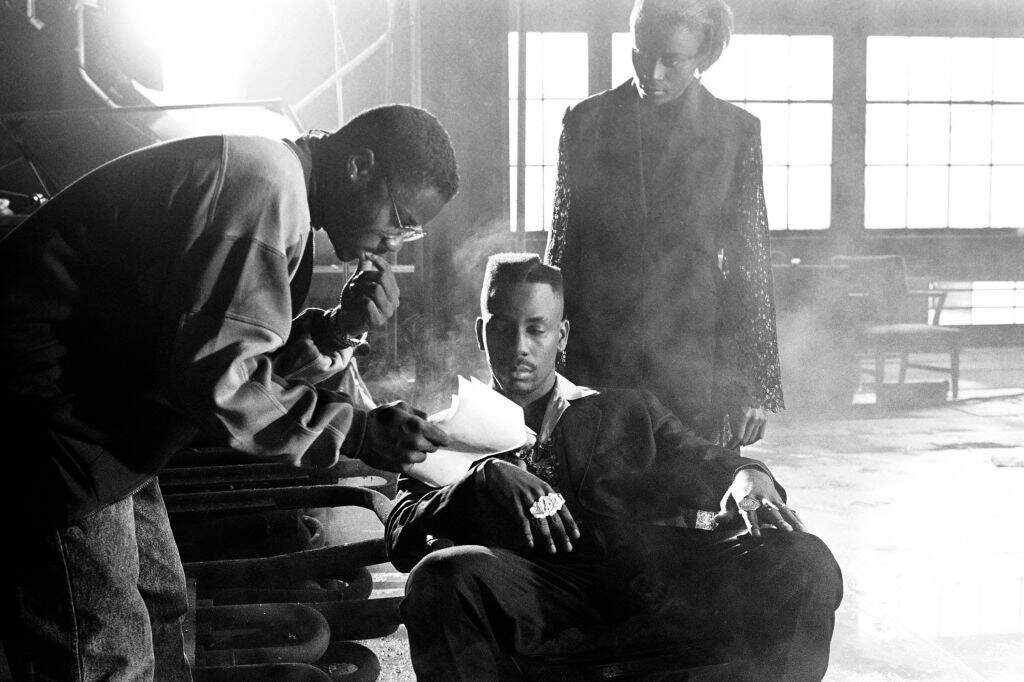
Warner spent a significant amount of time in the control booth, watching the behind-the-scenes production of individual episodes. He was even eventually given the reins and authority to direct five episodes of “The Cosby Show.” He also directed music videos for New Edition, Special Ed, Audio Two, The Black Flames and MC Trouble, in addition to directing Magic Johnson and Arsenio Hall in the landmark 1992 straight-to-VHS educational film, “Time Out: The Truth About HIV, AIDS And You.”
Representation matters and seeing the grace and responsibility with which Malcolm- Jamal Warner navigated life both as a Black child actor and as the fictional representation of Bill Cosby’s real-life son Ennis was inspirational. (Ennis, like Theo, had trouble academically and was diagnosed with dyslexia as a college freshman at Morehouse College.)
In later episodes of “The Cosby Show,” Theo pivoted to working with young people to mirror Ennis’ focus. The show ended with Theo Huxtable graduating from college with a wealth of career opportunities and his choice to continue working at the youth center in his local community. After eight seasons, we all felt as though we grew up with Theo — and Malcolm-Jamal Warner.
I attached so many core memories to seeing him in interviews and music videos, watching him become a successful author, director, producer and actor. He made me feel like I could also achieve big things as a creative, young Black boy with big hopes and dreams. Thank you, Malcolm, for giving so many of us the motivation to find our purpose in life
Follow Cognoscenti on Facebook and Instagram. And sign up for our weekly newsletter.