Support WBUR
Cog's Weekly Newsletter
Third spaces are public goods
Editor's Note: This essay appeared in Cog's newsletter, sent every Sunday. We share stories that remind you we're all part of something bigger. Sign up here.
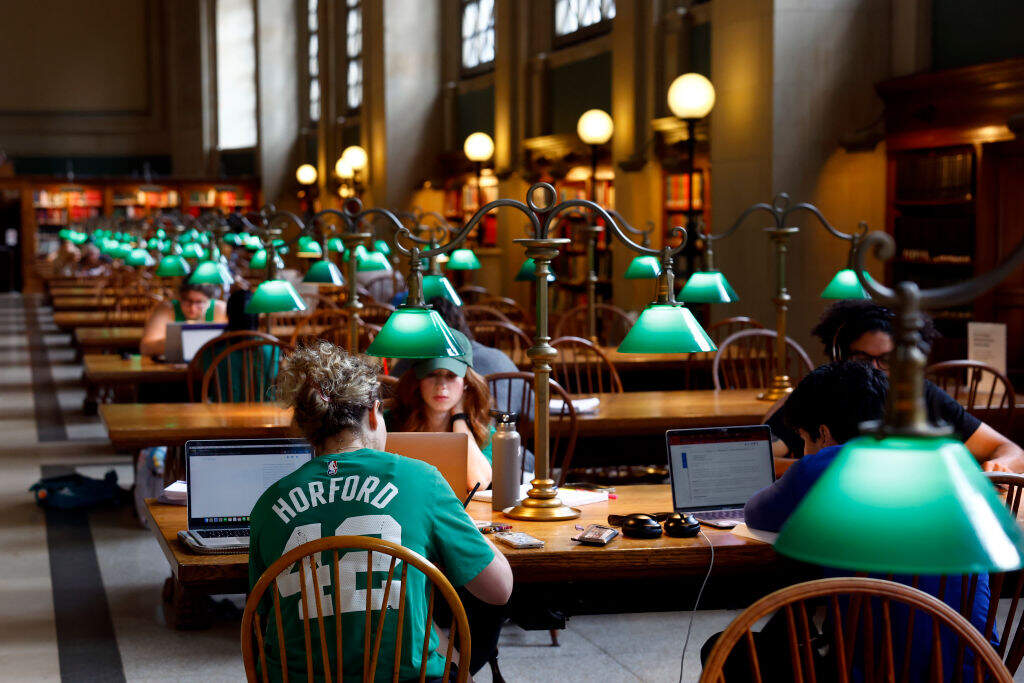
I did something last week I hadn’t done in a long time: I went to the Boston Public Library’s main branch in Copley Square. I was meeting colleagues for lunch in the Map Room — the Tea Room’s hipper and more casual cousin. There’s a craft cocktail menu (though we stuck to ice tea) and lighter fare; the room’s marble floors, vaulted stone ceiling and giant Roman numeral wall clock give off charming old-train-station vibes.
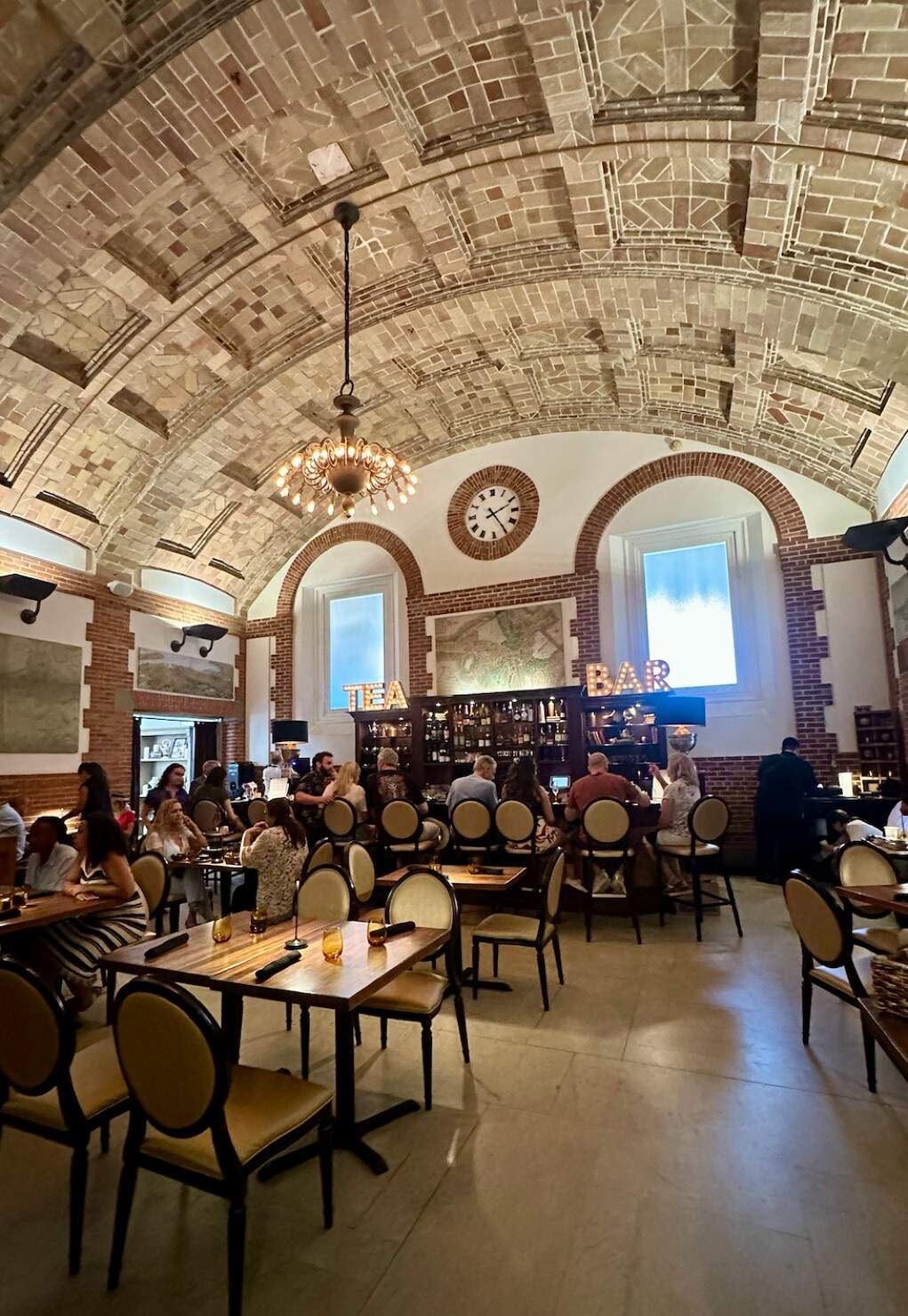
The Map Room, the Boston Public Library and libraries more generally are examples of “third spaces”: Places outside the home, but not the office. The urban sociologist and author Ray Oldenburg coined the term in the late 1980s. The gist of Oldenburg’s research suggests third spaces are public goods, essential to the health of any democracy, and a lack of access to them degrades our quality of life and our political system.
Boston Mayor Michelle Wu’s administration once had a whole office dedicated to re-imaginging and creating these third-spaces. They came up with a great definition: “places that contribute to our well-being … the spaces in between, where you freely encounter other people, ideas and experiences.” (The Third Spaces Lab is no longer active, but its work was distributed across other city departments.)
I missed many things during the early, isolating years of the pandemic, but those “spaces in between” are the places I missed most. I missed sitting, solo, at a table in the dining section at the Whole Foods on Alewife Brook Parkway in Cambridge. (That’s one place I could reliably get work done when my kids were very young.) Or attending an author reading at a bookstore (an hour-long, solo outing, guaranteed to inform and inspire — or at least get me out of the house). I missed being in places where it was OK to be around people, but not with people. Spaces where I could feel free from the relationships and responsibilities of my daily life.
This week, Lydia Begag wrote about one of her favorite third spaces, Yafa, a Palestinian bakery in Somerville. Owner Abdulla Awad’s commitment to “spread kindness” has kept her coming back. Reading Lydia’s essay reminded me of the many places I’ve found comfort and community, as I’ve made my way in the world.
There used to be a bakery, “The Biscuit,” about three-quarters of a mile outside of Harvard Square. I spent a year’s worth of Saturday mornings there, accompanied by my laptop, a coffee and giant butter croissant. In New York City, Molly’s — an Irish Pub with sawdust on the floor and waitresses who call everyone “luv” — was basically my living room for a couple of years. For a few summers when I was in high school, my parents took my brother and me to a hotel situated in an old Victorian house, in Bayhead, New Jersey. After a day on the beach, still salty and sandy, we would grab a couple of Cokes and a bag of pretzels from the front desk, before we all regrouped for dinner. The rhythms and routines of the place felt comfortably familiar, even if the people weren’t.
Some of my fondness for these places is nostalgia, because they remind me of a different phase of life or a different version of myself. But mostly it’s a connection to a physical location at a particular time. Those third spaces helped shape me along the way.
After I got home from BPL, I did a little research. Turns out, the Boston Public Library is first large free municipal library in the country. It was also the first public library to lend books, have a branch library (it now has 25) and a children’s room. The older building, directly across from Copley Square, opened in 1895. Its iconic courtyard, surrounded by a covered walkway, now dotted with small tables and chairs, was intended to be an oasis for the people of Boston. It still is today, and all of us are richer for it.