Support WBUR
Essay
New requirements make it harder for Americans who need help to get it
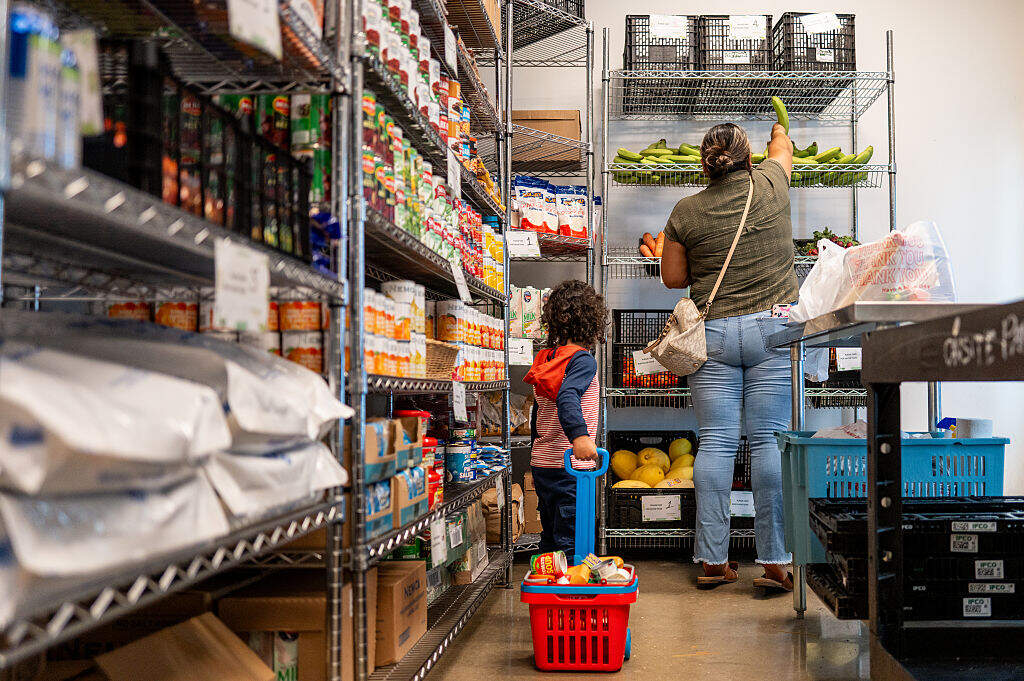
In Massachusetts, food insecurity is at crisis levels: 37% of households reported struggling to afford food in 2024, up from 34% in 2023 and nearly double the 19% reported just five years earlier. But Bay Staters aren’t alone. American families are already stretched thin — and the "One Big Beautiful Bill Act" threatens to make things worse.
Nationwide, the Urban Institute projects that 22.3 million families could lose some or all of their food assistance under the bill. But they won’t be denied Supplemental Nutrition Assistance Program (SNAP) benefits outright. Instead, they’ll be buried under paperwork, disqualified by deadlines and overwhelmed by technicalities — barriers that make it harder, if not impossible, for families to access the benefits they legally qualify for when they need them most. What little support families receive will be harder to hold onto, just as the need has never been greater.
The Trump administration’s signature legislation expands work requirements for both SNAP and Medicaid, creating new hoops for vulnerable populations to jump through. For SNAP, the work mandate now extends to able-bodied adults ages 55 to 64 without dependent children, plus parents whose youngest child is 14 or older. These individuals must document at least 20 hours of work or job training each week — or risk losing food assistance entirely.

Consider a 58-year-old retail worker whose arthritis flares unpredictably, forcing her to miss shifts. Or a father juggling two part-time delivery jobs while his 15-year-old struggles with epilepsy, which sometimes requires him to stay home to provide care. These aren't people avoiding work — they're people whose lives don't fit into neat bureaucratic boxes. One missed deadline, one lost document, one sick child could cost them the nutrition support that keeps a family fed.
In our state, SNAP serves more than 1 million residents, including over 250,000 people age 60 or older. The new verification requirements place this enormous population at risk every time a form arrives late or a website crashes. Specifically, able-bodied adults without dependents aged 18–64 must work at least 20 hours per week or participate in approved job training, and the exemption for parents now applies only to those with children under age 14. States have also lost much of their discretion to waive these rules — even in high-unemployment areas — and the number of discretionary exemptions they can grant has been sharply reduced.
Starting December 31, 2026, states must also impose work requirements on Medicaid expansion adults — low-income individuals between the ages of 19 and 64 whose eligibility stems from the Affordable Care Act’s broader coverage guidelines. Imagine a construction worker managing diabetes, whose blood sugar spikes midweek, causing him to miss a filing deadline. Or a home health aide who, after caring for her elderly clients all day, must drive her own aging parent to the hospital — then, exhausted and distracted, struggles to complete the renewal via a smartphone portal. Miss the requirements — lose your healthcare.
We’ve seen how devastating this can be: during Massachusetts’s 2023–2024 MassHealth redetermination process, the state’s net caseload dropped by approximately 360,000 enrollees, a 15% decline. Even more striking, 67% of those who lost coverage did so due to "insufficient information", meaning they were likely still eligible, yet were cut off because they couldn't navigate the paperwork maze in time.
Economists call this deliberate complexity "sludge" — administrative friction designed to reduce participation.
Economists call this deliberate complexity "sludge" — administrative friction designed to reduce participation. Applicants are often forced to verify the same information multiple times across different benefit programs, each with its own online portal, password system and documentation rules. For example, someone might have to submit pay stubs to a SNAP portal, separately upload them to Medicaid, and then again to housing assistance — even when all programs ask for the exact same proof of income. The result is duplication and delay that functions less like accountability and more like an obstacle course.
According to the Congressional Budget Office, the House Republican plan slashes SNAP by about 30% — the largest reduction in the program's history, with $186 billion in cuts projected through 2034. The work requirements aren't really about work (time and again, research has shown that these requirements don’t increase employment); they're about cutting the rolls. The CBO estimates that these new work requirements could result in nearly 3.2 million adults losing access to SNAP benefits each month.
But some organizations are stepping up to help communities cut through the red tape. Link Health, a Boston nonprofit, places trained navigators in health center waiting rooms to assist patients with on-the-spot enrollment in SNAP and Medicaid. Their platform translates dense government language, flags missing paperwork, and consolidates multiple applications into one process that takes less than 15 minutes and has helped disburse nearly 5 million in state and federal benefits to families in need.
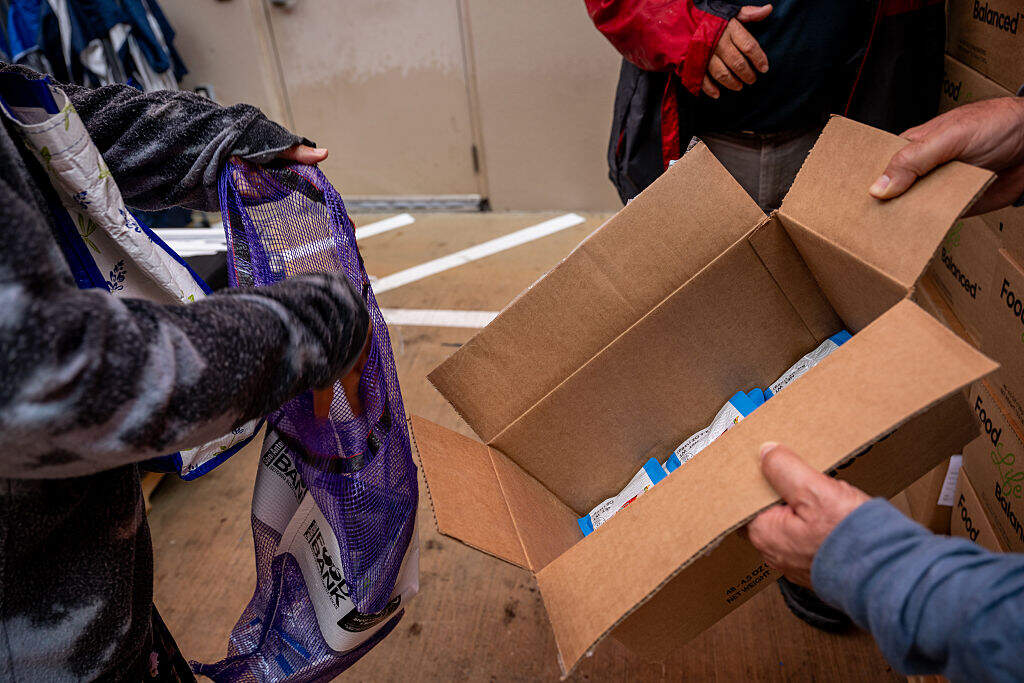
Other nonprofits are also working to mend the broken safety net. The Greater Boston Food Bank and Project Bread assist residents with SNAP enrollment, providing guidance and support. Operation ABLE offers outreach services to help individuals complete applications and maintain eligibility. Catholic Charities Boston helps people apply for food benefits, minimizing delays. Health Care For All advocates for health justice and helps people navigate health care coverage options. These organizations, along with others, are working tirelessly to ensure Massachusetts residents can access the resources they need. But while their efforts are vital, they also underscore a deeper problem: a social safety net that is so riddled with barriers that private charities are left to do the work the government should already be making accessible.
The contrast is stark. While some organizations work to simplify access, federal policy moves in the opposite direction, layering on requirements that sound reasonable in theory but prove devastating in practice. The result isn't increased employment or reduced dependency. It's increased hunger, untreated illness and family instability.
Real reform means acknowledging that modern work is complex, caregiving is essential and health is unpredictable. Instead of testing people's endurance with bureaucratic hurdles, we should test our systems' ability to respond quickly and compassionately to human need.
The One Big Beautiful Bill Act promises to streamline government, but for millions of families, it delivers something else entirely: bureaucracy as punishment. This bill turns government into a gauntlet. No family should risk falling behind on rent or utilities because a parent couldn’t submit the required documentation on time. No senior should skip medication because they didn’t understand the digital filing process. And no community should accept hunger or financial strain as the cost of administrative efficiency.
Follow Cognoscenti on Facebook and Instagram. And sign up for our weekly newsletter.