Support WBUR
Essay
What the race back to the moon says about Trump's priorities on Earth

Given the overwhelming number of problems we have to worry about on Earth it’s no surprise that domestic or international space exploration isn’t top of mind for most people. That said, even though moon bases or long-term satellite missions might not directly affect the lives of the majority, a country’s actions in space mirror its actions on Earth. Changes to space policies and projects indicate an administration’s bigger goals, which is why the public should pay attention to NASA’s decisions to shut down climate-related satellites and missions, and to prioritize building a nuclear reactor on the moon.
NASA has chronic funding deficiencies, and its prioritization of programs — including ones it has invested in heavily for years, such as the mission to retrieve samples obtained on Mars — changes as the administration changes. George W. Bush wanted to go back to the moon and he essentially ended NASA’s space shuttle program, necessitating a reliance on Russian shuttles. Barack Obama pushed for Mars instead (and supported the development of commercial rockets). Under Trump (and Biden), NASA has refocused on the moon with the Artemis Project, which aims — in conjunction with the help of commercial and international partners — to establish the first long-term presence on the moon.
Turning our attention back toward our lunar neighbor has been a long time coming, given that no human has set foot on the moon since 1972. It’s an invaluable spot for launching future space missions, a waystation that’s far closer and easier to access than Earth with its tricky atmosphere. The moon’s southern region also contains vast quantities of ice, which could be used to help maintain colonies. The Artemis Project aims to return humans to the moon by the end of this decade and to establish a lunar base by 2030. One previously defining priority of the project had been to put the first female and person of color on the moon, but the current administration eliminated mention of those goals in March.
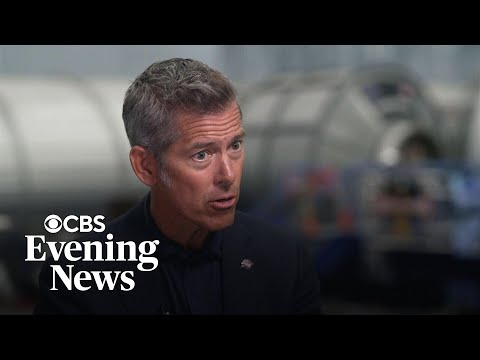
The race back to the moon has Sean Duffy, former Fox News host (and former Real World Boston cast member) and NASA’s interim director, prioritizing the building of a nuclear reactor, ideally ready to launch by 2030 (the first phase of the project is reportedly finished). Solar power is only available 50% of the time on the moon. “Lunar nights” last roughly two weeks out of every month and are pitch-black and freezing, and southern areas of the moon are in permanent shade, making solar power infeasible.
Using nuclear energy on the moon isn’t in and of itself a problem, but the ratcheting up of competition and tension between NASA and the Chinese and Russian space programs could be. China and Russia announced some time ago their plan to build a joint moon base, and in May, the two countries declared their intent to build a lunar nuclear power station. According to Politico, Duffy believes that whoever builds the first reactor will claim the area for themselves and "declare a keep-out zone.” Thus, he wants to beat China to the moon — a goal he reiterated at a NASA town hall on September 5 — and “claim that for America.” Space Race 2.0 is well underway, and considering the state of geopolitics, and Duffy’s warning about “letting safety be the enemy of progress,” the stakes are even higher than they were in the 1960s.
Forget idealistic notions of space benefiting all humankind. Forget the U.N.’s Outer Space Treaty of 1967, which holds that no person or country can “own” space or celestial bodies. Forget the idea that space exploration isn’t a zero-sum game and that it’s possible to return astronauts to the moon while also continuing other missions, particularly if the administration doesn’t gut the budget as planned. Forget using NASA and its resources to conduct important research on climate and life sciences on Earth.
The administration proposes reducing NASA’s budget by about $6 billion and slashing roughly 50% of the funding for scientific missions. It wants to refocus the agency on human space exploration, cutting roughly one-third of all NASA jobs and ending “climate-focused ‘green aviation’ spending.” Overall, the White House plans to gut NASA funding by 24%.
In late August, Duffy told Fox Business that “all the climate science and all of the other priorities that the last administration had at NASA, we’re going to move aside.” In some instances, “moving aside” is code for destroying. The administration has directed NASA to terminate important satellite missions that measure greenhouse gases and plant growth and provide data to farmers, scientists and corporations worldwide.

The Orbiting Carbon Observatory, an environmental science satellite, has enough fuel to power it for 15 more years. A 2023 NASA review illustrated the “unprecedented success” of these missions and the data they provide, which “have allowed discoveries and engendered understanding of Earth system processes in myriad ways by the scientific community.” And yet, the administration plans to decommission it and let it burn up in the atmosphere. A related instrument attached to the outside of the International Space Station will also be switched off.
It’s possible that Congress or a climate-friendly corporation or institution could have stepped in to prevent the scuttling of these missions and satellites, but that would be an uphill political and financial battle.
In addition to providing invaluable data, these instruments have already been paid for. It makes no sense to destroy them now — except to emphasize how little the health of the planet matters to this administration —especially when compared to national prestige.

To that end, Trump has also relaxed rules around commercial spaceflight, including the fast-tracking or elimination of environmental reviews and restrictions for rocket launches and spaceport construction.
In 2006, the George W. Bush administration erased a key line from NASA’s mission statement: "to understand and protect our home planet; to explore the universe and search for life; to inspire the next generation of explorers ... as only NASA can." What seems like a small deletion has had massive consequences for research, funding and the direction of the agency. Nearly 20 years later, space exploration isn’t about improving the lives of people on Earth or about improving Earth itself. It’s about political posturing and prestige and about encouraging (and profiting from) commercial spaceflight.
Understanding and protecting Earth shouldn’t be an afterthought — it should be the paradigm that motivates the majority of NASA’s research. The administration’s priorities for the cosmos indicate how little concern and empathy it has for our planet and its residents. No matter how much Elon Musk and others might wish it weren’t so, and regardless of whether humans set foot on the moon or Mars, there is no Planet B.