Support WBUR
opinion
What the Gen Z protests in Nepal can teach the US about democracy
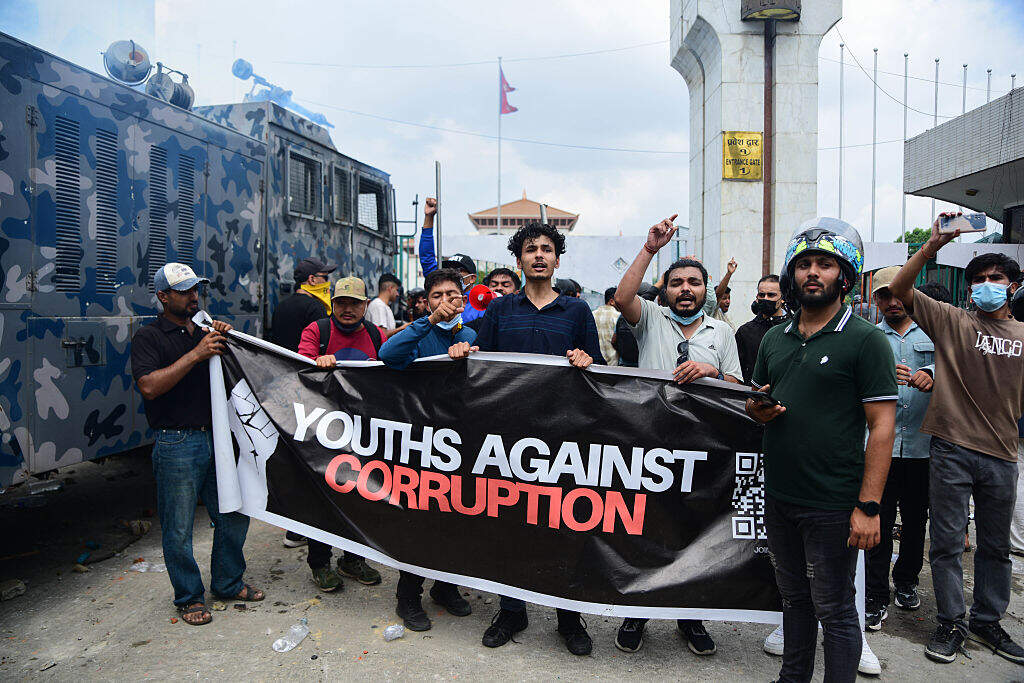
Over the past month, as I watched images of young Nepalis filling the streets of Kathmandu, chanting for change, I felt a jolt of painful recognition. Though I now live thousands of miles away in the United States, those scenes carried me back to the spring of 2006, when I joined countless others in the People’s Movement that toppled the monarchy. I was 14 years old then, swept up in a tide of hope and determination I barely had words for.
In recent weeks, Nepalis (mostly students and young people, but ordinary citizens alike) have flooded the streets after the government abruptly blocked dozens of social-media platforms in a move widely read as an attempt to muzzle dissent. What began as a backlash to digital censorship swelled into a broader anti-corruption revolt over joblessness, nepotism, and impunity; security forces fired live rounds, leaving more than 70 dead and thousands injured.
The sound of voices rising in unison, the fear and exhilaration of defiance, the belief that we were standing at the threshold of something transformative — all of it still lives within me.
Nepal has had three such ruptures in living memory. What I want Americans to know is that Nepalis are not strangers to democracy — we have fought for it, bled for it, and dreamed of it across three generations. But democracy cannot survive on dreams alone; it requires institutions strong enough to turn sacrifice into lasting justice.
But the echoes of the past are not always comforting. Too often, our uprisings have won the moment but lost the aftermath — breaking a regime without rebuilding systems fit to protect rights, check power and deliver fairness. After each breakthrough, old habits reemerged in new clothes: patronage networks persisted, corruption mutated and the culture of impunity reasserted itself.
In 1951, the overthrow of the Rana oligarchy promised democracy after a century of hereditary rule. In 1990, another mass uprising dismantled the “Panchayat” system and restored multiparty democracy. And in 2006, after a brutal civil war that claimed more than 17,000 lives, Nepal declared an end to the monarchy and embraced a federal republic.
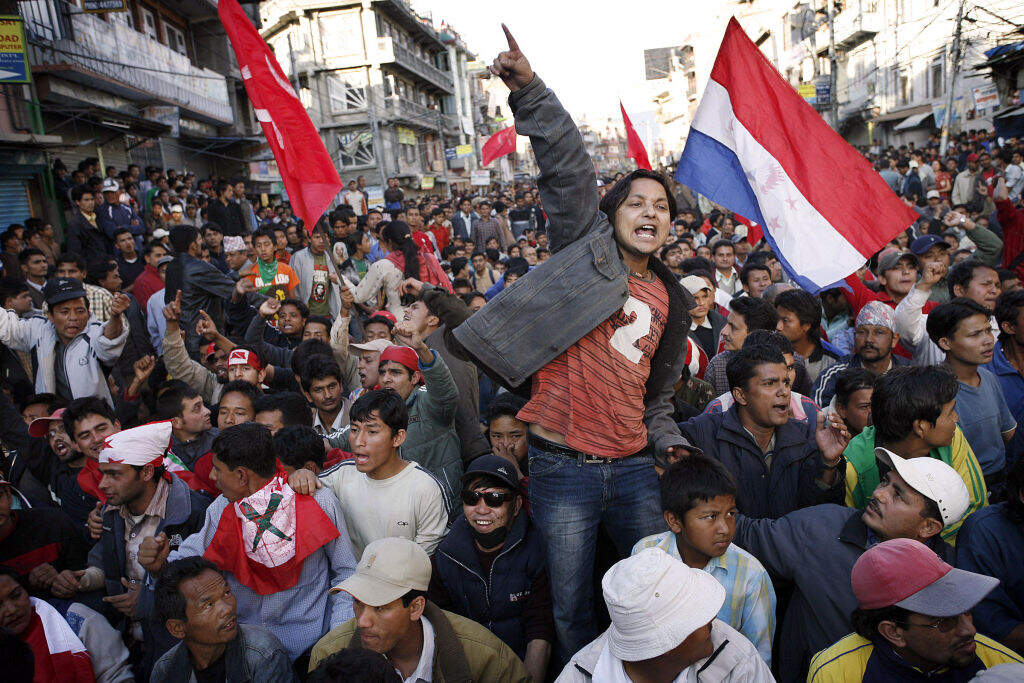
Each of these moments carried enormous promise. Each was born of sacrifice, courage and a genuine hunger for justice and inclusion. And each, heartbreakingly, was followed by familiar disappointments: Elites reshuffled power among themselves, corruption adapted to new forms and the aspirations of ordinary Nepalis were too often pushed aside.
For my parents’ generation, 1951 brought liberation but little stability. For my older siblings’ generation, 1990 restored freedoms but entrenched divisions that fed a civil war. For mine, 2006 brought federalism, but also disillusionment, as many of the commitments to equity and representation remain unfulfilled nearly two decades later.
I was born just as the civil war began, raised in its shadows, and came of age in the demonstrations of 2006. To me, the protests of 2025 look painfully familiar—young people daring to imagine a better Nepal, only to be met with force, and grieving families wondering if their sacrifice will truly matter. The cycle of hope and heartbreak has defined our modern history.
There is something uniquely painful about seeing those same streets erupt again. I remember the tear gas, the barricades, and the tense standoffs with police in 2006. I remember the way the air seemed to thrum with both danger and possibility. To see a new generation face the same choices — the same risks — is both inspiring and heartbreaking. Inspiring, because it proves that the spirit of resistance in Nepal is not easily extinguished. Heartbreaking, because it shows how fragile our institutions remain.
Rules matter. Institutions matter. Without them, uprisings become seasons of hope followed by years of disillusionment.
Watching from the United States only sharpens that clarity: in a country where democratic norms are also under strain — from election denialism to attacks on the rule of law — I am reminded that institutions are not self-healing. They must be defended, repaired and renewed, or they decay. The distance between Kathmandu and Washington is vast, but the warning is shared: without credible rules and accountability, even old democracies wobble.
And yet — despite everything — I cannot let go of optimism. I see it in the sheer resilience of Nepalis, in their ability to rise again and again after devastation, in their refusal to give up on the idea of a fairer society. I see it in the courage of the young who march even knowing the risks, demanding accountability and dignity. Their voices remind me of my own in 2006, and of the generations before me who also dared to believe.
Still, optimism sits uneasily beside weariness. Because I know, as so many of us do, that change in Nepal has rarely been about rewriting the rules—it has too often been about replacing the rulers. And rules matter. Institutions matter. Without them, uprisings become seasons of hope followed by years of disillusionment.
From afar, in the U.S., I find myself holding both emotions at once: hope that this time might be different, and fear that it will not.
I realize that part of being Nepali is learning to live with this duality: the belief that tomorrow might bring a more inclusive future, and the memory that yesterday’s promises often went unfulfilled. For those of us watching from afar, the distance only sharpens the ache. We see our homeland struggle with the same battles we once joined, and wonder if our children will inherit the same unfinished dreams.
Living in the United States, I’ve come to see that this duality is not unique to Nepal. Here too, young people wrestle with the dissonance between soaring ideals and stubborn realities: between the promise of equality and the persistence of injustice woven through its history. Watching Nepal from afar reminds me that every democracy, however established, is always unfinished, and that the yearning for a fairer future binds us across borders.
And so, I find myself asking, quietly, almost like a prayer: How many more times can my country reinvent itself before the cycle finally breaks? How many more young lives must be offered before change becomes real?
I don’t know the answer. But as I watch from afar, I hope — against history, against cynicism — that this time, the story of Nepal will be different.