Support WBUR
Essay
Learning to row at 85: ‘Hands away, body over, slide to the catch, row’
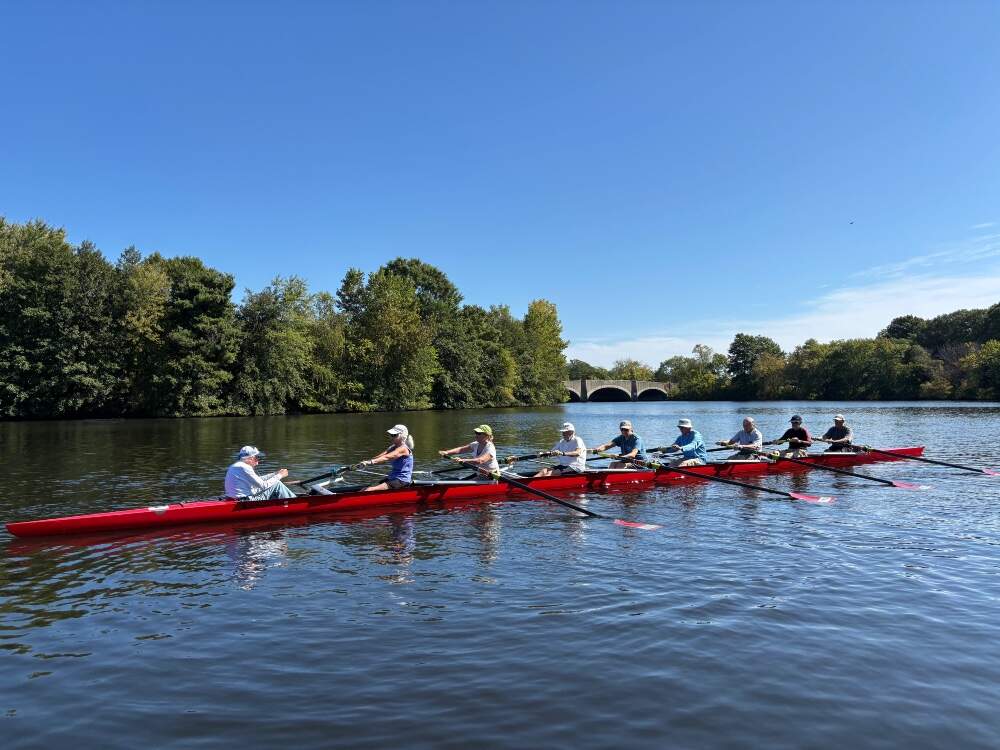
Editor’s note: Among the 2,500 boats and 11,000 rowers making their way down the Charles River this weekend for the 60th Head of the Charles regatta, two boats of rowers aged 80 and above will represent CRI rowing club’s “Octogenarian 8,” a crew led by coach Catherine Saarela. On Sunday, Frank and Caitrin Lynch, who are father and daughter, will help row an eight-person racing shell five miles from the CRI boathouse in Brighton to the MIT boathouse, where an “A-squad” of octogenarian rowers will swap in to compete in the actual race. For Frank and Caitrin, it’s an opportunity to do something new — and a little bit daunting — together. -- Sara Shukla
Frank:
The row on Sunday is longer than I’ve ever rowed. That makes me a little nervous. If we screw up and don’t get there, there’s no race for them, because we have the boat. That also makes me a little nervous. But I feel good, knowing that I’m contributing to the success of the racing crew.
It isn’t common that people at 85 take up rowing. The other rowers in the “octo eights” have been rowing for decades. When we started in May, it was on a “barge,” a long, wide boat with no chance of tipping over. Coach Catherine told us that even college rowers start out in these as they learn the precise rowing sequence and coordination of different parts of your body. I couldn’t get it. There’s so much to remember. Hands away, body over, slide to the catch, row. Catherine would sometimes point out herons and turtles, and I’d forget where I was in the sequence.
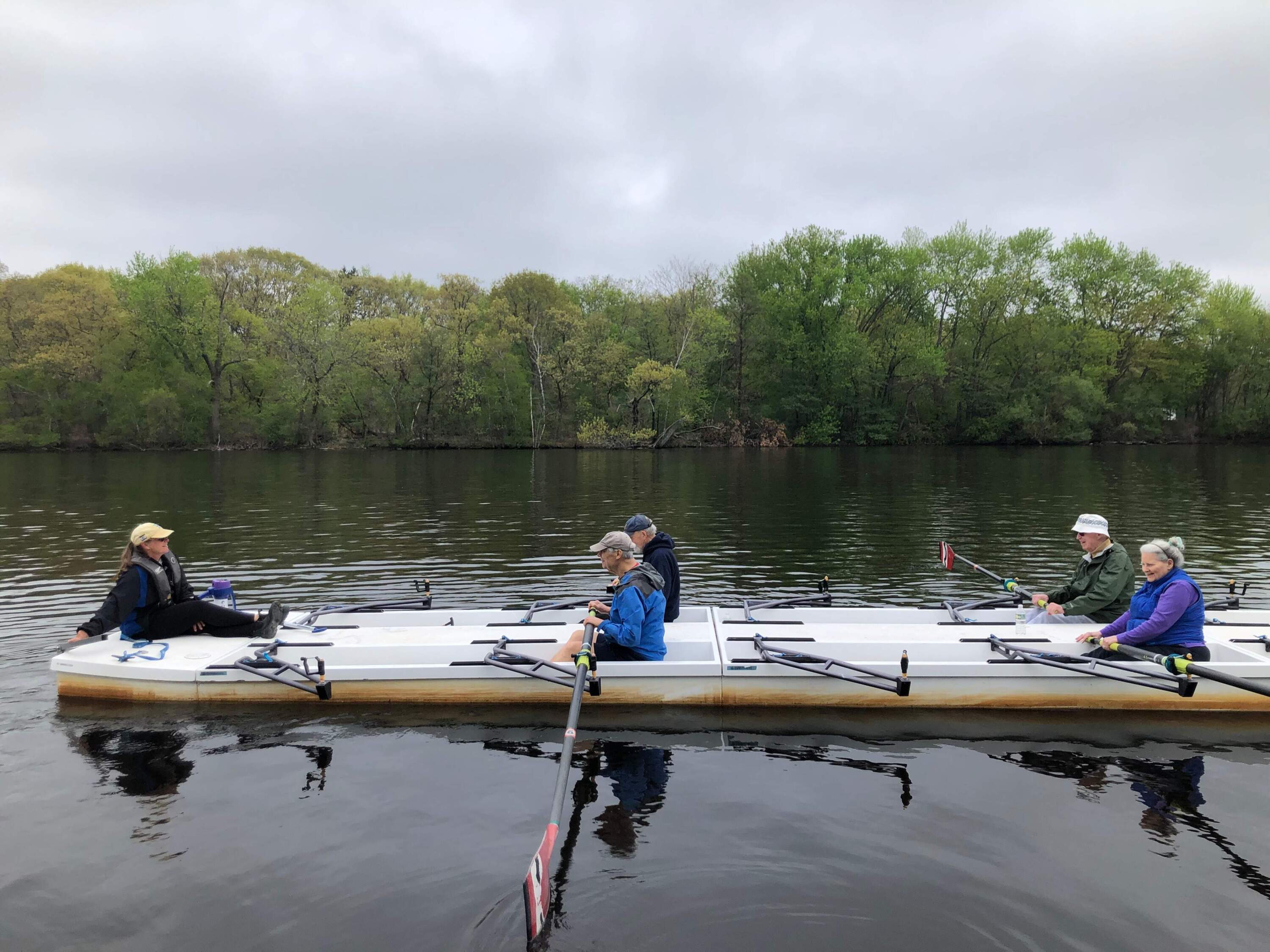
On the first day in the racing shell, when it was my turn to get in the boat, it took me a while to get situated. The boat was wobbly, unlike our stable barge. The cox used the words “port” and “starboard” in the opposite way to what I knew as a sailor, because we’re moving backward in a racing shell. When he said “port,” it was his left. He was facing forward, and I was facing backward. It was unnatural to me, but then it’s unnatural to sail backwards.
The cox calls rowers by their seat number, which means you need to know your number. Over and over again I’d hear, “Six.” “Six. No.” At first, I didn't realize he was talking to me. From the launch, Catherine said, “Frank, that’s you.”
I was nervous that first week, and the second and the third. But there was less calling my number as the weeks went along. I’d start to get into a rhythm, and it felt comfortable. We’d be going along rowing, and I’d be thinking, “Oh wow, I've really got it.” And then I’d realize: I’m out of sync with everybody. I was feeling mellow, like I could fall asleep because it's so comfortable. As you're saying that, you're getting all out of sequence. I'm bending, and nobody else is bending. And that’s when I’d hear the cox call my number.
I’ve been hearing a lot about the importance of keeping the brain and body going as you age. Keeping track of the rowing sequence: that’s the best mind-body activity I can think of. If you don’t do that sequence, you screw everybody up. I played football in high school and did track in college. In track or football, the whole team doesn’t go in the water if I mess up.
Now Caity’s rowing on Sunday, too. She’ll be the one in the “stroke seat,” facing the cox the whole time. I’ve been thinking about that, and I don’t know if she knows what she’s in for.
----
Caitrin:
When I mentioned rowing to my dad a couple of years ago, he couldn’t do it because my mom had Parkinson's disease, and my dad was the primary caregiver. The coordination with caregivers would have been too much, my father would have felt guilty leaving her, and he would have been worried about her the whole time he was away.
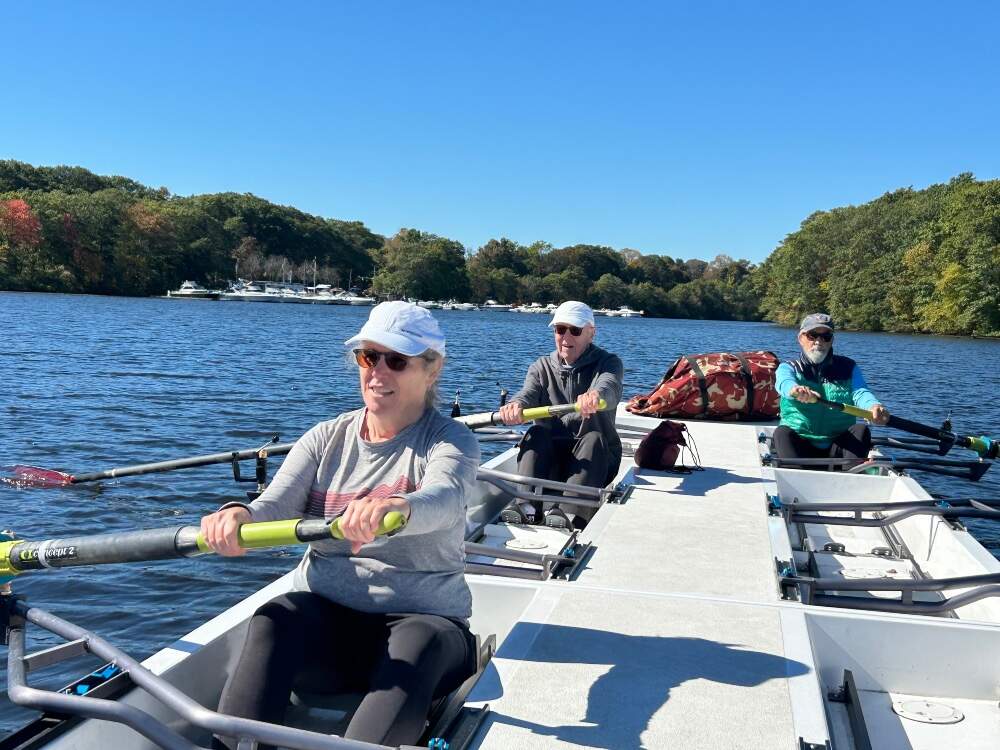
My mom passed away last fall, and since May, I've brought my dad to rowing one day a week. He soon added two other days per week. At first I was texting him each day with a packing list: water bottle, hat, hearing aids and more. I've seen my father grow more comfortable with getting himself organized, taking an Uber, learning a new sport and making sense of what was happening with his body (asking his doctors, children, coach and computer about aches in long-unused muscles).
Last week we learned that I'll be in the boat with my dad. Our coxswain is Bill Becklean, 89, who won a gold medal in the 1956 Olympics, when he was 20; he’ll stay on the boat to compete when we reach the other squad. I didn't make the age cut by a few decades, but Coach Catherine Saarela needed another rower and invited me to join. I'm not a great rower, but I love rowing and the chance to do this with my father. I’ll be in the stroke seat, face-to-face with the cox for the entire five miles. At one of my dad’s practices, I was on the launch with Coach Catherine and we heard the cox tell the rowers, “You’re not doing a good job setting the boat. It’s rocking.” Catherine said to me, “Bill, he’s the real deal.” I feel a distinct privilege to row with him (a gold medalist!), my dad and the whole crew of rowers who are literally old enough to be my parents.
My dad and I rowed together the other day, me in front of him, as I will be on Sunday. On the car ride home, my dad said to me, “You were slowing down sometimes. You didn't keep a consistent pace.” I immediately thought, “Oh my god, my father’s criticizing me." And then, demonstrating an impressive level of post-teenager maturity, I realized that all our post-row car rides have been for discussions of what he was learning, what he's not quite sure about and what seems counterintuitive. Now he was merely doing more of that, trying to figure out, “How do we do this? Together.”
I've overheard CRI rowers much younger than 80 say that being in the Octo 8 is a “life goal.” My dad lucked out by having a body and mind that supports this kind of activity at this life stage. And we both lucked out by meeting Coach Catherine, who has created something beautiful in the Octo 8: a way to support and recognize older adults as people, in a community of care, support, learning and teamwork.
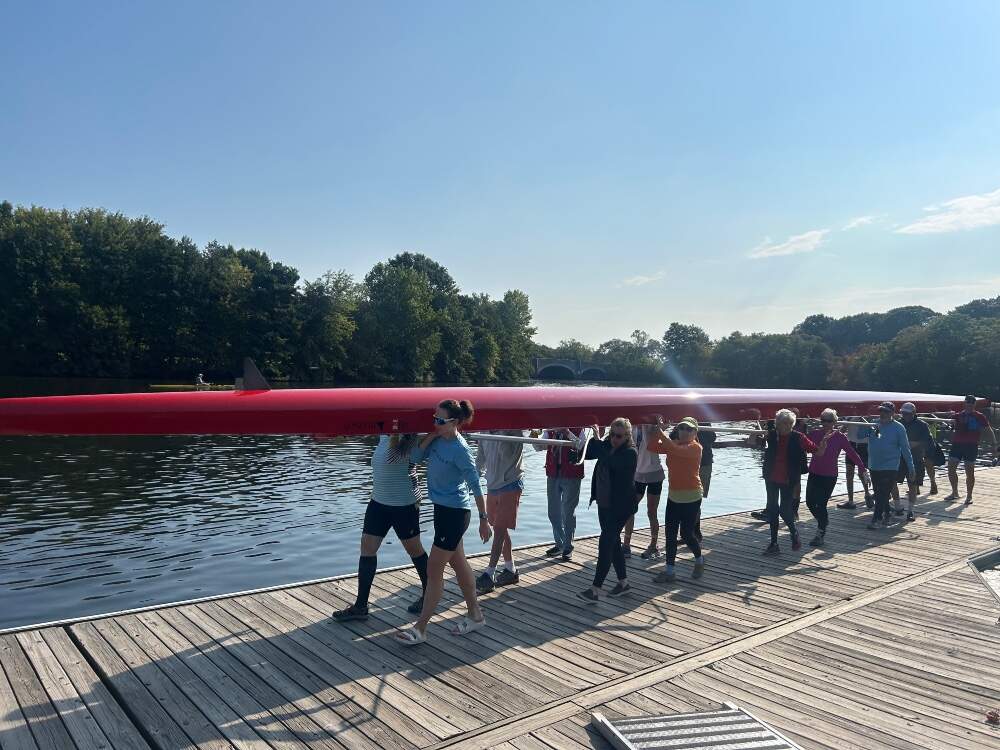
On Sunday, you can look for Frank and Caitrin in the “traveler” lane of the Charles, the Boston side of the river in a red CRI boat; they’ll be heading towards the harbor, sometime between 2 and 4 p.m. “Fast boats” to all!