Support WBUR
Essay
Diane Keaton and me
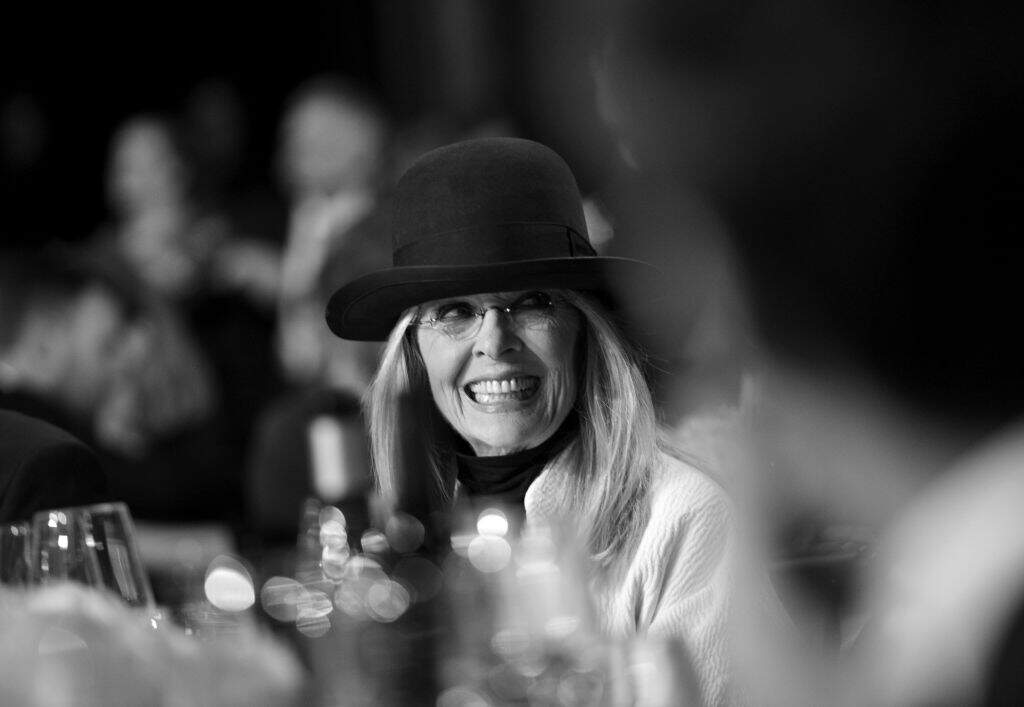
Editor's Note: An excerpt of this essay appeared in Cognoscenti's newsletter of ideas and opinions, delivered weekly on Sundays. To become a subscriber, sign up here.
Picture, if you will, the 1980s. Not the cool, post-punk 1980s — Madonna in ripped jeans, staring at the camera through smudges of kohl — but the actual 1980s, as lived by regular people in the suburbs, the provinces, the hinterlands.
Even if you didn’t suffer through the decade, you can — like my Gen Z kids — instantly recognize its cringe-inducing hallmarks in family photos or Netflix promos: the neon spandex and oversized shoulder pads, bandage skirts and neck-slashed t-shirts, frosted lipstick and Laura Ashley dresses, with their enormous, puffy sleeves and curtain-like dirndl skirts. And, of course, the hair. Teased, permed, sprayed into heights rivalling the wigs of Marie Antoinette. In the bland, homogeneous suburb where I grew up, girls rose hours before the first period bell to contort their bangs into a towering shelf known as “the claw.”
Even in childhood, I hated all of it. Both the demure, hyper-feminine Princess Di style — which my elegant, urban mother called “churchy” and “frumpy” — and the brash, revealing, hyper-sexualized power outfits. But there seemed no alternative.
Until Diane Keaton.
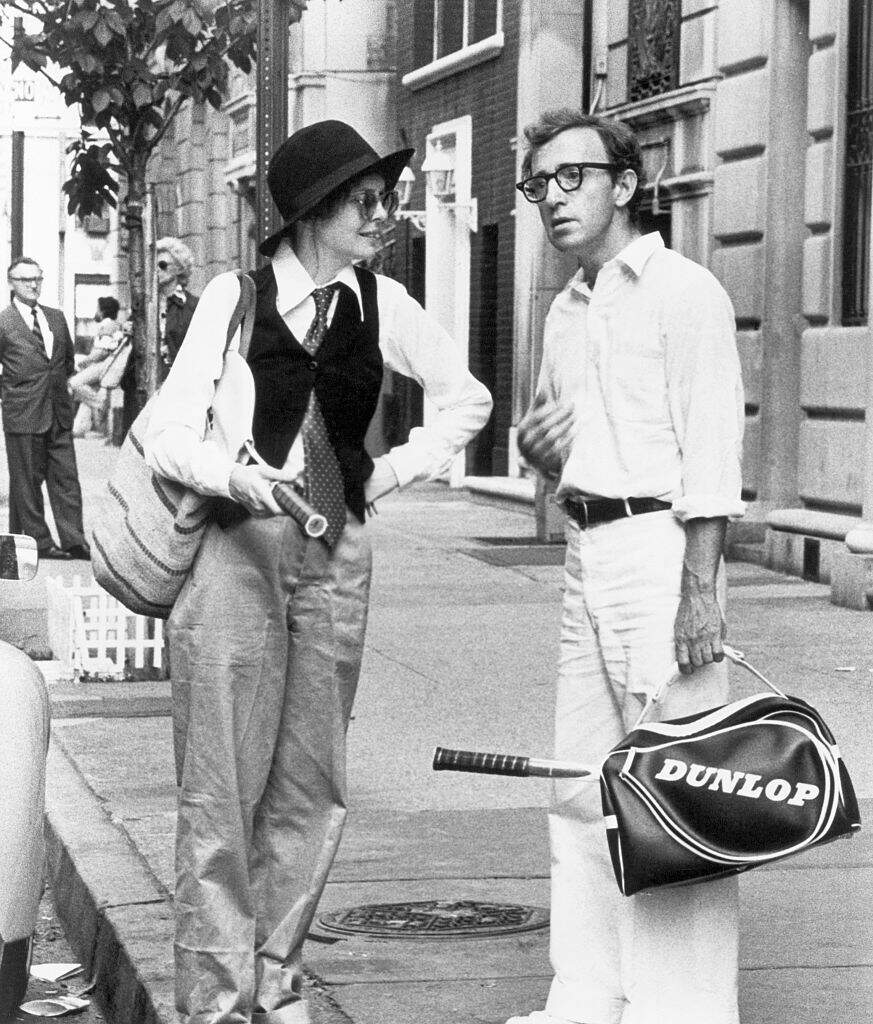
I was 12 when my father — an obsessive cinephile — deemed me ready for Woody Allen. One Sunday afternoon, we sat down and watched “Play It Again, Sam” (1972), and I saw another path forward, another way of being a woman in the world. Keaton constructed herself outside of not just the male gaze — for that’s what those ‘80s monstrosities were all about, right, portraying oneself as Madonna or whore? — but outside of any gaze other than her own.
While Keaton’s outfits in “Play It Again, Sam” were slightly more tied to the fashion of the time — those huge collars of the 1970s — they also hinted at the world-changing wardrobe to come: The fitted tweed jackets, wool trousers in autumnal plaid, long pleated skirts, a wide black tie over a crisp white shirt, body-skimming black sweaters so perfect I immediately made it my life’s goal to find the closest possible version available at the Nanuet Mall.
These clothes sound serious, don’t they? Serious and elegant, and not too far — I’m realizing — from my own mother’s timeless uniform of wide-legged wool trousers and cashmere sweaters. But what read as conservative on my mother, radiated on Keaton. They emanated a sense of play, of joy in both the garments that adorned her and the process of combining them into ensembles of stark originality and individuality. My mother dressed to follow rules of propriety; Keaton dressed to break them.
After my first brush with Keaton that Sunday, as my mom made dinner, I crept into my parents’ bedroom and absconded with a pair of faded Levi’s, a white dress shirt, pinstriped wool trousers I’d never seen my father wear, several plain white t-shirts, a black leather belt, a merino sweater the color of port wine (fitted like Keaton’s), and a matching scarf from my mother’s bottom drawer.
I arrived at my locker the next morning transformed, inside and out, jeans hanging perfectly from my hips, scarf angled neatly around my neck. Suddenly — I realized as I dialed my combination — I was unafraid of the many, many bullies who dominated schools during the Reagan years, torturing anyone who veered, in any way, from the norm. (John Hughes movies felt like documentaries to me.) “What are you, like, a farmer?” called one. “Are those boys’ jeans?” snickered a girl who’d once publicly shamed me for wearing plain white, rather than neon, socks. “Yes,” I said, ignoring the screams and guffaws that followed, as I strode down the hall to biology class.
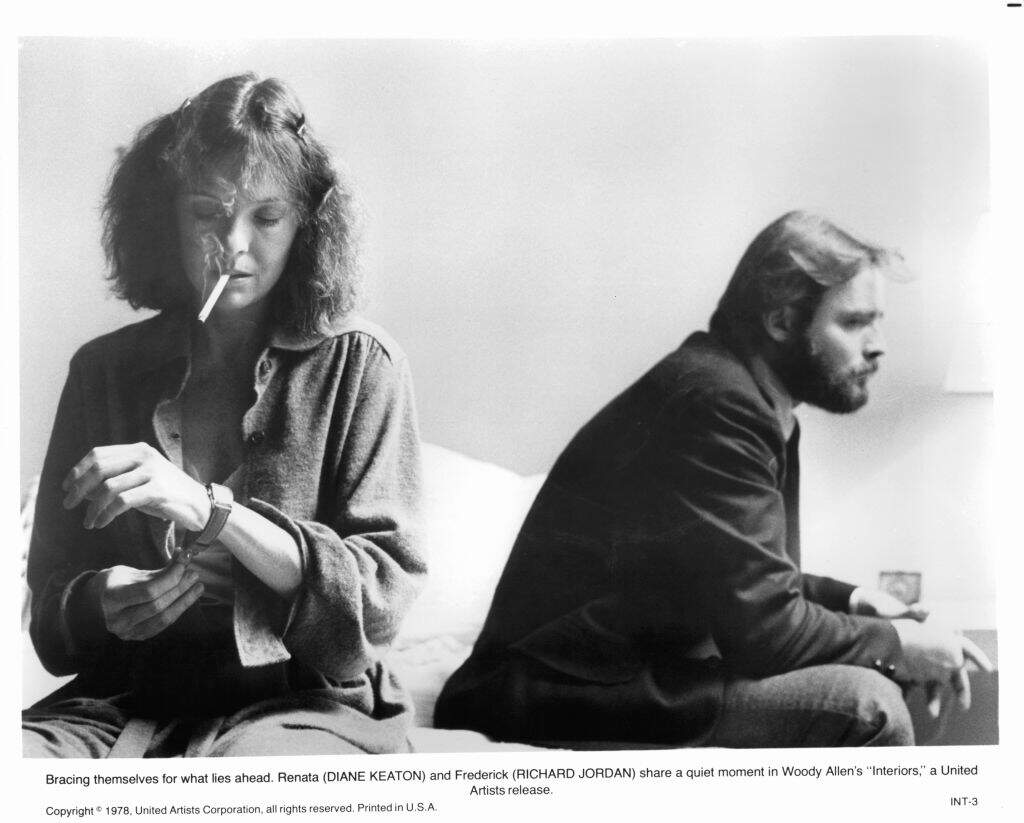
Over the week that followed, we watched “Annie Hall” (1977), after which I snatched an unworn vest from my parents’ closet. And then “Interiors” (1978), in which Keaton wears her signature bob curly, like my own hair, replete with the frizzing filaments I’d spent my life trying to eradicate.
My father worried that I’d find “Interiors” boring — it was Allen’s first drama, based on a Bergman film — but instead I sobbed along with him over Keaton’s minutely calibrated portrayal of Renata, a well-known poet struggling to write, consumed by thoughts of “preoccupation with my own mortality.” It only occurs to me now that there might, er, be as much of a correlation between the delicate checked blouse she wears in that film and one in my own closet, as there is between my own early career as a poet, also ended by pervasive thoughts of “feelings of futility in my work.”
Because here’s the thing: I see now it wasn’t just that I wanted to dress like Diane Keaton — though I did — I wanted to be Diane Keaton, in some unquantifiable, elemental manner. To possess not necessarily the confidence but the comfort and grace to be myself, to blithely accept my shortcomings as an integral part of my character, my persona. “I’m not glamorous,” she murmurs, calmly, as Linda Christie in “Play It Again, Sam.” “I have an inferiority complex ... I’m so clumsy.” I wanted, in other words, not just to dress for myself, for my own gaze, but to live for myself, as myself, in all my complexity. I didn’t want to strive for the hard, shiny perfection, of body and mind and demeanor, valued in that era — not unlike our own, of course.
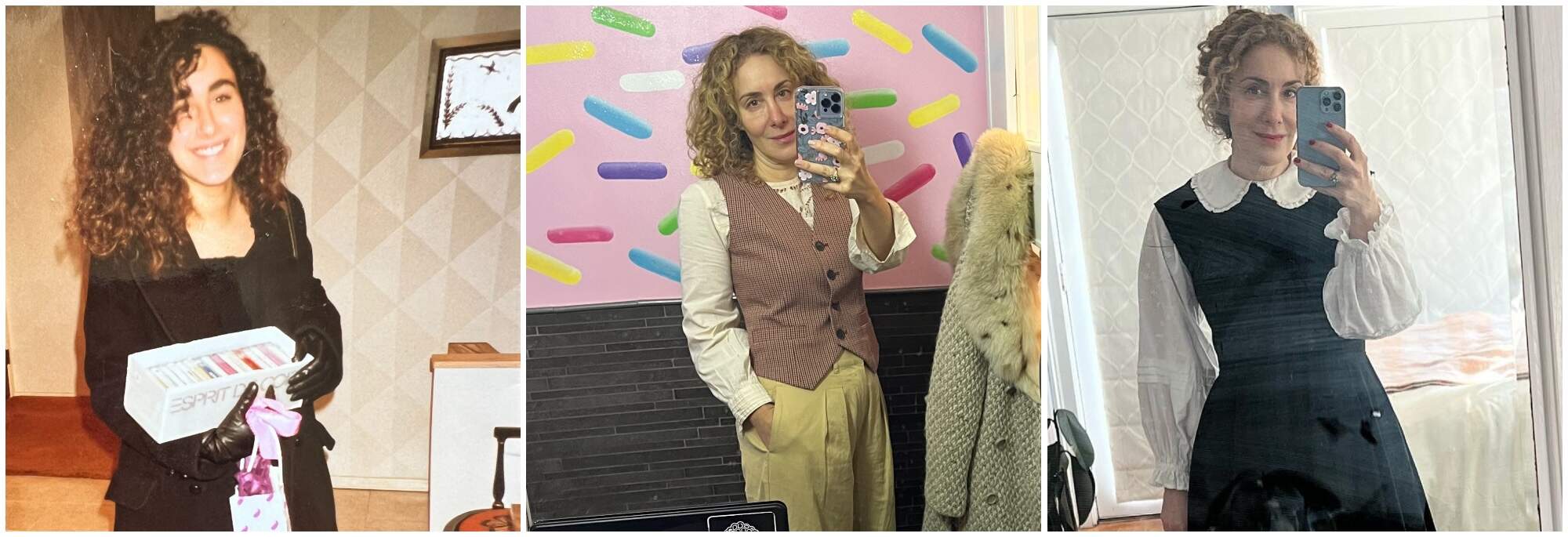
Much has been made of Keaton’s style, both on-screen and off, and rightly so. But that ought not overshadow what Keaton, holistically, brought to every character she played: A vulnerability that served as not weakness but strength, that made her — as an actor and a person — more herself rather than less.
The clothes mattered. So much. Of course they did. She offered girls like me a third path, both a specific sartorial style that projected softness but not submission, that subverted the crushing gender norms of the time without ascribing to patriarchal notions of “power.” (Those shoulder pads!) But the clothes also mattered, because they served as an emblem, a metonym, for Keaton’s sublime ability to simply be herself. She gave generations of girls permission to do the same.