Support WBUR
Commentary
Housing is a public health imperative
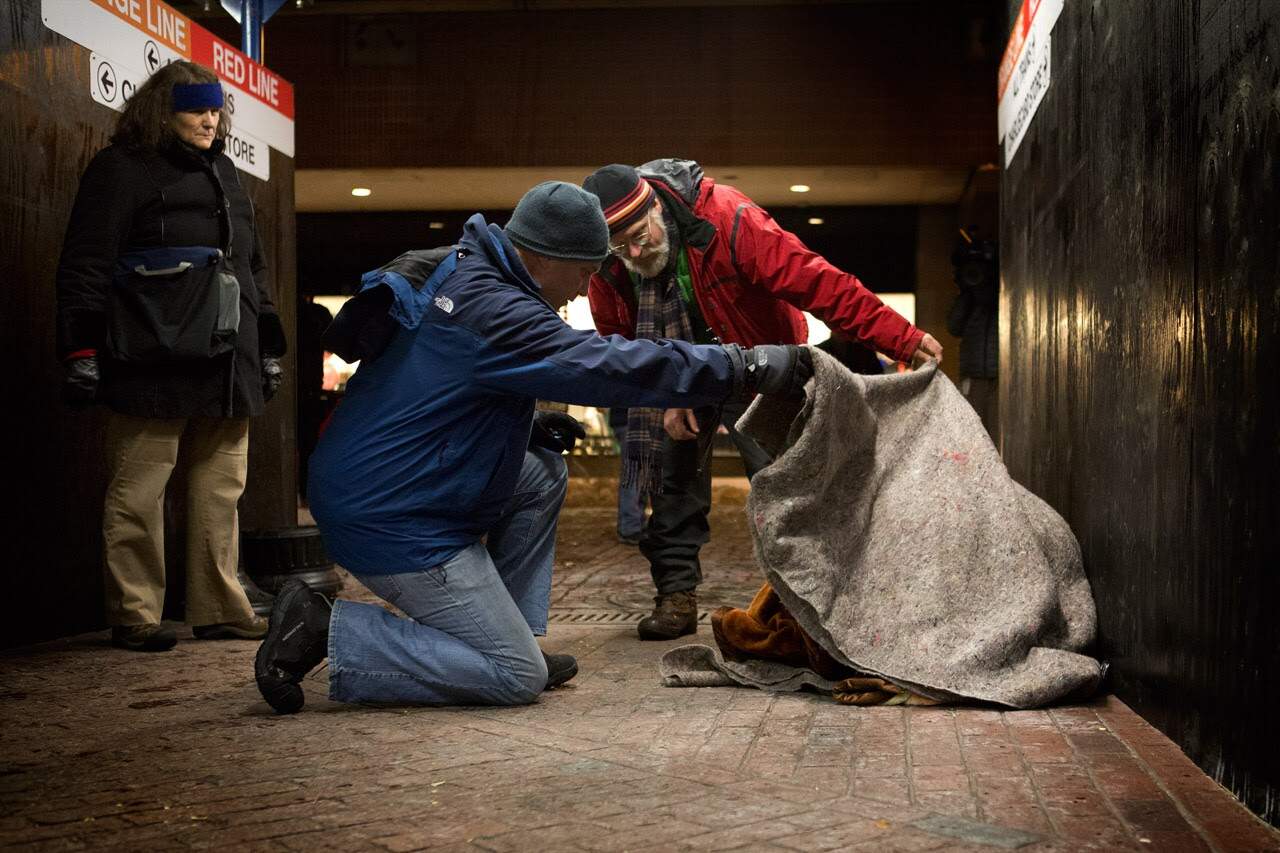
Massachusetts has historically made efforts to shelter unhoused families requiring assistance. It was the first state in the nation to pass a right-to-shelter law for families (also known as Emergency Assistance, or “EA”), through which families with children under 21 can apply for emergency shelter. But in February of this year, the Massachusetts legislature passed a bill limiting how long families can stay in the state’s shelters to just six months. The bill also capped the maximum number of families permitted to utilize shelters at any given time at 4,000. For context, the maximum number of sheltered families in 2023 was more than 7,500, a supply-demand mismatch that underscores the affordable housing crisis that has pushed families into shelters in the first place.
I am a primary care physician in Boston. I take care of particularly sick and structurally marginalized patients in the heart of the city. Many of the patients I worry most about are currently living with their families in EA shelters.
In the past few months, I have had multiple patients living in shelters come to me with uncontrolled blood pressure, diabetes and even symptoms of heart failure that they didn’t have before. Too many of my patients whose health conditions have been stable for years have grown more obviously unwell. When I ask what makes it hard for them to stay on their medications, their answers come easily: Their days are spent on the phone, trying desperately to apply for extensions to their housing. The pharmacy is closed by the time they have the wherewithal to pick up their medications. I have a patient whose shelter took away her fridge, which she needs to safely store her diabetes medications. Another patient will lose access to her CPAP machine for sleep apnea when she is forced to evacuate her shelter at the end of this month, and without it, her fatigue is so life-limiting that she cannot work.
It is an absolute public health imperative to stably house families in Massachusetts. My patients are getting sicker because of the threat of losing their homes. There is simply no way around this fact. Though at first glance, limiting EA shelter looks like it will save the state money, forcing people — especially those with uncontrolled illness — back into homelessness will ultimately raise costs in other ways. At the very least, emergency room visits and hospitalizations for easily preventable complications of chronic conditions like diabetes will increase. It costs the state of Massachusetts around $165 per night to shelter a family. The cost per night of a hospital stay for one person is $5,000.
This isn’t to suggest that everyone forced out of stable housing will be hospitalized. That said, homelessness makes you sicker. People experiencing homelessness are three to four times more likely to die prematurely than their housed peers, not just of communicable illness and violence to which exposure increases in shelters and on the streets, but also of heart attacks and strokes. Furthermore, access to preventive and early primary care is nearly impossible without stable housing, which means that when patients are able to present to a health care setting, it is usually in the emergency room, and it is usually with far more advanced disease than if they had been housed. This combination of worsened population health outcomes with increased health care spending should be enough to tip the scales against premature eviction from shelters.
Too many of my patients whose health conditions have been stable for years have grown more obviously unwell.
For my patients who are living in shelters and getting sicker by the day, I have written innumerable letters protesting the cruelty of eviction and requesting shelter stay extension or transfer to another stable living environment, but most of them seem to have been ignored.
Beyond simply removing the six-month EA limit implemented in February, there are various bills making their way through the state legislature that could help. House Bill 1469 and Senate Bill 1011 propose expanding access to housing subsidies for families and children who are at risk of losing their current housing and are otherwise eligible for EA or who are currently living in EA shelters. This could reduce the strain on the shelter system by helping families stay in their own homes. My prediction is that this will have a downstream effect of preventing adverse health outcomes for unhoused or soon-to-be unhoused families.
Unfortunately, help will not come soon enough for my primary care patients at risk of losing shelter housing, who are being forced into the streets before a cold and unforgiving winter. I worry about them constantly – and when I am able to see them in person, I often feel helpless because of my inability to materially improve their lives. But for all the patients I have who will almost certainly lose their shelter beds this winter despite every call their social workers and I make, there are just as many who are at risk of imminently losing their housing due to inflation and rapidly increasing rental costs.
Bills that proactively provide subsidies to people at the highest risk of eviction from stable housing have the potential to prevent a cycle of displacement, instability and poor health. In a federal landscape marked by cruelty towards unhoused people, the Commonwealth of Massachusetts has an opportunity to materially practice its progressive values. We are not just teetering on the brink of a public health crisis — we are in its throes. But by preventing displacement through proactive funding to those among us with the greatest need for structural support, and by extending shelter length of stay to prevent premature evictions, we can positively change health care outcomes.
My patients deserve better. Our community deserves better.