Support WBUR
Commentary
What ghost forests tell us about ecological belonging
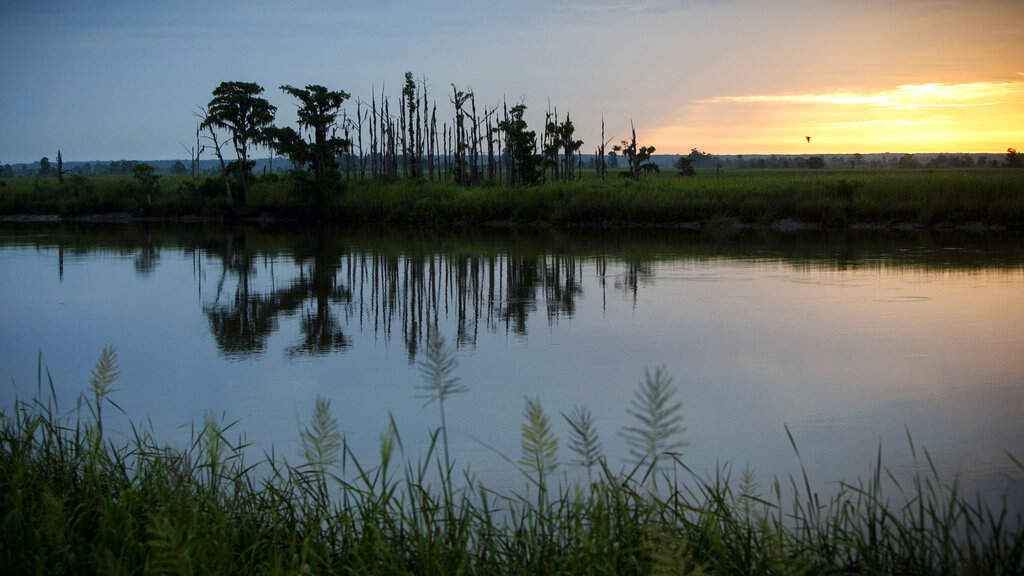
I look across a salt marsh in South Wellfleet, Mass., lush in midsummer, the emerald cordgrass swaying in the sea breeze. A marsh hawk cruises low, searching for voles. But at the marsh’s edge, a broad stand of white cedar and pitch pine rises gray and bare, crowded trunks erect but branches naked and brittle. This is a ghost forest.
The sea is claiming this ground. Salt water, inexorably seeping into the water table, has poisoned the roots. The same thing is happening in many places along the Atlantic coast — ghost forests emerging as the ocean rises.
These dying trees foreshadow greater harms. Beyond the loss of woods and wetlands, climate change will cause hunger, displacement and death. And with all that, it brings a quieter, insidious cost. The torrent of change will undermine our rootedness in the living world — the ground of our ecological belonging.
Between now and the end of the century, climate change will trigger a cascade of rapid, irreversible environmental changes that will make it impossible for people to establish a sense of place.
Humans have always been embedded in the living world. For much of history, nature was a partner both generous and powerful — a food source, but also spiritual force. Beasts of the wild occupied prominent roles in daily life. Thawing streams and migrating birds cued the timing of planting. Seasonal floods brought nourishment to riparian fields.
In the 19th century, writers like Ralph Waldo Emerson and Henry David Thoreau saw nature as sanctuary, a realm where the self might touch something transcendent. As industrial society expanded in the 20th century, Aldo Leopold and Rachel Carson called out the cost of our callous treatment of nature.
Environmentalism emerged from the recognition that the prairies, forests and rivers we rely on are not mere backdrop but the infrastructure of life itself.
Now, in the anthropocene, the planetary degradation wrought by warming is not hypothetical; it is manifest and will continue for generations. Permafrost in Siberia is thawing as ice sheets in Antarctica become unstable and ocean currents falter.
But knowing the cost of climate change has not been enough to prevent it. The necessary transition away from fossil fuels is not happening fast enough. Corporations continue to sink their vast capital into the infrastructure of extraction. Global emissions continue to rise, and the familiar ecosystems we have taken for granted are breaking down.
The consequences of inadequate action will land hard — in fact, some of them already have. The swiftness of environmental change due to a warming climate has no precedent in the course of human civilization, and we are unequipped to reconstruct our sense of place as quickly as it unfolds.
The people of Greenland already confront this. Their island was thrust abruptly onto the geopolitical center stage when climate change opened new strategic sea routes. Their homes, built on permafrost, have cracked foundations and slumping floors. Species dependably caught by fishermen, such as cod, have migrated northward, while humpback whales have arrived from the south perturbing the ecosystem. Cultural traditions that depend on snowpack, such as dog sledding, are becoming unsustainable.
“Ecological grief” is now a well-documented reality in Greenland.
Over the coming decades, the scope of these changes will become widespread. Where today there are beaches and tidal pools, there will be breakwaters and seawalls. Where today there are groves of majestic evergreens, there will be scars of wildfire. Where today there are songs of beloved native birds, there will be silence.
Climate change is directional — it doesn't rewind and repeat in a few generations. What people know of nature in their youth will have changed by the time their children are born.
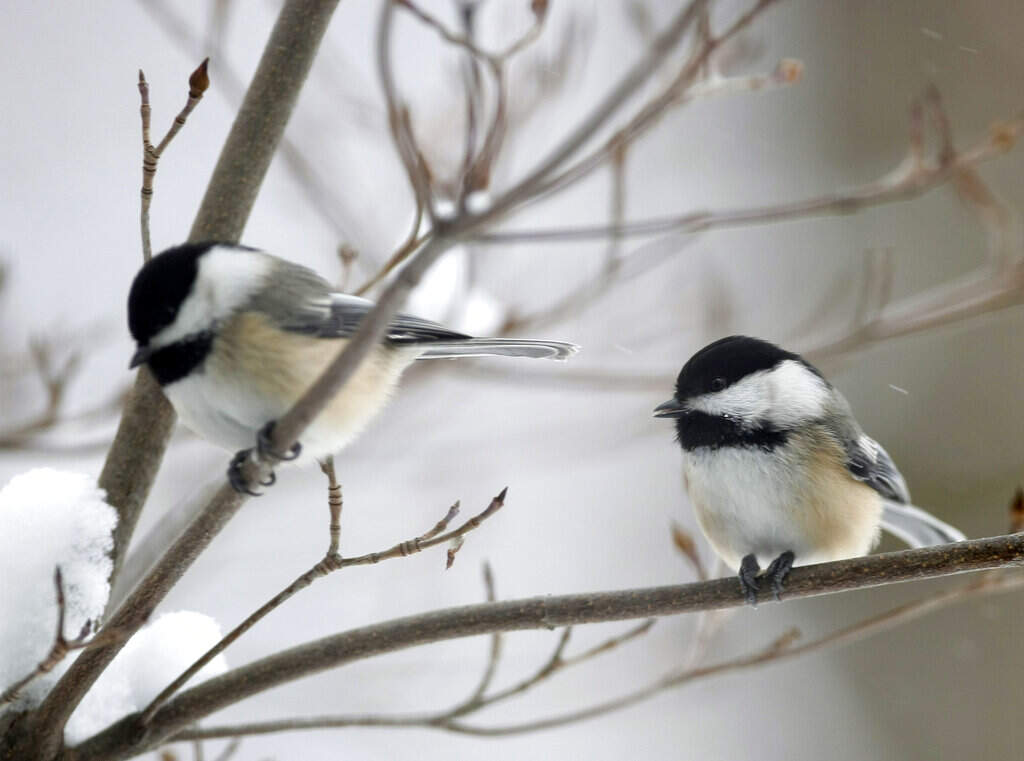
Older New Englanders already recall the "real winters" of their younger days. In Massachusetts forests, southern species like hickory will supplant familiar trees like paper birch later this century. Our state bird, the black-capped chickadee, will likely be forced northward by 2050. The iconic lobster is already declining steeply in our waters.
This explains how we lose our ecological belonging. We lose it not from mourning what's gone, but because environmental changes happen too quickly to create the generational memory needed to anchor our identity to the land.
Without a sense of ecological belonging, where do we turn?
Humans are resilient. If one dimension of meaning is lost, another comes to the fore. So, theoretically, we can compensate for the loss of belonging by finding other ways to ground our identity.
The most immediate way we find our footing in the world is through our human relationships. Friends and family, church and community, colleagues and coworkers have always been central to how we define ourselves. Unfortunately, the climate effects that erase our ecological belonging can also stress these interpersonal sources of meaning.
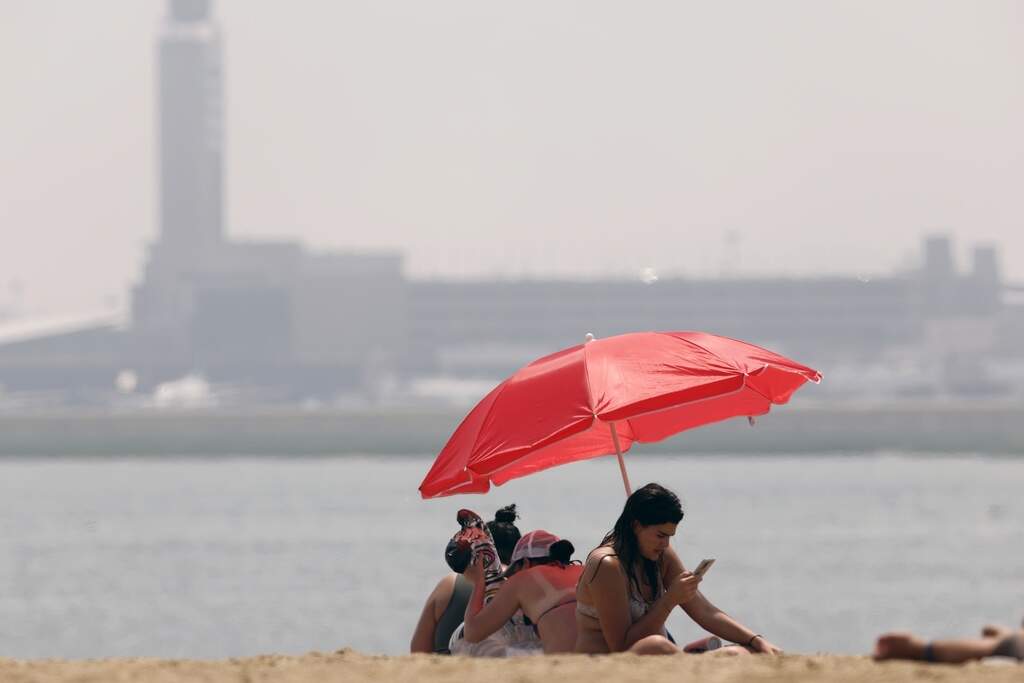
Even minor disruptions to everyday life can limit opportunities for social bonding and strain human connections. Heatwaves drive us into air-conditioned isolation. Over the past few years, school days and outdoor concerts have been cancelled due to smoke from Canadian wildfires. Drought-fueled brush fires in October 2024 prompted officials in Salem to cancel city-sponsored Halloween events. Rising food and energy costs force people to cut spending on social activities.
In extreme cases, like the post-Katrina diaspora, relocation due to extreme weather forces people to rebuild their social world from scratch.
So we turn to technology, projecting ourselves into the digital landscape since the physical landscape can no longer support us. People can indeed find help for loneliness in virtual communities, but relationships in cyberspace, while at first novel and convenient, are ultimately a thin soup. Having many online friends doesn’t make people happier. Technology can be empowering; it can even be compelling. But it does not generate a durable sense of belonging.
Climate change is transforming ecologies faster than human memory can keep pace. In the developing world, the stakes may be life and death. In wealthy countries, the cost is different—we will adapt and survive, but the fabric of life will wear thin.
A hundred years from now, that marsh in Wellfleet will be a shallow bay, the stumps of the ghost forest preserved in the peat under the salt hay grass that takes it over. A new ghost forest will emerge as the marsh continues its inland migration.
Rootedness will no longer be passed from one generation to the next. The ecological belonging we feel deeply today will not survive the flood.