Support WBUR
Essay
In 2025, I got by with a little help from these books
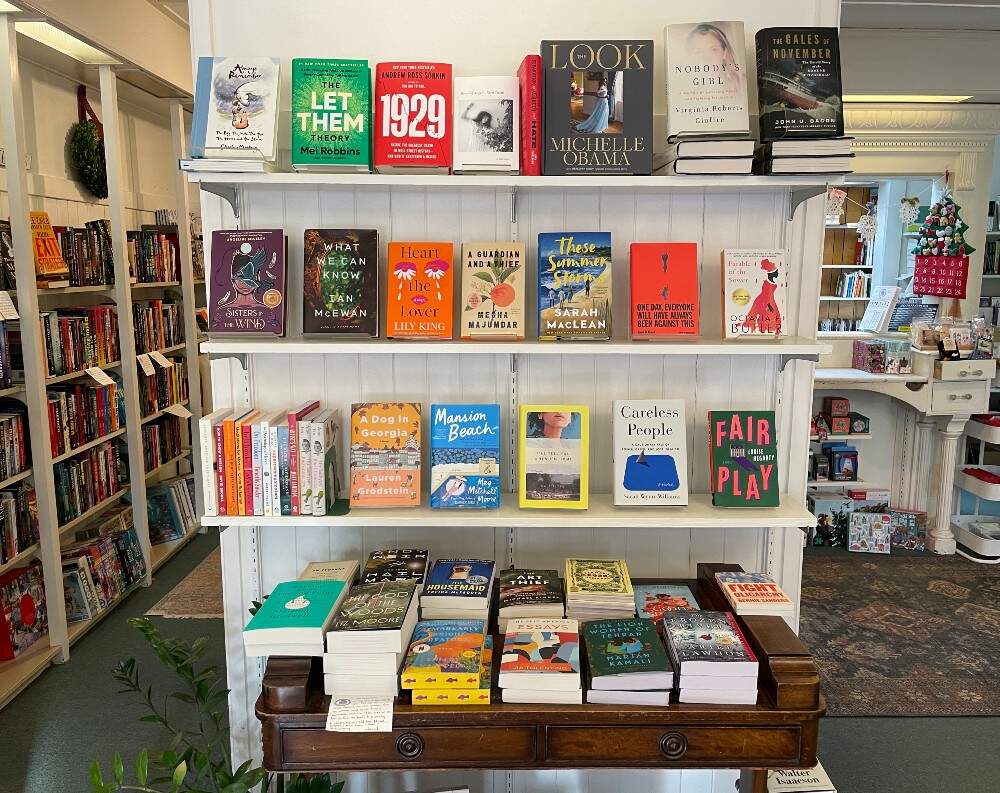
Sometimes the world is too much, and in 2025 that seemed like the case more often than not. In January, I was ready for a fight. I decided I would read the “hard” books. I would do the work. And since I’m a fiction reader (and an independent bookstore owner), that meant I finally read “Parable of the Sower” by Octavia Butler. It was well worth the hype, and the prescience was unnerving — the wealth disparity, California fires, the cult of personality. It sort of made the new biography of Butler, “Positive Obsession: The Life and Times of Octavia E. Butler,” by Susan M. Morris and published this year, a mandatory read.
I read some nonfiction, too, including “Careless People: A Cautionary Tale of Power, Greed, and Lost Idealism,” by Sarah Wynn-Williams, and couldn’t stop talking about it for weeks — how Facebook gave Trump his first presidency, the ways in which it encourages advertisers to prey on teen girls, how it enables political unrest in unstable countries. As a piece of literature, it also forces us to think about how we are all complicit. Could have been titled, “Horrible People,” too.
Like 50.2% of America, I also brought home a copy of “On Tyranny,” by Timothy Snyder, and got real fired up about chapter one: “Do not obey in advance.” Then I got distracted by current events again and moved on to the other 19 chapters.
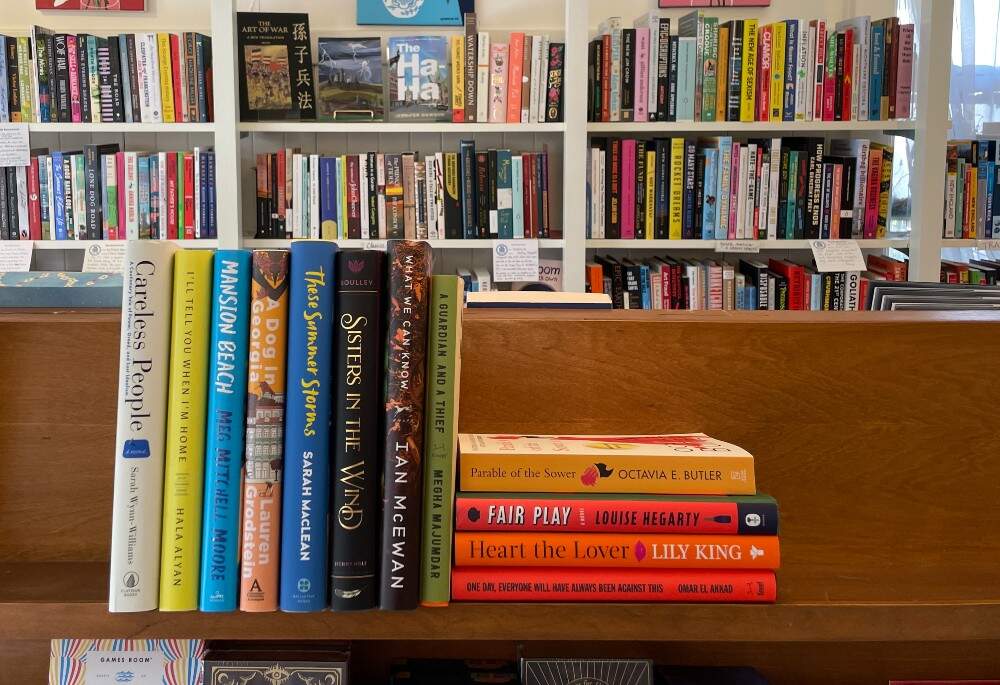
After reading “One Day, Everyone Will Have Always Been Against This,” by Omar El-Akkad, I knew it would win this year’s National Book Award for Nonfiction. Everyone should read this book. It’s brilliant and puts words to what a lot of us are feeling about the atrocities in Gaza but don’t know how to internalize, or feel we have the knowledge and background to fully understand. I also highly recommend Hala Alyan’s memoir published this year, “I’ll Tell You When I’m Home,” about her family’s history in the Middle East, including Palestine, and the feelings of displacement that continue to haunt younger generations.
And then it was only March, and I was tired.
I decided to soothe my senses with the audiobook of “The River Has Roots,” by Amal El-Mohtar, narrated by Gem Carmella and with musical interludes from the author and her sister Dounya. It’s a beguiling story of the strong bond between two sisters that is part murder ballad, part fairy tale.
Then I devoured and loved a bunch of books that might be described as “summer reading”: “These Summer Storms” by Sarah MacLean, a steamy drama with inheritance games, extreme wealth and a healthy dose of romance set on an island off the coast of Providence, “Mansion Beach” by Meg Mitchell Moore, a novel set on Block Island inspired by “The Great Gatsby,” and “A Dog in Georgia” by Lauren Grodstein, perfect for fans of “The Wedding People” by Allison Espach, about a woman who, in a moment of crisis, decides she’s just the person to find a lost stray dog in the Republic of Georgia — in the process she finds herself, through engaging conversations with interesting characters.
The thing about fiction — it’s all escapism. I find even the “hard” books, even the books that reflect our world too much, are bearable because great novels also work in the beautiful things that make us human: love and compassion and empathy. They’re inescapable.
My hot take about novels? Every single one of them is about grief in some way. Even the joyous, happy ones, because we can’t experience joy without also experiencing sorrow. We can’t read the “easy” books without also reading the “hard” books. Reading broadly enhances the entire reading experience.
So by fall, I was ready for “Sisters in the Wind,” by Angeline Boulley, a book that looks at indigenous kids in the foster care system while also being action packed. I couldn’t put it down. I was also ready for a good sob over Lily King’s “Heart the Lover.” Is it sad? Yes, in the best possible way: a deeply romantic story of first love and its lasting effects that I read in one sitting.
If you want grief explicitly, do not miss “Fair Play,” by Louise Hegerty. It’s a meditation on loss dressed up as a Glass Onion-esque British manor house mystery. This book will haunt me for a long time for how gorgeously it explores how one character processes her brother’s death — or is it a murder?
When I told customers at my store about Ian McEwan’s new novel, “What We Can Know,” set in a near future beset by climate change, most shook their heads. Too sad! It’s not sad, though. A literature professor whose speciality is the literature of 1990 to 2030, obsessed with a poem read at a dinner party in 2014? It’s brilliant. Going forward allows us to look back. And then McEwan takes us on a treasure hunt to find that missing poem. It’s an adventure. It’s a book-nerd delight.
Similarly “A Guardian and a Thief” is set in a near future Kolkata experiencing a climate emergency. One family seeks to escape to America, and the tension builds when a thief steals their precious visas. Over and over, the story asks what lengths each character will go to to survive, but the precariousness of the situations are cut with a levity of language. Megha Majumdar writes with such energy, with the joy of being alive, that I was thrilled to experience her turns of phrases even as I was crushed by the fates of the main characters.
As we head into the holidays and the cold of the winter months, I find myself longing for one of the books that started off my year. It was a quietly masterful novel with which I rang in the New Year. I fear many people might have missed Anne Tyler’s “Three Days in June.” Now would be a good time to find it. Tyler has a knack for humor and for making a story feel easy. Taking place over a long weekend in, yes, June, a woman experiences a crisis at work as she heads into her daughter’s wedding weekend and her ex-husband arrives to sleep on her couch. What could go wrong? Or maybe, what could go right?
Sometimes books find us at the right time and place, and sometimes we have to go out and find the books for this time and this place. As we barrel into 2026, I hope this guide helps you find the right books for our current moment.