Support WBUR
Essay
Is the humble pigeon a mascot for our time?
“Pigeons are having a moment,” I tell my friend.
“Tove,” she kindly says, “I think that’s just your algorithm.”
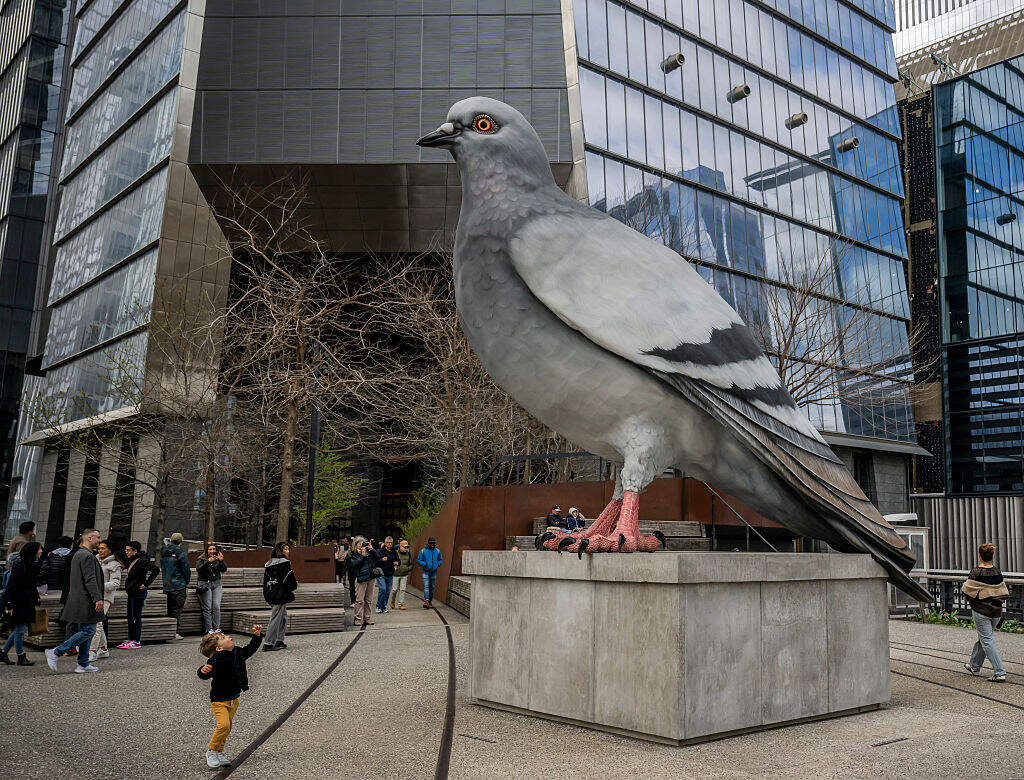
When I scroll through my Instagram feed, I see a video of someone putting makeup on to look like a pigeon. Then there’s a pigeon using a water bottle refilling station to take a nice little bath. An illustrated ode to pigeons. Someone dresses up like a pigeon and visits New York City’s “pigeon house.” There’s a gigantic pigeon sculpture on display at The High Line through spring 2026. PBS just aired a new documentary called "The Pigeon Hustle,” which reveals the secret world of urban pigeons. I heard about the documentary on social media, too.
And, yes, it does appear that over half of the pigeon videos I’ve been watching were “suggested posts” — not content from people I follow. The algorithm has correctly deduced that I will stop scrolling to watch if there’s a pigeon on the screen. Yet I also wonder if the algorithm itself is behind my love of pigeons.
I think it all started when I discovered that pigeons come in varieties other than “street.” There are 350 domestic pigeon breeds and roughly the same number of wild Columbidae species — the family of birds that includes pigeons and doves. I laughed when I saw a Jacobin pigeon on social media for the first time. They have feather ruffs swirling around their necks like an elaborate coat, giving them an air of a femme fatale whose wealthy husband mysteriously vanished. It was enough to make me look more closely at pigeons and what I found delighted me.
Now I’m enchanted every time I see a flock of them take to the sky, flying in formation to better protect themselves from predators. I often stop to watch flirting pigeons — those males strutting with puffed-up chests — because it’s both self-serious and clownish.
Once, we all paid attention to pigeons. Historically, we needed them even if we didn’t love exactly them. As Rosemary Mosco outlines in her book “Pocket Guide to Pigeon Watching,” humans in the Fertile Crescent domesticated rock doves (there’s no scientific difference between pigeons and doves) 5,000-10,000 years ago for meat and also to use their poop as fertilizer. Then we began using them as messengers; pigeons, Mosco wrote, took to the skies to tell people who won the very first Olympic games in ancient Rome. Pigeons like the famous Cher Ami were considered war heroes for the role they played in keeping soldiers safe, often passing messages to call in reinforcements.
But radios and telephones and the internet made the pigeon’s role as messengers obsolete. We figured out how to make synthetic fertilizers. And chicken became the most popular meat in America. Suddenly, we found ourselves in a world with plenty of pigeons we had no use for. The once-beloved pigeon became dirty, an unwanted hanger-on, a “rat with wings.”
In cities, we watch the birds peck at our trash and startle us when a flock of them noisily claps their wings to take to the air. They poop, well, everywhere, and their acidic droppings can corrode and stain structures and surfaces over time. Instead of welcoming pigeons, businesses in urban areas pay a lot of money for “bird mitigation,” which includes bird spikes, sonic devices that emit sound to scare pigeons away, or hiring someone with a hawk to hunt pigeons for a few hours.
We became convinced they didn’t belong. Sociologist Colin Jerolmack argues in “The Global Pigeon” that people’s irrational dislike of urban pigeons comes from the ways they transgress the boundary between civilization and wilderness. “Like weeds in the cracks of pavement, pigeons represent chaotic, untamed nature in spaces designed for humans,” he writes. I think the way they make tamed spaces unpredictable is one of the reasons I’ve come to love them.
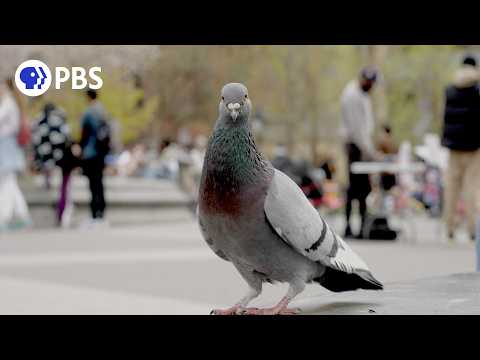
And I’m not alone in this. Over the last few years, the internet has shown us a different side of pigeons, turning their “defects” into strengths. Posts about their notoriously “lazy” nest making — a pigeon nest is often just a couple twigs on a flat surface — regularly go viral. Pet pigeons like Pidge, Merlot, and Penny have become social media celebrities. People post about saving pigeons from “string foot,” a common pigeon malady caused by string becoming tangled around a toe (It’s why so many city pigeons are missing digits.)
Pigeons are even making their way into fashion. In 2023, the “Sex and the City” reboot “And Just Like That” had its own pigeon moment when Carrie wore a clutch shaped to look like NYC’s unofficial mascot. (The $955 pigeon purse is currently sold out.)
In the 17th century, pigeons were a status symbol. Anyone who has watched pigeons flirt with each other or listened to them coo from a dovecote (the traditional name for a domestic pigeon’s house) can’t help but be charmed by these birds. It’s no surprise that interacting with pigeons — even if only through a screen — is making us love them again.
A few days ago, my friend sent me a text to tell me the pigeon content I’ve liked is now showing up in her Instagram feed. “I don’t hate it,” she confessed.
Pigeons aren’t dirty; they come in thousands of colors and shapes. They care for their young. They purr when they’re happy. They like to cuddle. They can be potty-trained. Most of all, they’re survivors — something people can relate to. They’re a mascot for our times. If pigeons can make it, maybe we can too.