Support WBUR
Opinion
Growing up in Nepal, I thought the US had figured out democracy. I was wrong
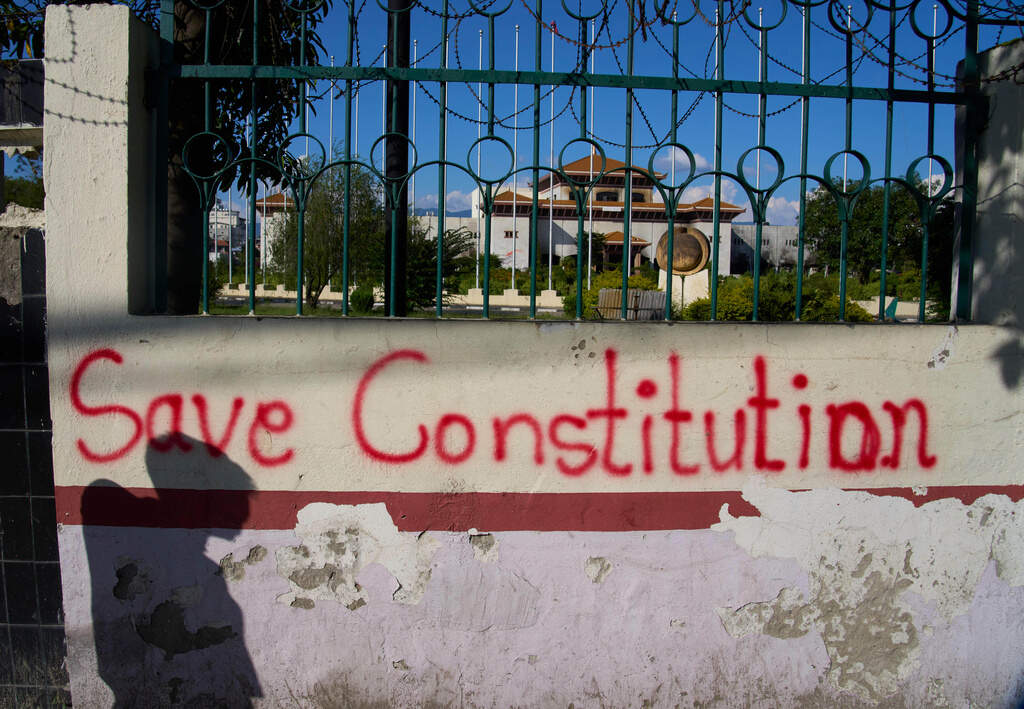
I grew up being told — explicitly and implicitly — that Nepal was a democracy in progress. A worksite. A place that needed guidance, monitoring and gentle scolding from “mature democracies.” And for most of my life, the United States stood at the front of that classroom: grading elections, sanctioning coups, funding civic education and issuing solemn reports about rule of law and democratic norms.
Now I live in America.
And I am increasingly unsure whether the teacher still believes in the syllabus.
Back home, Gen Z Nepalis have been marching — they are protesting corruption, patronage politics and elite impunity. They are angry, yes — but they are angry within the democratic framework. They want institutions to work, not to disappear.
Here in the United States, by contrast, democracy is starting to feel like an optional subscription. Elections are accepted conditionally. Courts are legitimate only when they agree with you. Journalists are either heroes or enemies of the people, depending on the day. Political violence is no longer unthinkable.
Watching this unfold as a Nepali is disorienting. Watching it unfold as a Nepali who was taught that “America had figured this out” is worse.
Let me be clear: Nepal is not suddenly a Scandinavian utopia. The United States is not a failed state. This is not a “gotcha” comparison. America still has more established institutions, stronger courts, more resilient markets and vastly more administrative capacity. On paper, it wins easily.
But democracy is not a spreadsheet. It is a habit. And habits can decay.
Let’s start with the most basic democratic act: voting.
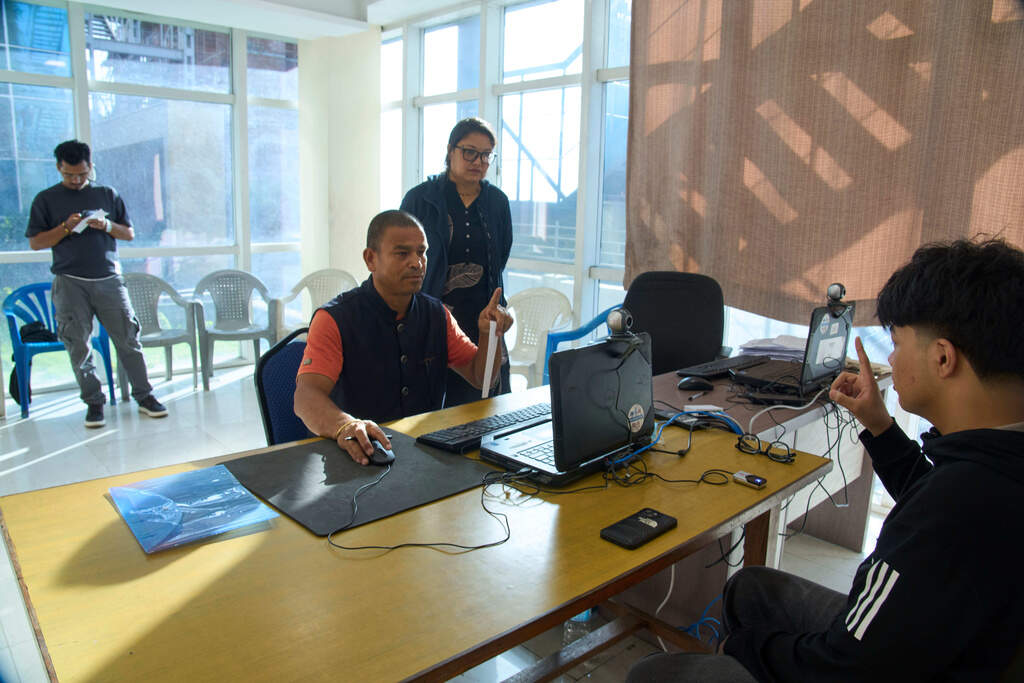
Nepal’s 2022 federal and provincial elections were messy in the very predictable ways Nepali elections are always messy. Too few women made it into parliament. Caste and ethnic identity still mattered more than anyone wants to admit. Money, muscle and patronage warped local races. Voter education lagged. None of this is flattering. All of it deserves criticism. But here’s the key point: these were arguments inside democracy. People fought over representation, inclusion and reform — not over whether the ballots were imaginary. No serious actor claimed the election itself was a hoax. The fight is about fixing the system, not setting it on fire.
Now look at the U.S. after 2020. Election officials, courts, recounts and cybersecurity authorities all said the same unglamorous thing: There was no evidence votes were deleted or altered. Fraud stories collapsed under basic scrutiny. And yet millions of Americans were invited (by elites, not by accident) to treat the outcome as optional. Believe it if you like. Reject it if you lost.
Once you cross that line, you’re no longer debating democracy — you’re auditioning for its replacement.
One of the clearest stress tests of a democracy is whether courts can tell the executive “no” — and whether that “no” actually lands.
Nepal’s Supreme Court does not wear the mythological halo of the U.S. Supreme Court. It is slower, less insulated and far more openly political. And yet in July 2021, it did exactly what a constitutional court is supposed to do in a crisis: It blocked an executive power grab. When Prime Minister K.P. Sharma Oli dissolved parliament to engineer early elections, the Court didn’t issue a vague warning or hide behind procedural fog. It reinstated the legislature and ordered a new PM to be appointed — by a firm deadline.
The remarkable part is not the ruling. It’s what happened next.
Oli complained. His allies protested. Editorials raged. And then — quietly, anticlimactically — he left office. The decision stuck. That is what democratic constraint looks like in practice. Courts don’t need universal love. They need to be obeyed.
Now contrast that with the U.S. Executive power here has spent years stress-testing the limits of constitutional restraint — military actions without congressional authorization, emergency authorities stretched thin, executive orders standing in for legislation. The U.S. Congress often shrugs. Oversight fizzles. And when courts do intervene, the reaction is no longer predictable acceptance but open suspicion.
That difference matters. A democracy does not collapse because courts make controversial decisions. It collapses when losing parties decide that judicial constraint itself is optional.
A December 2025 Reuters investigation detailed unprecedented prosecutorial errors inside the U.S. Department of Justice, including sharply elevated dismissal rates and judicial findings of bad faith. Courts questioning prosecutors’ credibility used to be rare in America. Now it’s becoming routine.
Nepal’s courts, for all their flaws, have recently behaved like referees. America’s legal system increasingly looks like another battlefield.
Nepal’s politics are chaotic. Governments fall. Coalitions fracture. Prime ministers rotate like a carousel. This is not a secret; it is practically the national brand. It is exhausting, inefficient and often cynical.
But chaos is not the same thing as epistemic collapse.
For all the instability, Nepali politics still operates on a shared, if begrudging, set of facts. People argue ferociously about what should be done, not about whether basic reality exists. There is corruption, incompetence and bad faith — but there is not yet a mass breakdown over the truth.
In the U.S., the problem is no longer just polarization. It is reality fragmentation. Most adults now say Democrats and Republicans cannot agree on basic facts. That is not a dispute over policy or ideology; it is a disagreement over what is even happening. And once citizens no longer share a common factual ground, democracy stops being a system of negotiation and starts becoming a system of force.
If elections and courts reveal how democracy works, the press reveals how honestly a country talks about itself.
Nepal is tightening media regulations, and journalists are right to be alarmed. New rules have expanded state discretion, increased pressure on independent outlets, and raised the familiar specter of “order” being used as a substitute for freedom. These moves deserve criticism, loudly and without qualification.
But the comparison with the U.S. no longer flatters Washington. America now sits in the middle of the global press-freedom rankings, well below where a self-styled model democracy expects to be. Journalists are detained or charged simply for doing their jobs. Local newsrooms are collapsing at scale. Public-interest journalism is being hollowed out by funding cuts and political hostility. The press is not just criticized here; it is routinely delegitimized.
Freedom House still rates the U.S. “Free” and Nepal “Partly Free.” That matters. But direction matters more.
Nepal is a fragile democracy trying — sometimes clumsily, sometimes bravely — to strengthen norms. America is a powerful democracy acting as if norms are optional accessories.
As a Nepali living in the United States, I never expected to feel this inversion. The country I was taught to admire now feels complacent about its own erosion. The country I was taught to apologize for is, at least in moments, remembering why democracy matters.
That should not make Americans defensive. It should make them alert. Because democracies don’t disappear when tanks roll in. They disappear when people stop believing the rules apply to everyone.