Support WBUR
Essay
Let's stop shipping baby chickens in the mail
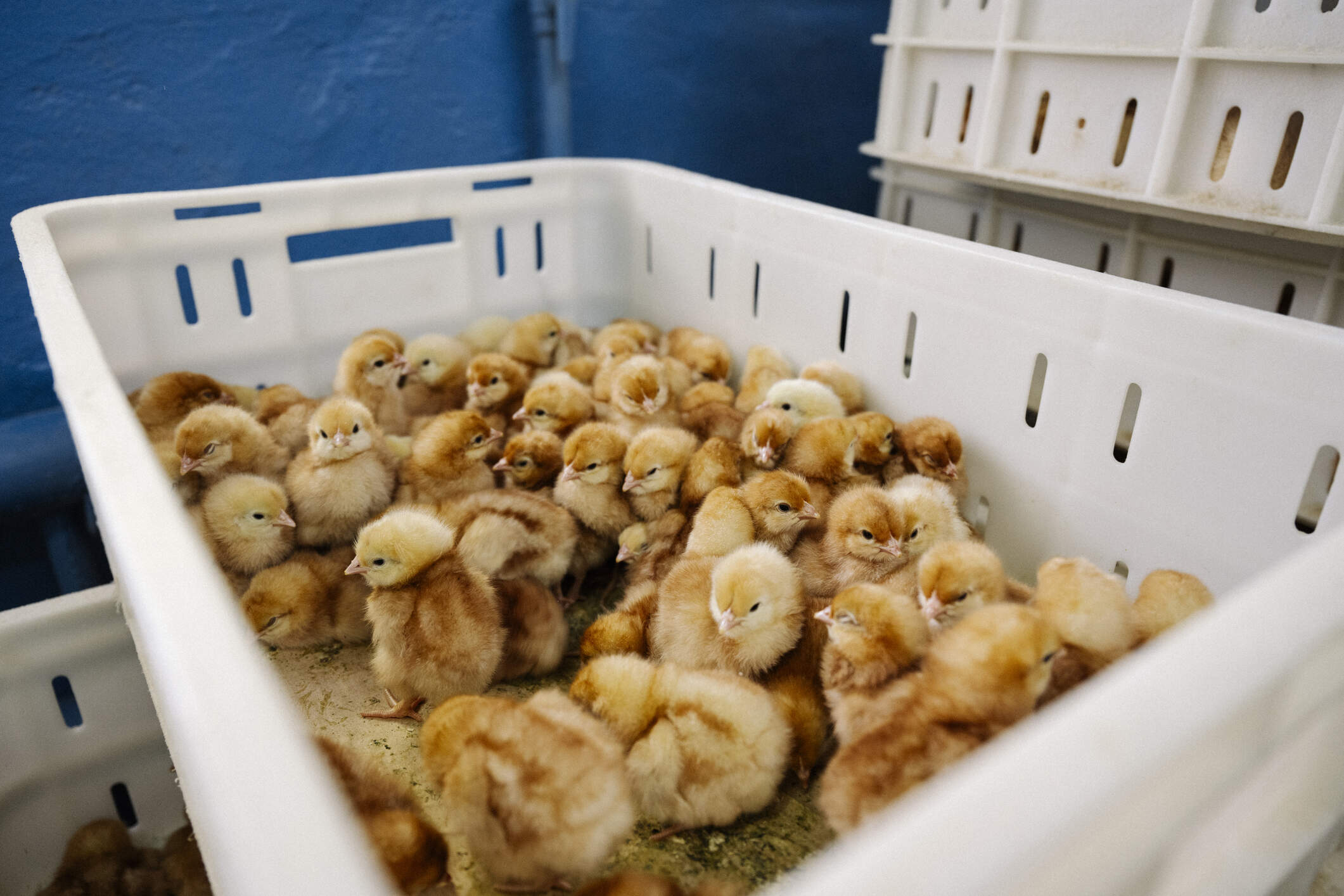
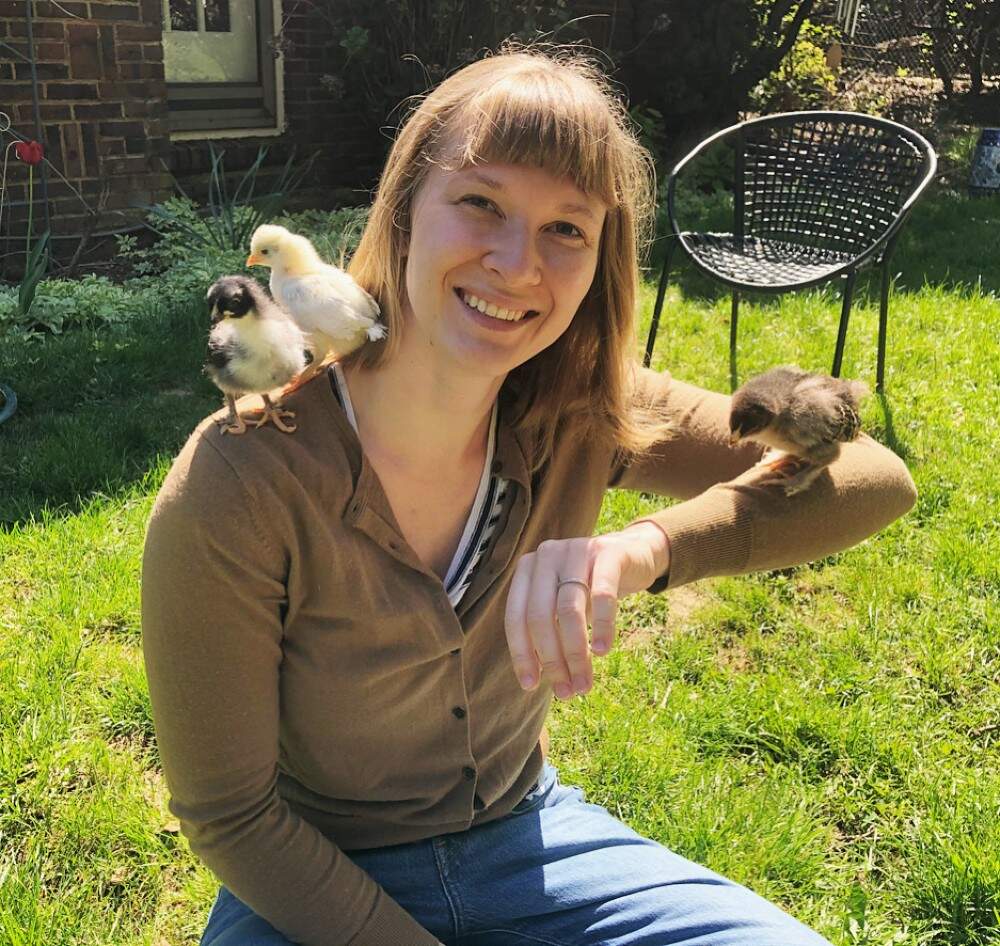
As soon as I planned my move from New York City to Portland, Oregon, I knew a flock was in my future. I bought my first chickens online in 2018. The “ladies,” as I’d come to call them, hatched at a hatchery, were sorted into boxes, shuffled onto mail trucks, and came to my local USPS office the next day. I was at the post office as soon as it opened, ready to collect my cheeping package and take my flock home.
I did this again a few years later, in 2020, when I was ready to add to my flock. My chicks — all females of different breeds and colors — arrived healthy and on time. Yet since that last order, I’ve come to believe it’s time for the century-old practice of shipping live chicks to end.
While homesteaders and small farms have always had chickens, as I detailed in my book "Under the Henfluence," they’ve gotten more popular as backyard pets. Eleven million U.S. households now have chickens, with demand so high that hatcheries, places that breed and hatch chicks by the hundreds of thousands, keep selling out.
As early as February, chick season will begin, with baby birds criss-crossing the country on the way to their new homes. Between postal delays, weather events, and the fact that these are day-old animals, it’s likely that at least tens of thousands of these baby birds will die before reaching their intended destination.
If you’ve never owned live chickens or other poultry, you may not be aware that every year, millions of baby birds are sent through the U.S. postal service. Due to a quirk of bird biology — chicks absorb their egg’s yolk before hatching, providing them with enough nutrients to get by for a little while — they don’t need to eat or drink for up to 48 hours after hatching. This makes the business of sending them in a cardboard box possible.
The practice of shipping chicks through the mail began in 1918 with the promise that chicks would only be shipped if they could reach their destination within 72 hours. That is a promise the USPS can no longer keep.
In the 2025 chick season, 12,000 day-old chicks were left in a USPS truck for three days without food and water. Four thousand of them had died by the time they were discovered. Unfortunately, this incident isn’t an anomaly. In 2020, postal delays in Maine resulted in the deaths of roughly 5,000 chicks. In 2022, 4,000 died after being left on a Miami runway. And these are just a few of the cases that made the news. Every year, winter storms result in mail delays that prove fatal for mailed chicks. On a smaller scale, hobbyists, farmers and farm stores often receive chick orders where one or more have died in transit.
The idea of treating living creatures like luggage would be reprehensible if it weren’t so deeply ingrained. If we’ve been doing it for over 100 years it must be okay. Right?
When the USPS added baby chicks to the list of things that could be sent through their brand-new, parcel post service in the early 20th century (bees and “harmless” cold-blooded animals are also allowed), hatcheries opened up across the country. Today, over 100 years after this custom began, mail delivery is almost inescapable if you want backyard chickens. Order chicks online? They’re shipped to your house. Even the chicks at your local farm store probably came from hatcheries that shipped them to the store via priority or express mail.
But in the last few years, things have changed. To save money, the USPS continues to slow down service. The Postal Service doesn’t keep records of how many animals are shipped through the mail (or die while in transit), but people across the country who regularly order chicks have noticed an uptick in shipping time. Anecdotally, delivery issues are common. One farm store manager said chicks had been arriving not in 72 hours but five days, surviving without food, water, or heat in the back of a truck as best as they could. Backyard chicken groups on Reddit are full of similar stories. People expecting a box full of cheeping animals are being handed silent parcels. They open them anyway, just in case there are any chicks to save.
And slowdowns aren’t the only threat to animals in transit. Despite the USPS semi-official motto that “neither snow nor rain, nor heat” will keep workers from delivering the mail, climate change and the ensuing major weather events impact delivery times. Post offices close for maintenance issues, power outages and whenever conditions become unsafe. During the 2019 polar vortex, mail was suspended to parts of 10 states. During Hurricanes Helene and Milton, the USPS closed 329 postal facilities in Florida. During the Los Angeles fires, mail was rerouted to facilities outside of evacuation zones. A GAO report found that over 10,000 USPS facilities are in the path of potential floods, storm surges, and other weather-related disasters.
While some chicks still arrive safely at their destinations, the shipping issues have gotten bad enough that some smaller hatcheries now only sell to local businesses within driving range.
Delays, when it comes to live animals, are deadly. If I ever get chickens again, I won’t buy them from a company that sends them through the mail. Local farms and hobbyists often have chicks for sale. An even better option is adopting an adult hen (or rooster) in need of a home. After a century, it’s time to find a new way to get chickens to the people who want to raise them.