Support WBUR
Essay
Why doctors like me appreciate 'The Pitt'
John Carter and I started medical school the same year. It was 1994. Granted, he was in Chicago and I was in Galveston, Texas. He was fictional and I am real. But we still had a lot in common.
Every Thursday night I’d go to Phi Rho Sigma medical fraternity to study, then I’d stay for ice cream and “ER,” joining a pack of first- and second-year medical students crammed into the TV lounge, sitting on couches, floors and end tables. In that first season, we watched in awe with the hopeful inkling that perhaps we were witnessing something of what it meant to be a real doctor. We were naive early-career future physicians, deep in the drudgery of the basic science core classes: gross anatomy, physiology and biochemistry. That first season was exciting, offering a glimpse of our potential future. Unfortunately, my present was the acute awkwardness of John Carter, medical student. It was the familiar cringiness of combined inexperience and ignorance that I suffered daily.
By my third year of medical school, we still met for ice cream and “ER” on Thursdays, but there were fewer of us now that we were in the depths of our clinical training, drowning in 80-hour work weeks that left little time for television. I still went to the fraternity when I could, but now my classmates’ and my camaraderie was based not on hope but on derision. We’d watch each episode alert for falsehood, laughing at Carter’s never-ending trauma surgery sub-internship or the very idea of an ER resident performing a technically complex pulmonary angiography. It was the beginning of our cynicism.
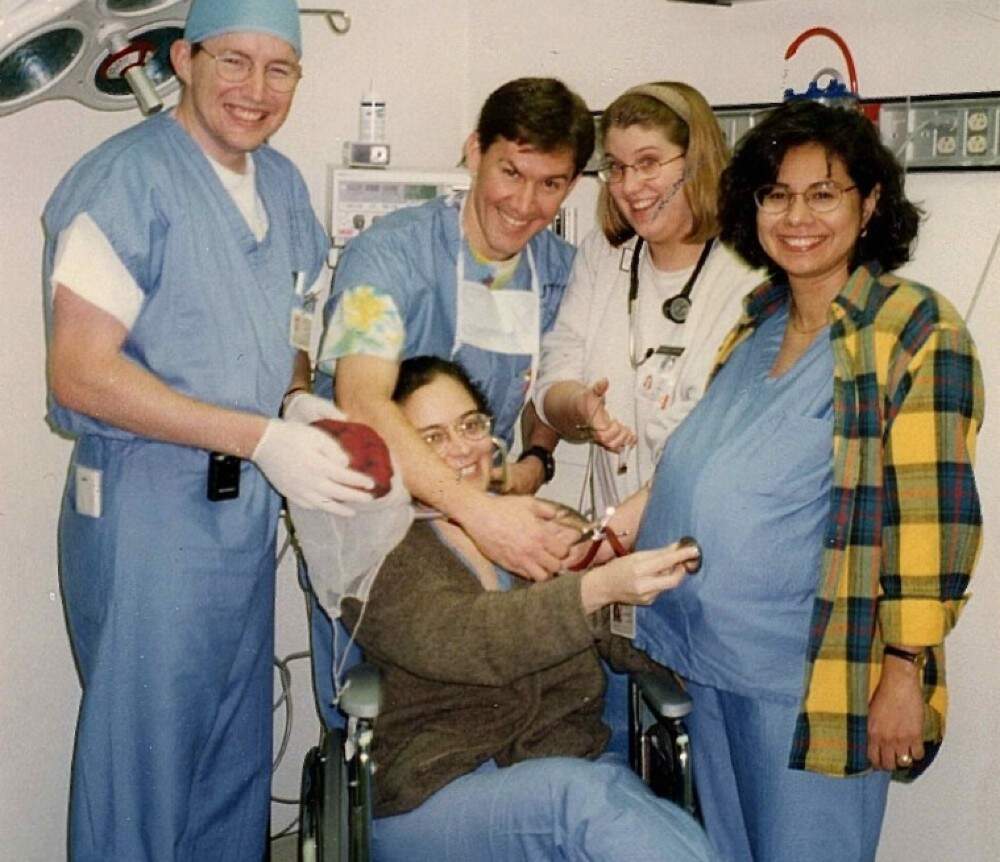
But John Carter grew up and so did I. I changed my initial specialty choice from emergency medicine to obstetrics and gynecology. I survived internship, the trial by fire first year of post-graduate training. I switched again to become a radiologist, a specialist who interprets medical imaging including CT, MRI, ultrasound and x-rays. Carter and I both gained skill, accumulated knowledge and experience, suffered the moral injury of the modern medical-industrial complex: patients that made too much money for Medicaid but not enough to afford “real” insurance; patients in crisis that we were unable to help because there were no psychiatric beds available in the entire state; necessary therapies that were skipped because the patient’s insurance wouldn’t authorize care; patients who thought their Googling trumped a medical degree.
And so, when I saw the first season of “The Pitt” advertised last January — as I was doing my usual swapping back from days to my overnight shift, necessitating eight hours of mindless activity to stay awake — I figured I’d stream it. I expected it would be full of the usual tropes and archetypes of every medical show, but I could binge the first few episodes in a single sitting, a night in which I had little hope of doing anything productive anyway.
Instead of being disappointed, I was delighted. In place of John Carter, we have Dr. Michael “Robby” Rabinovitch, but he’s essentially the same man, just 20 years on. He’s in charge now, a mentor, not a bumbling student. In his graying hair, depth of caring and simmering burnout, I can see myself. A lot has happened in 20 years — to both of us. I’ve passed from trainee to attending (a physician in charge of doctors in training), then to private practitioner. I’m now often the most senior person in the room. I interact with other physicians who were born after I graduated college. In both his dedication and fatigue, Dr. Robby reflects our aging process as physicians, the accumulation of experience, perchance wisdom, and the struggle to maintain our humanity in the face of the slings and arrows of our everyday practice.
We’re almost midway through season two now, and the show continues to be well done. The characters are all variations of the five people you meet in medical training, from competitive med students (“gunners” in medical parlance) to frosty attendings. The medical jargon is spot on. The patients and situations will be distressingly familiar to anyone who frequents an emergency room. There are deviations from reality, inevitably. The treatments are real even if the consulting specialist is understandably absent; it is not an interesting drama if every patient gets their definitive care from a physician who is not a main character. I still maintain that the absence of a recurring radiologist who can clash with the ER doctors in uncomfortable and confrontational ways represents a missed dramatic narrative opportunity (though in an earlier episode this season, a nurse lets slip that the new radiologist is a ‟hottie.” If that’s not Chekhov’s gun, I don’t know what is).
My husband chuckles at the fact that I still yell at the TV, shouting what to do next right before the characters do it and answering the attendings’ questions to the trainees before the screenwriters have. But it’s more than play-by-play commentary: The show allows me to give myself a pat in the back. Yeah, I still got it. (For example, in a recent episode, the intern performs a paracentesis on a patient with chronic alcoholism and takes 4 liters of fluid off his belly. I shook my head and said, “Those are rookie numbers.”)
But the thing that I like most about the show is the unflinching way it shows the odds that physicians are up against: antivax parents who have done their “research,” the gun violence that is the scourge of our society, the extrinsic pressure of hospital administration and, by extension, the insurance industry, the seemingly insurmountable problems of homelessness and drug addiction, the plodding encroachment of technology further eroding the doctor-patient relationship as every physician types on a computer while not looking at the patient. It’s all there.
The show will not fix any of this, but I improbably feel better as I watch. If Dr. Robby and his crew can survive this, so can I. I can keep showing up for patients, keep grinding, keep up with insurance requirements, keep up with hospital administrative demands. Keep my sanity. Keep my integrity and keep my hope. I can keep doing this.
So, to Dr. John Carter and now, to Dr. Michael Rabinovitch, thank you. It still feels good to be seen.