Support WBUR
Opinion
Making Boston's buses free is a bad idea
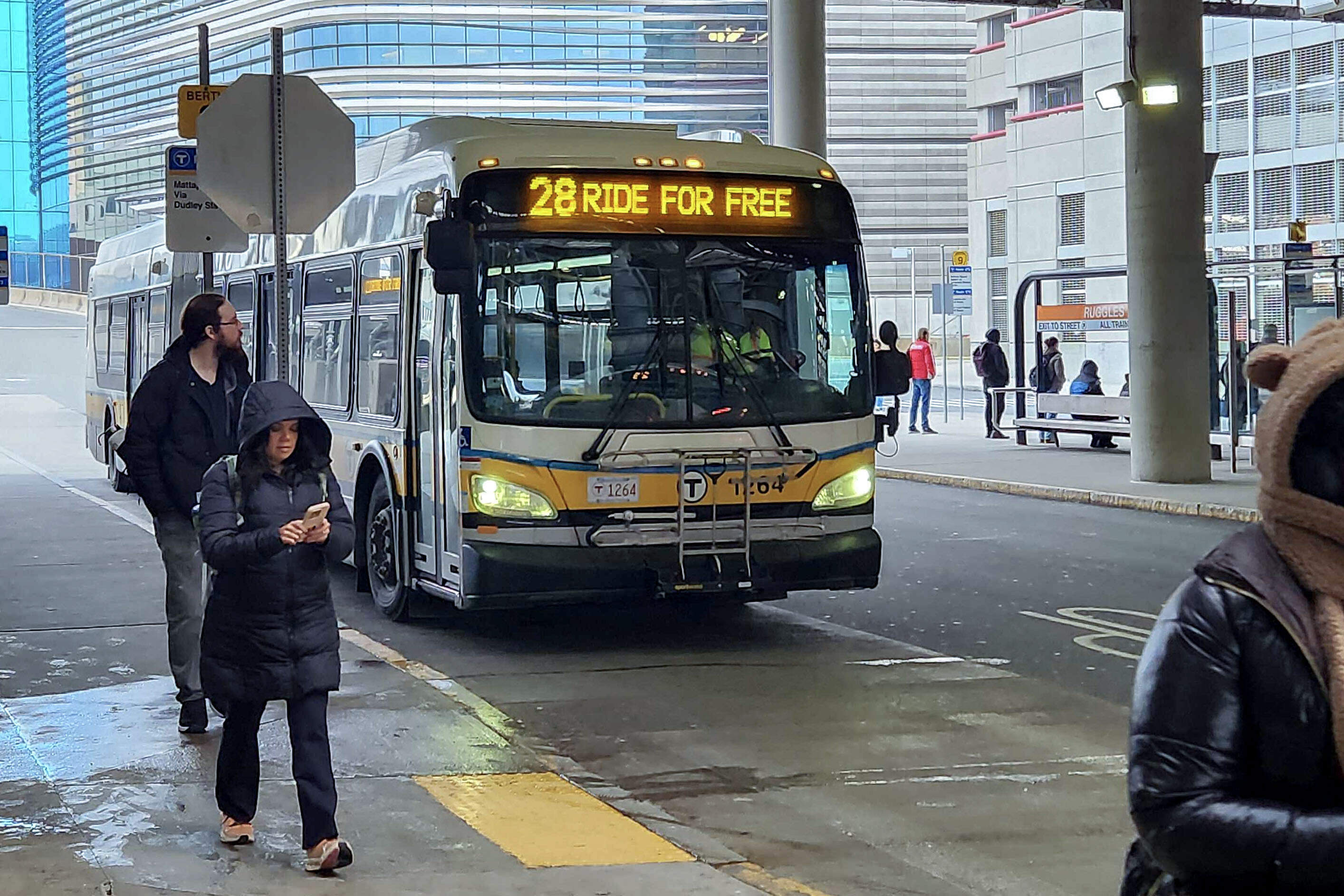
New York Mayor Zohran Mamdani’s proposed test-drive of free buses during this summer’s World Cup soccer games must negotiate an inconvenient pothole: an analysis from New York University’s Marron Institute of Urban Management that blew out the tires of fare-free transit. The implications reverberate beyond New York’s five boroughs, including in Boston, where I and many other car-free residents depend on the MBTA. And where the pilot of three no-fare bus routes (routes 23, 28 and 29) have been extended through June.
The NYU report argued that the $1 billion in foregone fares under Mamdani’s plan for permanent free buses in the Big Apple could buy 41 miles of new subway lines. Per the New York Times, “The added stations would be in overlooked parts of the city where new transit options could spur the construction of thousands of new units of affordable housing, the researchers said.” In other words, Mamdani is missing the forest of affordability for the trees of free buses.
In the last five years, the European tradition of fare-free public transportation has crept across the nation from Boston and Richmond, Virginia, to Kansas City, Missouri. But for just as long, many transportation experts here have thrown shade on such schemes. Today, Boston Mayor Michelle Wu’s enduring hope of free bus service remains stalled, with only the "free-three" available throughout the MBTA. This well-meaning but misguided idea should be put out of its misery.
The superficial appeal of public transit isn’t rocket science. “Affordability” is the buzzword du jour, and Boston’s "free-three" saved many riders more than $20 month in the first year after rollout, according to City Hall. Ridership on those lines surged by more than one-third in the first year of fare abolition. What’s not to like?
Well, for one thing, depriving the money-starved MBTA of fare revenue by making all buses free — which would cost between $72 million and $121 million — would be akin to putting a whippet on a diet. We who depend on public transit shudder to think what services might have to be cut if the T can’t treat its pre-existing fiscal woes.
Two, while I appreciate an extra $20 a month as much as the next straphanger, it’s a paltry down payment on “affordability.” The top-of-mind concerns when it comes to this issue are housing, health care, education and taxes — not a few bucks for the bus. The head of Boston advocacy group TransitMatters got it right when she told WBUR that if you’re really concerned about transit users, there are better ways to spend money.
"People need to know that they can rely on a bus to come, and that is going to be more important to them than how much they paid,” she said. In this winter of bus-slowing snow and wind chill temperatures in the negative double digits, this rider can only say: Amen. Her comment echoes how Jake Blumgart of Governing magazine once summarized expert dissent: “Essentially, with scarce resources, every dollar spent on free fares is one not spent on, say, more frequent service.”
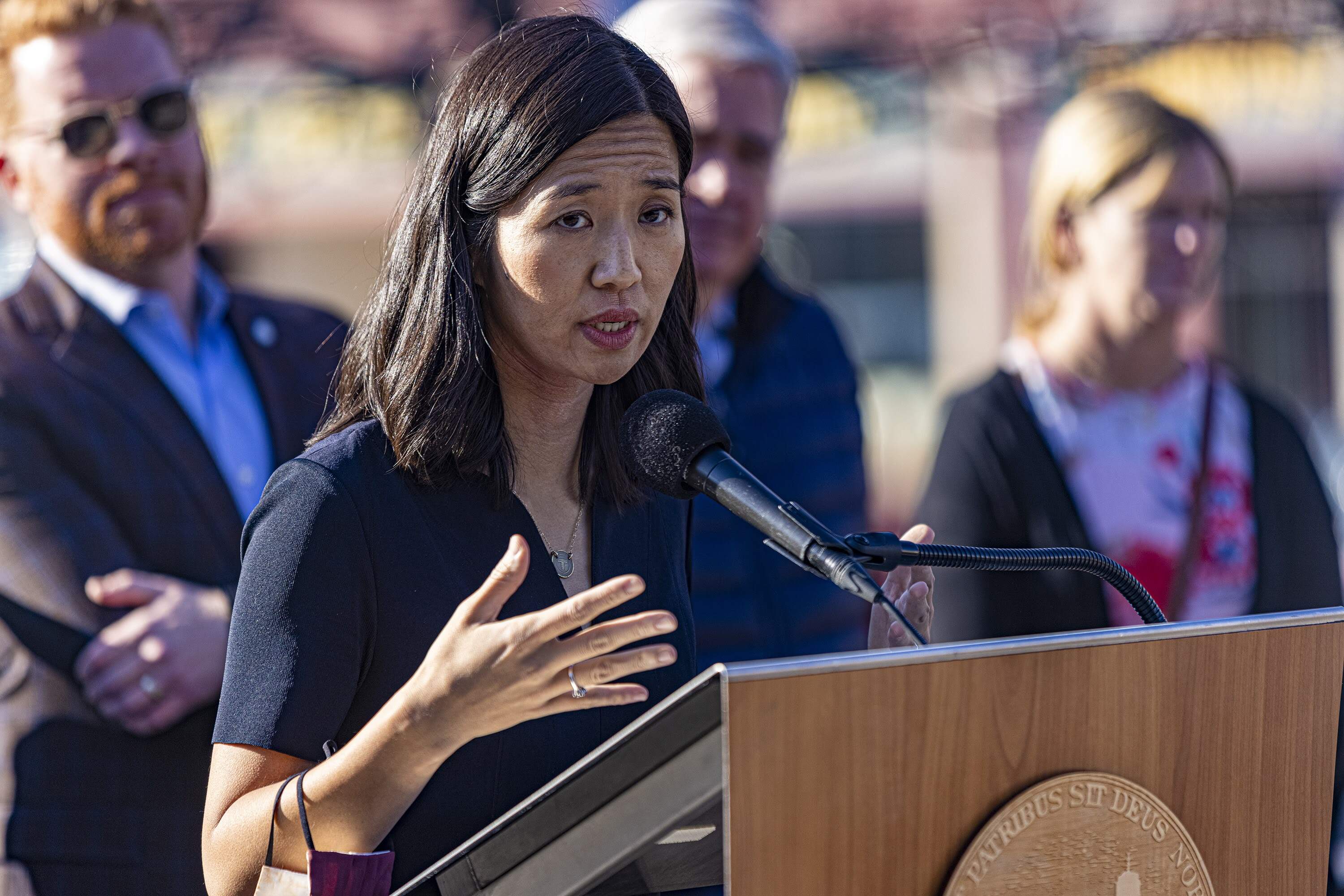
As a former city councilor, Wu brought deep knowledge of municipal government to the mayoralty. She has been a serious, thoughtful leader, who stands against the authoritarian slime oozing out of Washington, D.C. But the NYU report is the latest evidence that the passage of time hasn’t been kind to spare-the-fare advocates.
I’m grateful that free buses in Boston have stalled like the #1 in a snowdrift. I frequently ride that particular bus, the system’s slowest, according to TransitMatters. Such poor performance can’t be attributed solely to the T; road congestion and heedless auto drivers share the blame. But sub-par bus infrastructure is also a culprit, and the consequences, notes the Globe, are “slow and sporadic bus service for some of the city’s least-privileged communities.”
The MBTA, responding to TransitMatters’s report, says improving bus service’s speed and reliability are their top priorities. It and the city have vowed to expand bus lanes, a more commendable policy than free-fare fixation.