Support WBUR
Essay
Watching my daughter chase her Olympic dreams at high speed
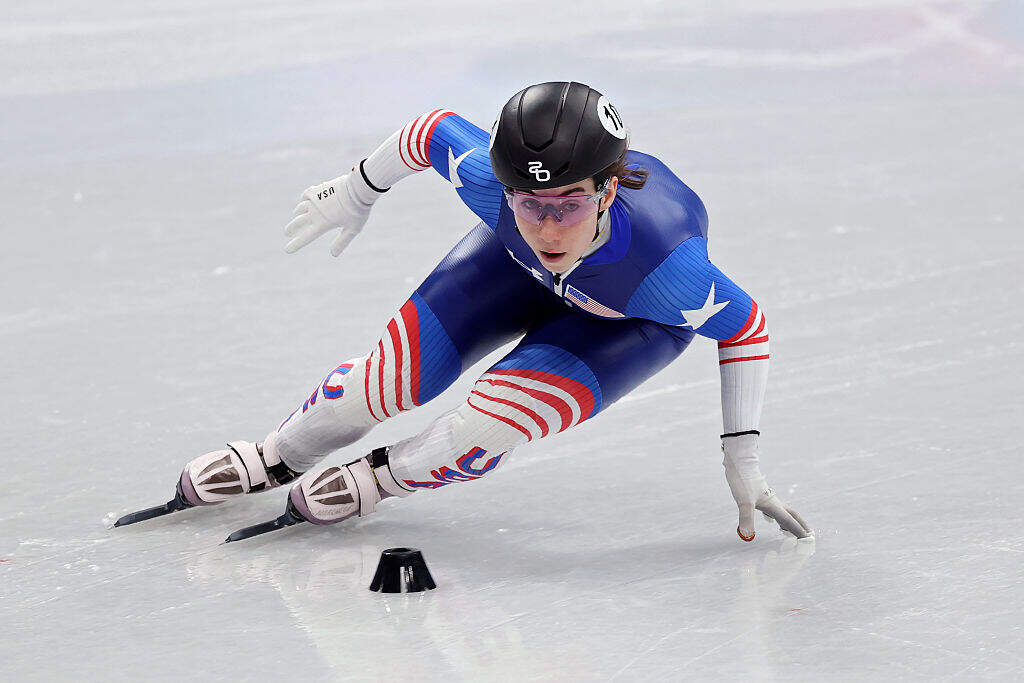
Still reeling from the ups and downs of the 2026 Milano Cortina Games (and missing that pistachio paste they put on everything), I can’t help musing that you never know where your children might lead you. Certainly my scientist husband and book-loving self never suspected we’d have a daughter who would lead us to the Winter Olympics.
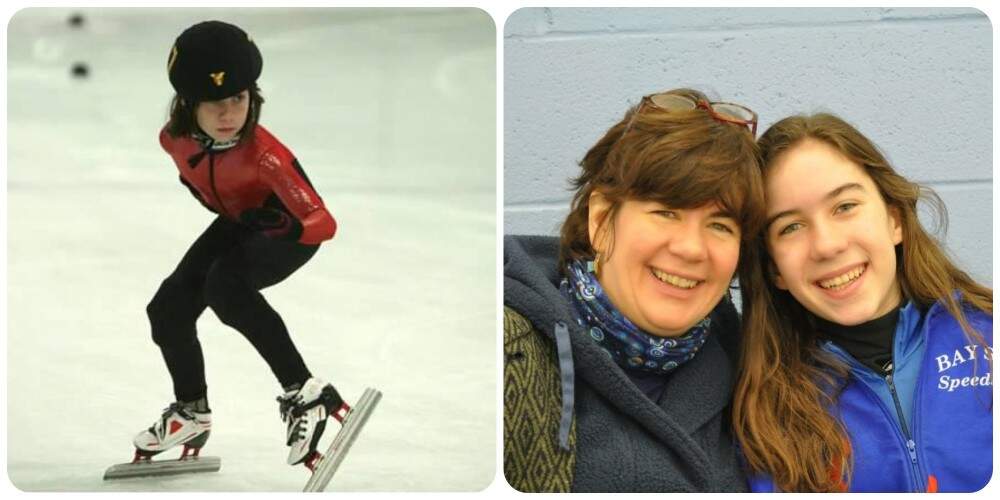
Growing up in Buffalo, I reveled in snow, but more for sipping cocoa by the fireplace afterward than pushing my body to extremes. Raising children outside Boston, I delighted in pulling my youngest around frozen ponds for fresh air and exercise. Julie craved the wind in her face and the sensation of speed, so on a lark I signed us up for a learn to speedskate class.
For me, it was a fun escape from routine and an invigorating challenge to learn something new. For Julie it was the start of a long love affair. Entering the arena, we would slip into the restroom to change out of our street clothes, donning matching spandex skinsuits, helmets, cut-proof gloves and black Bay State Speedskating jackets embroidered with our first names. When we emerged, I was no longer Mom, no longer in charge, no longer in control.
Weekly jaunts to the local club turned into weekend meets and then travels to corners of the country and world we might never have seen otherwise. I did plenty of driving, but it was passion that drove Julie to put in the work — training day after day, year after year, striving to cut another split second off her personal best. It was not pursuit of a medal but pure joy in the process that kept her persisting, propelling her to the start line at the 2022 Olympics in Beijing and then the 2026 Olympics in Milan.
Like a letter from Hogwarts, Julie’s invitation arrived to join the U.S. National Short Track Team. Though she was an honor student whose parents both had advanced degrees, she would complete college part-time. Her heart raced, out of anyone’s control, to that short track rhythm. The team’s base at the Utah Olympic Oval swarmed with athletes warming up and cooling down — jumping, kicking and squatting on the indoor running track. The track encircled a long track ice oval, which encircled two Olympic-size rinks like twin nuclei in a hyperactive cell. Julie had found her happy place.
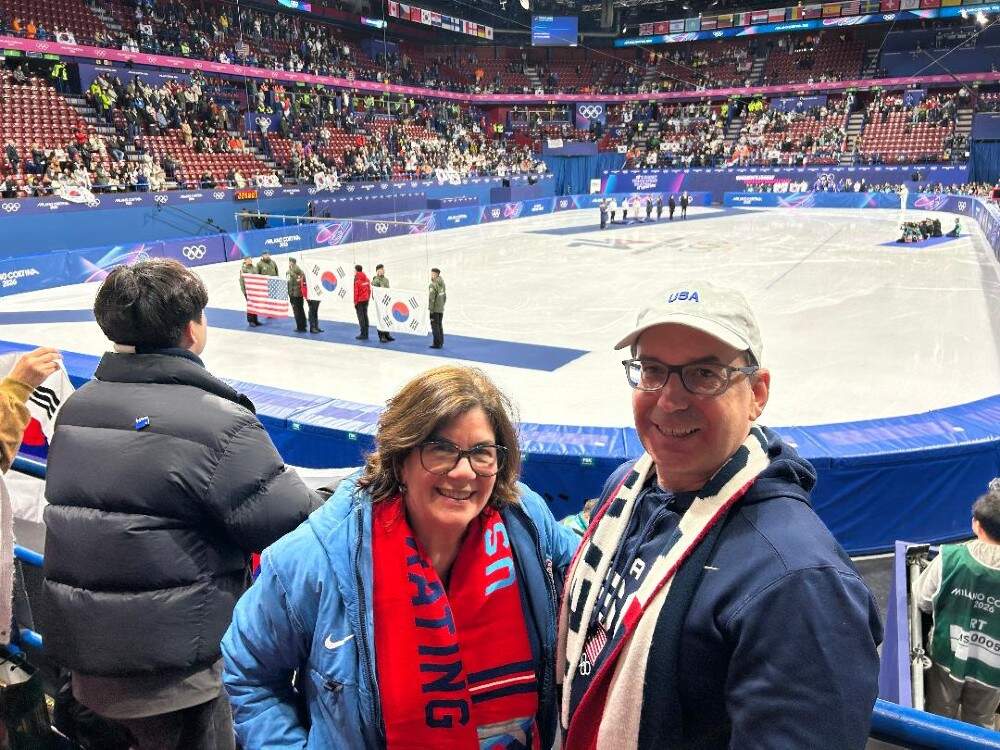
In Beijing, spectators were banned from the Olympics due to Covid, but in Milan we filled the stands with extended family and friends, hooting and hollering for Julie. Between skating events, we strolled the terraces of the myriad-spired Duomo, gazed on Michelangelo’s unfinished Pietà and indulged in aperitivo, limoncello and gelato.
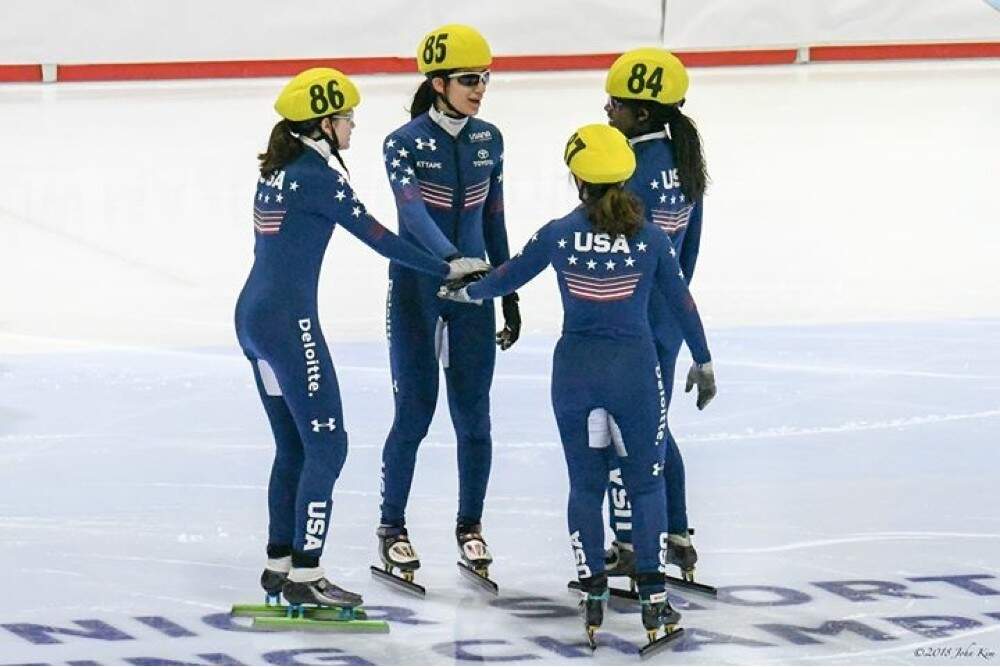
Anything can happen in short track speedskating. Beyond strength and nerve and quick strategic thinking, skaters must stay balanced — pushing their limits but maintaining control. They must also balance on razor-thin blades, attached to boots that elite racers have custom molded to their feet. The tight fit supports their ankles as they lean into the ice at sharp angles.
Parents too must stay balanced — rooting for our kids’ dreams but remembering they are larger than their dreams. Like poet Walt Whitman, we all contain multitudes. Watching my little girl on the world’s largest stage, colorful flags hovering overhead and celebrities like Apolo Ohno sitting nearby, I knew only she could control the tuck of her hips, the arch of her back, the push off each leg. Still, I did what I could. “Go Julie!” I shrieked as she exploded into each race. Let her skate with grace and control, I entreated silently, let her finish safe and happy.
As in life, there are many ways for even the most skilled among us to fall — leaning too far (“booting out”), planting a foot slightly off (“catching a blade”), bumping blades with another (“shared responsibility”). Obvious arm blocks aside, there are also many ways to get disqualified — twitching slightly before the starting device fires (“false start”), changing tracks in a way that cuts off a competitor (“outside-to-in, inside-to-out”), trying to squeeze too aggressively around the corner (“late pass”). Sudden stumbles by top-seeded skaters clear a path for underdogs who stay on their feet. That’s the unpredictability of short track, and what makes it such an adrenaline rush to watch.
People ask how we can stand this crazy sport. It’s addictive, especially if you’re already hooked on speed. But beyond the sheer thrill, it’s the essence of life. Anything can happen, and there is always hope. Things go awry. The key is to take a breath, pop back up and keep trying.
Top skaters give their all to what they can control. They learn to shrug off the rest — missed referee calls, lopsided heats, ailments striking at the worst possible time. They learn to tune out armchair critics, listening instead to the voices that matter, those they know best, including fellow athletes whose respect they have earned over years of sharing the arena.
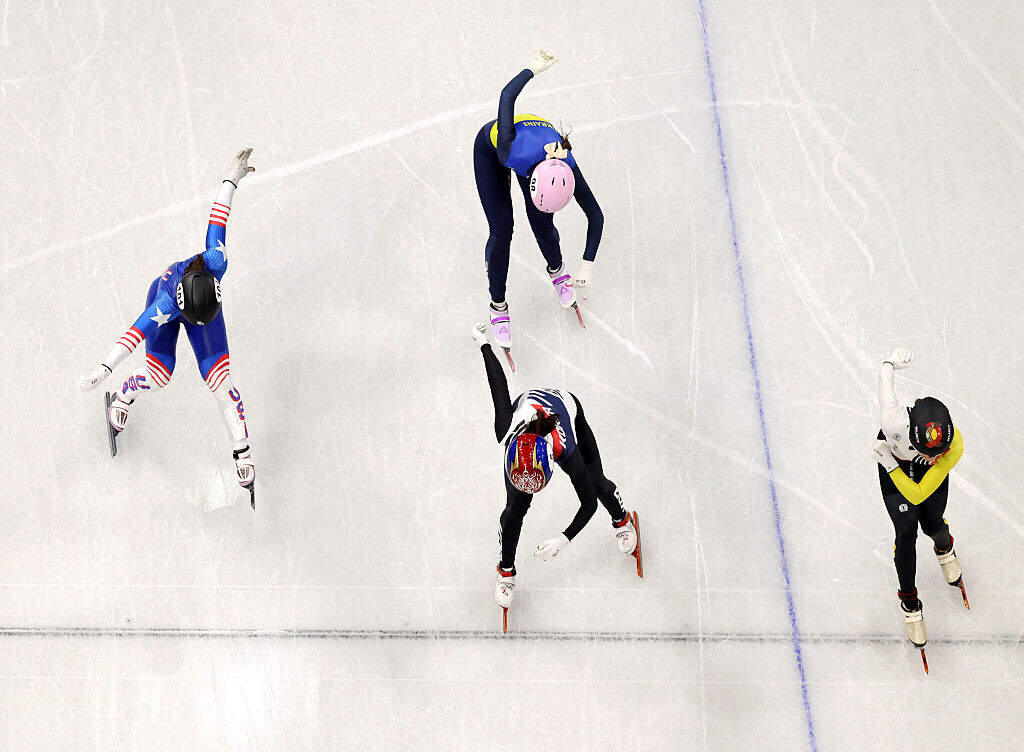
Life is not always fair. But it sure makes for an interesting journey. Short track offers a highway complete with scenic straightaways, sudden swerves and high-speed chases. Pursuing the world’s fastest human-powered sport, every generation keeps breaking past legends’ records, even when they never win a medal. Today’s leaders make it look easy as they race around at 35 mph, positioning their bodies just right and tensing their core to harness centrifugal force.
The final short track event of the Games included the greatest up and the greatest down. Three skaters collided in the 1500-meter quarterfinal, and one of their blades accidentally slashed another’s face as she spun out of control, blood spattering the ice. Referees stopped the race while EMTs stretchered the injured skater out of the rink. Later, after stitches, she would post online sending love to her rival skaters, asserting that no one was to blame, that they all know the risks every time they step onto the ice.
Moments after that scare, in the 1500-meter final, Julie’s dear friend made it to the podium — the first ever American to medal in that event. As she hugged her team and whooped for her pal skating a lap with the USA flag, I could see Julie’s smile beaming across the rink. My heart raced to her ups and downs.
Julie and her teammates take my breath away every time they step to that start line. They lead me on a wild ride with every lap. When they cross the finish line, whether first or last or in-between (often separated by mere hundredths of a second), they leave me inspired to pursue my own dreams — to take risks and rise to new personal bests. I could not be more grateful.
Anything can happen, and there’s always hope.