Support WBUR
Commentary
The trouble with using technology to enforce traffic laws
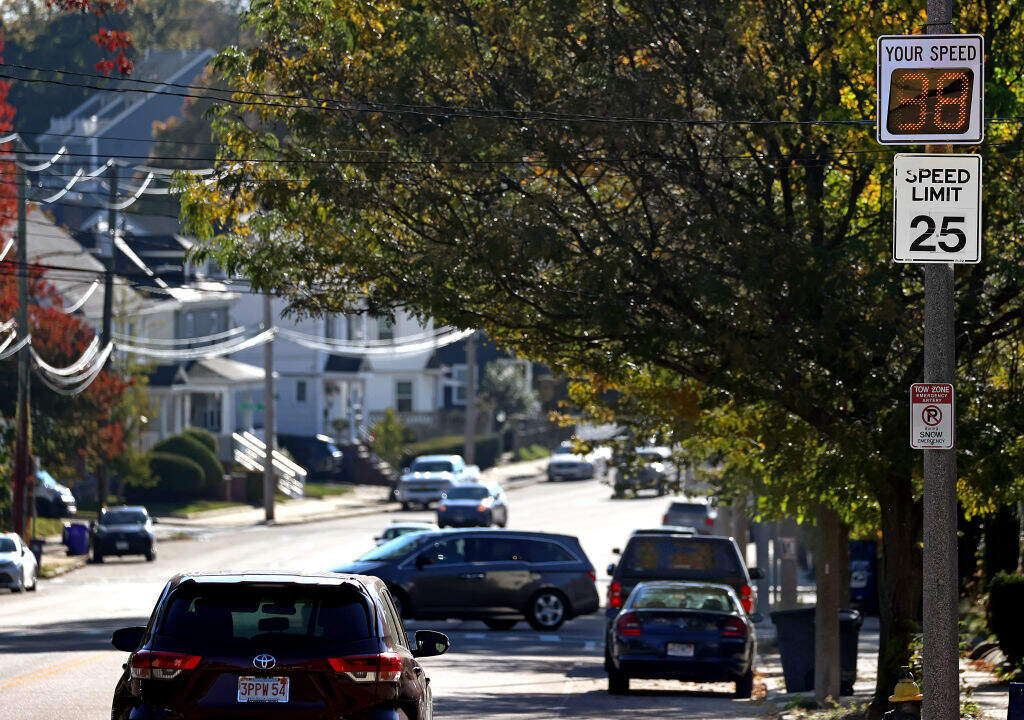
Gov. Maura Healey has proposed allowing cities to deploy speed cameras for the first time, specifically in school zones and construction zones. Pending legislation on Beacon Hill seeks to expand automated enforcement even further, including red light cameras and other surveillance systems that are not limited to sensitive locations. But before we turn on the cameras, we need stricter guardrails and stronger privacy protections so we don’t create more enforcement disparities or trigger unlawful deportations.
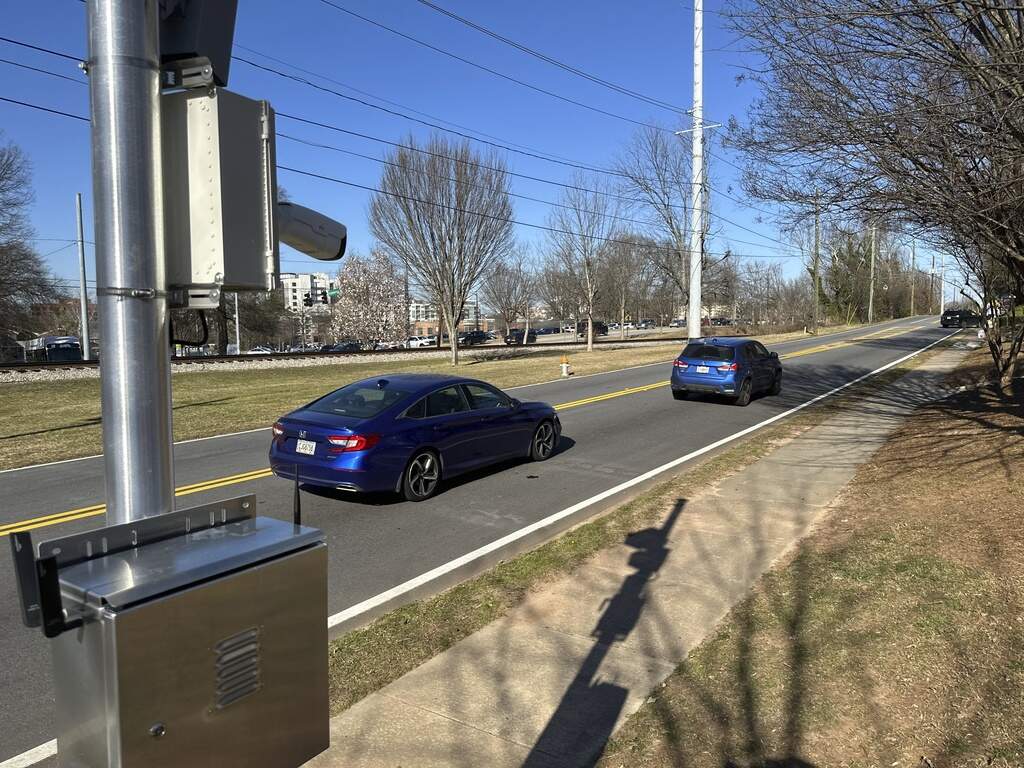
Speed cameras automatically detect speeding cars, photograph license plates and help generate citations. Red light cameras use similar technology to detect when a car enters an intersection after the light has turned red, capturing the license plate to generate citations. The technology can be fixed, such as red-light cameras at intersections, but speed cameras can also be mobile or use point-to-point systems that track speed over distance. At least 19 states generally allow this technology to help reduce speeding and improve road safety. But the technology is not discrimination-proof.
Massachusetts has well-documented racial disparities in traffic enforcement with data showing that Black and Latino drivers are more likely to be searched, criminally cited and arrested than white drivers. Greater reliance on automated enforcement systems would likely make these disparities worse because they will lead to more contact with the legal system, more fines and more debt. This compounds the same complex problems that over-policing has long produced for low-income people and people of color, especially those living in public housing.
Using data from Missouri, researchers confirmed “that local budget stress is associated with higher citation rates” along with “an increase in traffic-stop arrest rates.” Experts have described this alarming phenomenon as “policing-as-taxation” or policing-for-profit.
Here’s what happens: Automated enforcement creates a revenue-generating trap that disproportionately harms low-income communities, especially people of color. Decisions about where cameras are placed, how fines are structured and how penalties escalate can magnify persistent disparities. Eventually, municipalities can become dependent on citation revenue, incentivizing over-ticketing.
One of the best assessments of revenue-driven enforcement came from the U.S. Department of Justice, which investigated the City of Ferguson, Missouri, in the aftermath of the 2014 fatal shooting of Michael Brown, an unarmed Black teenager. In a damning report, the Justice Department found that “City officials have consistently set maximizing revenue as the priority for Ferguson’s law enforcement activity.” The probe documented a municipal system where police officers and court officials raised revenue through tickets, fines and fees. Ferguson shows that money can distort policing priorities. This tension sets the stage for the community distrust that contributed to Mr. Brown’s death.
Massachusetts is not immune to those dynamics, which can lead to a form of redlining — mobility redlining — that sets the tone for who is welcome, or targeted, in certain neighborhoods. Based on 2021 and 2022 data, we already have a list of places where the odds of drivers of color being stopped during the day (when race is visible) is more likely, including Hanover, Ludlow, Southwick, Westwood and Wrentham, among others.
Before any automated systems are installed, every jurisdiction should be required to perform independent equity audits, with real consequences for disparities. This is particularly important for places with a history of discriminatory enforcement. In order to protect civil rights and residents’ privacy, the state must have meaningful guardrails for speed cameras.
Those guardrails should include caps on fines and fees tied to the original infraction, as some infractions stem from an inability to pay and disproportionately impact low-income people. We should also have strict limits on late penalties and other costs that accrue over time to avoid policing-for-profit practices that trap communities in cycles of debt or bankruptcy. And finally, the state should provide accessible information about automated systems for drivers in all languages relevant to the Massachusetts Registry of Motor Vehicles.
There are also serious concerns about privacy, surveillance and immigration enforcement. Federal authorities have aggressively sought information from other federal agencies, including the IRS, as well as state and local police, to track both immigrants and people protesting immigration enforcement.
Any automated speed enforcement program must expressly include strict data-retention limits and explicit prohibitions on sharing footage or data with federal authorities. Without these safeguards, local traffic infrastructure could be repurposed for other efforts, many of which violate our civil rights.
Since tickets may lead to court appearances, Massachusetts must also adopt safeguards that allow people to contest tickets remotely. Tele-court is crucial because ICE trolls courthouses. No one should have to appear in person to challenge a citation. Virtual proceedings make legal hearings more accessible and help prevent predatory schemes that may emerge if ticketed people are coerced into paying fines to avoid running into ICE.
Without stronger legal safeguards, speed cameras will open a Pandora’s box of risks: greater hardship for low-income drivers, deeper racial disparities for people of color, the persecution of immigrants and a disregard for civil rights. Before we trust any automated system, let’s ensure humans create meaningful safeguards for every resident of the Commonwealth.