Support WBUR
Essay
After cancer, no place felt like home. A cardinal helped me find my way
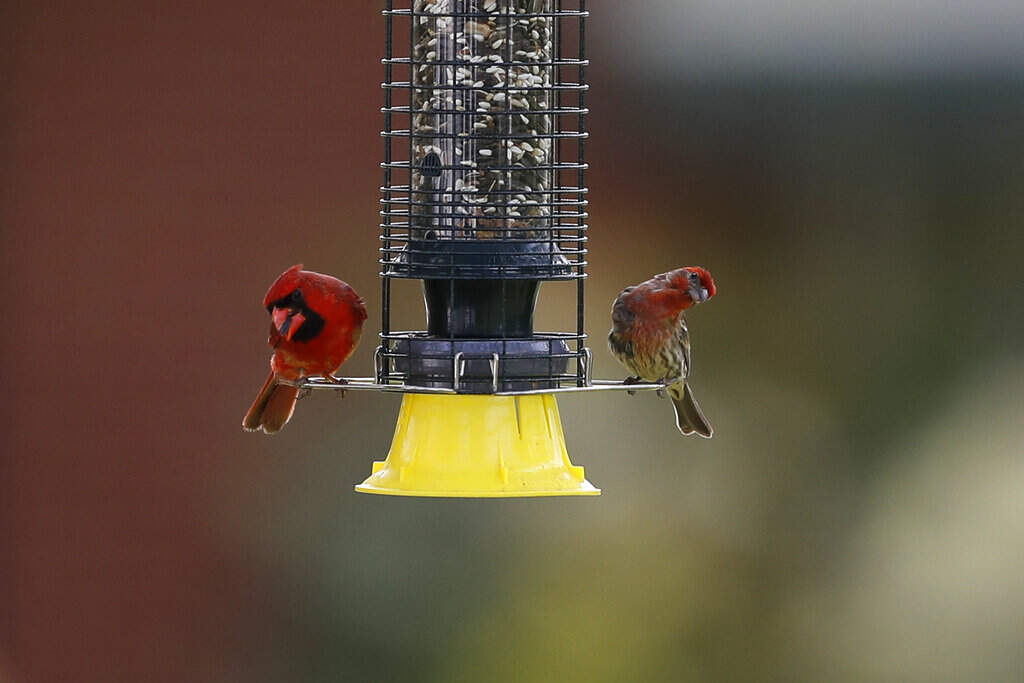
The note from our super was clear: the bird feeder on our back fire escape — the one I’d nearly fallen out the window to hang from our century-old Somerville, Massachusetts building — had to go. I refused. The feeder had become my daily meditation and a sanity check since my remission from lymphoma nearly two years prior, at age 25.
Countless birds flocked to the adjacent tree, and each day the same scarlet male and tawny female northern cardinals perched on a branch outside my bedroom, even in winter. At dawn, the male would fish for a sunflower seed and feed it to his lady. “Just like us,” I’d whisper to my partner, Quinn.
We’d dated since college, but cancer knit us together. He too had fed me, bathed me, held me under his wing as I recovered. We were paired for life, like Mr. and Ms. Cardinal.
As the April sun melted frost on the Charles and eager blooms pushed toward the light, Quinn and I emerged from our cozy winter burrow, too. But instead of finding a sense of renewal, everywhere now seemed to trigger me. The donut shop in Medford where I’d stomped across ice for a chocolate glaze post-diagnosis, the drive past Fenway to the hospital. Each time I crossed Harvard Bridge, I returned to the frigid December day Quinn held me as I told him I was lucky to have had a great love in my short life.
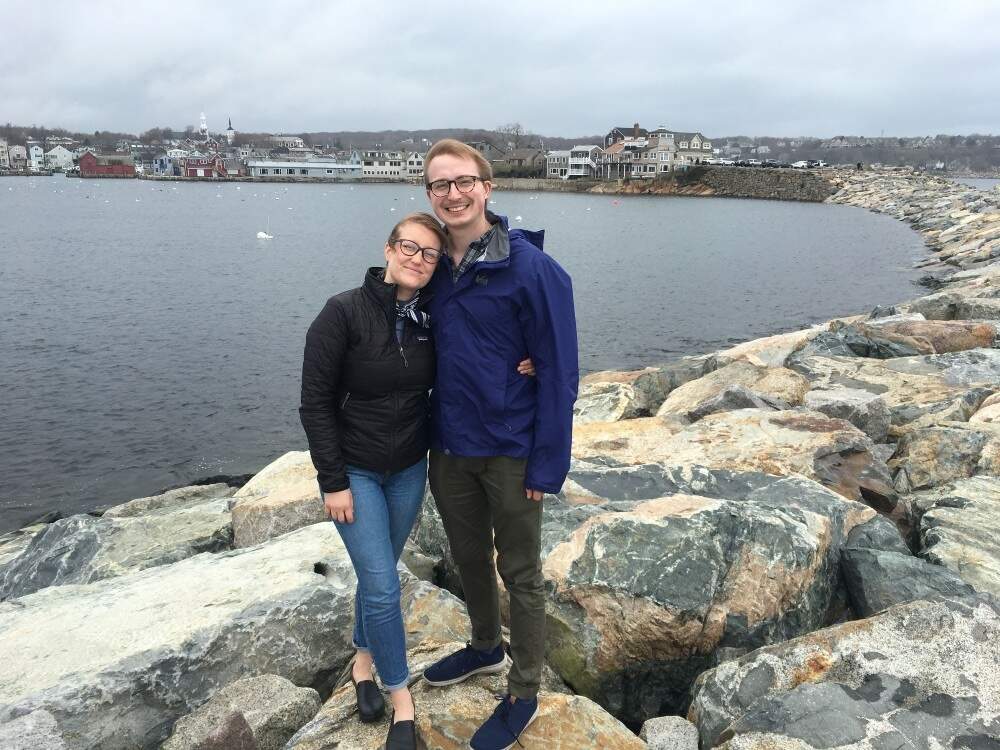
Though my body had healed, my mind had not. Boston felt haunted now. I was locked in a battle with post-cancer PTSD and had convinced myself the city I’d previously adored was somehow to blame. At home, I’d come to rely on the bird feeder, each staccato “chirp!” a reminder I was alive. Then a second, sterner note appeared: Remove the feeder now! It attracts rats. This time, I reluctantly complied.
With the feeder gone, our birds vanished, along with my faith that Boston could still feel like home. I accepted a federal job, and Quinn and I prepared to relocate to Washington D.C., a city in which I’d lived before illness. Back then, D.C. had been my dream: the hustle and grind, the many ways to network and stand out. But as a cancer survivor, all that seemed pointless. Now I only wanted to live, love my people, and do it well. A new start felt like the only way forward.
As we pulled the U-Haul up to our rented brick rowhouse, I nudged Quinn. “It’s not like it was,” I murmured. Naked trees quivered in the late-March chill. The street was grey and devoid of the snowbanks that had infuriated and charmed me in Boston. Worst of all — there was hardly a bird in sight. Quinn responded gently: “I think what has mostly changed is you.”
With the feeder gone, our birds vanished, along with my faith that Boston could still feel like home.
He was right. If the echoes of cancer followed me in Boston, in our new home my past self — a person I’d grown to see as shallow, naive to her looming illness — lurked around every corner. I clenched my teeth, determined to ride it out this time. I hung the bird feeder near my home office and watched as a cardinal returned to nest in the ancient tree just outside. Quinn and I began to build a life in D.C. We found our people and hosted sticky summer picnics on the National Mall. I began each day with a peaceful cup of coffee at the feeder and felt the birdsong begin to chip away at my discontent.
When I returned from work to a red dot sprayed onto our tree, I immediately called the city and begged to keep it. “You have rot, honey. The owners want it out,” the dispatcher said. They replaced our gnarled giant with a sapling. The birds came less, and my hope to embrace D.C. disappeared with them. Time slogged, and Quinn and I argued about whether to move again. When we tensely agreed to stay for four or five years, then move to California, where we’d met, I began the countdown that day.
But this time, while I waited, I began therapy. After a few sessions, I stubbornly saw Quinn had been right yet again. I was so desperate to find a reason for my unhappiness, I blamed it on where I lived. But my pain had more to do with my trauma than my location. I could never be at home in D.C., or anywhere else, if I wasn’t at home within myself.
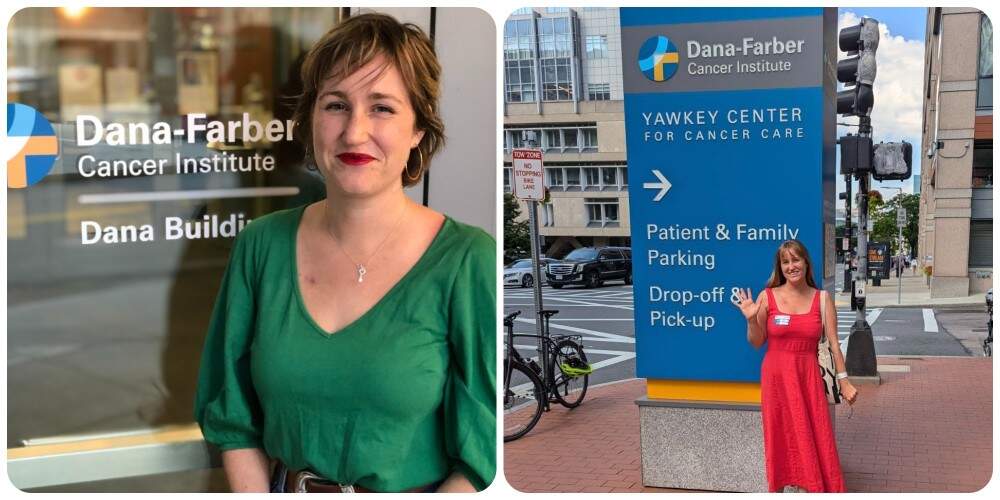
I started to explore how to love myself no matter where I was. Pottery, gardening, yoga, and biking along the Potomac helped reveal a genuine post-cancer version of me. I liked her. Quinn and I got married and began walking deeper into Rock Creek Park, a dense urban forest full of birdsong. The more I healed, the more my relationship to D.C. healed, too.
Four years have passed, and while Quinn and I still plan to move cross country, I stopped my countdown somewhere along the way. I already feel nostalgia for this place where we built a community and became newlyweds, where I faked not only my love for the city but my for my own self as well — until both became real. When we go west, the feeder will come with us, but less as a crutch and more as a reminder of comfort and consistency in a time of change.
Recently, when a once-in-a-decade snowstorm shut D.C. down, Quinn and I bundled up in our old New England gear and hit the unplowed sidewalks. “A little like Boston,” I observed, my face upturned to the hushed, crystalline flakes. Quinn nodded. I could carry the cities I had lived in with me, and grow to reconcile with — even love — the versions of myself I’d been in them. I could accept that not all change is loss, that each city enriched me and challenged me, helped me see myself and the world with fresh eyes. I could do all that and still be present here, knee-deep in snow with Quinn, as we prepared to embark toward yet another unknown.
As we approached our house, a flash of red and a chirp sounded from a nearby tree. Mr. Cardinal flitted past just as we looked up.