Support WBUR
Cog's Weekly Newsletter
How rivers shape cities — and us
Editor's Note: This essay appeared in Cognoscenti's newsletter of ideas and opinions, delivered weekly on Sundays. To become a subscriber, sign up here.
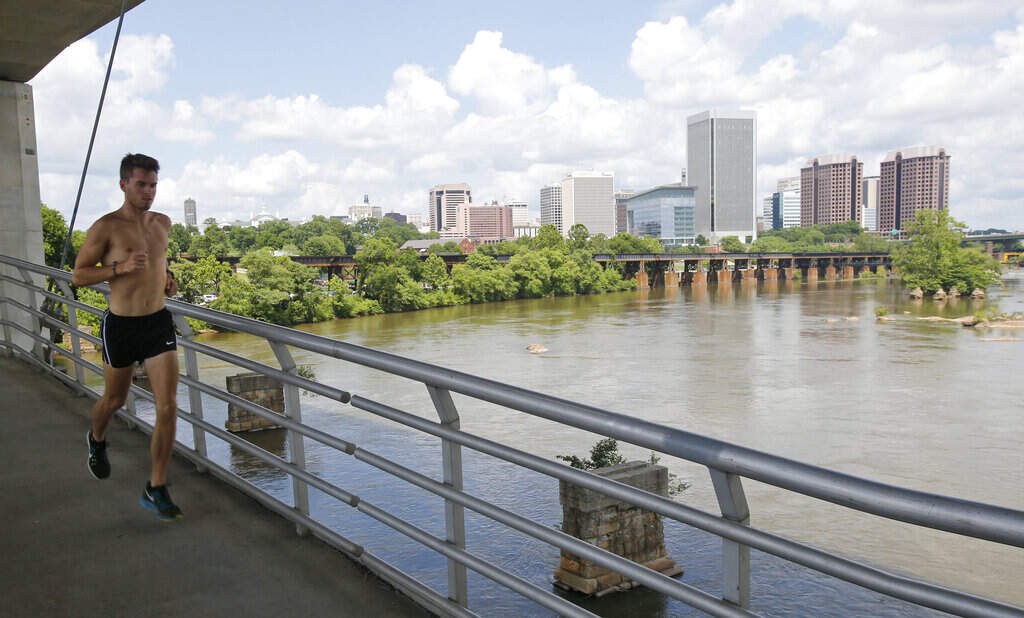
When I first moved to Richmond, Virginia, 25 years ago, the James River had a bad reputation.
The James stretches more than 340 miles from the Blue Ridge Mountains to the Chesapeake Bay, and runs right through the middle of Richmond. And because the James is so large, people thought they could dump human and industrial waste into it without consequence. (If you’re a resident of Boston, and a lover of the Charles and its “dirty water,” you can relate.)
I won’t go into the details here. Suffice it to say that before there was Love Canal, there was the Kepone disaster, named for a toxic, nonbiodegradable insecticide that a chemical plant in the nearby town of Hopewell dumped into the James River in the 1970s. It took decades of advocacy work, new regulations and improved wastewater treatment to restore the river to a place where people wanted to swim and fish.
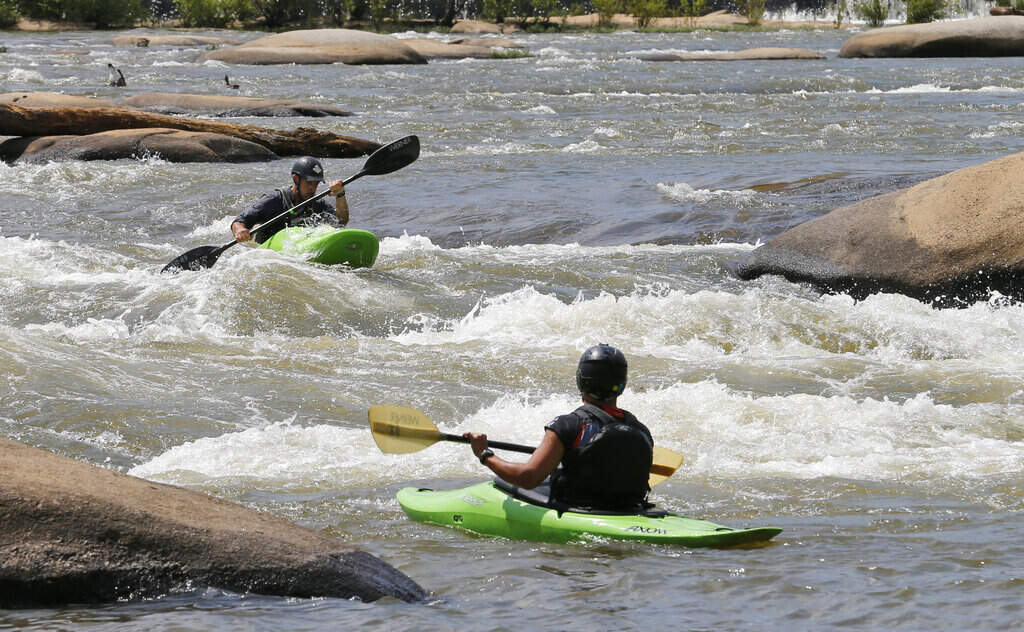
Today, the whitewater on the James — with its Class III and Class IV rapids in the middle of Richmond’s downtown — attracts rafters from around the country. People also paddleboard and tube on the James. On hot days, which we get plenty of down here, they wade into the water. In 2012, Outside magazine named Richmond America’s Best River town, and in 2019, the James was awarded the Thiess International River Prize, which recognizes “remarkable outcomes for rivers, river basins and their communities.”
But not every river poisoned by industry makes a comeback.
Before the Clean Water Act, before the EPA outlawed the production and use of Kepone in the U.S., cities took a different approach to rivers filled with pollution and pestilence. Starting in the 19th century, urban planners and engineers did what we’ve all been guilty of doing with our problems: They buried them.
I knew nothing about any of this until Jan Donley pitched us a story about the unburying — or “daylighting” — of the Saw Mill River in Yonkers, New York, where she lives. The area was settled by the Dutch in the 17th century. And within 200 years, the Saw Mill was so polluted that a local poet called it a "snake-like yellow scrawl of scum." The solution? In the 1920s, the city of Yonkers routed the river underground and covered it with a parking lot. (Is anyone else singing “Big Yellow Taxi” to themselves right now?)
Yonkers isn’t the only U.S. city that buried its river. Providence, Kalamazoo and Cincinnati buried urban rivers. Outside the U.S., Vienna, London, Moscow, Paris, Tokyo and Seoul did it, too.
And they all also eventually daylighted them, recognizing that the rivers that led settlers to these cities could be key in revitalizing them. In Yonkers, the daylighted river is now Van Der Donck Park, a National Fish and Wildlife Urban Refuge. You won’t see kayakers, but you will see ducks paddling, turles sunning and parents playing with their kids.
Like all good personal essays, Jan’s story is about something bigger than its subject. When Jan visited the daylighted river, she saw herself in it. She thought about all that she had buried, the times she felt unseen and how, in more recent years, she was able to daylight herself.
“The verb ‘daylighting’ appeals to the poet in me,” she wrote. “Bringing something out of the shadows and into the sun — allowing its essence to flow — is, after all, a poetic story.”
Maybe that’s why poet Ada Limón began her recent conversation with Fresh Air host Tonya Mosley by talking about rivers. The two were discussing “Startlement,” Limón’s latest collection of poetry. Like the practice of burying rivers, the word startlement dates back to the 19th century. It describes “the state of being strongly impressed by something unexpected or unusual.”
I live in a city shaped by the James, and work in a city shaped by the Charles. The idea of burying (and then unburying) rivers produced genuine startlement in me this week. Rivers change us, and we change them. After editing Jan’s piece and listening to Limón, I’ve been thinking about the mistakes we make and how we undo them. How we honor the past, while reshaping our future. How restoring something is hard, imperfect work and what that might look like.
Follow Cognoscenti on Facebook and Instagram. And sign up for our weekly newsletter.