Support WBUR
Essay
My twin brother was disabled, but I don't consider myself a 'glass child'
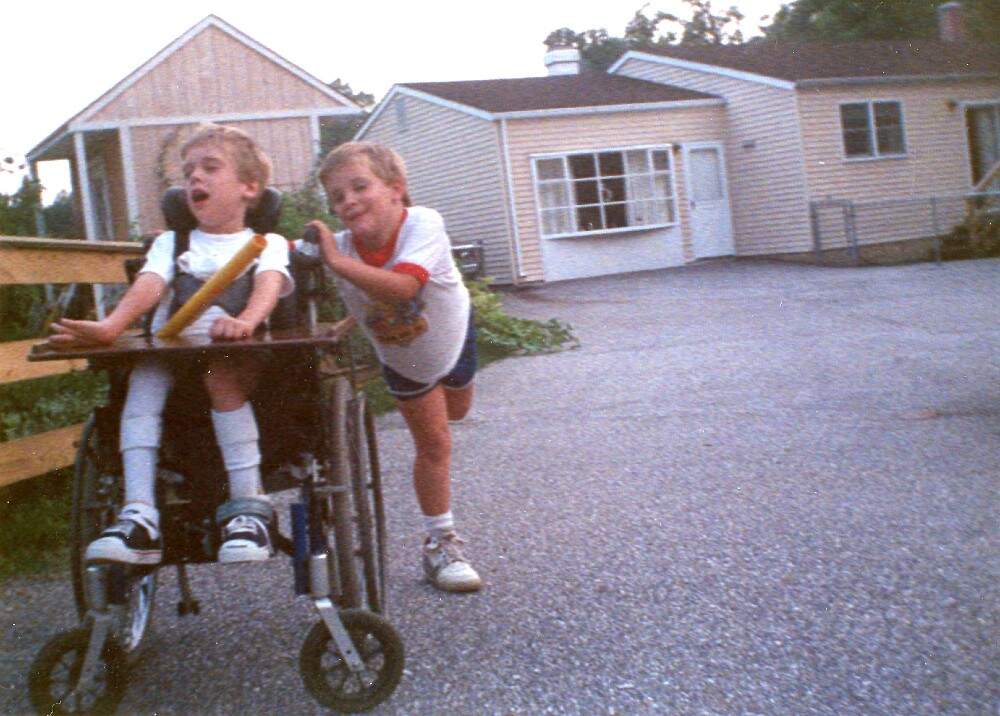
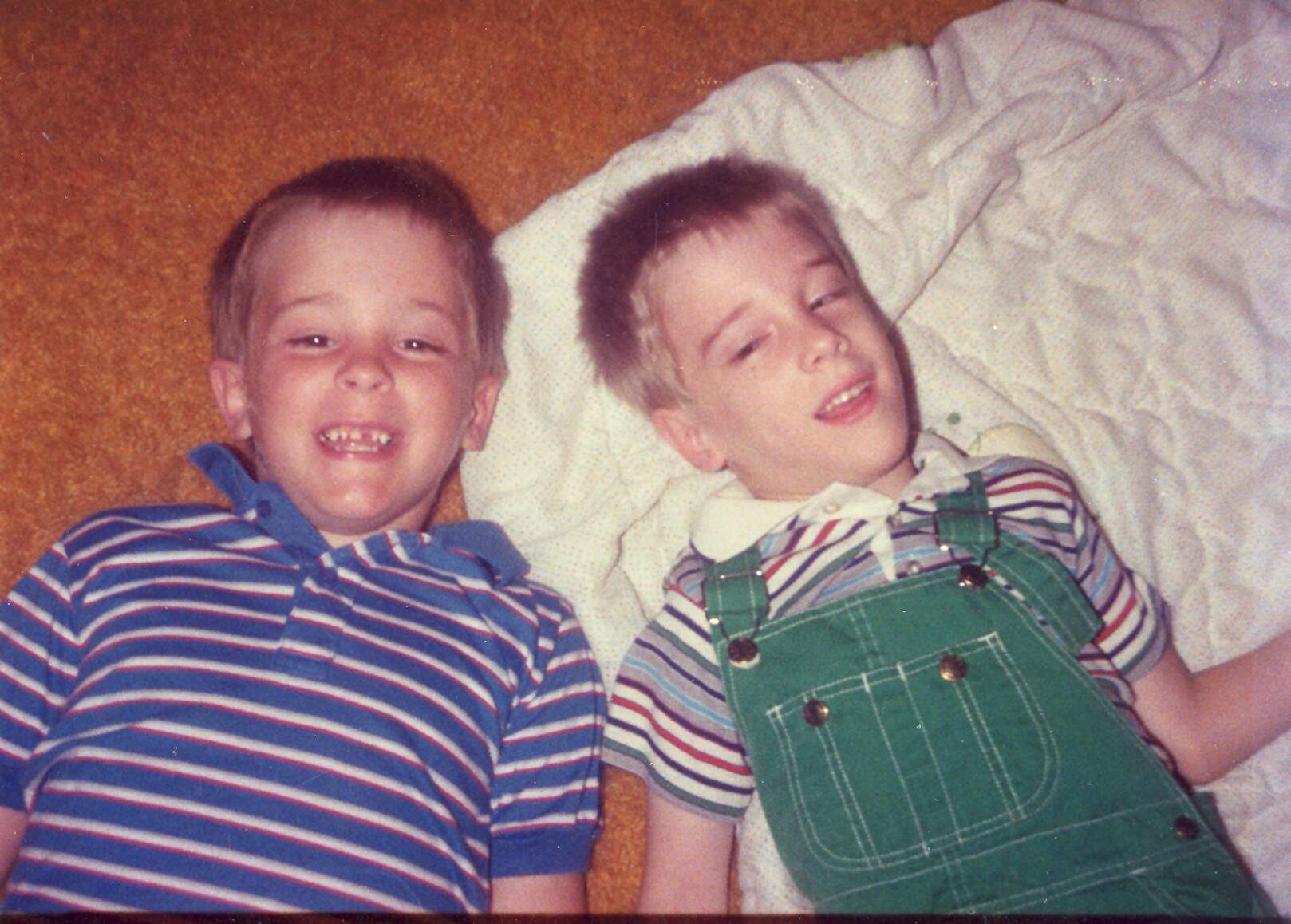
March is Cerebral Palsy Awareness Month and Developmental Disability Awareness Month, but as the twin brother of Danny, who had severe cerebral palsy and intellectual disabilities, I never need the reminder.
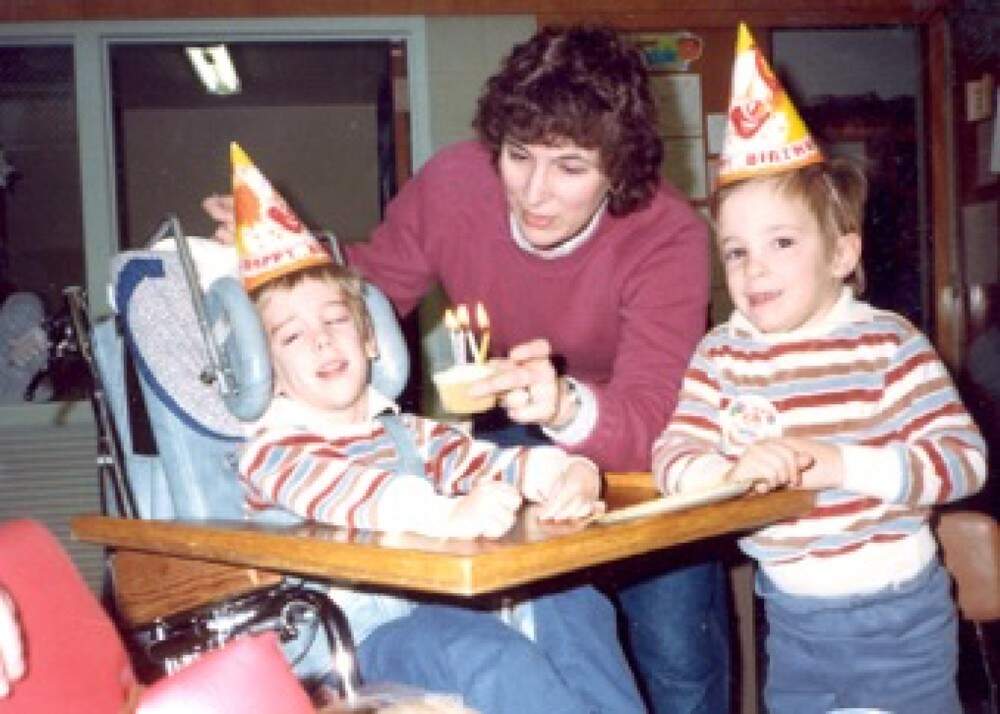
Danny could only say 12 words, but he still found creative ways to express himself. Depending on the way he said my name, “I-an” could mean, “Shut up, you idiot,” “Talk to me, bro” or, if spoken very softly, “I love you.” I spent much of my childhood pushing Danny in his wheelchair through the world. He lived a vibrant life before passing away in 2011, when we were 28.
A few years ago, a student asked me if I had “glass child syndrome.” I had never heard the term. Popularized by Alicia Meneses Maples in her 2010 TEDx Talk, the term “glass child” refers to a sibling of a “high-needs” brother or sister, usually someone with a disability or chronic illness. A glass child’s parents, Maples explained, “are so consumed with the needs of our brothers and sisters that when they look at us, they look right through us, as if we’re made of glass.” Until I heard the term, I thought growing up with Danny had made me a less selfish and more mature person. I thought Danny had made me more patient and empathetic, and given me a greater sense of meaning and purpose. But as I watched Maples’ TEDx Talk, I found myself wondering whether there was something wrong with me. Were all these things I liked about myself actually a trauma response?
The glass child symptoms are many: parentification, anxiety, guilt, depression, resentment, people pleasing, perfectionism, anger, codependency and low self-esteem, among others. I soon discovered thousands of glass child videos on TikTok, in addition to articles in CNN and USA Today. With as many as 1 in 4 American children having special health care needs, the glass child ranks are swelling.
It seems to me that many siblings identify with the term because they were taught to suffer in silence. The glass child concept names a pain that they could finally voice. It creates space — and a vocabulary — for the grievances of what disability studies scholar Rachel Adams calls the “asymmetries of need”: when your disabled sibling requires more of the family’s attention and resources.
But the more I read, the more I worried that the glass child metaphor was deeply problematic for disabled people, their siblings and their families. Championed by a coterie of therapists and influencers selling workshops to heal your “emotional neglect,” it frames growing up with a disabled sibling as toxic. It pathologizes special needs families. While it’s true that some studies find that special needs siblings may be at an increased risk for anxiety and depression, other studies point to their increased capacity for empathy and resilience. Other research complicates the assumption of “negative” psychological outcomes altogether.
Most troubling is that the glass child metaphor also recycles a dark history. As Andrew Solomon wrote in “Far from the Tree,” in the first half of the 20th century, doctors commonly disappeared disabled children into institutions with the rationale that “keeping a disabled child at home was unfair to healthy siblings, because the disabled child would take too much of the parents’ energy and focus and embarrass the nondisabled child.” Now, in an America that often keeps our special needs families in a state of perpetual crisis as they attempt to navigate under-resourced social support, medical and educational systems, so-called glass child syndrome risks equating systemic societal failures to “bad parenting.” It reduces the complicated and artful interdependent dance of giving and receiving care to mere sacrifice and burden.
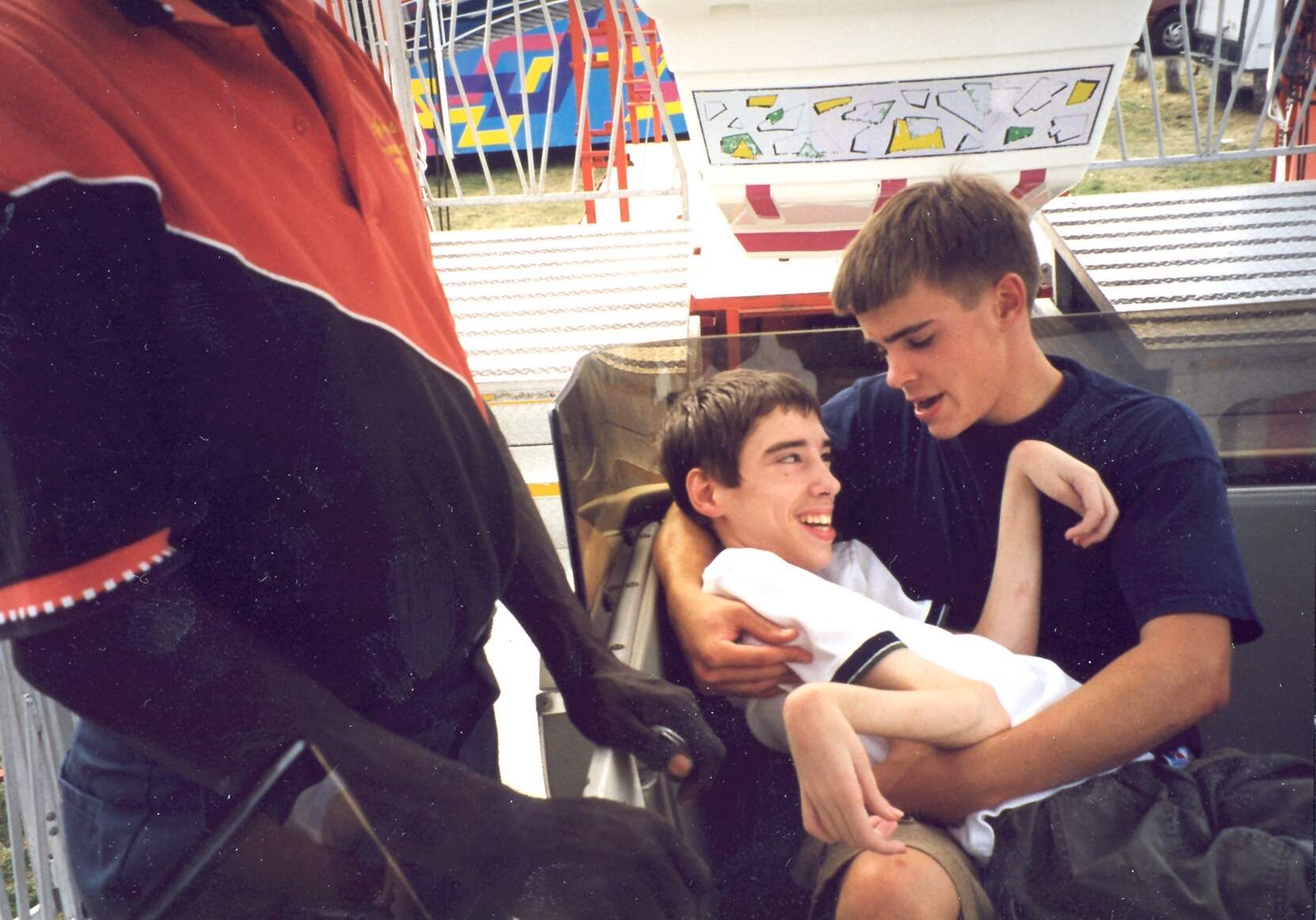
While I had my glass child moments when I didn’t feel seen, I am proud to have grown up in a special needs family. I am proud to be my brother’s twin. Indeed I often felt seen because of my brother. I felt like I was the best wheelchair driver in my age group. We were a comedy team, Danny driving home the jokes with a well-timed “Eh-eh!” (No). He was legally blind, but if you asked him who was ugly, he’d shout my name: “I-an!” Sometimes I had to be my brother’s arms, legs, eyes and voice. It often didn’t feel like a burden, more like an alternative way of moving through the world. I worry that by only having the glass child metaphor to describe experiences like mine, we give in to the ableist assumption that our disabled siblings are catastrophes, instead of people who ultimately enrich our lives.
I’m not trying to whitewash the challenges of having a disabled family member, or argue away someone else’s experience. Being Danny’s sibling wasn’t always easy. I often wanted our life to be less complicated. Sometimes I wished we could walk around the mall without getting stared at, or that we weren’t always waiting for the next medical crisis. And sometimes my brother — like all brothers — could be a jerk. Life in a special needs family is neither a tragedy nor a Pollyannish joy. There has to be more nuance — something in between describing our experience as either the worst thing ever or loudly proclaiming what an inspiration our disabled siblings are, tinkly piano playing in the background. Having a disabled sibling is a mixed bag. It’s complex, like all sibling relationships.
In lieu of the “glass child,” I much prefer Julia Miele Rodas’ idea of the “satellite.” In her 2015 essay, “Limited Visibility; Or Confessions of a Satellite,” she wrote about her brother Josh Miele, who is blind and has severe facial burns (he is also an accessibility technologist, an author and MacArthur Fellow). She says his body attracts so much attention that “the visible universe orbits around him” and all other bodies are “‘satellites’ to his ‘primary body.’” When she is with him, the way people stare erases the humanness of both her body and his, one body not mattering, another body mattering too much. Her self-esteem was bound up in helping him navigate the world, and not always in ways that he wanted or needed. She wrote, “my life has been structured by the experience of disability, by the reaction of others to the damaged sibling unit of which I composed an essential part. I have not been blind, but I have lived with blindness.”
If we extend the satellite metaphor to both visible and invisible disabilities, it shows how our lives bend to the increased gravity of our disabled siblings in profound ways. The satellite makes no claims to a syndrome, as if trying to compete with a sibling’s diagnoses. It’s not an automatically negative term, but neither is it overwhelmingly positive. It’s a complicated dynamic that describes a life lived in intimate relation to disability. In the satellite metaphor, disability structures both the disabled person’s life as well as the lives of their families. The ableism, stigma, inaccessibility and lack of resources that oppress disabled people affect their siblings, too. But siblings are also privy to the experiential knowledge that living with a disability provides: adaptation, vulnerability, interdependence and resilience.
I like the satellite metaphor because it doesn’t pit disabled and typical siblings — it doesn’t pit Danny and me — against each other. Instead, it calls us to create a more just world for disabled people and the siblings who orbit around them.