Support WBUR
Author Interview
The ghosts of literary history: Q&A with Emily Franklin, author of 'Love & Other Monsters'
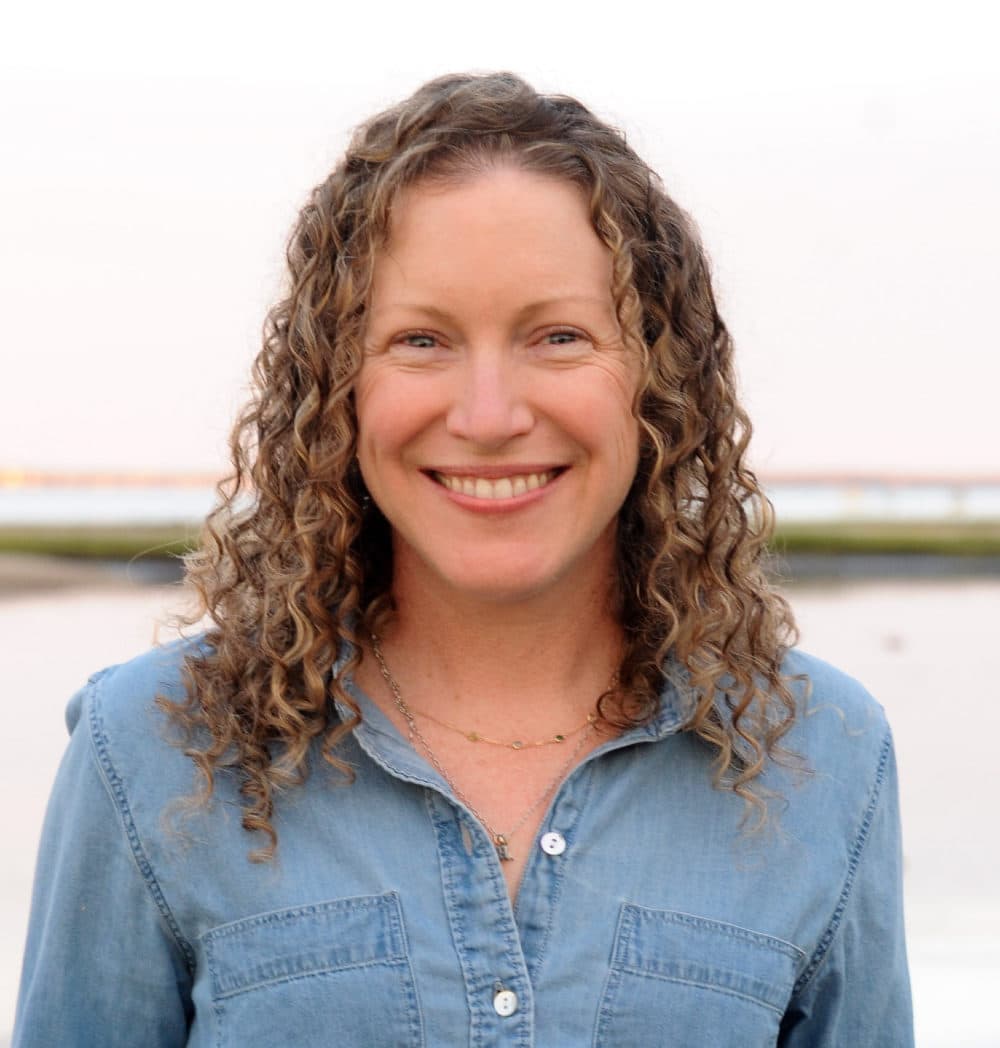
Editor’s note: This Q&A appeared in Cog’s weekly Sunday newsletter. To become a subscriber, sign up here.
When I opened Emily Franklin’s new historical fiction novel “Love & Other Monsters,” she had me at, “All love stories are ghost stories waiting to happen.”
Franklin is the author of more than 20 books, including the 2023 bestseller “The Lioness of Boston,” inspired by the life of art collector and philanthropist Isabella Stewart Gardner.
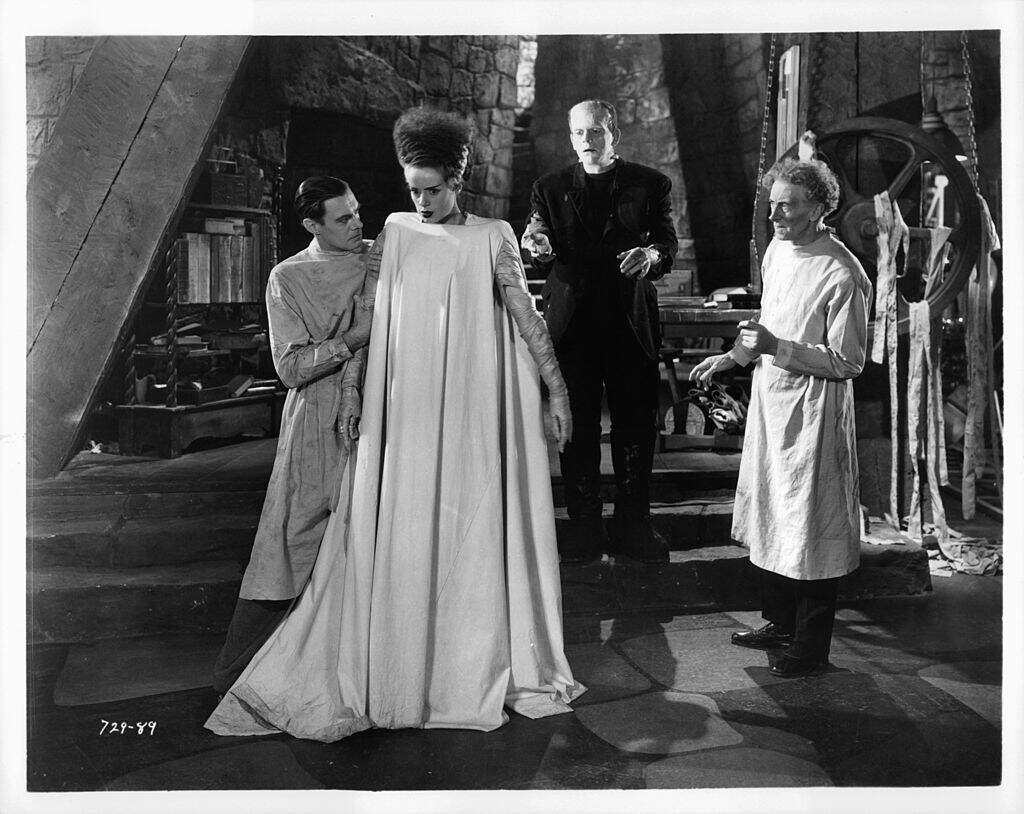
Her new novel, which publishes this coming Tuesday, takes us to 1816, known as “the year without summer,” when volcanic ash darkened the sky and created a worldwide chill. Mary Godwin (soon to be Mary Shelley) gathered with her fiance Percy Shelley along with Lord Byron and John Polidori, Byron’s physician, on the shores of Switzerland's Lake Geneva. It’s part of literary lore that Shelley’s “Frankenstein” and Byron and Polidori’s “The Vampyre” were born there, from a story contest Byron suggested.
But there was someone else at the villa — someone Franklin came across in her research, but whom Mary Shelley, and literally history, seemed determined to forget: Claire Clairmont, Mary’s stepsister.
In an essay for Cog this week, Franklin wrote a bit about what drew her to writing about Clairmont — and historical fiction in general: “The beginning of any novel writing process is, for me, a little bit of a love story. I know I want to spend years with a subject and characters when I can’t stop thinking about them.”
The more I read the novel, the more I wanted to know, so I asked her to answer a few questions. (If you have questions of your own, Franklin will be at Porter Square Books in Cambridge on Tuesday, April 7, and at the Coolidge Corner Theater on Wednesday, April 8 — just a few of the many Massachusetts stops included on her book tour over the coming months.) — Sara Shukla
Sara Shukla: “Love & Other Monsters” is written in first person, from the point of view of Claire. But I love how before we begin, you have an epigraph that includes a short quote from four different people: Mary Wollstonecraft (Mary’s mother), Mary Shelley, Percy Shelley and Claire Clairmont. Tell me about why you wanted to begin that way.
Emily Franklin: “Claire comes to see herself first through other people — how her mother or Mary Shelley see her, how Percy or Byron see her. So it made a certain amount of sense to have those quotations. But also, Claire was erased or forgotten and those people are still read and studied. Plus, I wanted to set up right away the idea of truth being a big part of the novel, and Shelley’s poem to Claire (which Mary later edited, trying to undo Shelley’s dedication to Claire).”
Was it important to you to write in Claire’s point of view, as opposed to third person? How did you go about understanding her? What surprised you about her?
“The first line of the book was always the first line: ‘All love stories are ghost stories waiting to happen.’ As I was writing this I felt very close to the ghosts and the complicated love in this story. All of the characters are so young — 18, 19, 20, 23, 28. At first, I thought this novel would have multiple points of view — a chapter from Byron and chapter from Mary, etc — but one voice kept whispering a little bit louder, and every time I went to write, Claire appeared on the page. I realized very early on in the writing that this was really Claire’s story. It’s the story of “Frankenstein” and “The Vampyre” and a story about making art, but it’s also the story of Claire being, in her words, “an ordinary girl.” An early surprise was what a beautiful writer Claire was in her letters and journals — and how funny and modern.”
I find it impossible to imagine the amount of research you must have done to write this novel, as well as “The Lioness of Boston” before it. Can you break it down for us, maybe by years? Archives? Binders? Cups of coffee?
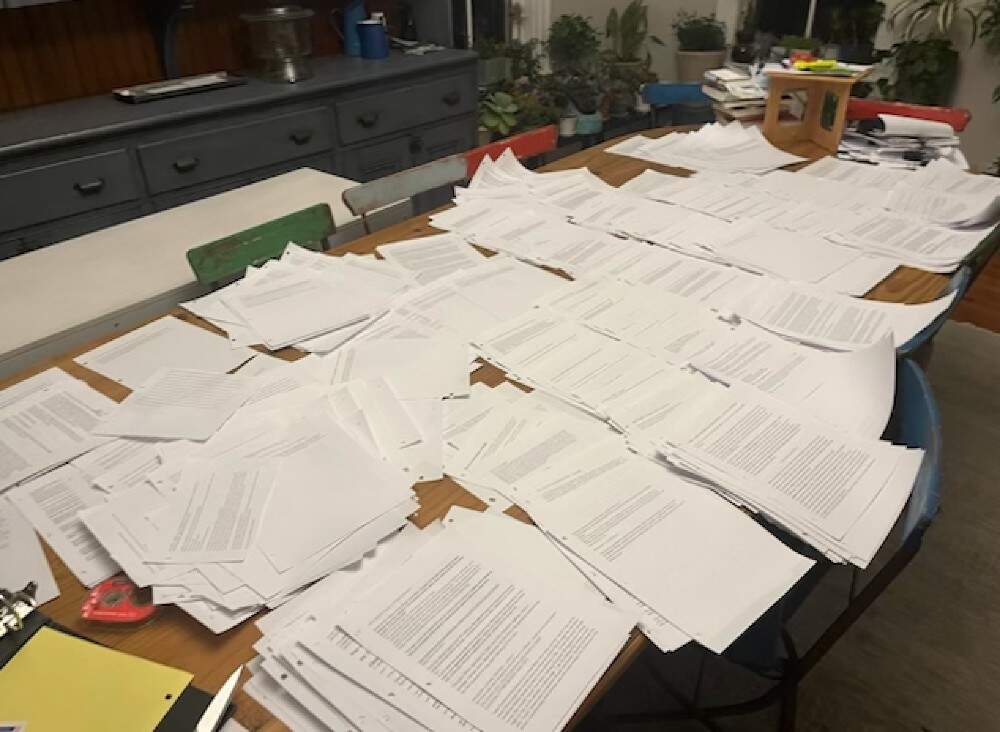
“I love research — and at a certain point, I have to stop and focus on writing. I started “Love & Other Monsters” in 2009 and have worked on it since then, only little bits at first, compiling information and the idea of Mary’s voice and Claire’s. Finally, after years of research, I understood the world and the characters and began writing. And writing. I wound up with — I know! — 1,100 pages.
“And they were out of order, because that’s how the scenes arrived. Partly this was because I was touring for “The Lioness of Boston,” and my time was fractured, but partly, I realized, because it was how this story was being told to me: as a re-reading and new understanding of Claire’s lost (or stolen) journal. So I spread all the pages out on the table and floor and put them into binders. One for each month in the book and one each for prologue and epilogue. “
In this novel, you’re writing from the perspective of someone who lived two centuries ago, but you, as the writer, are experiencing the world in 2026. How do you bridge that gap? What’s a challenge, and what works in your favor?
“When it comes to writing historical fiction, my modern day lens allows me a different — and sometimes deeper — understanding. I can give Claire Clairmont insights she can use to describe her feelings that she might not have known at the time. I don’t mean this as simple revisionism. The feelings Claire had, that conflict between right and wrong, good and evil, attention versus manipulation were the same feelings women struggle with today.
“So in terms of living now, but reflecting back, that’s leaning into Kierkegaard's idea that life is lived forward but understood backwards. And I wanted that for Claire. This is what we owe the people of the past: not only giving them voices, but bringing their stories to a new audience by blending careful research with the interpretation offered by modern insights.
“The challenge is to make sure the characters still inhabit the world of 1816 — their words and language. Their understanding of their situations is different than my understanding of their circumstances. And it’s a delicate balance that I think is helped by my foundation in poetry, where there’s the poem and the poem underneath the poem.”
Where do you like to write?
“For many years, with four little kids and no child care and no office, I wrote while nursing or while standing up with my computer on my bureau. Now I mainly sit at the kitchen table with my enormous dogs underfoot. I like to write here because it’s near the kettle and snacks and — with older kids — allows me to increase the likelihood of seeing them when they come home.”
What do you want readers to know about Claire Clairmont?
“That she was a whole person who played an integral role in beloved works of literature. That they consider her relationship with Mary when they read ‘Frankenstein,’ and that they consider Claire in the context of the monsters on the page and the ones in plain sight.”