Support WBUR
Opinion
Voting is 'preservative of all rights.' We can't let Trump make it harder to access the ballot
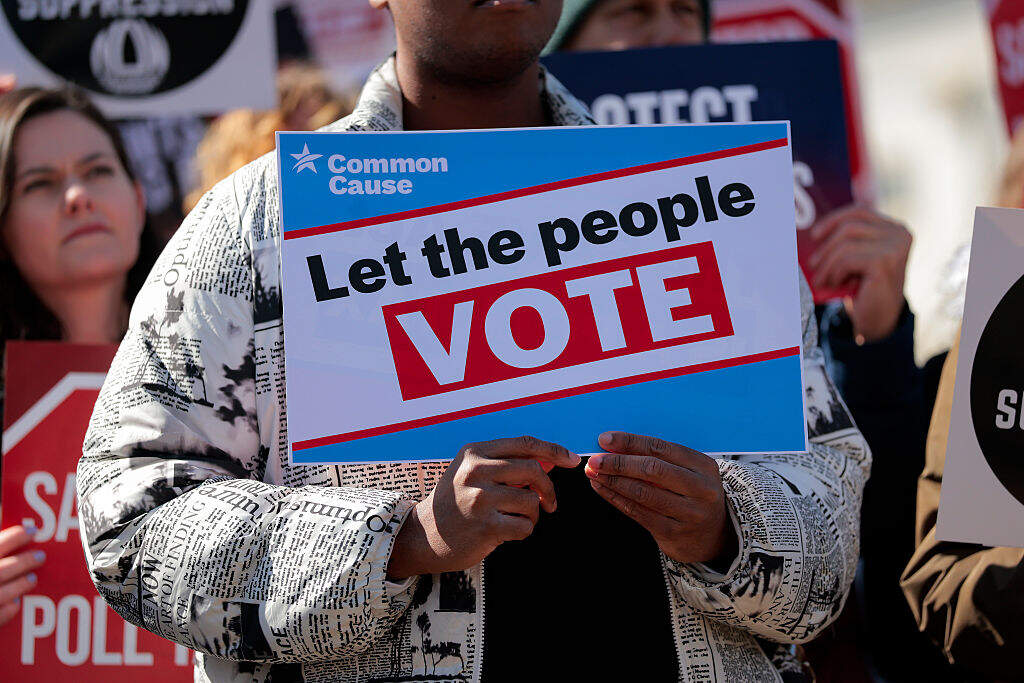
Almost exactly 140 years ago, in an April 1886 decision in Yick Wo v. Hopkins, the U.S. Supreme Court called voting the "fundamental political right, because [it is] preservative of all rights.” Indeed, it’s the foundation of our democracy: Voting is how “we the people” ensure that those who represent us in the halls of power respect and protect all the other rights and liberties guaranteed by our Constitution.
But today, the Trump administration is aggressively seeking to restrict access to the ballot box and undermine public confidence in elections, posing a serious threat to our democracy.
Pro-democracy forces, including my colleagues at the ACLU, are fighting to protect this precious preservative of all rights, and we’re scoring some victories. Just last week, a judge dismissed a Department of Justice (DOJ) lawsuit that sought to compel Massachusetts to turn over unredacted voter rolls full of sensitive data. It was the fourth court ruling in the country to rebuff DOJ efforts to obtain state voter rolls.
I cheered that victory; it’s clear the judiciary continues to play a critical role in protecting the franchise. But the judge’s ruling also laid bare what a dangerous moment this is. He wrote that the DOJ had not explained the legal basis for wanting the state’s voter rolls and made no attempt whatsoever to fix the “clear shortcomings” of its process.
To me, that’s terrifying. It speaks of this administration’s apparent contempt for the rule of law and its drive to undermine our democracy.
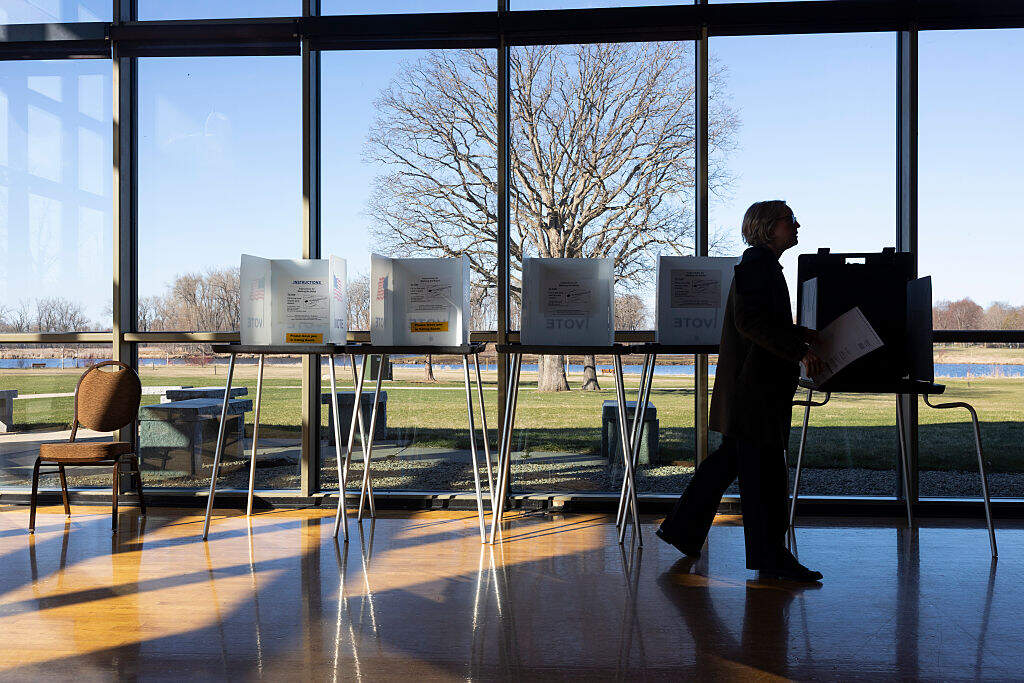
Here are the specific actions Trump and his team are taking right now to limit access to the ballot:
-- Trump is furiously promoting a bill (the so-called SAVE America Act) that would require voters to prove their citizenship with documentation that’s costly and difficult to obtain. Under this bill, the standard REAL ID — which is accepted as proof of identification at airports — would not be sufficient to gain access to the ballot box. Voters would need a passport, military ID, birth certificate, or a special “enhanced” driver’s license, which is only available in five states. These barriers would block millions of citizens from voting.
-- Key presidential advisers, including Steve Bannon, have talked openly about stationing Immigration and Customs Enforcement (ICE) agents outside polling places. Trump himself has mused about seizing control of elections from state officials, in clear violation of the Constitution, which gives states and Congress jurisdiction over voting.
-- The Trump administration is also seeking to drastically curtail mail-in voting, which is how 1 in 3 Americans cast ballots in the 2024 election. (My colleagues at the ACLU have filed suit to block this dangerous and unconstitutional executive order.)
Trump claims these actions are intended to address “voter fraud.” His U.S. attorney for Massachusetts reinforced that message with the recent launch of a task force that, amongst other things, would be dedicated to investigating “voter fraud.”
But the truth is, voter fraud in the United States is a myth. According to an exhaustive review of the evidence by the Brennan Center for Justice, voter fraud is “vanishingly rare.” The Brookings Institute scrutinized mail-in voting in 2016, 2018, 2020 and 2022 for signs of fraud and found that just .000043% of ballots raised concerns. Even the commission on voter fraud that President Trump hand-picked in his first term disbanded without producing any evidence.
And Massachusetts is no different. The Heritage Foundation, a conservative think tank that tracks the issue, found just four cases of fraud in the state in the past 14 years — and only one involved fraud by a voter. (In the other three cases, candidates were at fault.)
Nevertheless, the administration’s repeated attempts to access voter data and spread this false narrative about voter fraud have taken a toll. Trust in elections has fallen across the U.S. since the 2024 election, among Democrats, Republicans and Independents. One recent poll found that just 60% of Americans are confident that ballots in the November 2026 midterms will be accurately counted. (That’s down from 77% in 2024.)
This lack of trust, combined with the administration’s efforts to intimidate voters, has real implications. It could lead to lower turnout, which makes our democracy less representative. It could leave voters susceptible to conspiracy theories and incitement to violence, as we saw on Jan. 6, 2021.
In addition to the administration's actions, other factors could also curtail voting access. The U.S. Postal Service, for instance, has made service changes that could delay postmarking and delivering mail. In addition, the Supreme Court appears likely to block states from counting ballots that are postmarked by Election Day but arrive later. These shifts could end up disenfranchising millions of people who are used to dropping their ballots in the mailbox just before Election Day.
What can we do about all this?
Groups like the ACLU are defending the right to vote in the courts and educating the public through community outreach. Those are critical pieces of the puzzle. But everyone has a role to play.
State lawmakers should remove unnecessary barriers to the ballot box by enacting same-day voter registration and ensuring that voters don’t face difficulty casting a ballot because of extraneous paperwork. City officials must also ensure polling places are accessible for voters with disabilities.
Elected officials at every level should run campaigns reminding citizens to check their voter registration well in advance of the Sept. 1 primary and Nov. 3 midterm elections — and to post their mail-in ballots as early as possible.
These efforts can help us build a firewall against federal meddling and establish Massachusetts as a national model for election integrity.
Everyday residents can help, too. If you’re eligible to vote, check your registration status and make a plan to cast your ballot — ideally, more than a week before Election Day if you’re voting by mail. Consider working with a candidate or advocacy group you support to get out the vote. Volunteer as a poll worker or election monitor.
Finally, when you spot an attack on voting rights, speak out against it by calling your elected officials and raising awareness among your friends and neighbors.
It will take all of us to protect the right to vote — the basis of all the rights we cherish in America. It’s well worth the effort. Our democracy, and our freedoms, depend on it.