Support WBUR
Cog's Weekly Newsletter
Bobby Hall changed the world
Editor’s note: A version of this interview appeared in Cog’s weekly Sunday newsletter. To become a subscriber, sign up here.
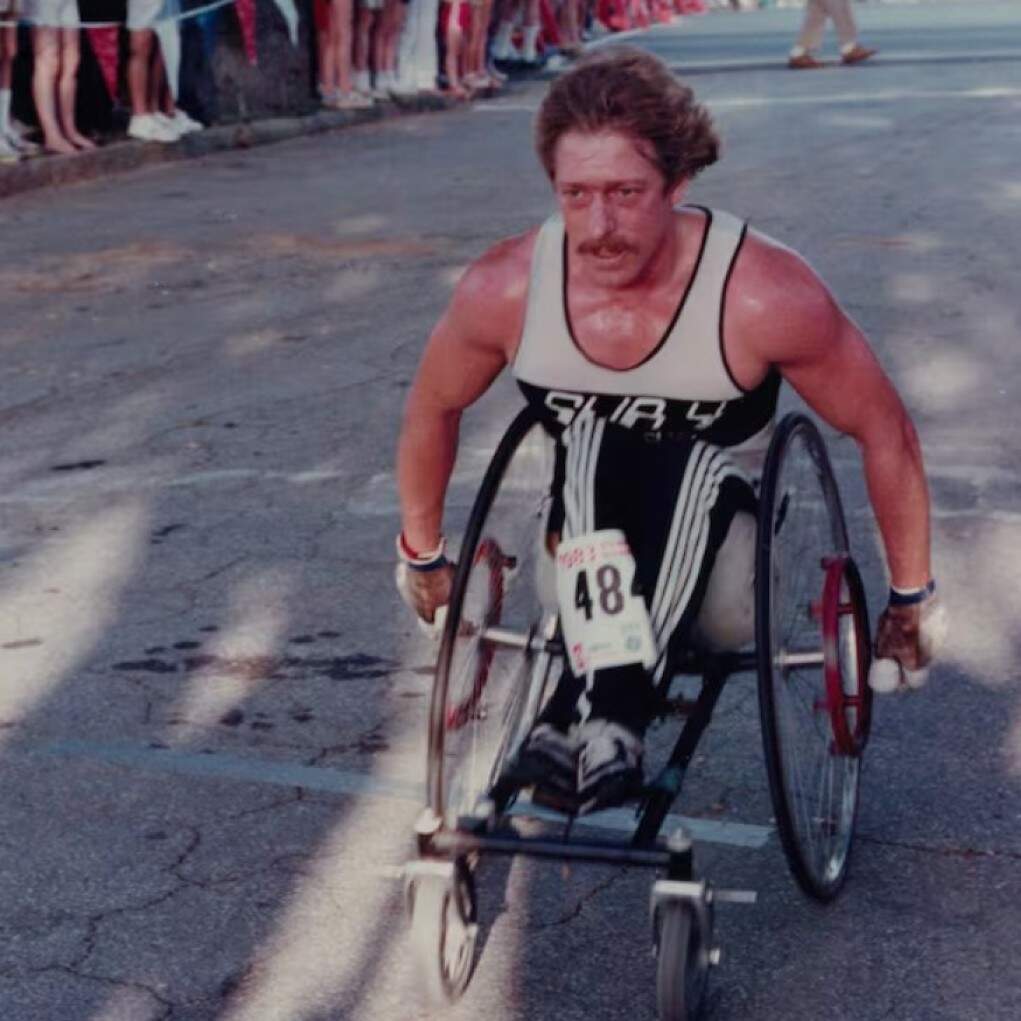
The running community lost a legend last week: Bob Hall, the first person to ever race the Boston Marathon in a wheelchair, died at 74.
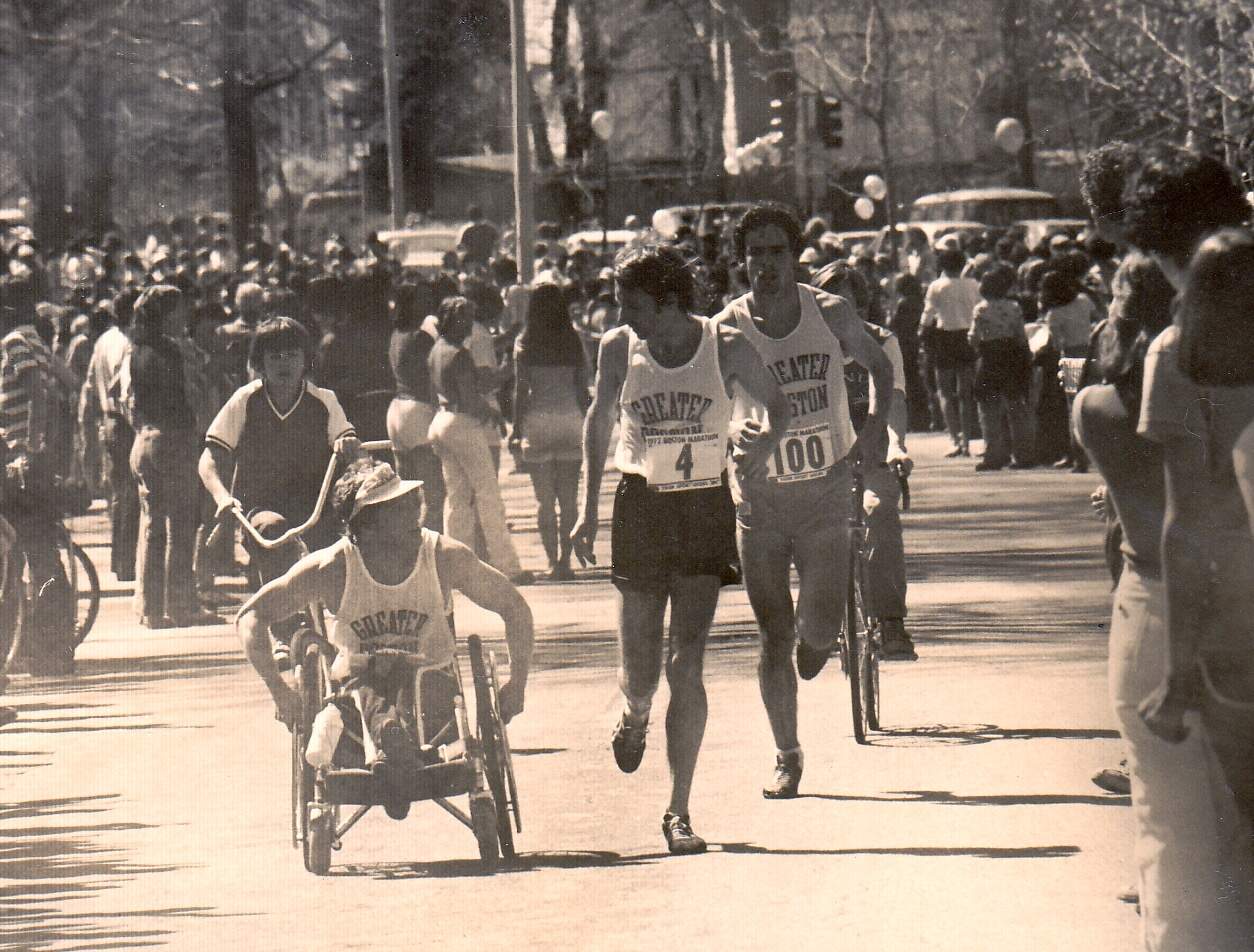
Hall survived polio as an infant, but the virus left him without the use of his legs. A native of Belmont — and a graduate of Belmont High — his first wheelchair sport was basketball. That eventually led to racing, and by 1974, he was a serious competitor: He won the first national wheelchair marathon championship in Toledo, Ohio. In 1975, at 23, he ran Boston — a first that was forever memorialized in an iconic photo of Hall running side by side with Bill Rodgers, that race’s eventual champion (who won in American-record time).
Hall was a fierce advocate for people with disabilities. He sued the New York City Marathon in 1978, after they denied him entry to the race in 1976. His organizing and advocacy gave access to generations of athletes. And wheelchairs he designed and built through his company, New Hall’s Wheels, revolutionized the sport — evolving from modified hospital wheelchairs that were heavy (nearly 50 lbs) and difficult to maneuver, to chairs that were more aerodynamic, had three wheels (instead of four) and were constructed of lighter materials, like aluminum and carbon fiber.
I talked this week with Hall’s longtime friend and fellow wheelchair athlete Christine “Chris” Griffin, who spent time with Hall and his family in his final days. Griffin is an Army veteran and a nationally recognized disability rights attorney and activist. She was the executive director of the Disability Law Center in Massachusetts, and served as a commissioner of the U.S. Equal Employment Opportunity Commission under Presidents Bush and Obama. She also has the world’s greatest Boston accent – and, after she was paralyzed in a car accident at 25 years old, she pushed her own Bobby Hall wheelchair for years.
Our interview happened just one day after Hall died. When I asked if she felt comfortable continuing, she told me: “Yes, because he would’ve wanted it. He would’ve loved to have done this himself.”
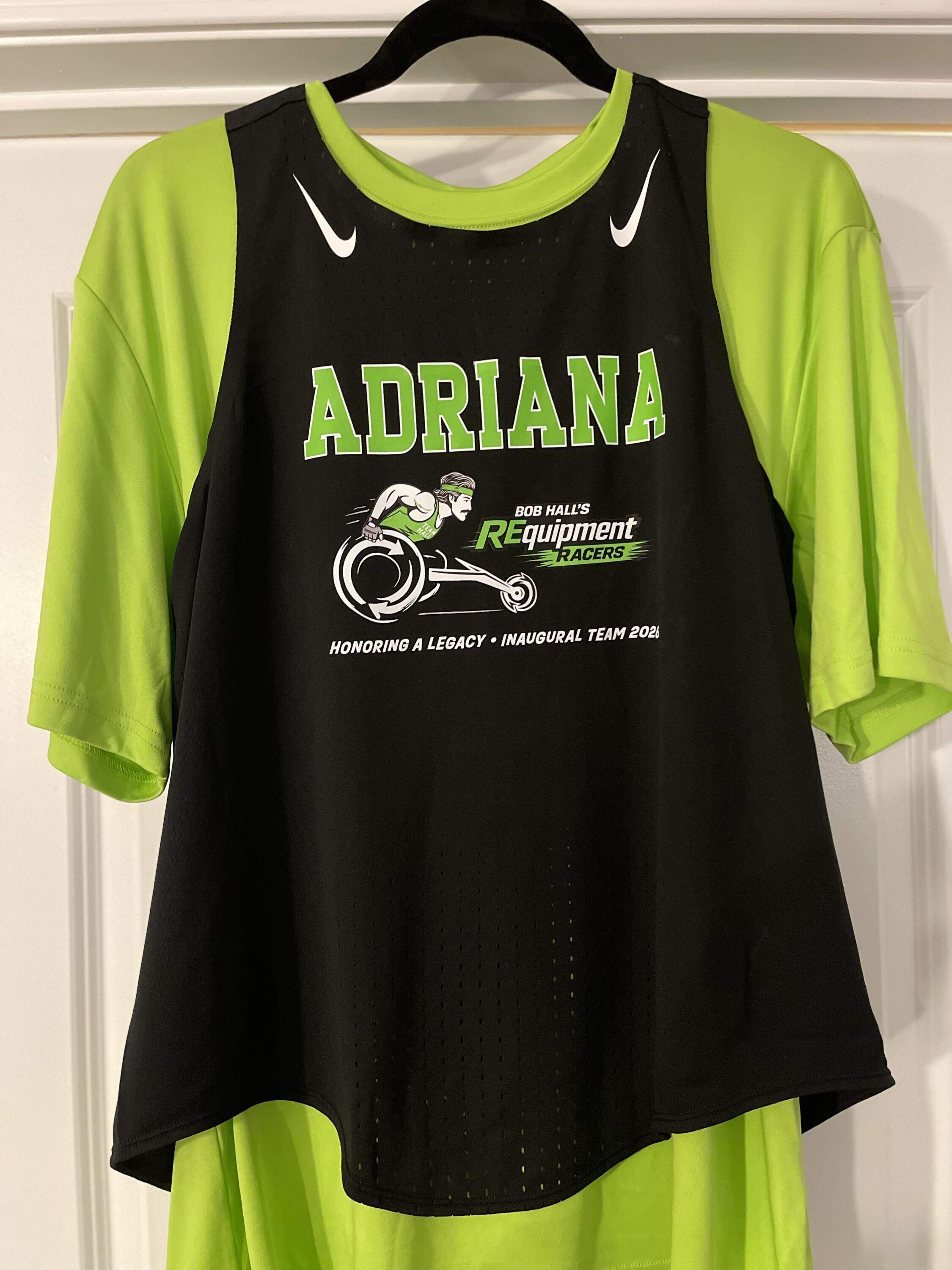
In the year before his death, Hall created the Bob Hall Legacy Fund, housed at the Massachusetts-based nonprofit REquipment. The organization refurbishes medical equipment and assistive technology, and donates it to people who need it. To raise money for the Fund, Hall secured 14 charity bibs for this year’s Boston Marathon. “ Bob loved this because it was all about supporting people’s independence and inclusion,” said Griffin, who serves on REquipment’s board. “ When you have everything you need, you can live an independent, productive, happy life. But if you have a disability, there are certain things you need; it’s not a level playing field.”
I talked to Griffin about Hall’s life and legacy, how a wheelchair racer trains to run a marathon, and how access to sport can serve as a gateway to something much greater: visibility, inclusion and respect.
This interview has been edited for length and clarity. — CA
Cloe Axelson: Chris, you’ve been in a wheelchair since 1980. Tell me a little bit about yourself, and how you met Bob.
Chris Griffin: “So, I grew up in a big family in Dorchester. In 1980, when I was 25, I was injured in a car accident. I’m what’s known as a T-4 paraplegic – so I’ve been in a wheelchair full time since 1980. Before the accident, I was a runner and everyone immediately said, ‘Oh, you gotta get into wheelchair racing.’ I was lucky enough to get to know friends of Bob’s while I was still in the hospital, going through rehab. Bob and I got introduced, and it wasn’t long before I was in a modified racing chair myself. We became fast friends.
“Bob saw the big picture from the very beginning, and he talked about it. When I went to law school and got into this work, he was instrumental in helping me focus on the various issues of access he saw.”
CA: How do you train to do the Boston Marathon in a wheelchair?
CG: “All your power is in your arms. We’d do a ton of weight lifting — on the bench, pressing overhead, curls, flies, you name it. But it’s also endurance training – you have to get out there on the hills. A lot of people train on ergometers, which is a roller for your racing chair that allows you to increase the resistance. It’s a lot of technique, too. Bob was really great at talking to you about your technique: I remember I used to bob my head a lot and he’d say, don’t do that: It’s wasted energy.
“We would also buy baseball gloves — a pair of them, one for each hand — and we’d tape them up and push the wheels with those. Injuries to your fingers and broken blood vessels were a regular thing, because you were constantly bashing your hands. We’d also take tube socks and cut off the tops and put them on our upper arms — there's no brakes on these wheelchairs — so sometimes you’d end up with abrasions on the inside of your upper arms too, but it was all part of it.
“The whole thing is, you can’t let up, you just have to go through it, or you literally go backwards."
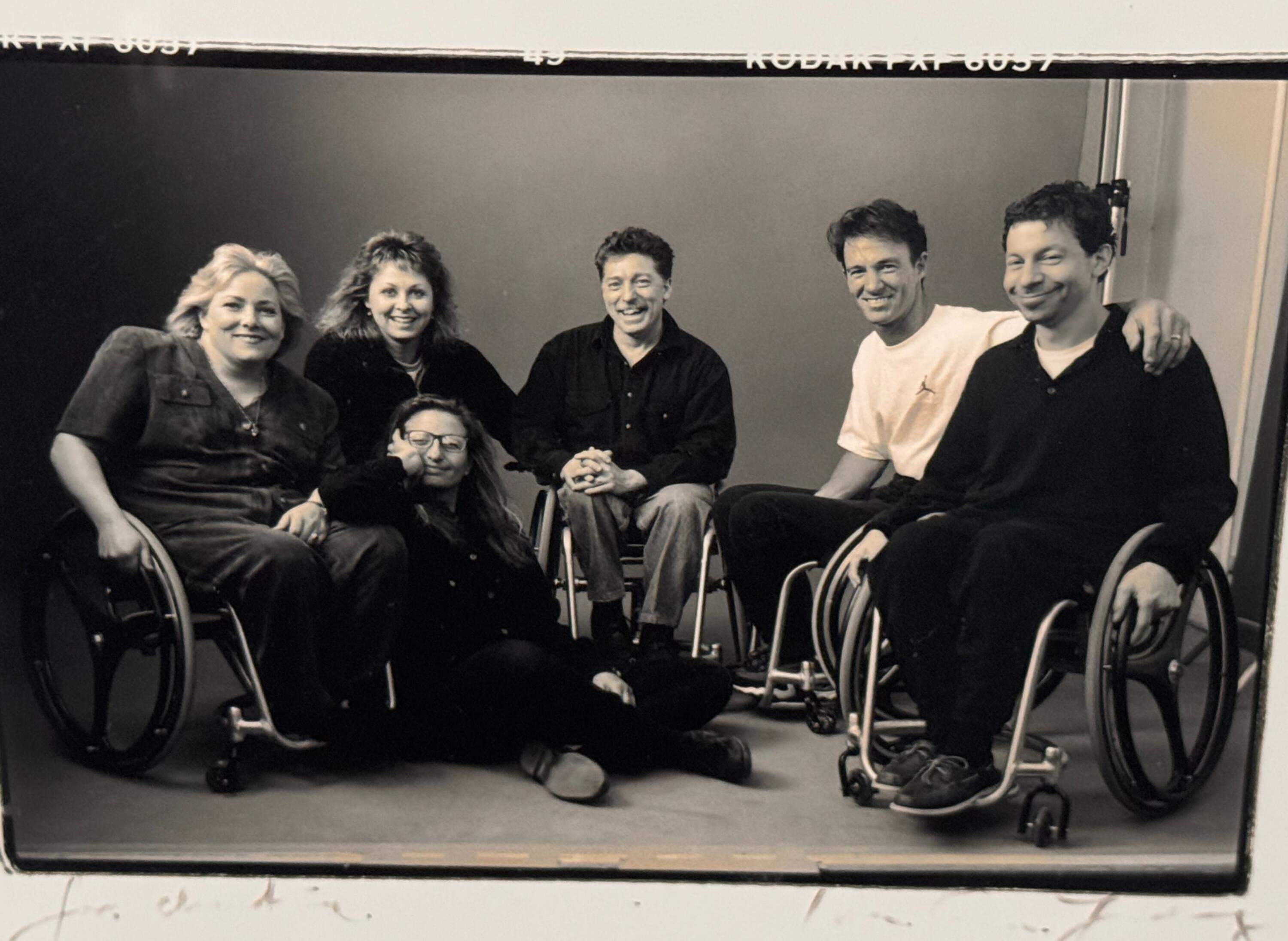
CA: Tell me the story behind this photo that features you, Bobby Hall and the photographer Annie Liebowitz.
CG: “So at one point, Bobby’s company was called New Hall’s Wheels. One of his business partners was Wynn Newhouse.” [Editor’s note: Newhouse’s father, S.I. Newhouse was the chairman of Condé Nast; Wynn was paralyzed in early adulthood by a severe spinal illness, and used a wheelchair.]
“Wynn wanted to get advertisements in mainstream magazines, and Bob called me up and asked me if I wanted to be in one of these ads. I remember saying to him, ‘What? Are you nuts? Ask a famous person in a wheelchair to be in it, you know?’ But no, he wanted everyday people who used his chairs.
“We flew to New York City, and S.I. arranged for Annie Liebowitz to take the photos. We spent a full day with Annie in her studio — probably from 7 a.m. until 5 p.m. It was the most unbelievable day. I wanted to be in The New Yorker — I thought, my god, I’ve arrived if I’m in The New Yorker — but S.I. said no. At the time, the circulation of The New Yorker wasn’t big enough.”
CA: There was a nine-year gap between 1975, when Bob first ran the Boston Marathon, and 1984, when the BAA offered an official wheelchair division. What did Bob understand about the Boston Marathon, and why it was so important to open it up?
CG: ”It wasn't that the Boston Marathon just opened up doors for people with disabilities – it was also about gaining society’s acceptance of us – as human beings, not damaged people. The community of runners started to accept us as peers, as capable athletes. And then they knew that we had lives just like them: that we worked, that we were married, that we had kids. They started to accept us as more similar to them, than less similar to them."
CA: What were you like as a racer?
“As the wheelchairs evolved, I evolved with them, but I was never a great racer. I just did it because it was fun, it was exercise and I liked it. I could push forever – I just couldn't push fast.
“Bob actually talked me into doing my first marathon. I told him, ‘Oh my God, I can’t do that – I’ve only done 15 miles.’ But he said, ‘No, if you can do 15, you can do it.’ And so we went to Newport, Rhode Island, and I did my first marathon – it was probably his 101st. Bob had this eye and he had this willingness to coach you and help you, even if you weren't an elite athlete. I remember once we were working out on the track, and Bob had me tighten the strap around my legs like an inch. I remember rolling away and saying to myself, what the hell difference is an inch gonna make. But you know what? The next lap around the track was so much better.”
CA: Bob first raced Boston in 1975. That was about 15 years before the Americans with Disabilities Act (the ADA) was passed into law. Why do you think race organizers wanted to keep wheelchair racers out?
CG: “Some of the race directors at the time, like in New York City – which is a whole other story – didn’t believe we belonged there. They didn’t think we had numbers large enough to warrant doing anything special for us. They were very concerned about safety, cost and logistics. I don’t know, maybe they thought we were going to run into the runners and hurt them or something? Remember, too, that these races were longstanding traditions, there was just a general resistance to change that was hard to overcome.”
CA: How did Bob help organize folks like you, who wanted to race?
“Bob was brave. He was a real pioneer. Everyone was saying, You can’t do this. And I’m sure there were people with disabilities telling him, You’re nuts, what are you doing? But he saw the big picture, early on, that this was about inclusion. He knew it was about more than athletics, more than sports. It was making society see us as people who were capable – when they didn't think we were.
“He was really good about making sure people showed up at races in their wheelchairs, which made us impossible to ignore. We went to races every weekend. Sometimes there were races at nighttime after work, and we'd go to those too. But the goal was to push the envelope on this.
“We all knew that was what we had to – we had to show up in order to make these changes and Bobby led the way in doing that.”