Support WBUR
Essay
A Band-Aid, a Trivial Pursuit card, postcards from 1931 Berlin: All evidence of our shared humanity
When I first stumbled across the cache of lost bookmarks at my public library, I was killing time. Sifting through the dusty pile felt like being in on a delicious secret or traveling down a hidden passageway into a forgotten world.
Lest you are picturing a typical assortment of bookmarks with tassels or inspirational quotes, the lost bookmark box at my library contains random artifacts rescued from the pages of returned or donated books. Before reshelving or upcycling the books, dedicated librarians and volunteers remove the relics — items they salvage are free and ready for rehoming.
Each time I visit, the collection is different.
I love the surprise of the hunt, and how the people who misplaced their memorabilia have no idea their keepsakes are back in circulation. Some treasures reveal clues about the previous owner; others leave me stumped.
On my first spin through the box, I found a photograph from 1989 of a mom and her newborn. The baby is tucked into his smiling mother’s arms; she is still wearing her hospital bracelet. I pulled the picture from the pile.
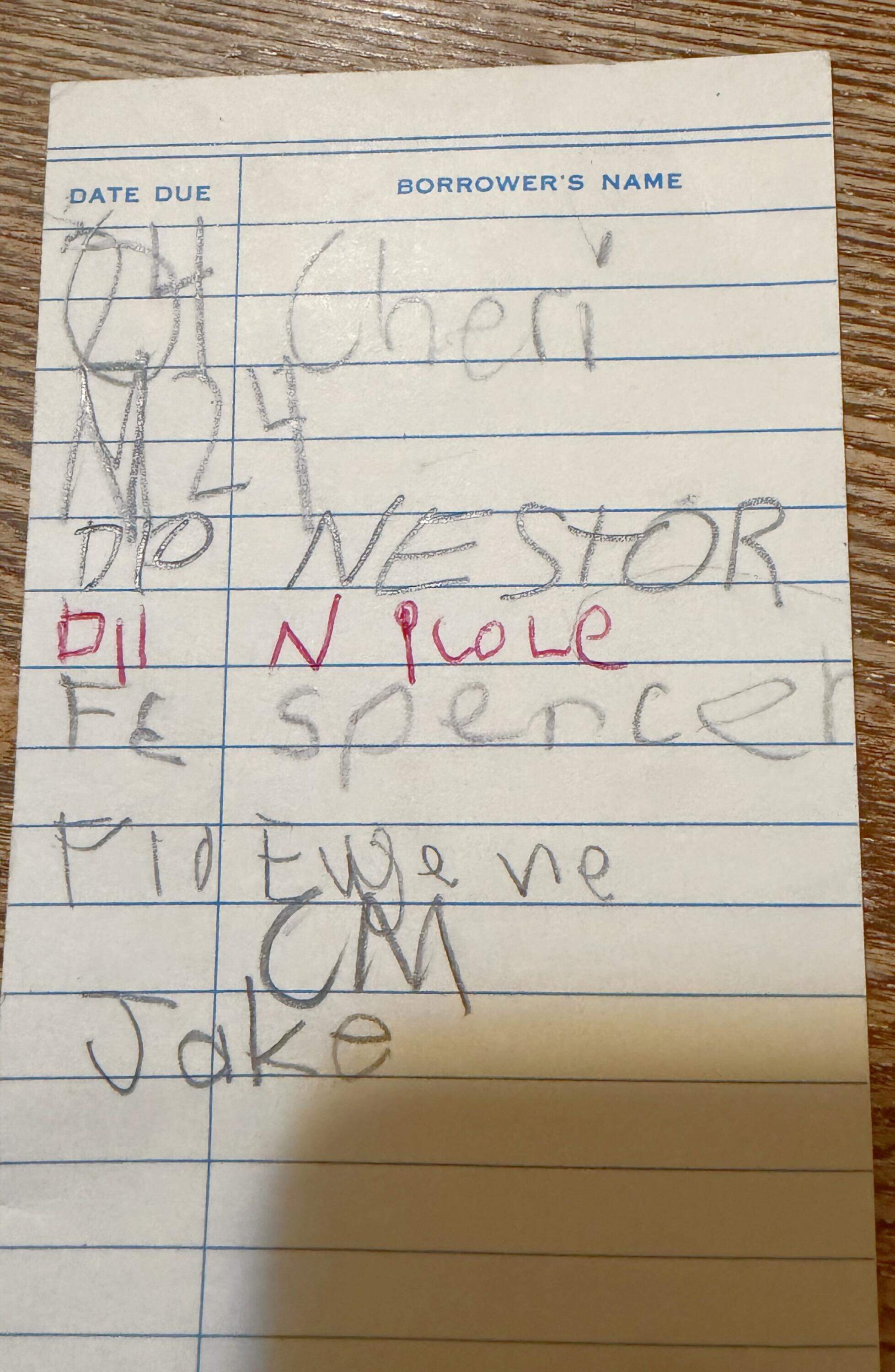
From the box, I also plucked an old-fashioned library borrowing card filled out in 1981 by elementary schoolers who wrote in thick, slanty pencil. Who were Marlem, Jesus, Nestor and Anthony, whose crooked handwriting drifts downward across two lines? Where is Nicole, who made the “i” in her name look like a lollipop? Seeing that card took me back to how many times I checked out Berenstain Bear books from the school library in second grade. That was the year my dyslexia-related challenges with reading and writing were at their most painful. Each time I struggled to spell my teacher’s name on a borrowing card, I felt dumb. The 1981 souvenir exhumed a mixture of nostalgia and hurt.
I gathered those mementos, plus a 1973 carbon copy receipt for “Purinton’s Welding and Repair,” and sent them with a letter to a friend who recently learned she has a brain tumor. Trinkets tucked inside an envelope cannot soften the blow of a devastating diagnosis, but I hoped they might make my loved one feel less alone.
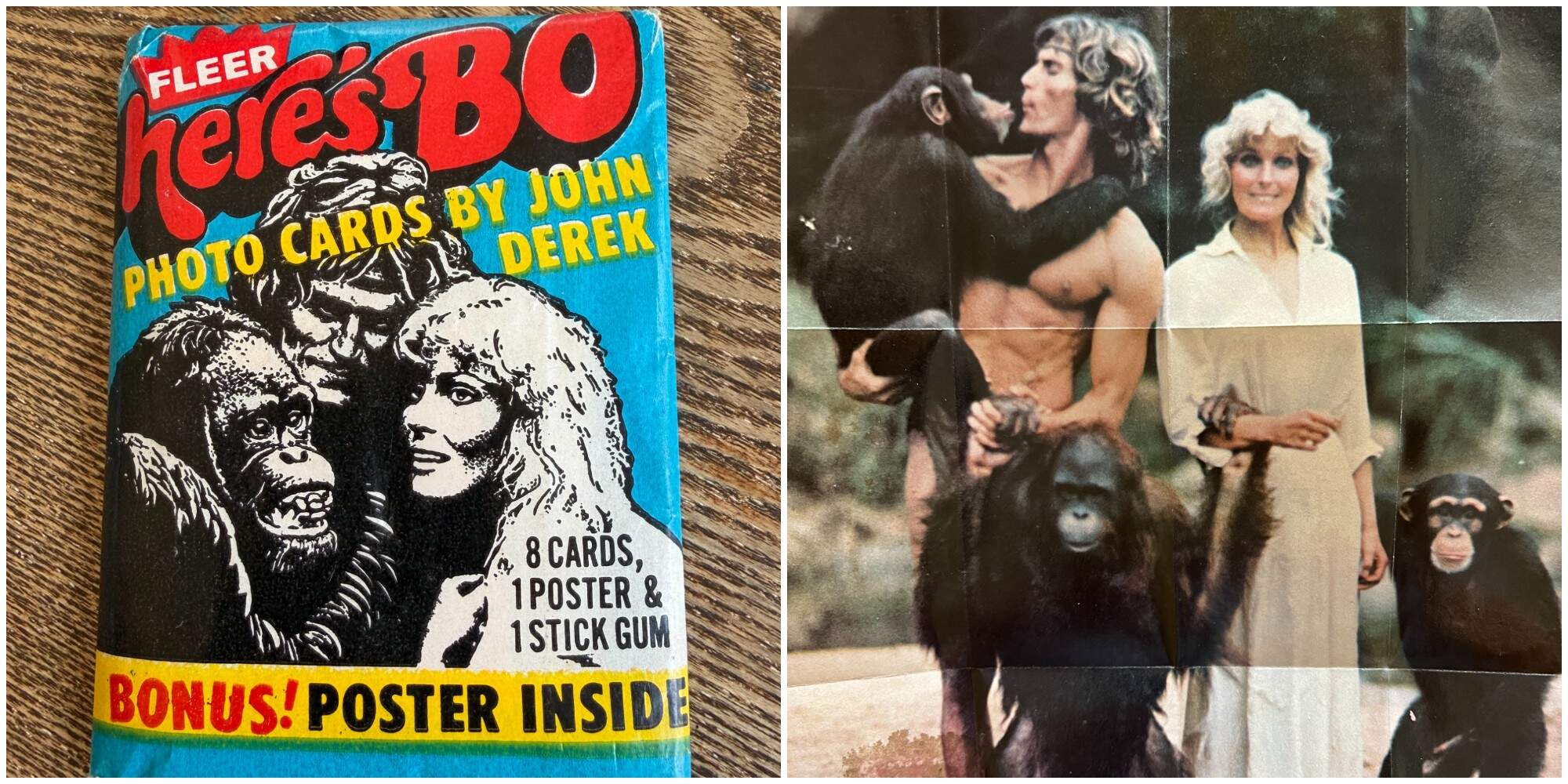
My second rummage through the lost bookmark collection was even more rewarding. I discovered an unopened pack of 1981 Bo Derek photo cards that included a poster and a stick of gum. The strangeness of those cards made me giddy. Deeper in the stack was a 2001 ticket stub from the Uffizi Gallery in Florence; that one evoked adventure.
I took my first trip to Europe in 2001, as a newly minted college graduate. My traveling companion was captivated by art, but I lacked the attention span to roam the galleries for hours. Impatiently, I wandered the Palazzo Vecchio in Florence, where I came upon a statue depicting two men in battle. One stands with his face contorted in pain. The other, inverted with his feet in the air, grabs his captor’s genitals.
I chortled nervously. Before long, I was squeaking with laughter. My exuberant convulsions attracted the attention of an all-male crowd of Asian tourists. Though a language barrier might have walled us off from one another, I observed the men gesturing at the statue and pointing toward me. They, too, started to laugh.
Decades have passed since I visited Italy, but the museum ticket stub brought back that day with perfect clarity.
In another setting, the bookmarks would be easily overlooked. A shopping list or Post-it note is just trash when scrunched on the ground in a slushy parking lot, and a poor-quality photo of a rain puddle will never become a family heirloom. By reclaiming these items for display, the library has elevated their status and made them worthy of contemplation.
It’s not the bookmarks themselves that I value, but the amusement and intrigue they inspire. I scoop the totems that dredge up memories and pocket the pieces that make me feel like a private investigator, because these are the knickknacks that are most fun to share with others.
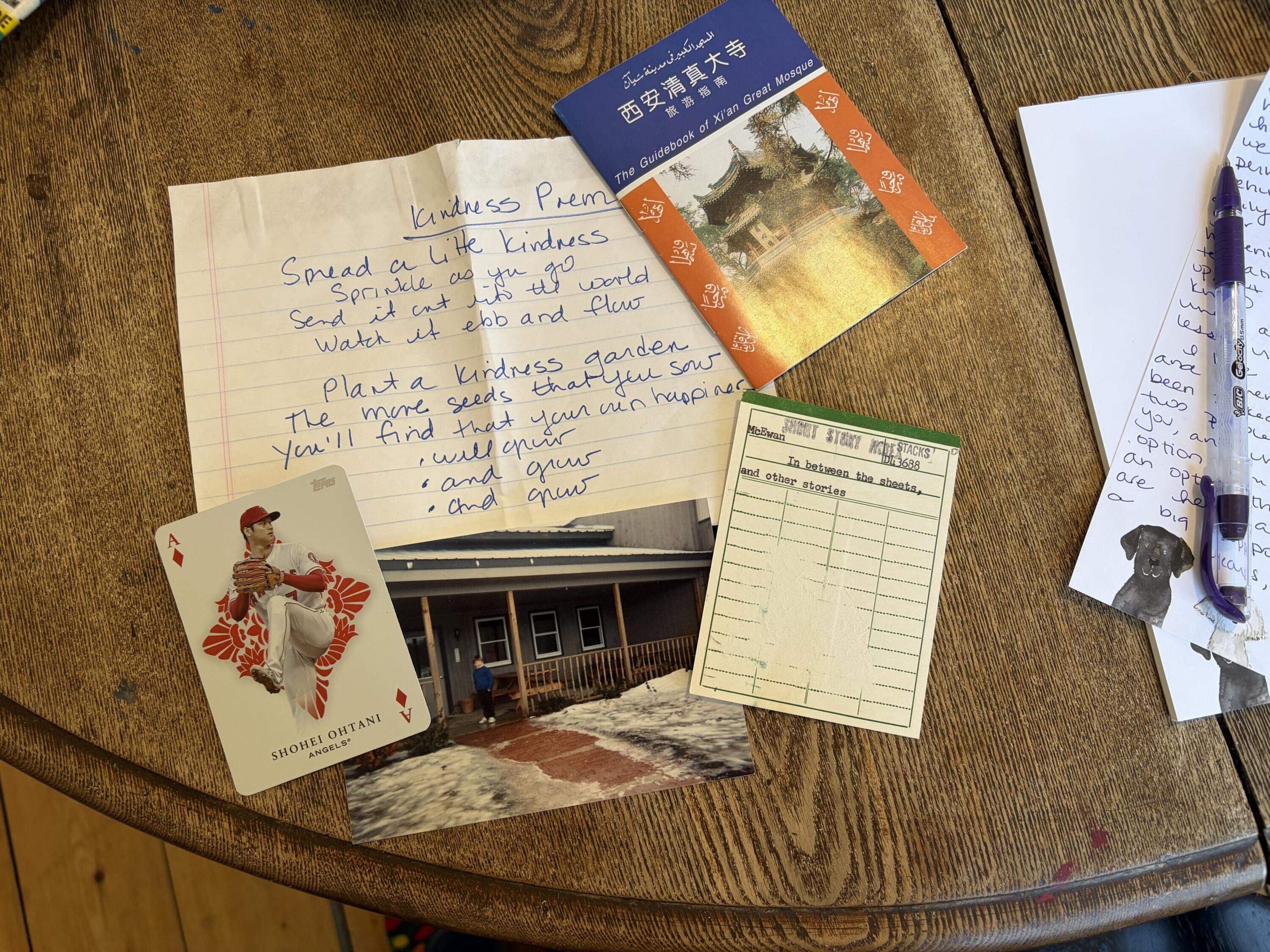
For the duration of my adult life, I have been a letter writer. The bookmarks next-leveled my game. Sitting at my kitchen table, a dog at my feet, I fill pages with details that connect to the bookmarks, whether stories from my own life or the results of my internet sleuthing, then post the correspondence to friends who could use a little whimsy.
I mailed the waxy pack of trading cards, the museum ticket, a blurry picture of seals and an airline boarding pass for a flight originating in Costa Rica to a friend in Texas.
Several days later, she called me during the middle of the workday. Through the phone line, I could hear her smile. My letter had arrived. The next weekend over FaceTime, we shared the delight of unwrapping the Bo Derek photocards and mutual disgust at how the gum had aged. (Not well.) The bookmarks had worked their magic anew.
What do an unopened Band-Aid, a Trivial Pursuit card, a coupon for a bankrupt department store, a driver’s education certificate and postcards from 1931 Berlin have in common? These everyday objects are evidence of our shared humanity.
At best, much of life is mundane, and at worst, crushingly lonely and unjust. It is easy to feel overwhelmed by the pace and pain of living. But the lost bookmarks, assembled and archived by my library, invite me to linger with gratitude and wonder. They remind me that the banality of my own life, and other people’s too, can be cause for celebration.