Support WBUR
Essay
The world has changed, but 'The Devil Wears Prada 2' is still about work
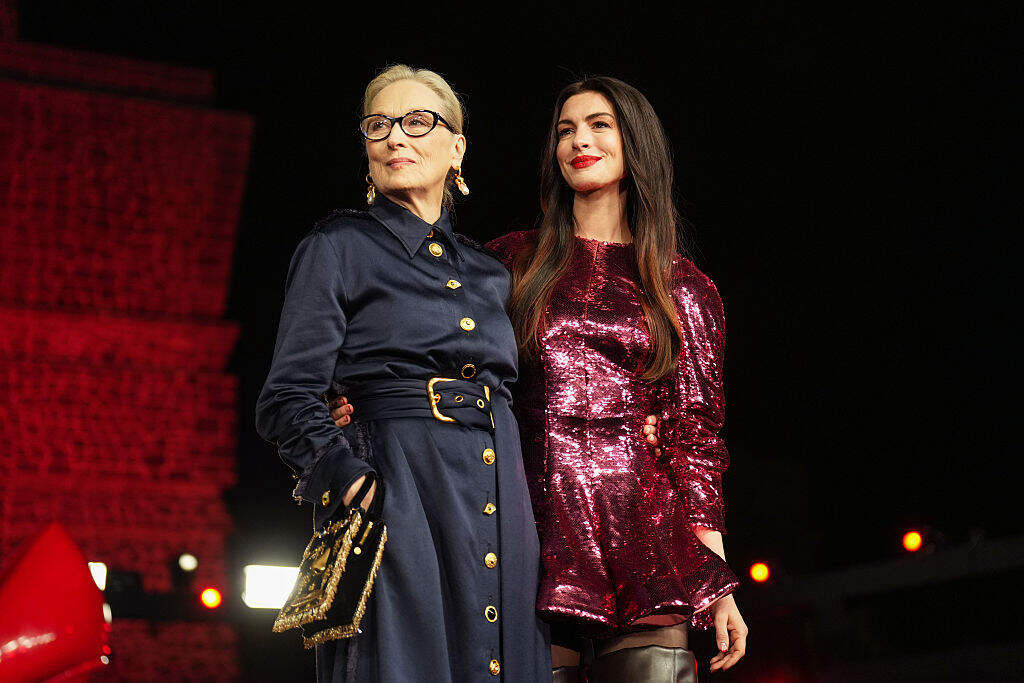
It’s hard to imagine a more industrious crew than the characters in “The Devil Wears Prada 2.” In the offices of fictional Runway Magazine, in the streets of New York, in the corridors of hotels in Milan, they are running, plotting, scheming, thinking, all for the love of a job. Well, also, for the love of clothes. The main theme of this movie is clothes. But the secondary theme is work.
The original “Devil Wears Prada,” released 20 years ago, was also about work. But it was a cautionary tale about the dangers of giving up your life and soul for your job. It involves a fresh-out-of-college journalist named Andy Sachs, who takes a job at a fashion magazine (which is but isn’t Vogue) as an assistant to imperious editor Miranda Priestly (who is but isn’t Conde Nast bigwig Anna Wintour.) Andy gets access to free designer pumps and thigh-high boots, but she’s consumed by all-hours demands from a boss who can't be bothered to learn her name. Her friends worry about her well-being. Her impatient boyfriend dumps her.
When I saw the movie back then, a part of me thought: Big whoop. Like nearly everyone I knew, I had done my share of overworking in my 20s, when I was fresh out of college, ambitious and free of responsibilities.

My first job as a newspaper reporter in small-town Louisiana wasn’t glamorous like Andy’s; to trudge through drainage ditches and bayous, I had to downgrade my footwear, and trust me, there wasn’t much lower to go. But it was equally consuming: covering mundane government meetings that dragged into the wee hours, dropping weekend plans to write about crazy crimes. And I had a beeper! I wore it everywhere, attached to my discount-store belt. If it went off during dinner, usually because an editor had a question about a comma, I felt like the most important person in the world.
I also had a sense that working hard would pay dividends, helping me get the next assignment, the next job, the next beat. And it did. By the time “The Devil Wears Prada” came out, when I had a toddler at home and couldn’t work all hours anymore, I had built up the standing to take a position where I could control the clock. All of that overworking was a down payment on work-life balance.
At the time, we were a few years away from a broader work-life balance conversation, marked by the “Lean In” movement and the “Can Women Have It All?” magazine covers. A few years after that, a pandemic upended the work-life calculation entirely. Hybrid work has been a game-changer for family life, even as it’s hollowed out downtowns and commercial buildings; how much to embrace the new white-collar reality is a debate we’re having in real time.
But “The Devil Wears Prada 2” is barely interested in that conversation. Miranda is still at the top of the magazine and the fashion world, angling for an even higher position in her media conglomerate. At one point, she mentions that she barely saw her kids when they were young, but considers that the acceptable cost of a job she adores. Andy, who’s found success as a hard-news reporter, conveniently gets a pass at confronting work-life choices: She’s child-free, with a cache of frozen eggs that represent tomorrow’s problem.
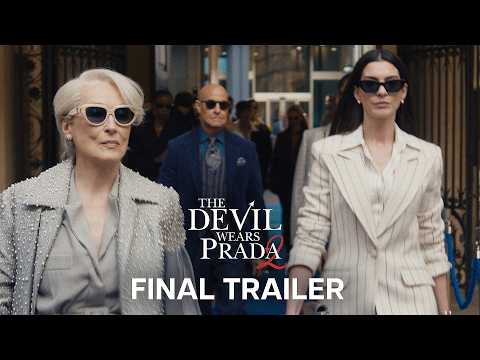
Today’s problem, for Miranda and Andy both, is the prospect of not working at all. The backdrop of the film is the collapse of the media industry and the perils of its prevailing business model, in which vast editorial staffs are subject to the whims of billionaires, their entitled kids and their benevolent ex-wives. I can attest that this is all too real for any journalist, but it taps into a broader sense that work is far more precarious than it used to be.
A year ago, DOGE ripped its chainsaw through the federal government. Today, tech moguls are stoking fears that AI will replace every job with a cheerful bot that hallucinates a little less than it used to. When Fidelity announced plans to call its staff back to the office five days a week, some conspiracy theorists guessed it was a backhanded way to encourage people to quit. It’s happened before.
Amid so much uncertainty, it’s no surprise that people would flock to a movie that fetishizes work as much as Christian Louboutin boots. (It’s not spoiling much to say that the movie’s final shot shows a Manhattan skyscraper at night, lit up from inside as three characters work long after 5 p.m.) The “Devil Wears Prada” franchise has always made a case for the importance of fashion — see the original movie’s famous cerulean sweater scene — but it has largely changed its stance on the psychic value of staying in a job. Work, kids! It tells us. It’s for your health!
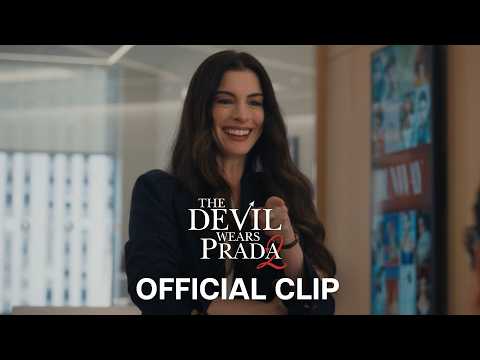
That’s an interesting lesson for the sequel’s younger fans in a generation known, fairly or not, for “quiet quitting.” A Deloitte survey last year found that nearly a third of GenZ-ers planned to switch jobs in the next two years — searching for work-life balance, but also for meaning and fulfillment. The implication, though, is that young people will work as hard as they need to, so long as the benefits offset the desire to attend a 5:30 p.m. spin class. The trick is understanding what those benefits are: the mentoring, the relationships, the characters you meet, the weird conversations you have in the sad cafeteria, the experience you don’t know you’re going to have until you have it.
They’re all on display in “The Devil Wears Prada 2.” In this sequel, Miranda Priestly’s young assistants are still treated like grunts; they aren’t allowed to pee without permission, and they surely have to sort the boss’s dry cleaning and get her lunch. But they’re resigned to their long hours and their full bladders, because the tradeoff feels intoxicating. Here they are at the center of things, in the hub of an office, surrounded by fancy clothes and oddball people, learning from a job that still exists.
Thank goodness the bots can’t carry the boss’s dry cleaning — yet.
This segment aired on May 11, 2026.