Support WBUR
Commentary
The trouble with rats and rat poison
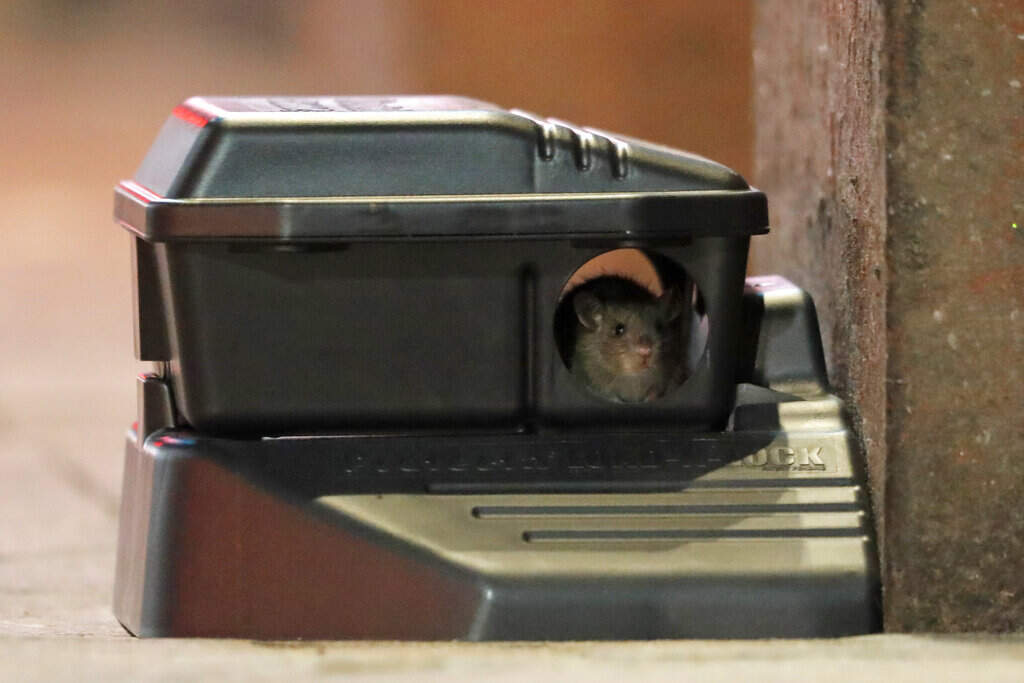
Every morning, from my window, I see a small black box. It sits at the base of the brick wall of the building beside my apartment.
Occasionally, a gray squirrel hops by the box. The busy traveler usually bounds over it, ignoring it as just another unremarkable fixture of the human landscape.
But one morning, the squirrel comes back. It shimmies up to the box, inspects it with a sniff, and then, slowly, squeezes its slender body and bottlebrush tail inside a narrow passage on the box’s side, vanishing.
I count the seconds. Then the minutes. Ten knuckle by before the squirrel emerges. It leaps up onto the box’s top, grooms itself, and goes on its way. The knot in my stomach tightens.
The squirrel is now a ticking ecological time bomb. For in the unassuming black box, the squirrel has just gorged itself on a full meal of second-generation anticoagulant rodenticides (SGARs), poisons primarily intended for rats that one wildlife rehabilitator, Christine Cummings of A Place Called Hope in Connecticut, told me should be called “the new DDT” for how they are devastating non-target species, especially birds of prey. The Massachusetts Senate last month adopted an amendment that would give cities and towns the green light to restrict or ban them, but decades of little to no regulation here and across the Northeast, not to mention in Washington, have allowed SGARs to contaminate virtually every level of the food chain.
The box’s contents will not kill the squirrel quickly. They will remain in the animal’s system for days. When the poisons do what they were designed to do — disrupt the body’s ability to clot blood — the squirrel will falter and become an easy meal for a predator or, once deceased, an even easier meal for a scavenger.

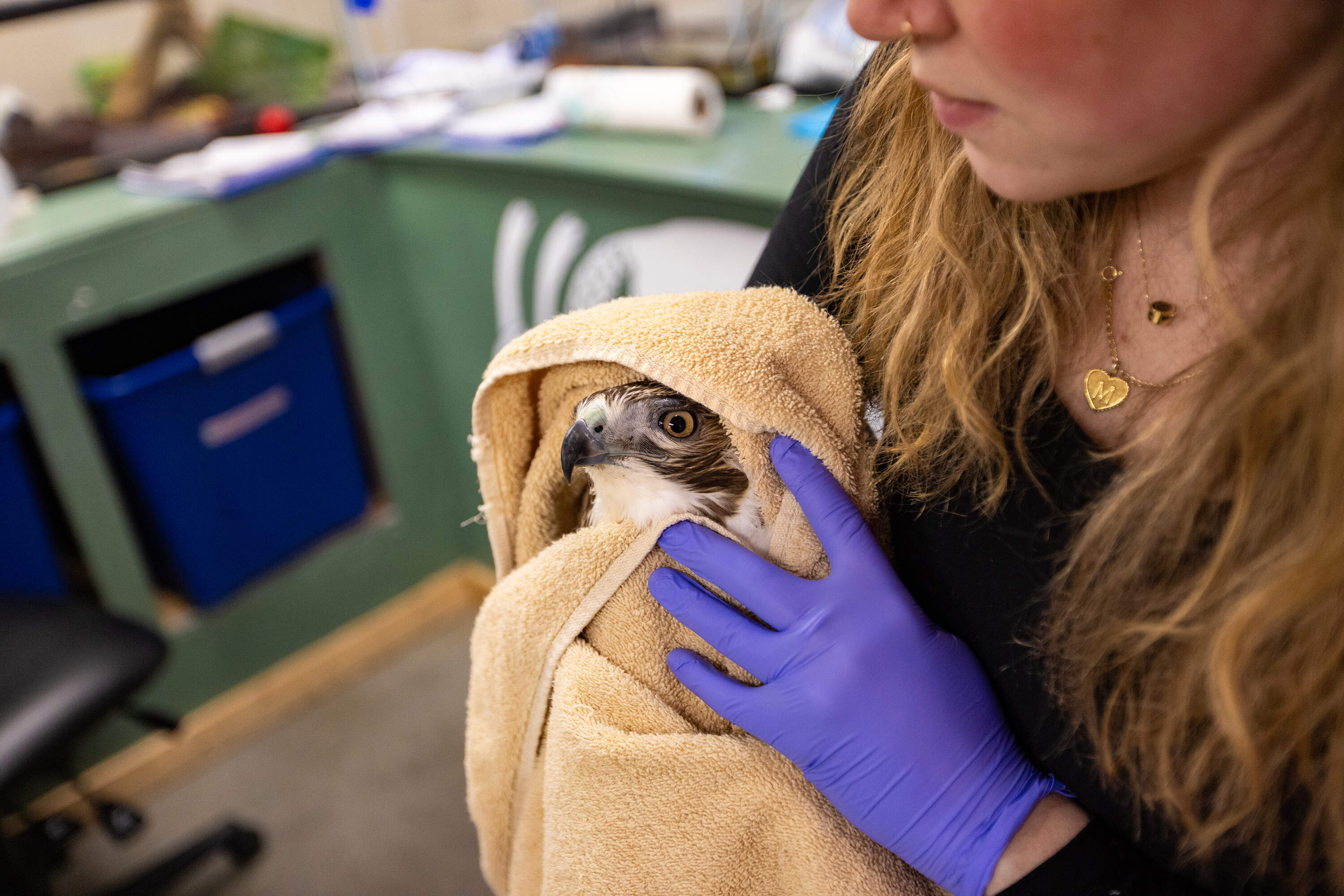
Let’s say the diner is a Cooper’s hawk (though it just as well may be a great horned owl, a bobcat, or a four-legged pet). The poisons will accumulate in the bird’s body, with gruesome effects. The hawk may lose control of its motor functions. The most harmless bump against a branch or a telephone pole, perhaps incurred while pursuing its next meal, may be lethal. Or the bird may simply hemorrhage internally until it drowns in its own blood. There are few peaceful deaths in the natural world, but the demise of wildlife and pets at the synthetic hands of SGARs are particularly brutal.
SGARs are an “improvement” on their first-generation predecessors, deadlier killers by a simple mechanism: sky-high toxicity. Whereas a rat (or a squirrel, chipmunk, mouse, or really anything that can access the black boxes) once had to ingest multiple helpings of first-generation anticoagulants for a lethal dose, SGARs deliver that fatal blow in just one feeding.
The problem is that they do not, despite their potency, kill instantaneously. The soon-to-be victim can return for additional feedings before it succumbs, concentrating an ungodly amount of poison in its body that will be passed on to that unlucky Cooper’s hawk or another predator or scavenger. Our ecosystems are engines of transfer and exchange. Put heaps of poison in the confines of a box, aimed at a particular target, and they will travel. They will wash over and into the landscape.
Once you become aware of these black boxes, you will notice them everywhere, especially in cities and suburbs. In my old urban apartment building, there was one beneath every other window along the ground floor, replenished each week by a pest-control company. Now, even in the small town I call home, where rat infestations are surely low on the list of public health risks, the boxes are still shockingly common.
Various studies conducted in the U.S. and abroad detail the widespread exposure of avian and mammalian predators and scavengers to SGARs. One from researchers at the Tufts Wildlife Clinic found that 100% of red-tailed hawks tested had some amount of them in their systems. A running list of published research on SGARs compiled by the advocacy group Raptors Are the Solution (RATS, aptly) shows that anticoagulant rodenticides have been found in a host of non-target mammals, wild fish, songbirds, domestic pets and even invertebrates. This is not to mention the thousands of humans, particularly children (who can mistake the colorful bait for sweets), exposed to anticoagulant rodenticides every year.
To understand why SGARs remain largely unregulated despite their well-established spillover effects, tune in to any legislative hearing on a SGARs-focused bill. You’re likely to find lawmakers justifying their unwillingness to prohibit SGARs on the basis of a time-honored bogeyman: uncontrolled rat infestations. All in the name of preventing a rodent apocalypse, pest-control companies and other licensed applicators can deploy rodenticides with few guardrails.
At the core of this knee-jerk reliance on poisons to control rat populations is a longstanding fallacy: That the way to reduce the number of creatures we deem problematic is to simply obliterate them. The natural world laughs at this conceit. Cull coyotes, and they breed more. Douse the world’s most populous cockroach species in insecticide, and they scurry away with increased resistance. Anticoagulant rodenticides have been around for nearly a century, and yet rats keep multiplying and developing immunity to the poisons we dump on them.
Other approaches are available. Along with improved sanitation and exclusion measures, one of the most promising solutions is rodent birth control, a non-lethal and non-toxic alternative that addresses the problem at its source. Pilot projects are underway in Massachusetts, Connecticut, and other states and cities to test the method’s efficacy at scale. Welcoming birds of prey into our cities and suburbs can also help cap rodent populations cost-effectively.
The clock is ticking. Massachusetts just recorded the SGARs-linked death of another bald eagle, the poster child of the American conservation movement. Every black box, whether sitting atop the concrete of a city street or tucked into the bushes of an idyllic cul-de-sac, represents history repeating itself. The question is whether we will heed the lessons of DDT and act, reining in our lethal instruments, before bald eagles and many other species find themselves back on the toxic brink.