Support WBUR
Essay
‘Good night and good luck’ to Stephen Colbert

The loss of Stephen Colbert may not be fully felt on the night he leaves television. It will come later.
It will come the first night something absurd, frightening, grotesque or dangerous happens in American public life, which assuredly these days it will. Millions of people instinctively wonder: What will Colbert say about this?
And then they will remember: nothing.
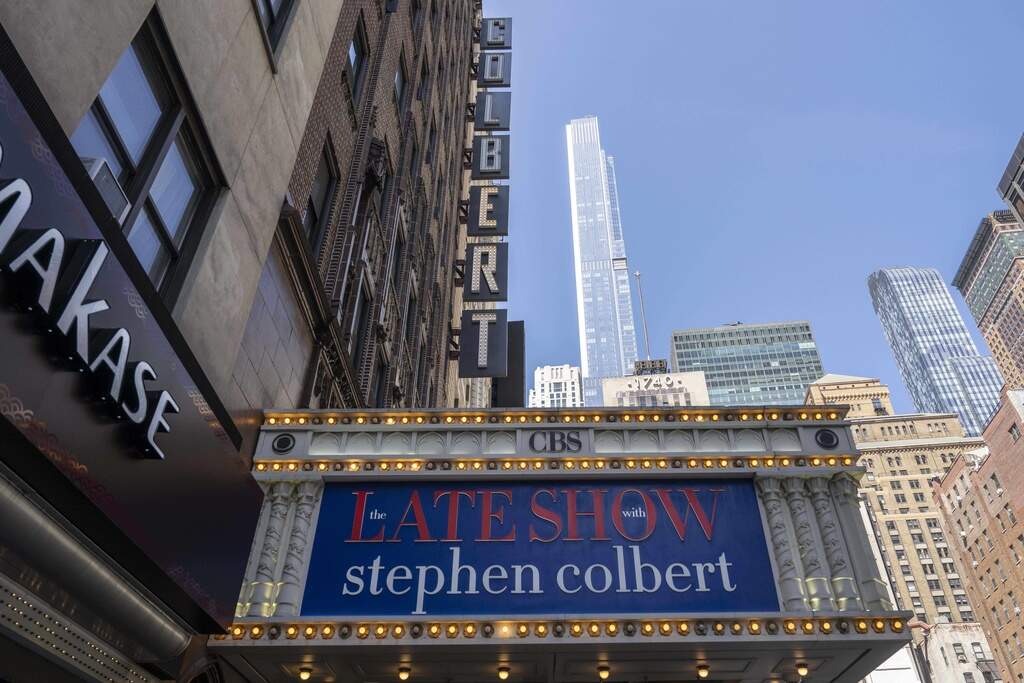
CBS has cancelled "The Late Show." The network that once had the backbone to air Edward R. Murrow taking on Sen. Joe McCarthy has decided that Colbert — one of the sharpest and most honest voices in American media — is no longer worth the trouble.
What’s being lost is not simply a talk show. It is something older and more important.
I know this because I was part of it. In 1970, as a teenager, I walked into WBCN-FM in Boston, in the early days of what would become a revolution in American broadcasting. Working with Danny Schechter, the station’s famed "News Dissector," we discovered that when news and information were bundled with music, comedy and genuine conversation, people listened. They trusted what they heard because the context made it credible.
That trust came partly from the form itself. Traditional news often strains to present facts objectively, at a distance. Colbert, like Stewart and Schechter before him, worked in a different tradition: accurate, fair, and deeply informed, but openly engaged. He talked to people, not at them, and the comedy made hard truths easier to hear because the laugh carried recognition — the audience realizing, together, that what he was saying was true.
Jonathan Alter, the veteran political journalist and former Newsweek columnist, made the point to me in a phone interview this week: democracies need skepticism toward power, and authoritarians often go after the people who ridicule them. Shakespeare gave us the line, “The first thing we do, let’s kill all the lawyers.” In politics, Alter suggested, the equivalent is: first, kill all the jesters. Comedy is dangerous because it makes fear, disgust and rage visible — and survivable.
Jon Stewart and "The Daily Show" proved this again, a generation after my days at WBCN. A stand-up comic doing a faux news show on cable became one of the most trusted figures in American journalism. This was not a paradox. It’s what happens when intelligence, honesty and humor occupy the same space. People think. They process.
Night after night, Colbert told the truth, made you think, made you laugh, and sent you to bed slightly less alone in your concern or alarm. For many viewers, he became part of the way they processed the day’s events. Millions of Americans depended on that.
Two examples come to mind.
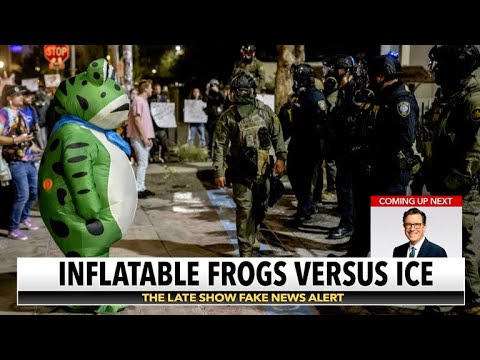
There was the time last fall when protesters in frog suits, calling themselves the Portland Frog Brigade, took to the streets to protest ICE — only to have the president say Portland “looked like a war zone” and Republicans denounce them as anti-American. Colbert answered by casting Kermit the Frog as the leader of the frog resistance, singing a parody of “Rainbow Connection” about masked federal agents, pepper spray, naked bike rides and a city standing up to fascism.
And there was the time CBS lawyers reportedly told Colbert he could not have Texas Senate candidate James Talarico on the show because of equal-time concerns. Colbert responded by spending several minutes explaining that he was not allowed to talk with or about James Talarico — while talking about James Talarico the entire time.
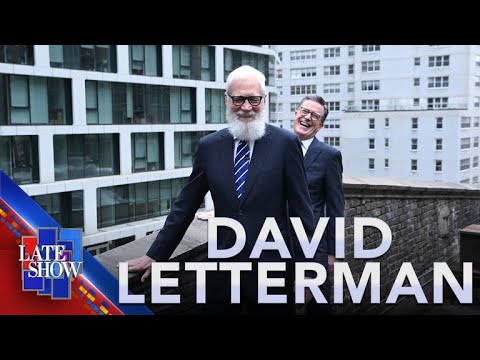
Last week, David Letterman stood on the roof of the Ed Sullivan Theater and oversaw the throwing of CBS property onto a large CBS logo on the street below. Then he looked into the camera and said, “In the words of the great Ed Murrow: Good night and good luck, motherf---ers.” It was funny. It was also a eulogy.
The danger is that institutions like this rarely disappear all at once. First they are treated as entertainment. Then as expendable. Then, when they are gone, people realize they had been serving a function no one else was filling.
We are watching something disappear. It is not just a talk show. It is a nightly opportunity to make sense of what is happening to the country, and to ourselves.
Once Colbert disappears from TV screens, millions of Americans may feel the sudden recognition of what was lost only after it is gone. Maybe someone else will find a way to step into that space — someone we trust, who can take on difficult issues fearlessly, say what needs to be said and make us laugh while saying it. We need that voice more than ever.
Good night, and good luck.