Support WBUR
Cog's Weekly Newsletter
Looking out for laughs
Editor's Note: This essay appeared in Cognoscenti's newsletter of ideas and opinions, delivered weekly on Sundays.
Mel Brooks writes in his memoir, “If you can laugh you can get by,” and I quote this all the time — to friends, my kids, my husband, myself. It’s not an easy time to work in the media. And it’s not exactly easy to read the news, either. It’s not an easy time to do a lot of things.
When I need the relief of a good laugh, I often turn to McSweeney’s for short-form satire and humor writing. It helped carry me through the stranger-than-fiction timeline of the pandemic; it’s the reason I have a piece written from the point of view of a ballpit in my bio; it’s why some very funny writers are now also my IRL friends. A lot of the short work McSweeney’s publishes is in response to something in the news, but sometimes it’s just absurdism at its best. Their most-read piece of all time is an aggressively enthusiastic celebration of autumnal decorating. The heart wants what it wants.
Sometimes I wonder what it’s like to edit satire these days, when the source material itself keeps getting more and more unbelievable. So, I asked Chris Monks, McSweeney’s editor. He said reading so much satire does help him cope, at least a little.
“The world has never felt more upside down and out of control,” he told me in an email, “but it’s good to know that there are so many funny writers out there who feel the same and use comedy to try and make some sense out of it all.”
And because even he needs an escape from the news cycle, Chris is mindful about mixing things up. “For instance,” he shared, “this morning we have a piece running about a dad with red-panda-obsessed children, who is freaking out because he has run out of facts about red pandas to share with them. It’s a charming and relatable piece.” (It really is. I even learned a thing or two about red pandas.)
In thinking about humor this week, I came across a New York Times article that suggests keeping a “levity diary” — like a gratitude journal, but for things that make you laugh. The idea is that noticing humor is a habit you can cultivate, a muscle you can strengthen.
Figuring there’s no time like the present, I started one on my notes app. Here’s what I added this week: “We Love You, Bunny,” a new novel by Mona Awad that’s making me laugh out loud at my kids’ piano lessons and swim practices; the memes about the leftover champagne from “The Summer I Turned Pretty” finale (still); and my 9-year-old’s Labubu, who is wearing a tiny blue sweater.
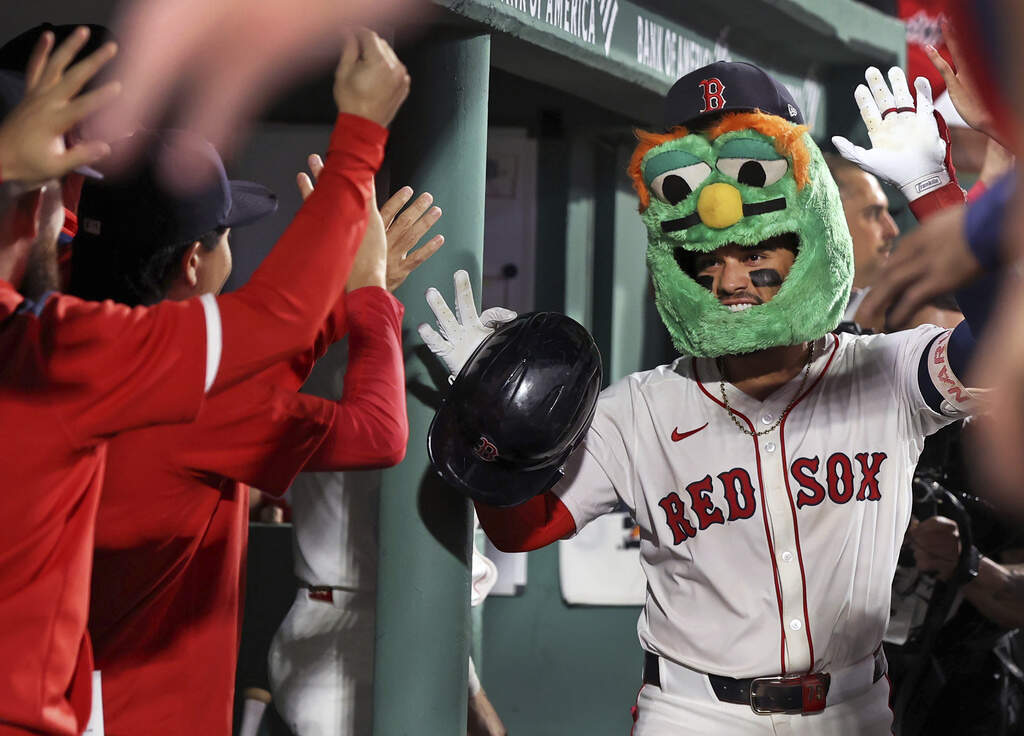
Then there’s my WBUR colleague Roberto Scalese, who woke up one morning last week and wrote a letter to an old flame, the Boston Red Sox, who’s looking surprisingly good, and may even snag a wild card spot (knock on all the wood). Berto’s relationship status with the Red Sox can be described as: it’s complicated. He wishes them the best, but it can be exhausting to keep them front and center in his life.
A perk of being an editor at Cog is that sometimes we get to work with our colleagues across the station on a personal essay — and working with Berto on this one was a lot of fun. It’s common in the humor writing world to collaborate, punching up jokes, and riffing on the cadence that makes the premise and framework feel both recognizable and increasingly silly. I love how, as you read, you can see Berto become more and more exasperated, and yet, like so many of us when it comes to the Red Sox, he just can’t quit them either. Our working headline was “Hey Red Sox…u up?” — and that bit makes me laugh every single time.
Another essay in Cog that brought me joy this week was by Ethan Gilsdorf. “The Rocky Horror Picture Show” turned 50 last Friday, and Ethan wrote about how it helped him find his own freak flag, so to speak, when he was a teenager. “The show gave me the permission and courage to dress up and act out,” he writes. “These weirdos are my people, I realized. I felt at home.”
As I stayed up way past my bedtime to watch Jimmy Kimmel’s return Tuesday night, I thought about how, while laughing about hard things isn’t necessarily a straight line to meaningful change, it can help assuage our fears or puncture our grief. I think it helps keep our hearts open. That’s certainly something worth looking out for.