Support WBUR
Essay
I’m an unlikely Tori Amos fan. That’s why I’ve loved her music all these years
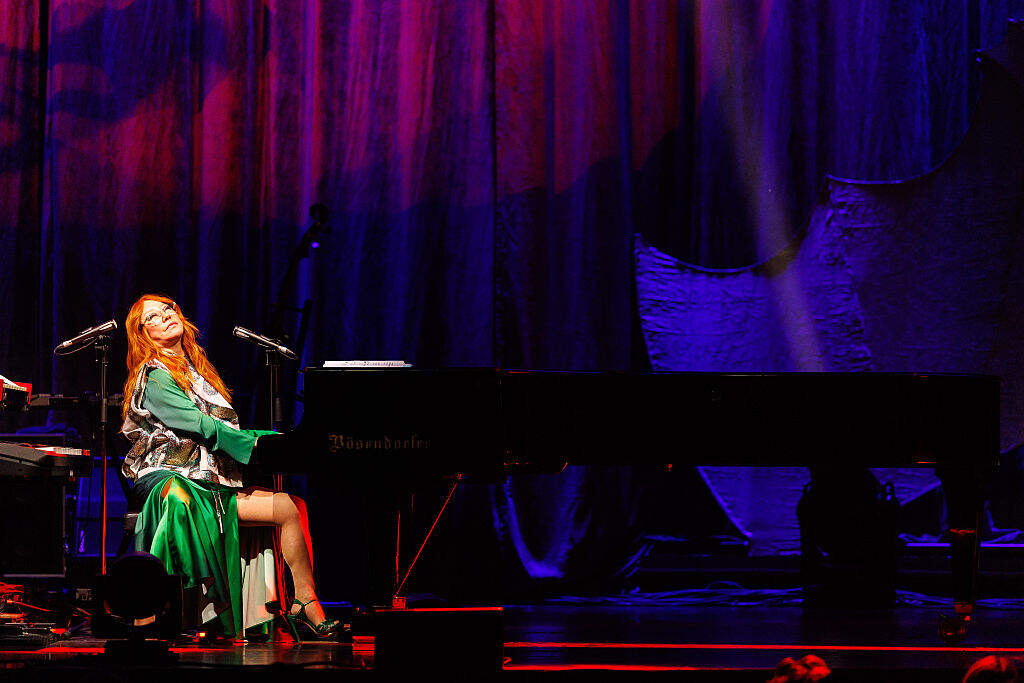
I found Tori Amos the way I found most of my music back in middle school. I would go online and look up songs from episodes of the TV shows I liked (in this case, “Charmed”), building playlists, downloading whatever I could find on LimeWire. That’s how I came across Amos’ song “Lust.”
It didn’t sound like anything else I was listening to at the time. It was haunting without resolving, emotional without explaining itself, but also upbeat in a way I couldn’t quite place. That was enough to send me searching for more. I landed on her album “Abnormally Attracted to Sin,” watched the videos and listened on a loop, late at night, headphones in, replaying the same tracks over and over —not because I understood it all, but because I didn’t.
Eventually I looked into more about Amos’ story: her young talent, piano bar requests and traumas overcome. No one pointed me to her. I just followed the thread because I wanted to. Looking back, I can’t think of the last time I’ve explored something so unintentionally as an adult.
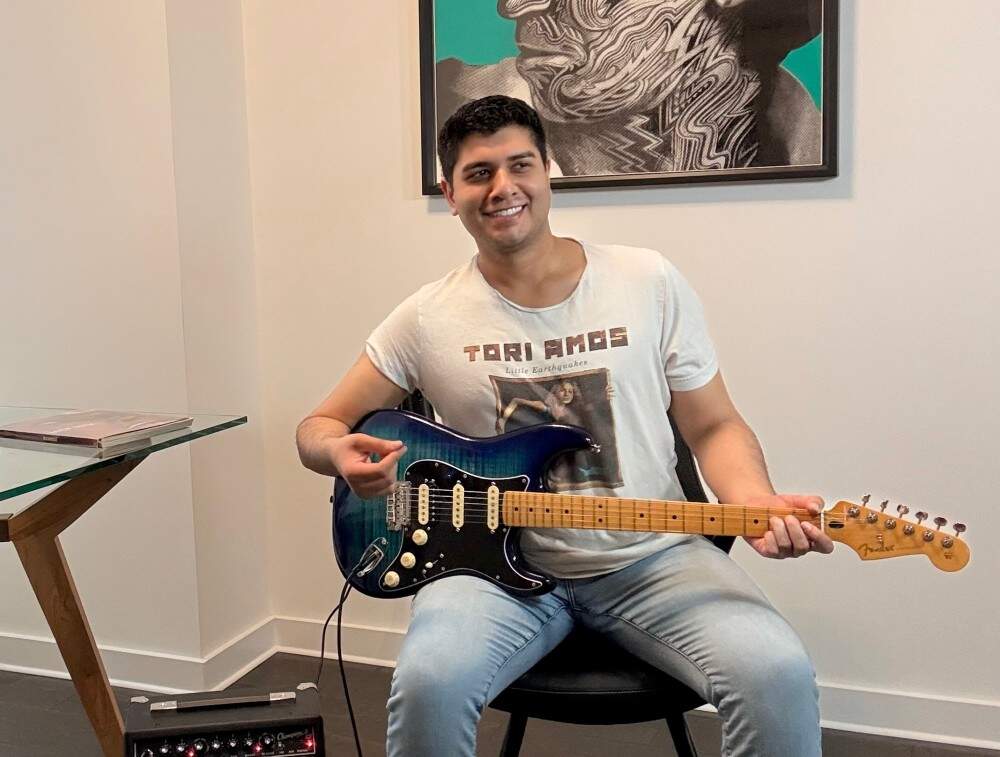
Even as I got older, no one around me, even my millennial hipster classmates at Brown, knew or cared much for Amos’ music. My dad called it depressing, worried I was just sitting there listening to sad songs on repeat. Admittedly, my infatuation with Amos was off brand for my stated interests and peer group at the time, when my greatest concerns were getting into an Ivy League college and passing for mainstream as one of the only brown kids in my class.
For the most part I was a consumer of mainstream pop culture — a sheltered Westchester cliché. I knew what it meant to bond over what was in, trendy. With Amos though, for me, there was no shared context to plug into. It was cathartic to secretly listen to Amos’ unpolished howls while putting on what was often a performance of my own.
Shared consumption often shapes our engagement with art in a way we can never untangle from our own relationship to it. The absence of that context ended up being the condition that made Amos’s art work most deeply for me.
It was cathartic to secretly listen to Amos’ unpolished howls while putting on what was often a performance of my own.
Through adolescence, college, business and law school, Amos was a form of self-expression and reflection in a world that demanded performances conform. Listening to her felt like silent rebellion against the suburbs, the Ivy League, the professional world — a way to keep my own secret spark in reductive, middling, environments.
Last year, on one of the first dates with my girlfriend at the time, we sat in my apartment and put music videos up on a projector, taking turns showing each other what we liked. My date went first, with Arctic Monkeys: sharp, controlled, produced but culturally “cool.” Then it was my turn. I hadn’t watched a music video in years, and none came to mind except Amos’. I debated: pick something classic, something “boy shows girl he is on a date with” — or “Silent All These Years”? I went with the latter.
It played. She watched. I could feel myself watching her watch it, revealing something about myself I didn't know how to articulate. I present as produced, deliberate, controlled. As a professional communicator, I know how to explain myself in ways that make sense to other people. This wasn’t that. This was a version of myself that didn’t translate. The next day, I joked about it, asking if I had scared her off with my music taste. “You were not wrong with that hypothesis,” she teased, and while we kept dating, we never listened to Amos together again. And actually, that was fine. I realized, that’s how I liked it best.
My connection to Amos’s music was formed in solitary loops; for me, it just doesn’t translate into something communal.
Maybe that’s why when I put on Amos’ new album, “In Times of Dragons,” released on May 1, I knew it wasn’t going to hit the same way within a few songs. It has her signature musicality. Perhaps the instrumentals are louder, her voice more produced than raw. The project is a clear critique of the global rise of authoritarianism. The songs offer a collective reading of the current state of the world, the lead single aptly titled “Stronger Together.” I’m pleased to see one of my favorite childhood artists on the right side of this political climate, and there is a relief in seeing a figure like Amos — who has always insisted on doing things on her own terms — thriving 20 years after I found her and 30 years after her original fame.
What I was missing was something less defined, something I once had to find my way to — and even listen to — on my own. Her music felt conspiratorial, like something only the two of us could understand. I suppose that’s the beauty of art that resonates on a personal level.
Amos is playing the Beacon Theatre in Boston this July, and because my family has spent years being forced to listen with me, mostly in the car, they decided they wanted to come. Buying the tickets was sweet, a potential bonding moment with my parents and brother. It also immediately felt wrong. We’ll have a fun dinner beforehand. My mom will be impressed when Amos plays her multiple pianos. It will be a nice day. But it won’t be the way I’ve experienced her music all these years, and I’m not expecting it to be.
That’s why I’m going back the next night. To disappear into the audience and sit — Amos and myself — alone, after 20 years of listening, the way it has always been.