Support WBUR
Essay
What a crime-fighting otter taught me about search and rescue
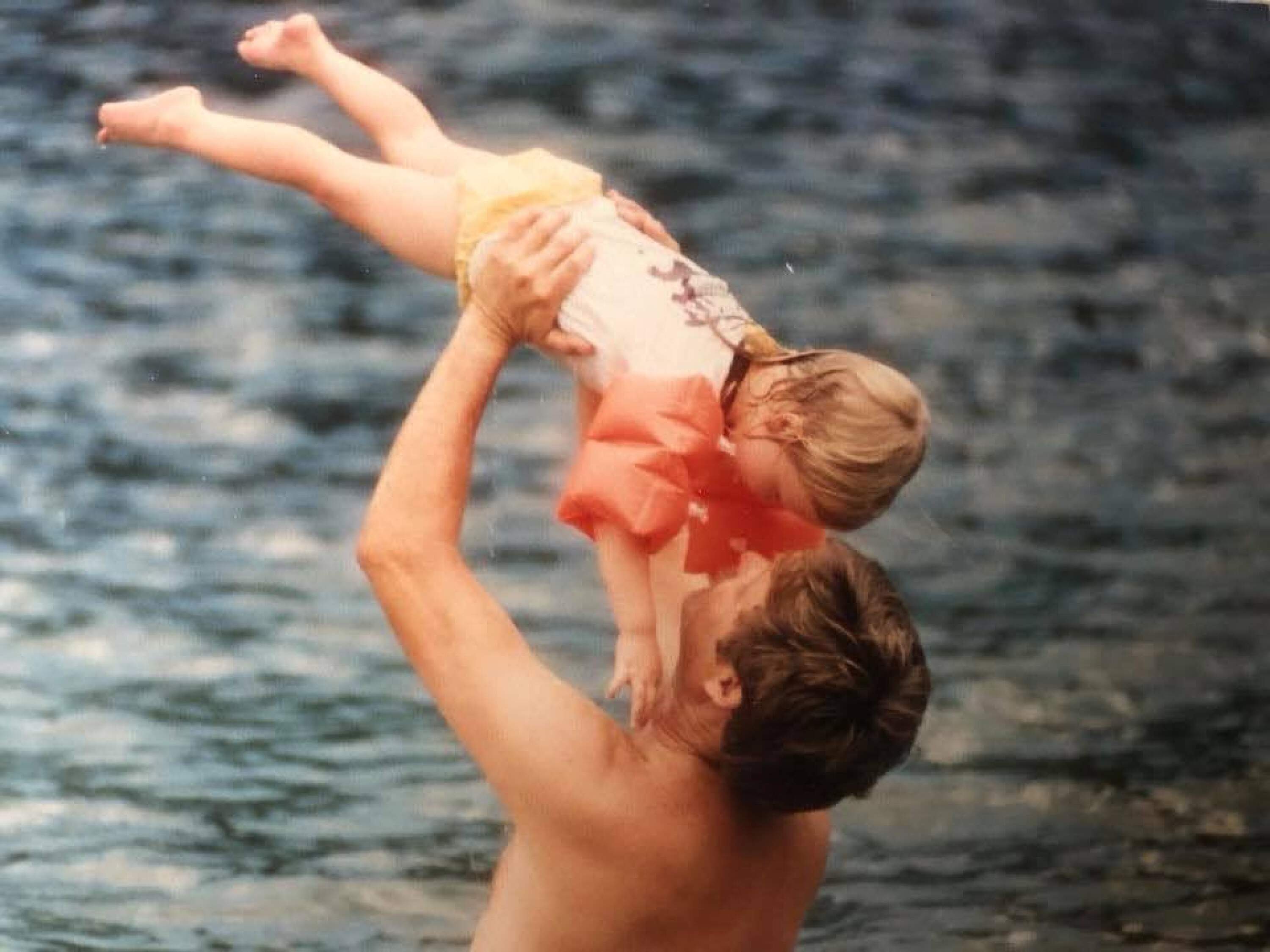
During manatee season, the clear water of the St. Johns River is filled with the gentle, enormous sea cows. When I was four, I shoved my arms into inflatable swimming rings, and my dad dropped me in the water. In Florida, you aren’t allowed to approach or touch a manatee, but they can come to you.
The first time one brushed the bottom of my feet, I froze, afraid it would eat me. “Just wait,” my dad said. “Trust them. They’re sweet.” Eventually, a manatee left her cub, flipped onto her back and floated over beside me. I stared at my dad, wide-eyed. From the edge of the boat, he smiled and told me to breathe, kicking his feet slowly in the chilly water. He said it would be one of the most beautiful and memorable moments of my life — and he was right.
He said the same thing every time he went to work as a park ranger, driving a flat tour boat along the river. When my mother started cosmetology school, he brought me with him nearly every day. I stood in my life jacket and pink floaties in front of a handful of sweating guests while he steered the boat slowly through the water plants. I'd point at cypress trees, water snakes and swamp birds, calling out fun facts my dad had taught me.
“There are thousands of alligators in this part of the river, but they don’t mess with the manatees,” I’d say. The tourists would gasp. “Manatees have no natural predators,” Dad would say. I’d pause a beat for effect before my final line in the presentation, “It sure does pay to be sweet!”
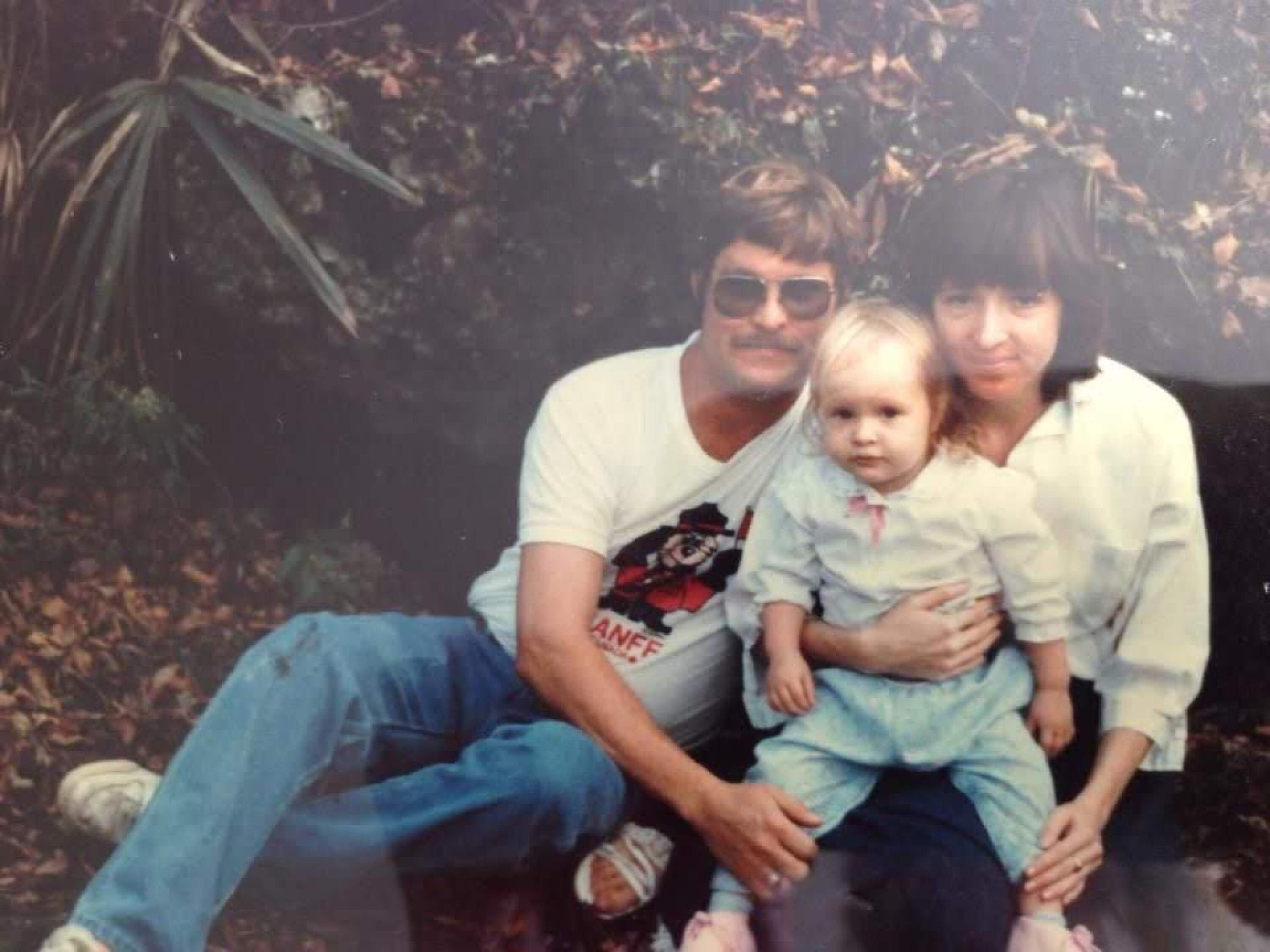
My family left Central Florida by the time I was in elementary school, moving north to the panhandle. My dad, my grandmother and my cousin died unexpectedly in quick succession when I was in high school, and right after I graduated, a major hurricane chased me out of town and wrecked the city, knocking over buildings and leaving power lines leaning into the flooded streets. The onslaught of tragedy made Florida feel dangerous, haunted. By the time I left my home state for good, St. Johns River and the manatees were already a distant memory. I didn’t go back for over 30 years.
When I finally did, it was a fluke. I traveled to Florida to work on a story about how people find what's lost, not realizing I was trying to do the same.
I went first to the Sarasota area to interview a subject for an article I was writing, about an otter named Splash that was trained to locate human remains under water. I’d seen Splash and his handler, Mike Hadsell, featured in a small town news journal when they visited to help law enforcement find a missing woman. It was the first time I was aware of this kind of collaboration between humans, that was not a SeaWorld-style spectacle. Hadsell told me that he decided to try to train Splash after working with search and rescue dogs for over 30 years, because he saw a huge need. Rescue dogs — and horses — stop at the water’s edge. Underwater detection technology is expensive, and it isn’t accurate in many conditions. Hadsell needed to find an animal who could jump in.
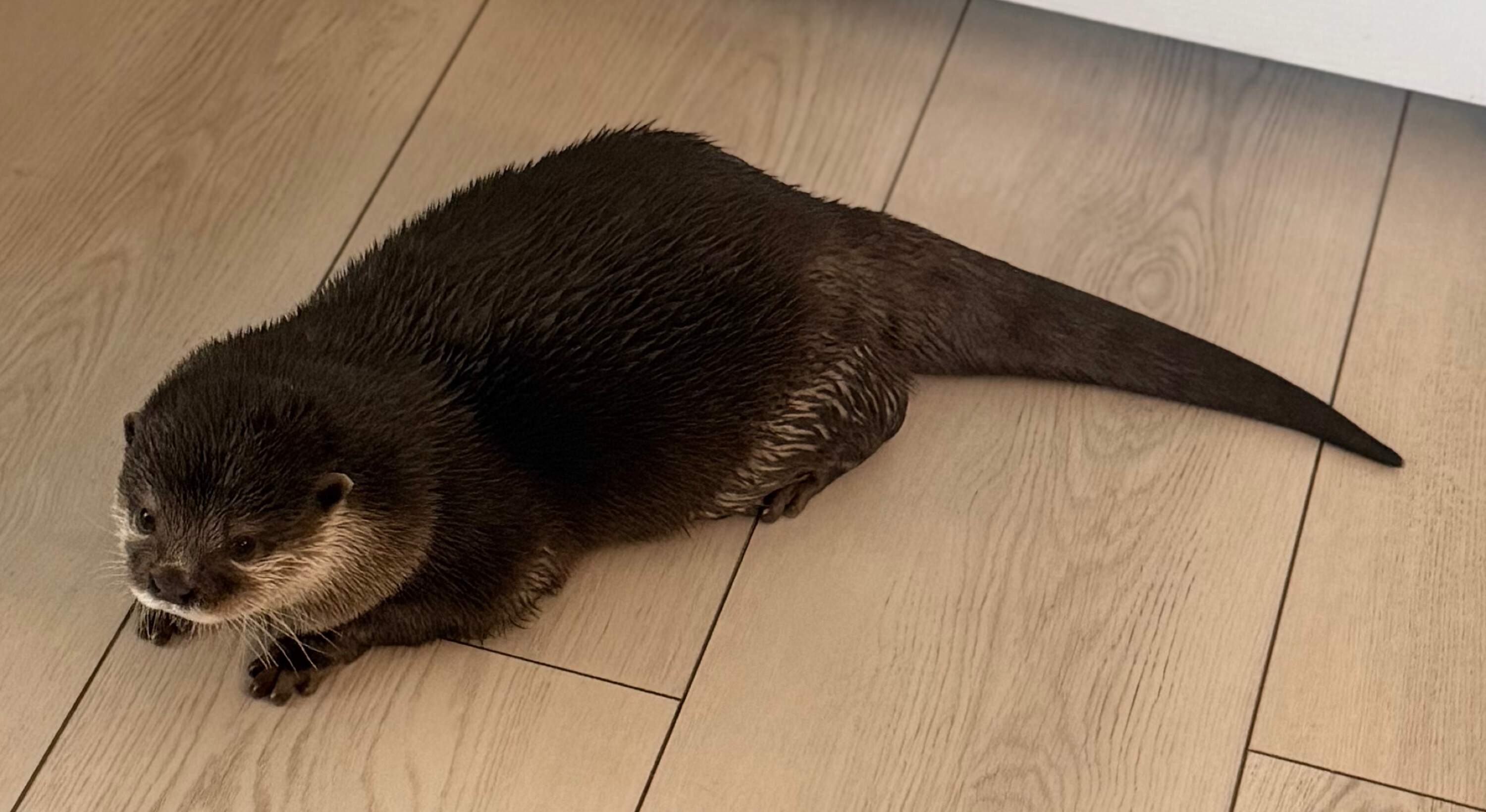
Splash and Hadsell were the kind of duo my dad would’ve loved. When Hadsell told me he had to truss up alligators and put them in “gator jail,” tied up on his boat to keep Splash safe when he was training in the wild, I remembered watching my dad doing the same kind of things as a park ranger. “To survive a place like this,” Dad said, “You gotta learn to live with dinosaurs.”
I left my meeting with Splash and Hadsell with a plan to drive to the panhandle, but the word closure kept ringing through my mind. Even though I’d faced an enormous amount of loss at a young age, I’d never considered the concept.
Everyone in my family had been cremated, and the adults at the time made decisions about what to do with their remains. I didn’t care when I was a teenager — or as a middle aged woman. What mattered to me was that the most incredible people I’d ever known, people who loved me ferociously, were gone, forever. I’d been forced to say goodbye. I spent my entire adult life trying to live meaningfully, to love my children the way my family had loved me and in doing so honor the people they would have been, had they survived.
I traveled to Florida to work on a story about how people find what's lost, not realizing I was trying to do the same.
Most sources define closure as finding a way to peacefully live with the fact of someone else’s death. To Hadsell, having Splash find the bodies of missing people was a pathway to that peace, as if understanding the story of how a person lost their life could soften the permanence of losing them.
I wondered what I could learn from their approach. While I accepted my family members’ deaths, I didn’t feel at peace. I was afraid of being in Florida, like it had an inherent viciousness and the ground could crack open at any time and swallow me up.
Driving north, I passed a billboard with a goofy illustration of a giant manatee and her calf. Suddenly, I remembered St. Johns River, the most beautiful day, the overwhelming fear mixed with awe. I pulled over, got directions and looked up the boat tours my dad used to lead. Now run by a private company, they launched one, two-hour tour each day.
The next morning, I sat alone on a wide bench of the pontoon boat as a dozen nursing home residents siphoned on board, their aids guiding them by the elbow or pushing their wheelchairs. “I thought I was the youngest one here!” said a woman wearing a coral t-shirt, as she parked her wheelchair beside me. She announced that she just turned 80, told me her name was Alice, and ran her finger down the tattoo on my arm, a forest of birds and lush vines. Then she held my bicep with both hands and rubbed it like she was trying to start a fire.
“This whole place is art!” she said, as the tour guide switched on the gentle motor, reminding us that this tour would be super slow so the propellers wouldn’t hurt the manatees.
Alice looked around and put her hands in the air, breathing in. It was 66 degrees, and a cool wind drifted softly through the blaze of the rising sun. I followed Alice’s lead, unclenching my jaw, relaxing my shoulders, focusing on my breath. I realized I was anxious and scared, but I didn’t have a good reason to be.
Was it even possible for me to rest here?
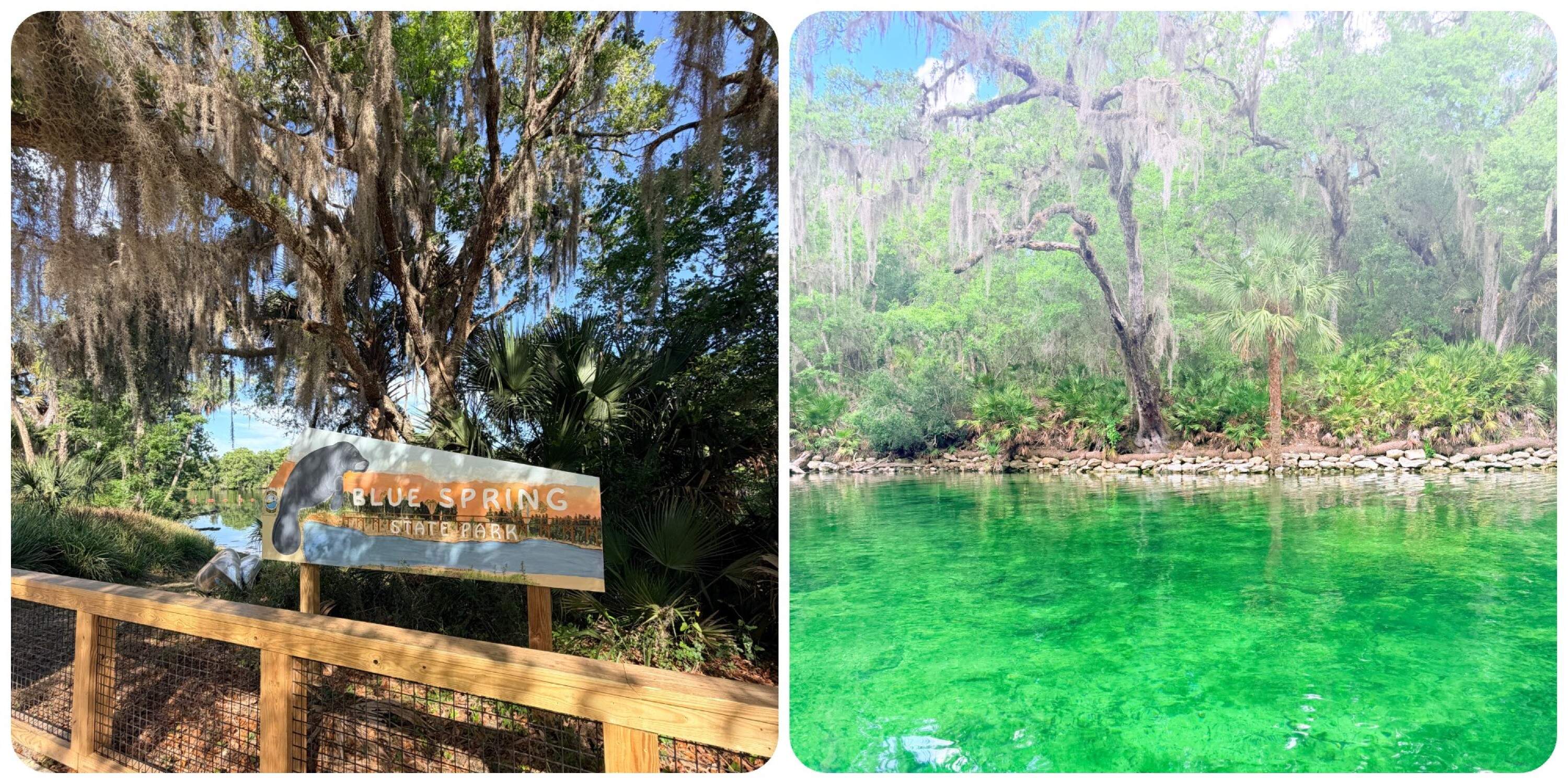
Within minutes of pushing away from the dock, a gator swam swiftly toward our boat. “Hi, Boo,” Alice said. She waved and blew kisses. The gator blinked up at us then turned and swam back to the river bank. The other tourists took pictures. The guide asked us trivia questions for an hour as he drove the boat in a slow circle around the river: “Why do alligators lay in the sun?”
The cartilage in the bumps on their back are like coals absorbing heat, I thought, then the guide said the exact same line.
“Which swamp bird sounds so much like a jungle cat that it was used in the Tarzan movies as jaguar sounds?”
The limpkin, I thought, as we passed one shrieking, perched on the branch of a cypress tree.
I hadn’t considered any of these animals in years, but question by question, the realities of their lives emerged from the slush of my memory until the guide asked, “Why don’t alligators eat manatees?”
“They’re too lazy,” I blurted out. “They don’t like to fight for their food.” Everyone on board turned to look at me. I suddenly remembered standing in front of the boat with my dad so many years before, the way he called me “First Mate,” how I marched around with my hands on my hips like I owned the whole park.
“That’s right!” the guide said, diving into a monologue about the nature of alligators, the way the river sounds like a party of monsters at night during mating season, how easy it is to get used to them, even though they look prehistoric. I watched a slim gator slip into the water and swim along the surface toward a kayak. The guy in the kayak glanced in the gator’s direction but continued to paddle, undisturbed. I had forgotten how normal it is here, I thought.
Alice asked me why I’d been writing so much in my notebook the entire tour. “Are you a student?” she asked.
“Kind of,” I said. I told her I was a journalist writing about a crime-fighting otter in Sarasota. She was delighted. As I told her about meeting Splash, the cases he’s worked on and his love for raw salmon, I felt like I was lying. I kept talking though, to cover up the questions I really wanted to ask her: What does closure mean to you? How have you dealt with the space people leave behind when they pass away?
Every year I get farther away from the last day I spent with my dad, my grandma, my cousin. The more the memories blur, the more the people who raised me disappear — the more I want them back.
“So you came for the otter, but how’d you end up here?” Alice asked.
I gave up and told her about my dad’s stint as a park ranger, how I’d been irrationally afraid of Florida for thirty years and how some part of my brain had retained a bunch of wild animal factoids, but I was starting to forget my dad’s voice.
“But you found him here, right?”Alice asked.
I stared at her, unsure of what to say.
She patted me on the shoulder. “Just find a reason to keep coming back. He’s around here, somewhere. They all are. If you’re here, they’re here too.”
After the boat tour, I felt both more at ease and more haunted by Alice’s words. I waited until she and the rest of her group boarded their bus and left, then walked alone down a long, refurbished wooden walkway to the entrance of the part of the spring you’re allowed to swim in. I tied my skirt as high as I could and stepped down into the cool, clear water. A school of dark sailfish parted and swam away from me, fast.
Manatee season had ended two months before, so there were few still cruising around the river, too far away for me to see. Nearby, a heron hung dead from a high branch. The tour guide had told us it had gotten tangled in a fishing line then somehow trapped itself up there, dead before any of the rangers found it.
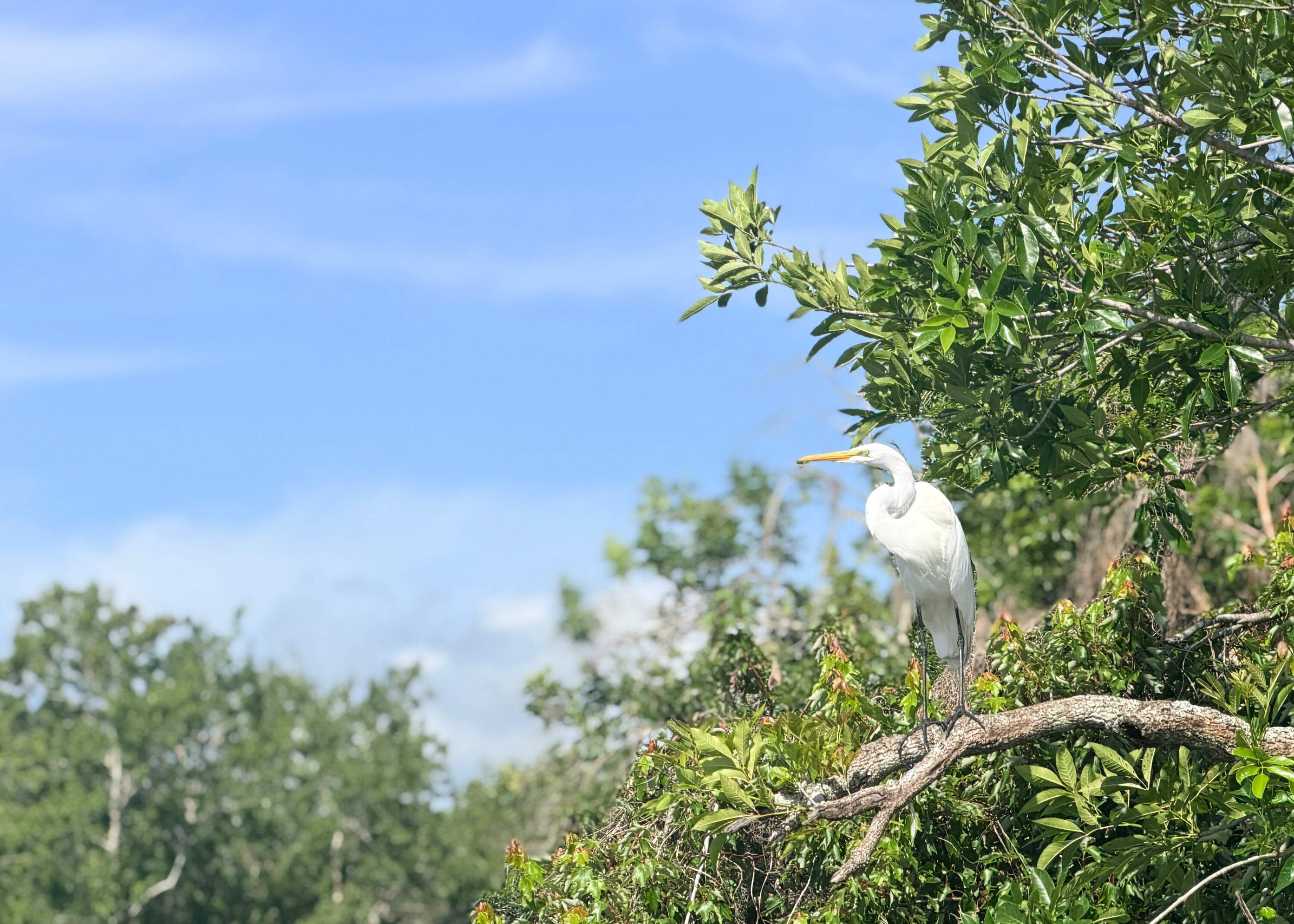
But when the wind blew, the branch moved, and the bird moved too, casting shadows across the orange sunlight. If I didn’t know where the shadows came from, I’d call them gorgeous, mesmerizing. Another heron stepped slowly through the plants on the bank below, and a white crane lifted up from the bright green water plants where it had been sleeping on the other side of the river. A limpkin screeched in the distance. Alligators sunned on exposed tree roots and followed canoes, their tails snaking the water behind them.
I'd stayed away from the banks of this river for decades, ignoring a whole chapter of my life. Returning, I realized that what I needed — and maybe what the search and rescue efforts like Splash the otter offer families of missing people — isn’t closure, exactly.
As I stood thigh-deep in the electric blue water, it seemed I could access more of the shared moments of my life with my father, from a time when we were embedded in the wild beauty of our home state. Inside these recovered memories, Florida transformed from a scary place. It was still a land of death and destruction but also a bright, lush ecosystem. “We are always living and dying at the exact same time,” my dad said.
That’s what makes life thrilling. Maybe the trick is to not run from loss, or fear it, but to find ways to return to the places that once held us, together.
Subscribe to Cog's weekly newsletter. Essays on friendship, love, loss, parenting, politics and more, from Boston's NPR.