Support WBUR
'Play Nice': The inside story of Blizzard Entertainment's billion-dollar games and controversies
“Diablo IV: Vessel of Hatred” is out on Tuesday. It’s the latest installment in a gaming franchise that’s made billions of dollars.
Successful as “Diablo” has been, the company behind it has had to deal with many of its own demons since its founding in 1991. Blizzard Entertainment stormed to the top of the industry with revolutionary hits like “StarCraft” and “World of Warcraft,” until gender discrimination claims and controversial corporate maneuvers eroded its lofty reputation.
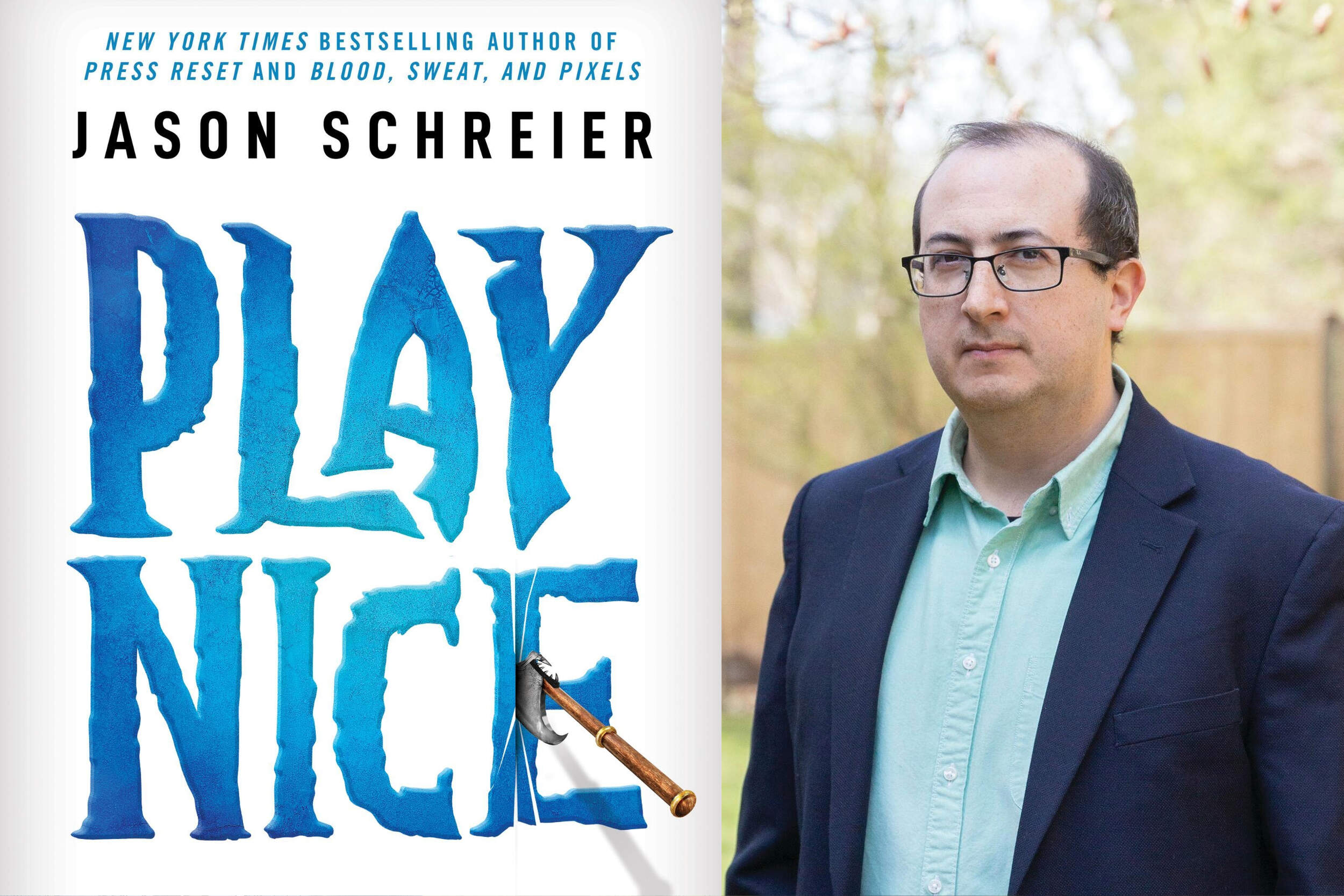
“No other video game company has made the type of industry-changing franchises that Blizzard has, and nobody has made so many of them, with one exception — Nintendo,” says Bloomberg journalist Jason Schreier, author of the new book “Play Nice: The Rise, Fall, and Future of Blizzard Entertainment.” “I like to refer to them as kind of the Pixar of video games.”
But after merging with “Call of Duty” creator Activision in 2008, Blizzard started to swing between risky long-term bets and steady cash cows. The company steered towards consistent sequels, mass-market mobile games and an ill-fated attempt to bring a professional esports league to its multiplayer phenomenon “Overwatch.”
“You have this company in Blizzard that really believes in innovation and creativity — they want to take all the time they need to make sure their games are great,” says Schreier. “On the other side of this boardroom battle, you have Activision, which believes very strongly in predictability and yearly releases. It was never going to work as a partnership.”
6 questions with Jason Schreier
For the non-gamers, could you give a sense of the scale of this gigantic industry?
“People don't realize that gaming is bigger than Hollywood and sports combined. I think that a lot of people think of video games as, ‘My kids play ‘Fortnite.’’ But really, the video gaming industry also encompasses those of you who play ‘Candy Crush’ on the subway on your way to work. And as it turns out, ‘Candy Crush’ would ultimately become part of Activision Blizzard. The gaming industry has gotten so humongous. I believe estimates pegged it as like about $200 billion in revenue.”
Then there’s this sci-fi game called “StarCraft” that takes off in South Korea. How did it become something of a national sport there?
“A little bit of quick history here is that South Korea was hit pretty hard by this financial crisis in the late 90s. South Koreans responded by boosting their internet infrastructure, and a lot of people wound up starting what's called internet cafes, basically a place where you can go and you can pay a very small amount of money to just play games there all day with your friends. And that happened to coincide with the rise of this game, ‘StarCraft.’
“People got really, really into ‘Starcraft’ to the point where some of the best players started becoming national celebrities in Korea. This guy Boxer was the equivalent of LeBron James in Korea. They were selling out stadiums and they were nationally televising ‘StarCraft’ matches. People were paying to go and sit in a stadium and watch someone else sit at a computer and play ‘StarCraft.’ That's how much people loved it in Korea. It was like their baseball.”
We have to talk about “World of Warcraft” in 2004. It really changed the company and it was designed to essentially play forever. Despite its success, this is the start of the section fall, the fall of the company in your book. Why?
“The games before ‘World of Warcraft’ that Blizzard made were designed to be sold in a box. And you play it through, maybe you play it online for a while, but really you then move on to the next game. ‘World of Warcraft,’ you buy it and then you pay monthly to keep playing it and then you play it forever. And in fact, it's about to hit its 20th anniversary this year and it shows no signs of slowing down.
“But here's what happened when Blizzard first put out ‘World of Warcraft.’ Their wildest dreams were that it might hit a million players in the first couple of years. Instead, by the end of their first year, they had 5 million players. By 2010, they had 12 million. Blizzard went from a company of hundreds to a company of thousands. The growth was exponential. It just had to deal with all of the kind of new scrutiny that that provides, and especially being part of Activision Blizzard, a publicly traded company where Blizzard is part of the title. That growth can only be sustained for so long and it really just irrevocably changes the nature of a company. When a company goes from hundreds of employees to thousands of employees, I think something gets lost along the way.”
Then after ‘World of Warcraft’ and the Activision merger, Blizzard had to cancel this expensive project called ‘Titan’ — which angered Activision CEO Bobby Kotick. What kind of fallout did that have?
“It was seven years of work. It was $80 million. A whole lot of energy was put into that one and then suddenly it was canceled. I think to some of the people that worked on it, maybe not so sudden because they had a feeling that there was some mismanagement involved.
“Bobby Kotick and his executives at Activision looked over and they said, ‘Hey, Blizzard, we need to get some adults in the room here. We need to fix some of these problems that allowed this game to happen because the stakes are very high.’ To give you an example, Bobby Kotick was so excited about ‘World of Warcraft’ that he would gather celebrity friends like Tom Brady, and he would introduce them to the Blizzard staff. And he would be like, look, these are the guys who made ‘World of Warcraft’ and this thing, ‘Titan,’ that's their next big thing. So he was pretty pissed when it was canceled.”
But out of this cancellation came an unexpected hit — “Overwatch.” Then Activision Blizzard tried to turn it into “the NFL of video games.” What did that even mean?
“The silver lining of the ‘Titan’ debacle was that after the game was canceled, a small team of people kind of remained behind to start making pitches, and they ultimately came up with what was called ‘Overwatch.’ That game sold astronomically well and became Blizzard's next big hit and billion-dollar franchise.
“So remember how ‘StarCraft’ became this national sport in South Korea? So Blizzard and Activision wanted to kind of take a similar approach to ‘Overwatch’ and really turn it into what is called now esports or competitive virtual gaming. I'll tell you a funny story. There's this guy, Nate Nanzer, he was leading the team within Blizzard to create what they called Overwatch League, which would be kind of, in his pitch, ‘Overwatch’ esports, modeled around the NBA.
“So there was a season and players would get salaries and benefits and they would have city-based teams — the New York Excelsior or the San Francisco Shock. And so Nate, his pitch was like, ‘Hey, if you want to be the owner of one of these teams, you can pay $250,000 to come and participate.’ And he took that all the way up to Activision, and Bobby Kotick, the CEO of Activision, is in a room with a bunch of his guys, and Bobby looks it over and he's like, ‘I love this. But you know what? It should be $20 million instead of $250,000 to buy an Overwatch League team.’
“His rationale was that he wants the billionaires involved and people like Bob Kraft, who owns the Patriots, who wound up owning an Overwatch League team as well, he wants it to have that legitimacy and that cachet. But of course, the Overwatch League would fall apart a few years later. All of these team owners started so far in the red and there was really no established model for profit. It didn't help that we walked into a worldwide pandemic shortly afterward, and the idea of selling tickets in stadiums was no longer a viable possibility. But that Icarus moment of saying $20 million a team wasn't quite the start that they needed.”
Well and then comes this bombshell — a series of scandals, a massive sexual harassment lawsuit. What did we learn about the misdeeds going on inside?
“Blizzard, like a lot of game companies, a lot of tech companies, was dominated by men. In the mid-2010s, it was about 20% women. Before that, in the 1990s, virtually no women worked there. And as a result, men were in all of the positions of leadership. And for women, I mean, that causes problems, ranging from subtle and systemic ones. Not having to worry when you're in a room, if you're not getting listened to or if someone's taking your ideas because you're a woman. It goes all the way up to the really extreme, horrible examples of harassment and physical assaults and some other horrible stories that came out as a result of all of this.
“And I think Blizzard from the very beginning had this kind of good old boys club culture that they really struggled to do away with, in large part because what they really valued was tenure and loyalty and people who had been there for 15, 20, 25 years, some of whom were not exactly the best people to be in management roles at the company. And so, yeah, that lawsuit exposed some ugliness that I think the company is still dealing with the repercussions of even today.”
Book excerpt: 'Play Nice'
By Jason Schreier
James Perkins Mastromarino produced and edited this segment for broadcast with Ahmad Damen. Perkins Mastromarino also adapted it for the web.
This segment aired on October 8, 2024.