Support WBUR
How focusing on fitness is helping one Gazan cope with the war
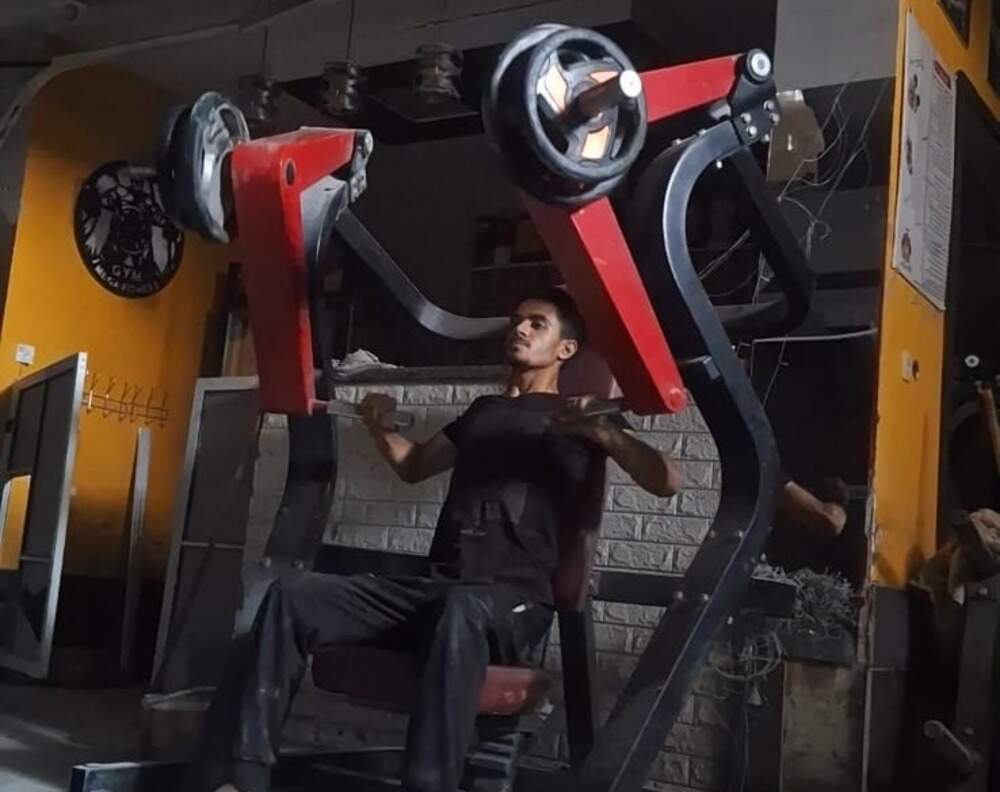
Finding the time to exercise can be a challenge for anyone, especially during the holiday season. But for 19-year-old Mohammed Hatem, keeping up with a fitness regimen has proven even harder as violence plagues his homeland of Gaza.
When Israel’s war against Hamas in Gaza began last October, Hatem was finishing up the second week of his first year as a business administration student at Al-Aqsa University. His studies quickly ended, and survival took priority over everything. His former school later became a refugee camp.
Since then, Hatem’s life has completely changed. He has been displaced 10 times, lost loved ones and dealt with severe food shortages.
“All my dreams switched from the person who wanted to be successful, athletic, have a business … to a person who just wants to survive, get water for his family, charge my phone, and get internet,” Hatem says.
But rather than despair in his circumstances, Hatem turned to the one thing that helps him cope: exercise.
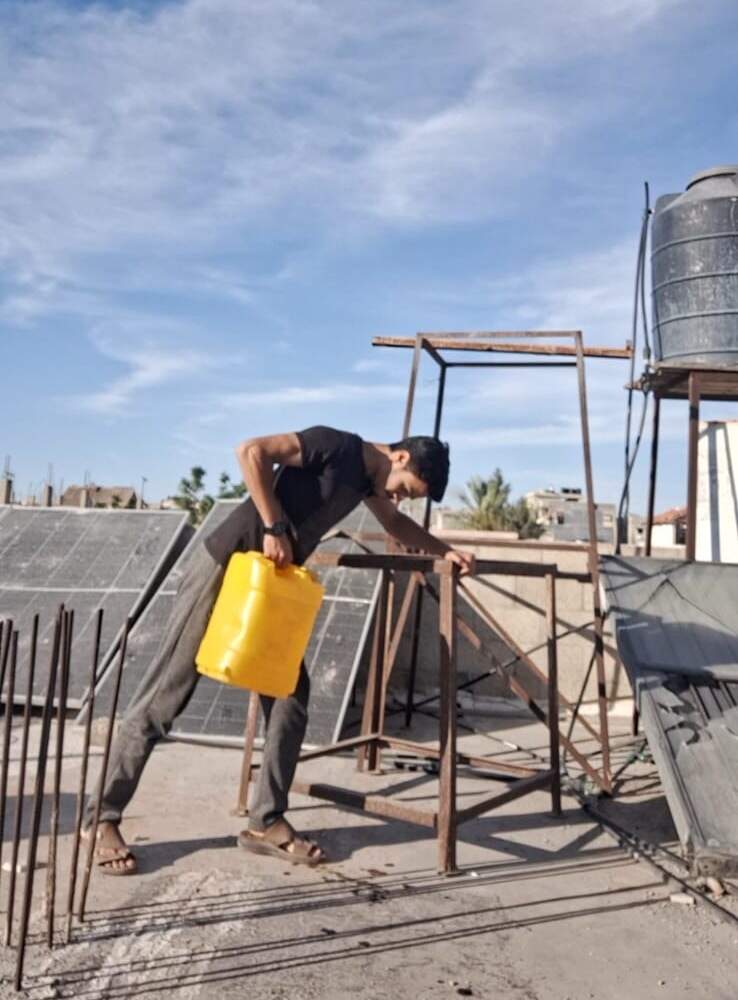
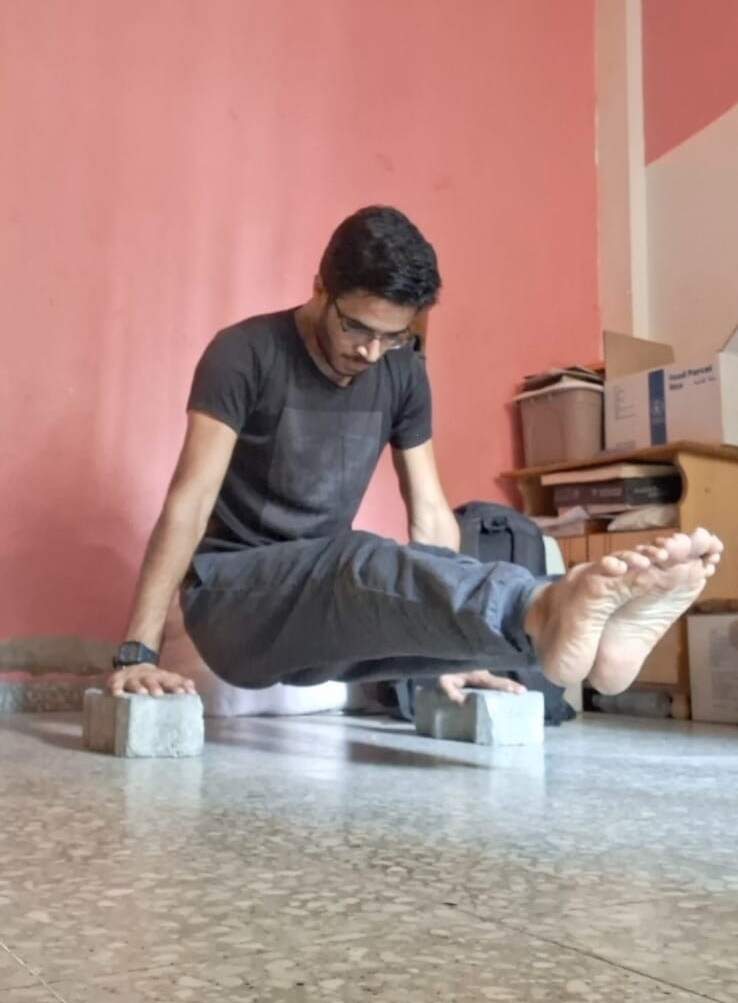
With his gym damaged during the war, Hatem had to get inventive with his workout equipment. He started using concrete door ledges for muscle-ups, where you use your back muscles to lift your entire body above the bar, or — in his case — the ledge.
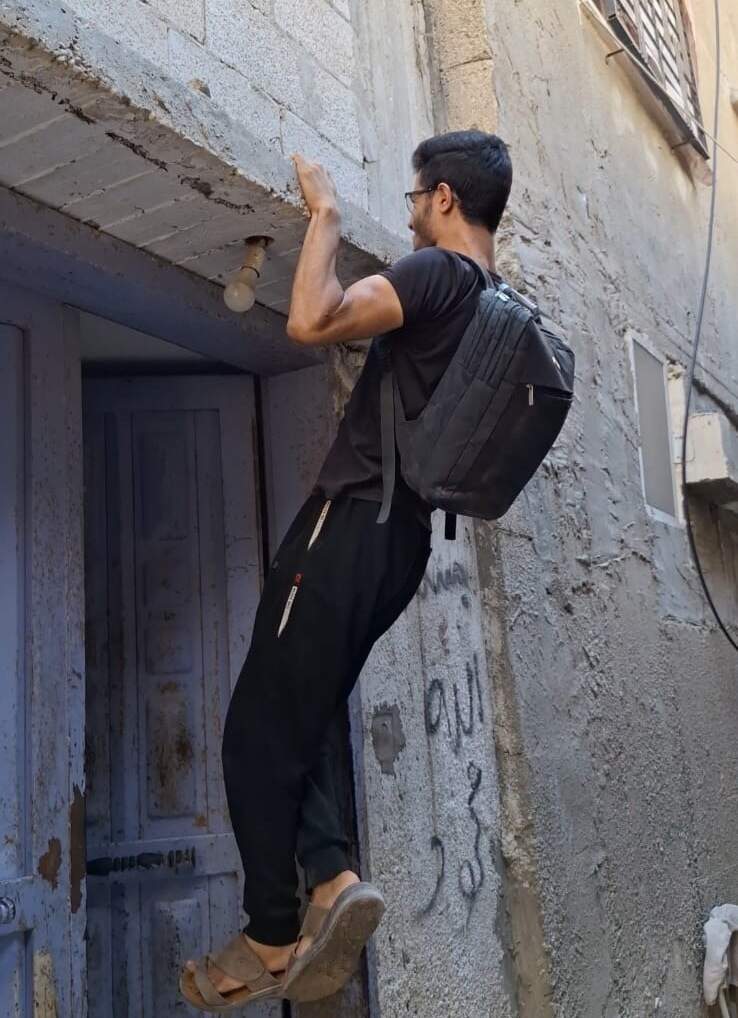
He now stuffs his old backpack with books and rubble and uses it as a makeshift weight for bicep curls and other free-weight exercises. He uses a propane tank for deadlifts and overhead presses. And sometimes, Hatem turns his chores, like fetching heavy water canisters, into daily workouts, too.
“If anyone wants me to explain why, how I am so motivated and how I am so dedicated to my workouts and my exercises, despite everything that is going on now, I would say no matter what you are going through, when the dust settles, you will always have a chance to either keep going with your journey or to just give up,” Hatem says. “And for me, I'm never giving up.”
Before the war, fitness was strictly a hobby for Hatem. His inspirations were bodybuilder Chris Bumstead and exercise researcher and powerlifter Jeff Nippard, after whom he models his workouts. Once Israel’s bombardment stripped away his access to a gym and his life became mainly about survival, Hatem lost a lot of the physical progress he had worked for. And rather than continue to lose muscle gains, he decided not to wait until the war was over to continue his fitness journey and launched his Instagram page Gymrat in Gaza.
Now, fitness serves as a lifeline for him.
His page catalogs his daily workouts and documents his journey to achieving certain fitness goals — he just recently learned how to do muscle-ups and is currently working towards a handstand — and his life in Gaza.
Hatem is just one of many young Gazans who have started chronicling their daily lives and wartime routines on social media since the war began. But Hatem’s content provides a different window into the war. His videos are littered with memes and jokes, and his positive outlook provides a different perspective on the war than other accounts focused on the violence and killings in Gaza.
On a recent video of Hatem’s progress toward a handstand, one viewer commented: “Among all the terrible news and images, this makes me very happy. You’re awesome!”
Despite the positive attitude he projects to the world, Hatem has lost a lot during the war, including relatives, friends and shelter. His close friend Mohammed Said al-Halimy — known better to Hatem and his Instagram following as Medo — was killed in Israel’s war in Gaza.
Al-Halimy was another content creator on social media giving his followers a glimpse into his daily life living in a warzone. His videos showed his struggles to create recipes with limited available ingredients, what living in a tent was like and his love for gardening as a form of resistance.
“A lot of you ask me why I plant,” says al-Halimy in one of his videos posted on his page. “Planting, for me, is a form of resistance. I bring life to earth. They're taking away life, but I'm bringing it to earth. And I hope that my plants have strong roots to the ground, just like we Palestinians do.”
After connecting through social media, Hatem and al-Halimy’s shared circumstances and love for fitness brought them closer. In July, they decided to meet up and do a collaboration video, challenging each other to complete the most reps at the highest weight in different exercises. Throughout their workout, they discussed their dreams and goals, much of which were aligned. Hatem says he was looking forward to continuing their progress together.
But less than two months later, shortly after their collaboration, al-Halimy was killed after being struck in the head by shrapnel from an Israeli airstrike near a makeshift cafe in the Gazan city of Khan Younis, where his friends say he was seeking an internet connection.
“I wanted him to be in this journey with me,” Hatem says. “I wanted him to go back to university, I wanted him to take care of his family, to go back to the gym together. And the fact that we lost this like forever, it’s just so breaking to think of.”
Despite the sadness he feels over losing al-Halimy and everything else he lost in this war, Hatem’s motto is to continue the grind. And every exercise he does is in memory of those he lost, including al-Halimy.
“We got to make Medo proud at this point,” Hatem says. “I got to achieve what me and Medo promised ourselves to achieve.”
Since starting his account in April 2023, he has gained more than 183,000 followers and posted more than 150 videos, with some receiving millions of views. Though editing and posting the videos is often a tedious process — usually consisting of him sitting outside internet cafes for hours waiting for the slow internet connection to upload the videos — Hatem says it’s all worth it.
“This is the most exciting and honoring experiment that I've done in my life,” Hatem says. He’s especially proud of the messages he gets from folks who tell him he’s inspired them to work out.
“I get a lot of messages from people telling me that they started going to the gym because of watching me and they got motivated by my journey and my content to start their own fitness journey. It makes me feel really proud and honored to be the reason for all of this.”
When it comes to bodybuilding, nutrition plays a large role in achieving a certain physique. Due to the severe lack of food — as of September, Israel had restricted 83% of food aid entering Gaza, according to the Norwegian Refugee Council — Hatem is one of the many Gazans struggling to get enough nutrients to fuel his workouts and build muscle.
Before the war, Hatem weighed around 128 pounds and was able to bench press 135 pounds and deadlift 225 pounds. But during the first couple of months of the war, he lost a lot of muscle mass, due to not being able to eat well and the constant stress of displacement. He’s regained it slowly through his consistent workout journey but still struggles to maintain a healthy diet due to the lack of available food, especially protein.
“For protein intake, you need to eat like one gram of protein for every pound that you weigh,” Hatem explains. “I don't remember for a single day that I actually got that like I barely got like 10 to 30 grams of protein a day, which is honestly crazy.”
Instead, Hatem focuses on lentils, rice and other carbohydrates to get enough energy for his workouts.
After over a year of being displaced and moving around the few designated safe zones in Gaza, some normalcy is finally coming into Hatem’s life. In early December, Hatem and his family were able to move back into his partially destroyed home in east Khan Younis where they evacuated shortly after the war began. Though there’s still rubble that needs to be cleaned after the building was damaged by Israeli forces early on in the war, Hatem is glad to be back and looks forward to posting more videos from his own home.
“Going back to my house meant that I will get to go through the roads I used to take to my school, university, gym, mosque and many other places,” Hatem says. “And even though these streets don't look the same anymore with all the rubble and destruction in them, they still give me the same feeling they used to give me back in the day.”
In terms of his studies, Hatem recently enrolled in business education classes at the University of Palestine, which recently opened online classes to new students.
Hatem struggles with mixed feelings about the recent positive changes in his life, especially while the war is still raging around him. He knows that at any moment everything could change again. Still, he says he feels grateful for his current situation, even if it does end up being temporary.
“It feels unreal to feel the slightest bit of normalcy after so long,” Hatem says. “Being back in my house, with what is still standing from it, and getting back to studying and pursuing my academic goals, it’s all a blessing I’m indescribably grateful for.”
Editor’s Note: The audio version of this story incorrectly refers to Hatem’s age as 18. He’s 19. We regret this error.
Click here for more coverage and different points of view.
Hafsa Quraishi produced and edited this interview for broadcast with Micaela Rodriquez. Quraishi also adapted it for the web.
This segment aired on December 16, 2024.