Support WBUR
A writer and photographer met 100+ women across Afghanistan. Here's what they found
Editor's note: If you or someone you know may be considering suicide or is in crisis, call or text 988 to reach the Suicide & Crisis Lifeline.
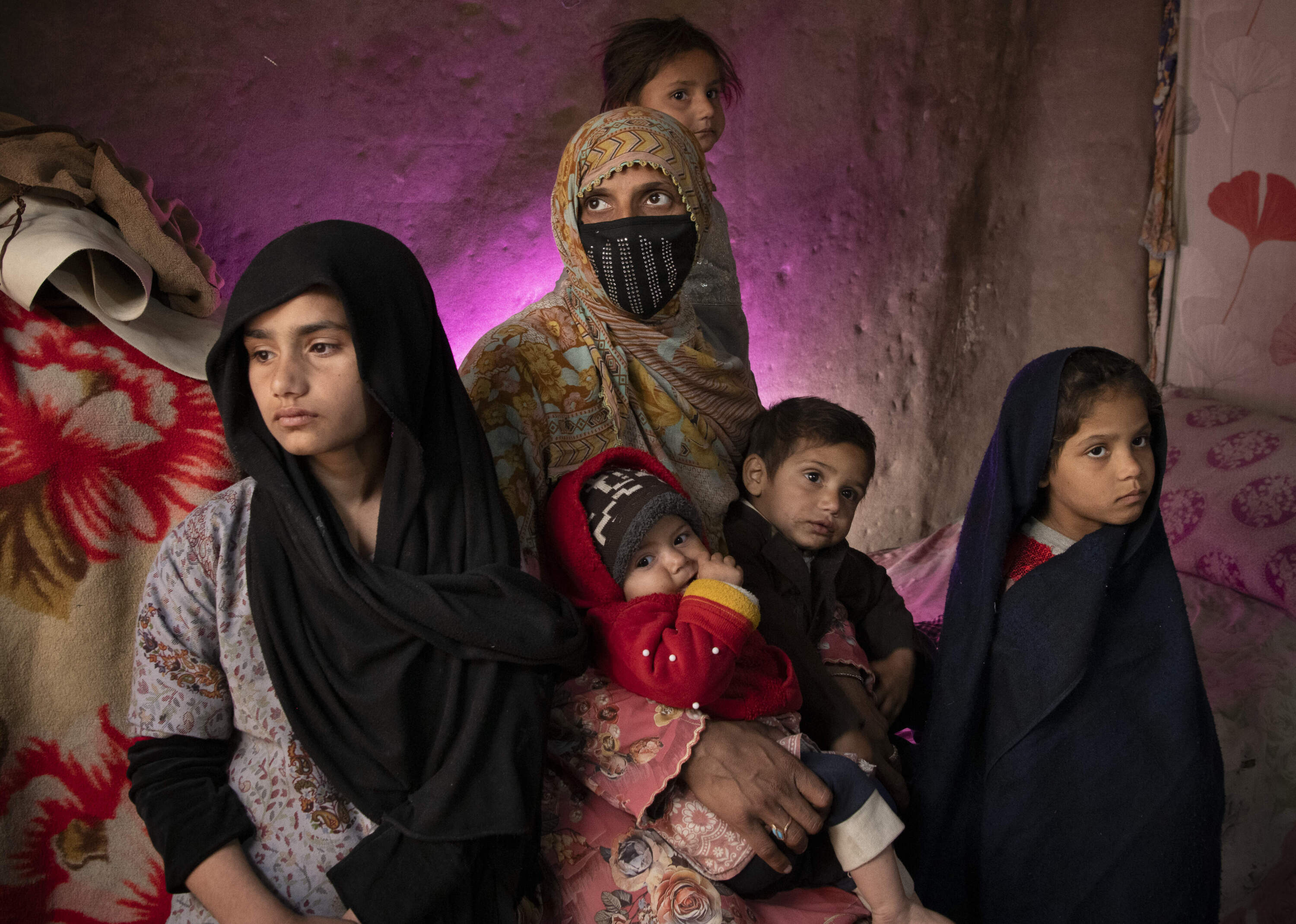
Under Taliban rule in Afghanistan, women are banned from attending nursing or midwifery school. They can’t go out in public without a male chaperone, and they must cover their faces and not let their voices be heard. Plus, they’re banned from workplaces, parks and bathhouses.
Writer Mélissa Cornet and photographer Kiana Hayeri say the Taliban are not just isolating women but trying to erase them completely. Cornet and Hayeri’s project called No Woman's Land gives them a voice.
Cornet and Hayeri spoke with more than 100 women and girls in Afghanistan to document their struggles and the resilience needed to overcome them.
“What we really wanted to document was both the attacks on women's rights,” Cornet says, “but also what's more intangible: their mental health, attacks on their humanity, the loss of hope that that they can have a future in Afghanistan.”
4 questions with Mélissa Cornet and Kiana Hayeri
How do crises like food shortages impact girls more?
Mélissa Cornet: “In Afghanistan, it remains a very conservative country. So even outside of the Taliban rule, when there is an economic crisis like there has been since 2021, it's always women and girls who suffer the most from it.
“For example, we visited some malnutrition wards, and we found that there were much more baby girls who were admitted for malnutrition than baby boys. And that is simply because inside the family, when there's not enough food to eat, the men and the boys are prioritized because they are the one leaving the house. They are the ones working, bringing back food and money.
“It's always the girls who eat the least and the last and so suffer more from malnutrition, but it's also the ones who suffer more from the coping mechanism. Since 2021, we've had an explosion in the number of child marriages.
“We meet these families whose parents are seeing their children die of hunger and they are faced with the impossible choice of either they accept to marry one of their young daughters — sometimes 12, 13, 11 years old — against a dowry that would allow them to nourish, to feed the rest of the children or they just have to continue watching the children die of hunger. This is a terrible situation and like all crises, it affects women and girls even more deeply.”
How do women and girls show resilience in the face of these hardships?
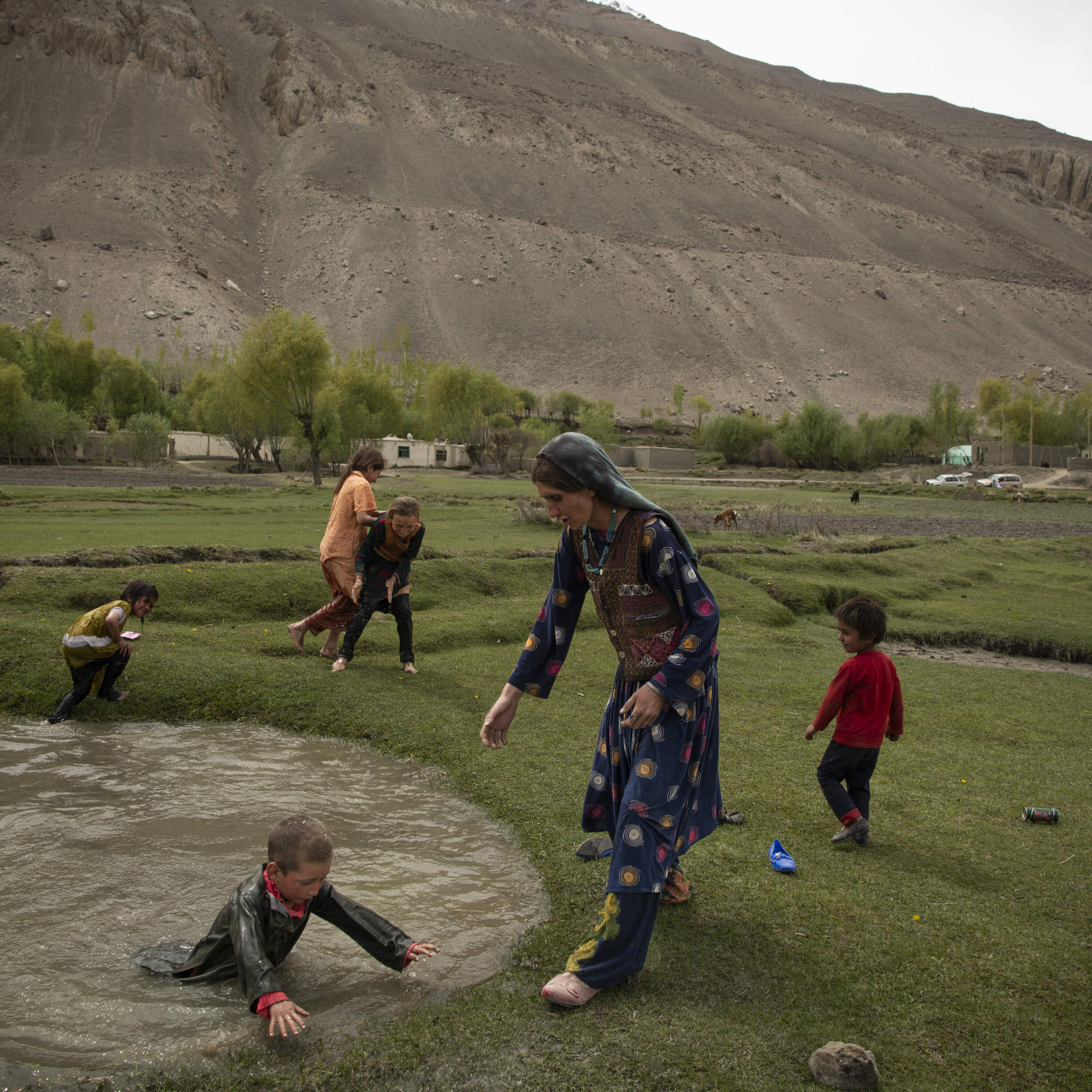
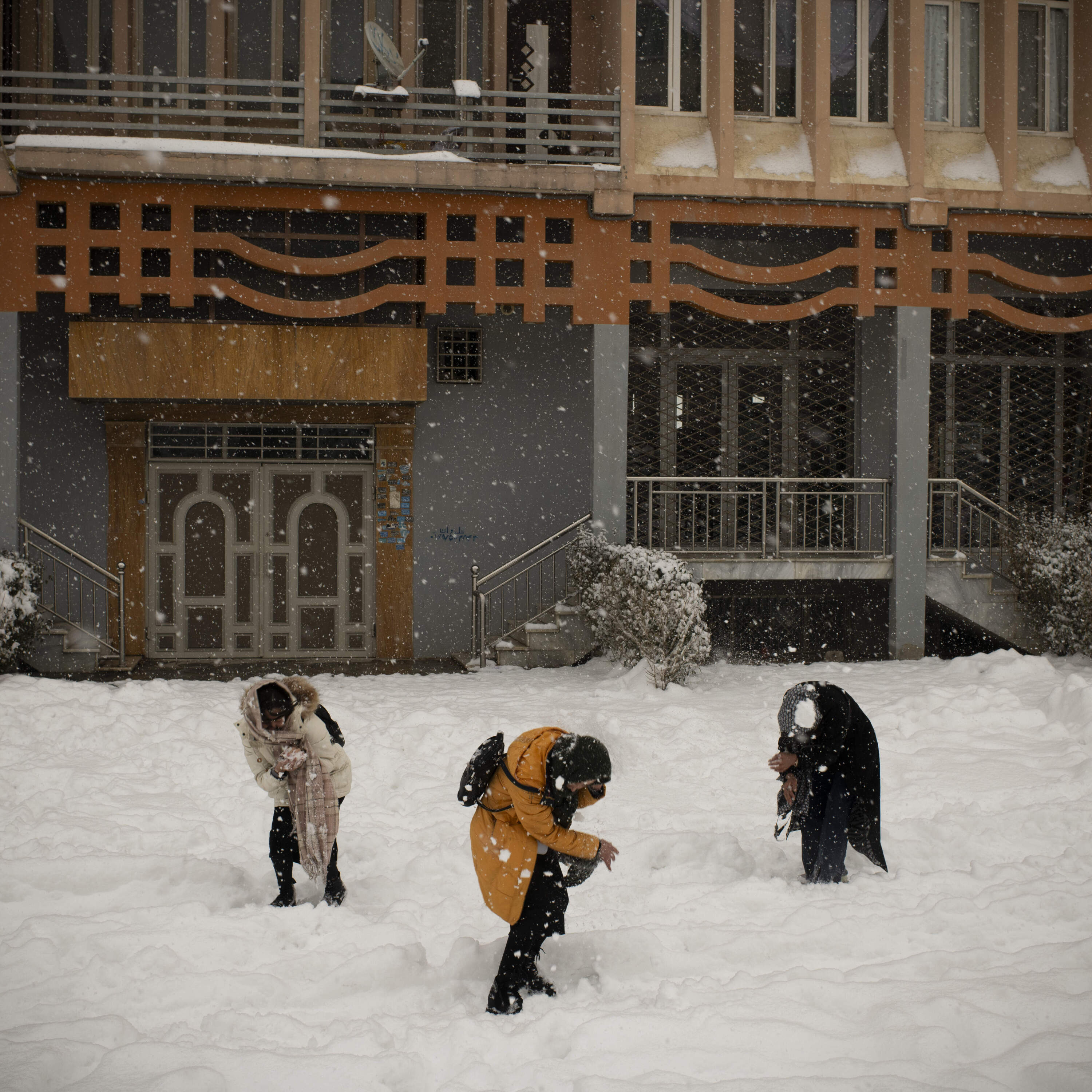
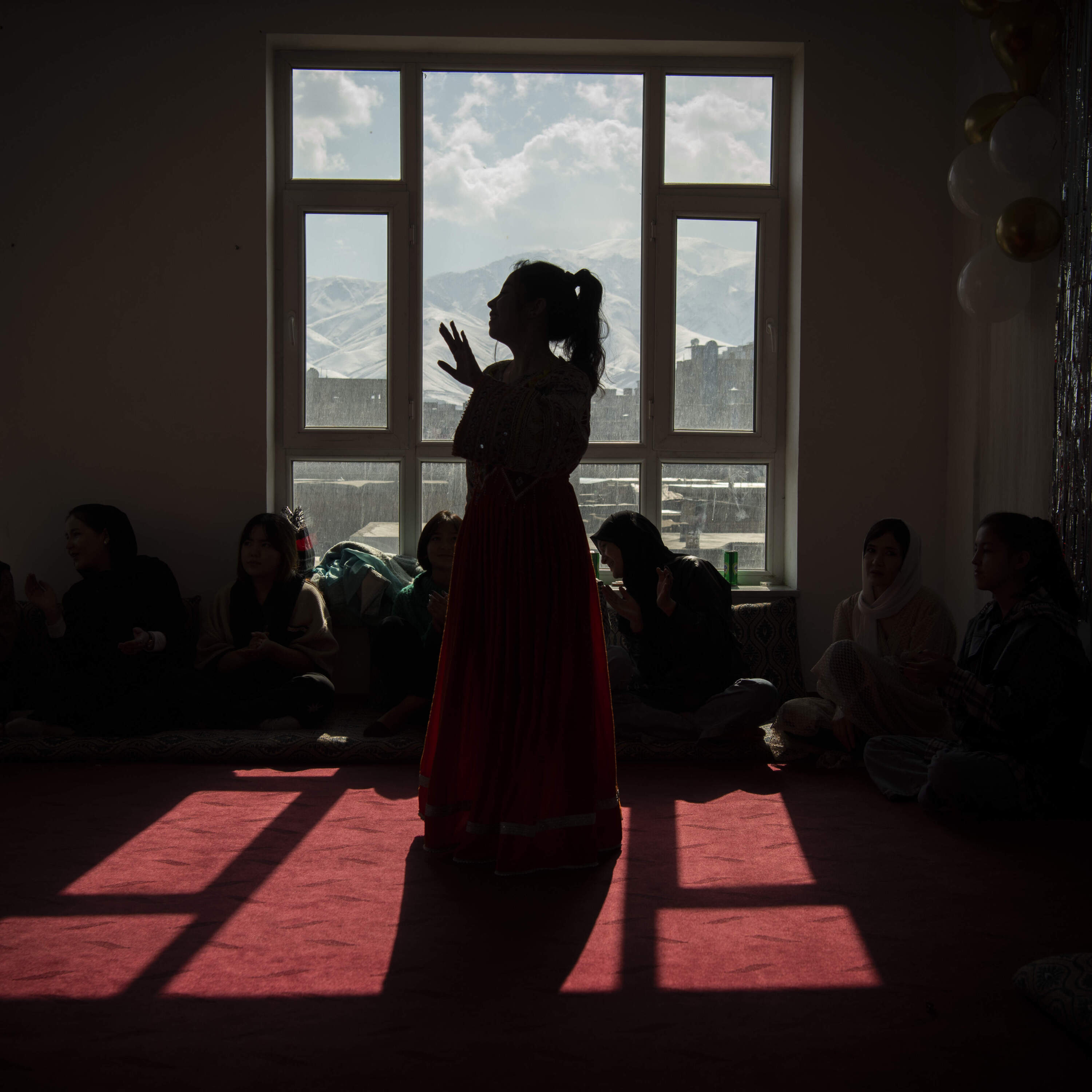
Kiana Hayeri: “Spaces are being taken away from women. Any form of expression is being taken away from them. These young girls and many of the women that we met carve out little spaces for themselves to be able to experience joy, to be able to express themselves the way they want to, whether that being in a back alley, playing snowballs, being inside a home, dancing for a birthday party, or going to somebody's home to get their eyebrows done or cut their hair.
“This is something Melissa and I constantly talk about: to look at joy as a form of resistance. And in Afghanistan today, when [the] Taliban is trying to erase women, existing is a form of resistance.”
How did you find subjects that were comfortable having their faces and names publicized?
Hayeri: “For every ‘yes’ we got, we probably knocked on 20 different doors. So for many people, the fear exists and it's real.
“But the women who agree to appear in front of our camera or speak to us or even meet with us, they're very courageous. They've taken a huge risk to do that.
“We made sure that they're very well aware: What are the photos taken for? Where are they going to appear? And what's the purpose of the project?
“In more sensitive cases where it was a matter of life or death, we made sure that the women look at their own photos and approve the one that they're comfortable with the level of anonymity.”
How do you cope with documenting oppression and erasure?
Cornet: “This is very difficult, and I think one of the ways to cope with that is just trying to get the work out so that people can see these stories.
“But then we also try to focus on how can we have little impact. For example, trying to work with the French government to get visas for these women to get out of the country. It might not be much, but for them it is going to be life-changing.
“We try to be realistic but also keep hope that we can do something to change the situation, that eventually the situation can improve.”
The No Woman's Land report was produced with the support of the Carmignac Photojournalism Award from Fondation Carmignac.
Gabrielle Healy produced and edited this interview for broadcast with Micaela Rodriguez. Grace Griffin adapted it for the web.
This segment aired on December 30, 2024.