Support WBUR
How sponge cities offer a sustainable solution to rising sea levels
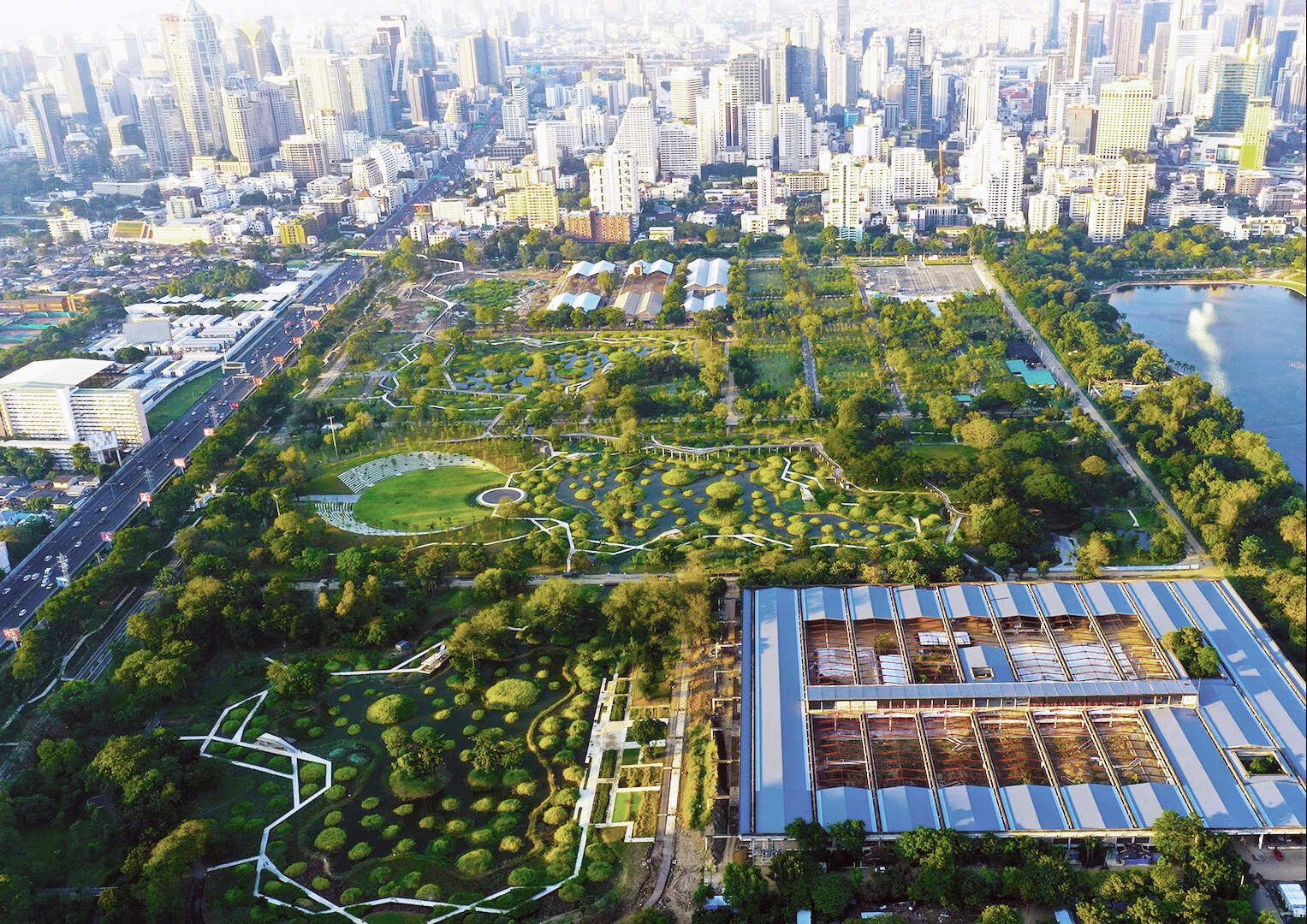
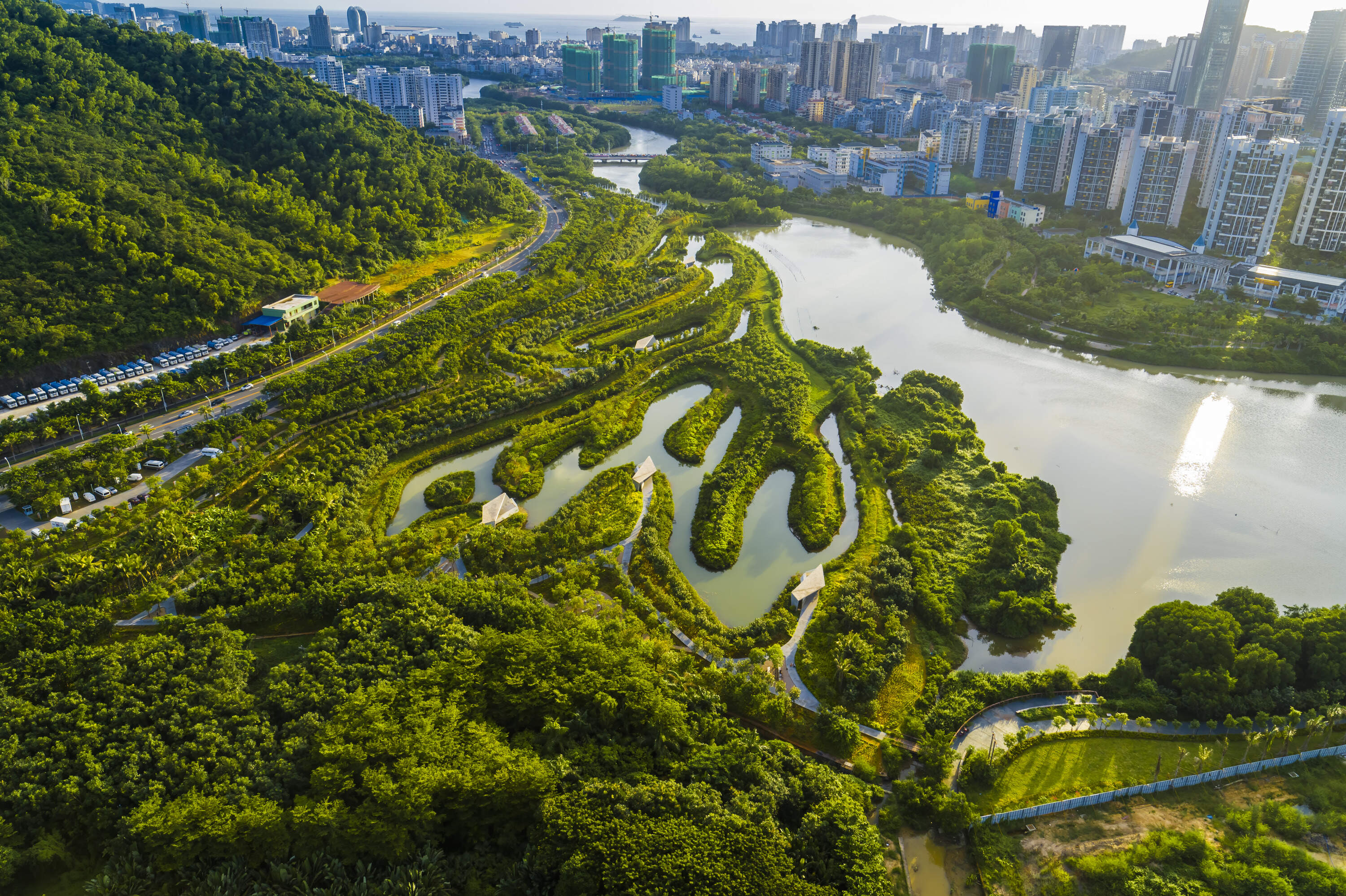
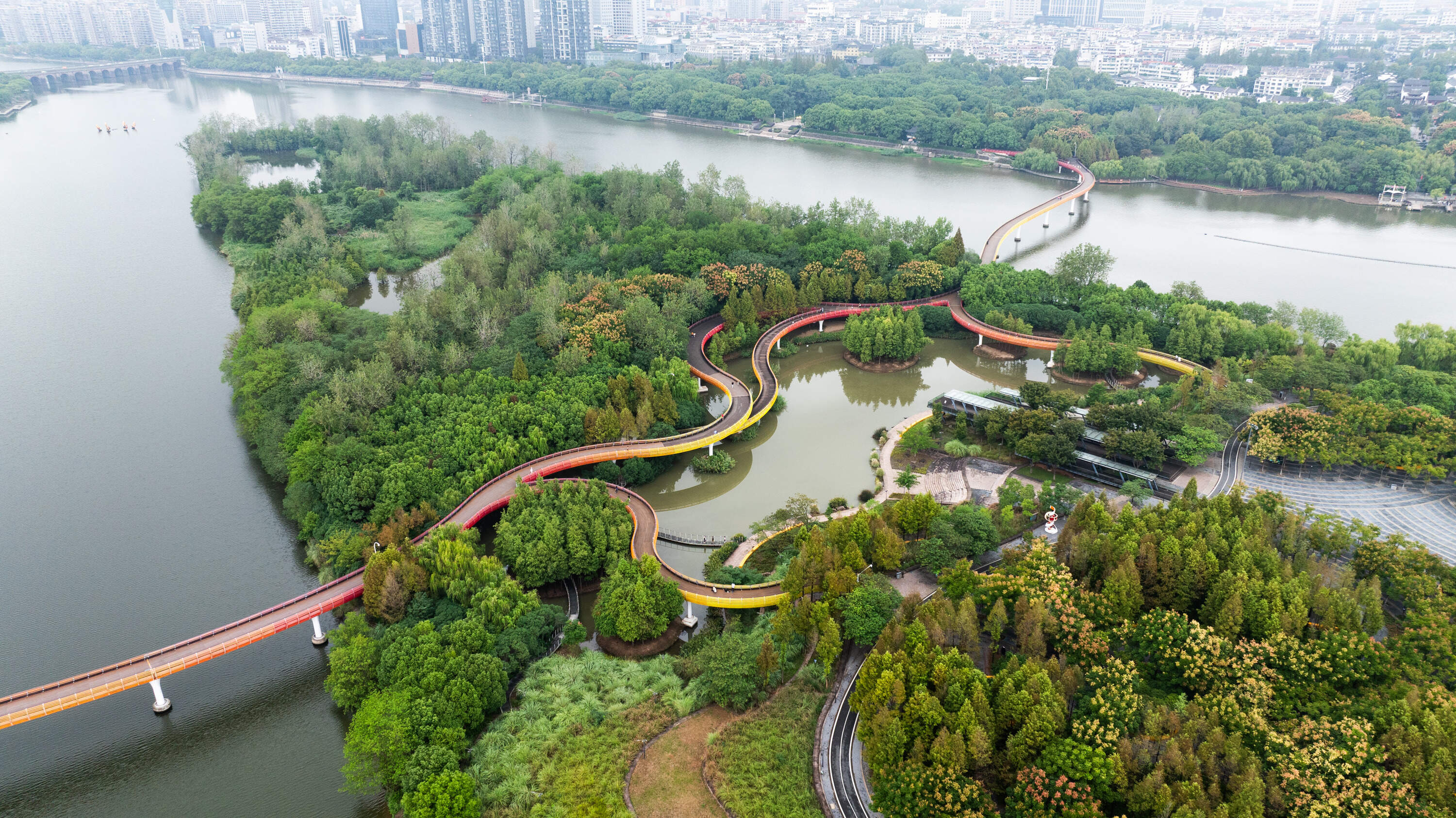
Kongjian Yu, the son of a rice farmer who tended terraced water-filled rice fields in China, is now a world-renowned leading voice on what he calls 'sponge planet:' Sponge cities, sponge waterfronts, places where water from rising seas is allowed space to flow in and out of areas instead of crashing over sea walls. And falling rain — stormwater — is captured and soaked up like a sponge. It's used again during drought, to irrigate or to fill beautiful urban water parks.
"We don't box with water. We don't fight it," Yu says. "We make it our friend."
He created Peking University's College of Landscape Architecture and founded the company Turenscape, which builds huge sponge projects around the world. His work has won the industry's highest awards, including the Oberlander Prize.
Recently, the Boston-based nonprofit Stone Living Lab — which brings together landscape architects, scientists, researchers, activists and community members to find ways to build climate resiliency and restore ecology — invited Yu to Boston for two days to get his advice. Like most waterfront cities, Boston has lost much of its spongy wetlands to development. And because of sea rise, it has so-called "wicked high tides" even on sunny days.
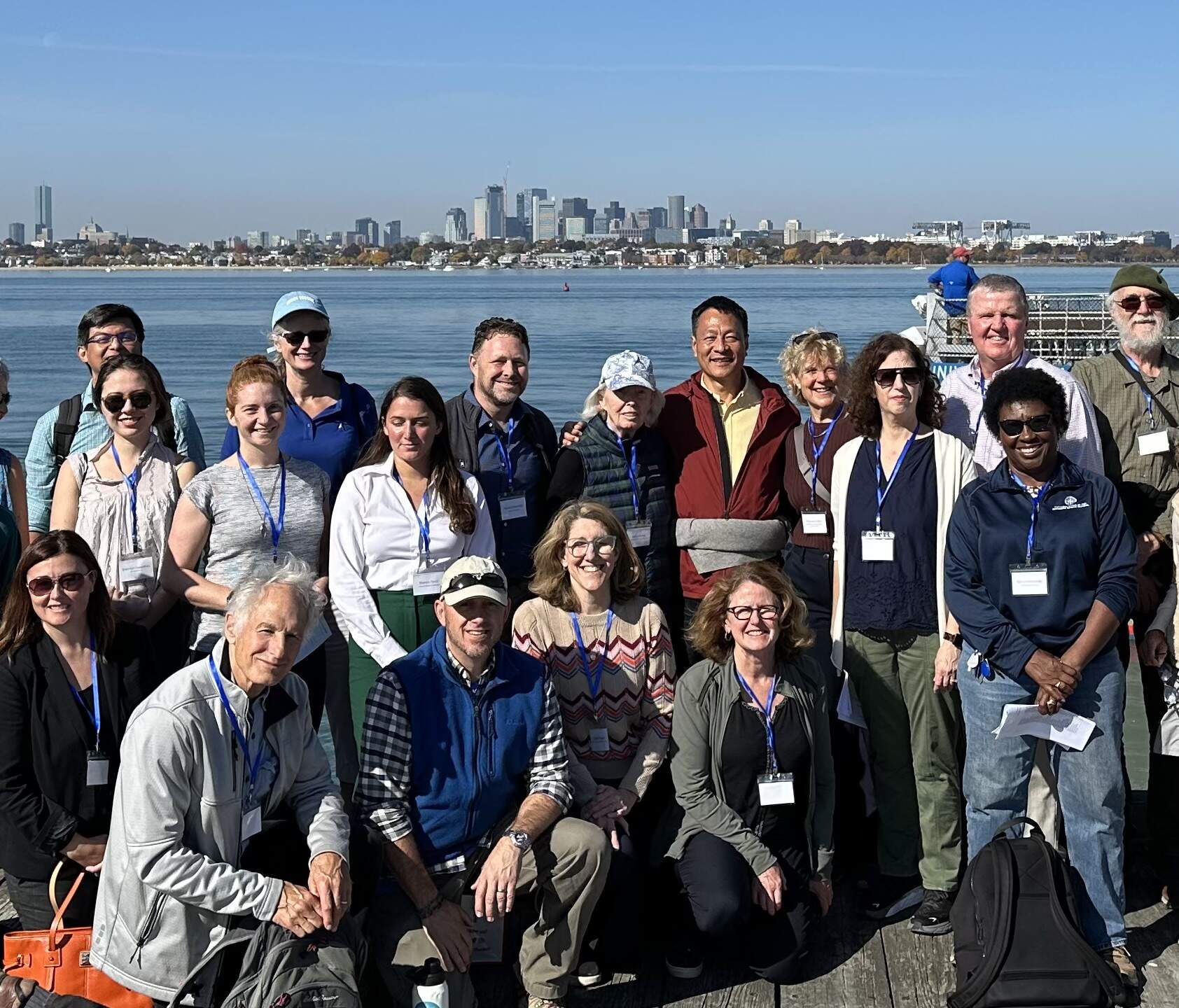
The first stop on Yu's tour was a boat ride to Cathleen Stone Island, recently renamed after one of the founders of the Stone Living Lab. Yu told the gathered landscape architects and engineers that the island's lawn should be replaced by a meadow of natural plantings or wetlands that will soak up water and keep it from flowing back into the ocean. He says 40% of sea rise is attributable to stormwater. He also suggested wells or aquifers dug down into the lawn to collect water that can then be used to water plants.
The group then took a tour of Boston and saw some of its sponge city projects, pedestrian islands with curb cuts to take in water, collected in cisterns below, then sent back up to water plants through a solar-powered drip irrigation system.
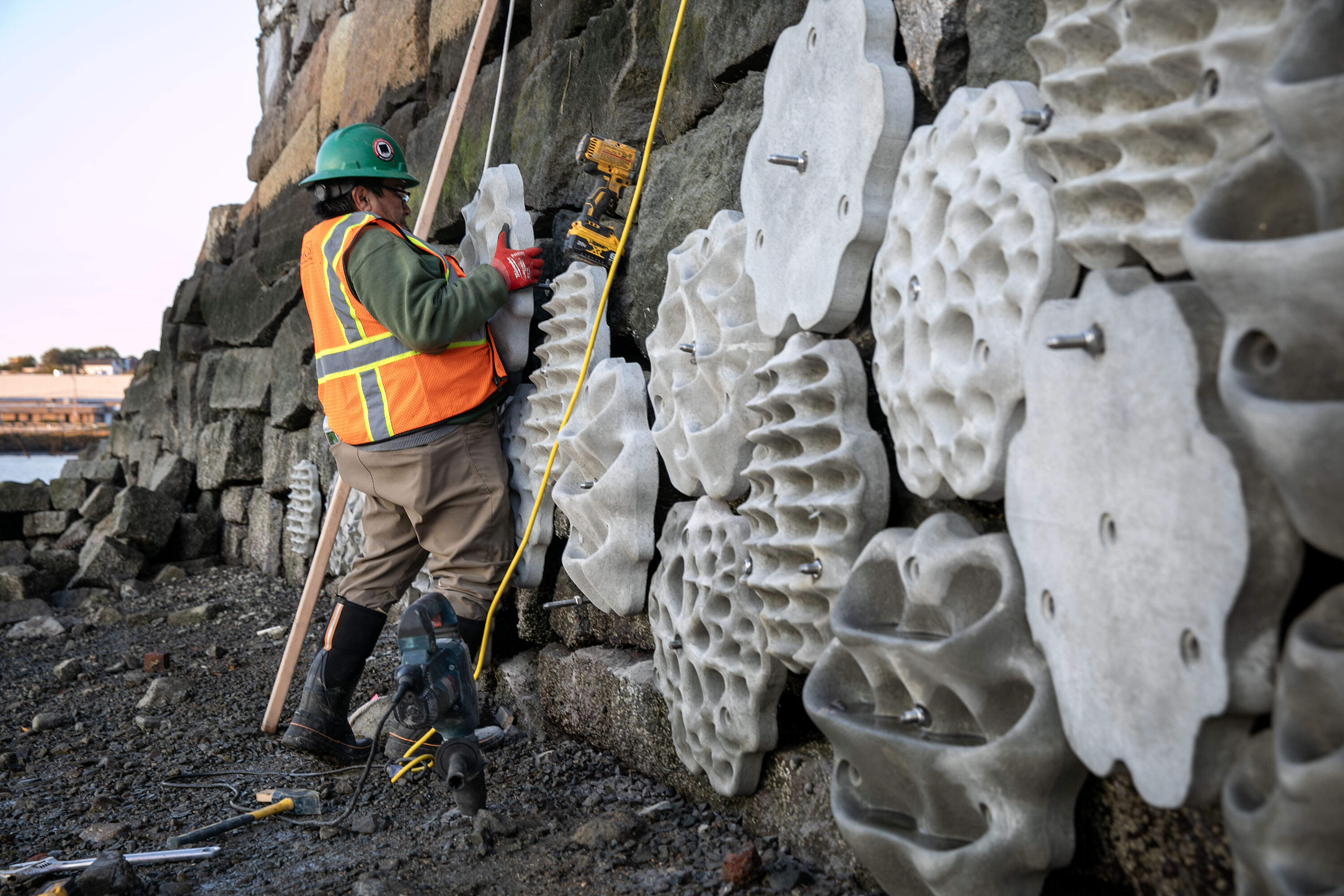
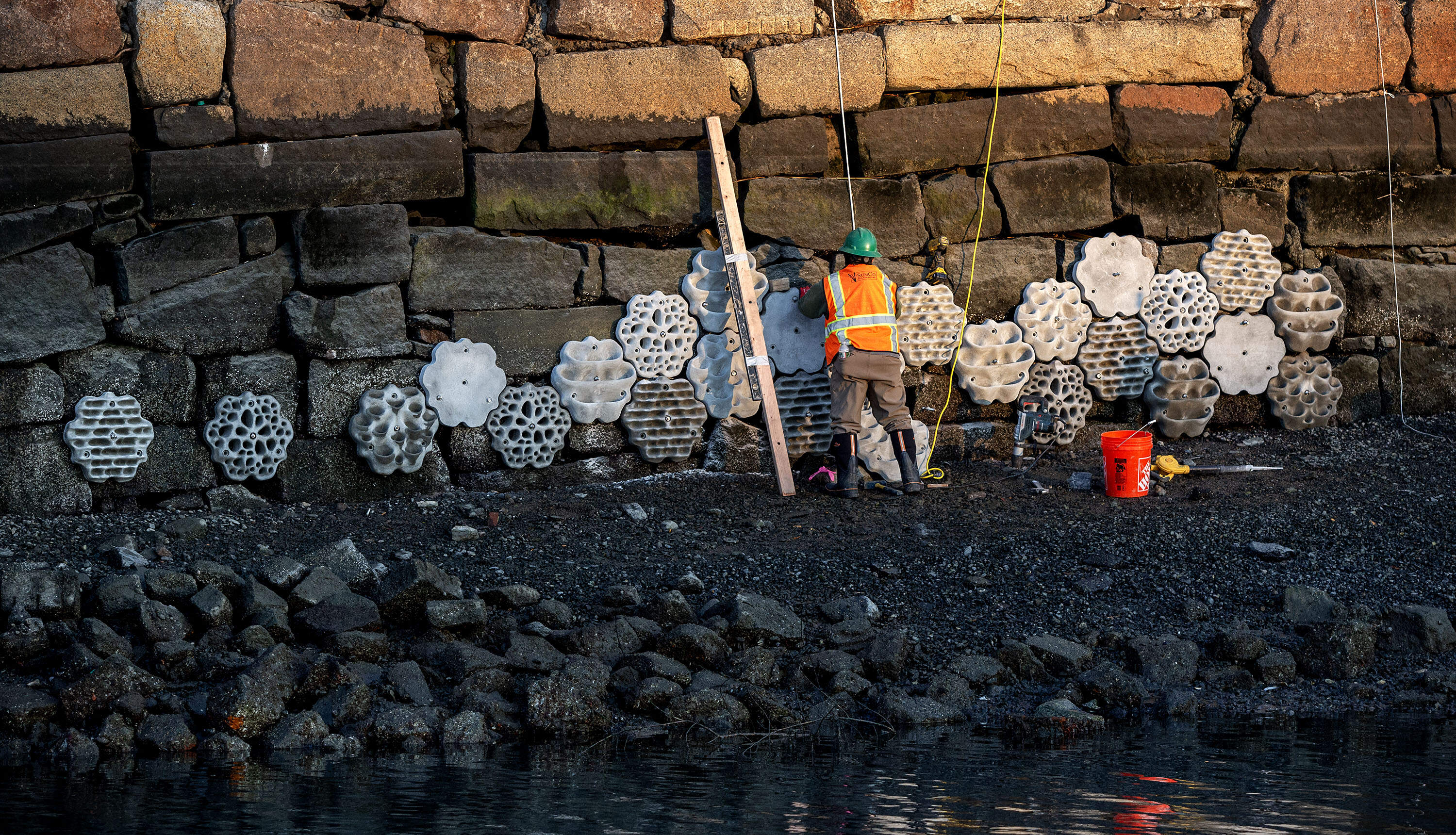
They also visited a living sea wall. Yu explains that sea walls are meant to stop storm surges. Waves hit them with such velocity the water goes over the wall, killing marine life and the vegetation beyond. His 'living walls' are adorned with craggy tiles that marine life can live in as they do in natural craggy rock formations.
Day two of his visit featured a talk at Boston's Museum of Science. He spoke about how inexpensive sponge cities are compared to huge cement dams, whose construction also contributes to climate change. Some countries are using their militaries to build his projects.
Kate England, Boston's director of green infrastructure, spoke of sponge projects already implemented, like the curb cuts in pedestrian islands.
Yu says was first encouraged by former President Richard Nixon's trip to China in 1972.
As a young man, Yu almost drowned in a creek but grabbed onto a tree branch. He says those tree branches are now gone because of pesticides and other industrialization. His village was destroyed, and he wrote dozens of letters to Chinese officials telling them they had to change. Thus, sponge planet theory was born.
Editor's note: Cathy Stone, who is featured in this story, is a supporter of WBUR.
This segment aired on January 9, 2025.