Support WBUR
Resell, recycle, remake: Fighting the flood of ultra-fast fashion
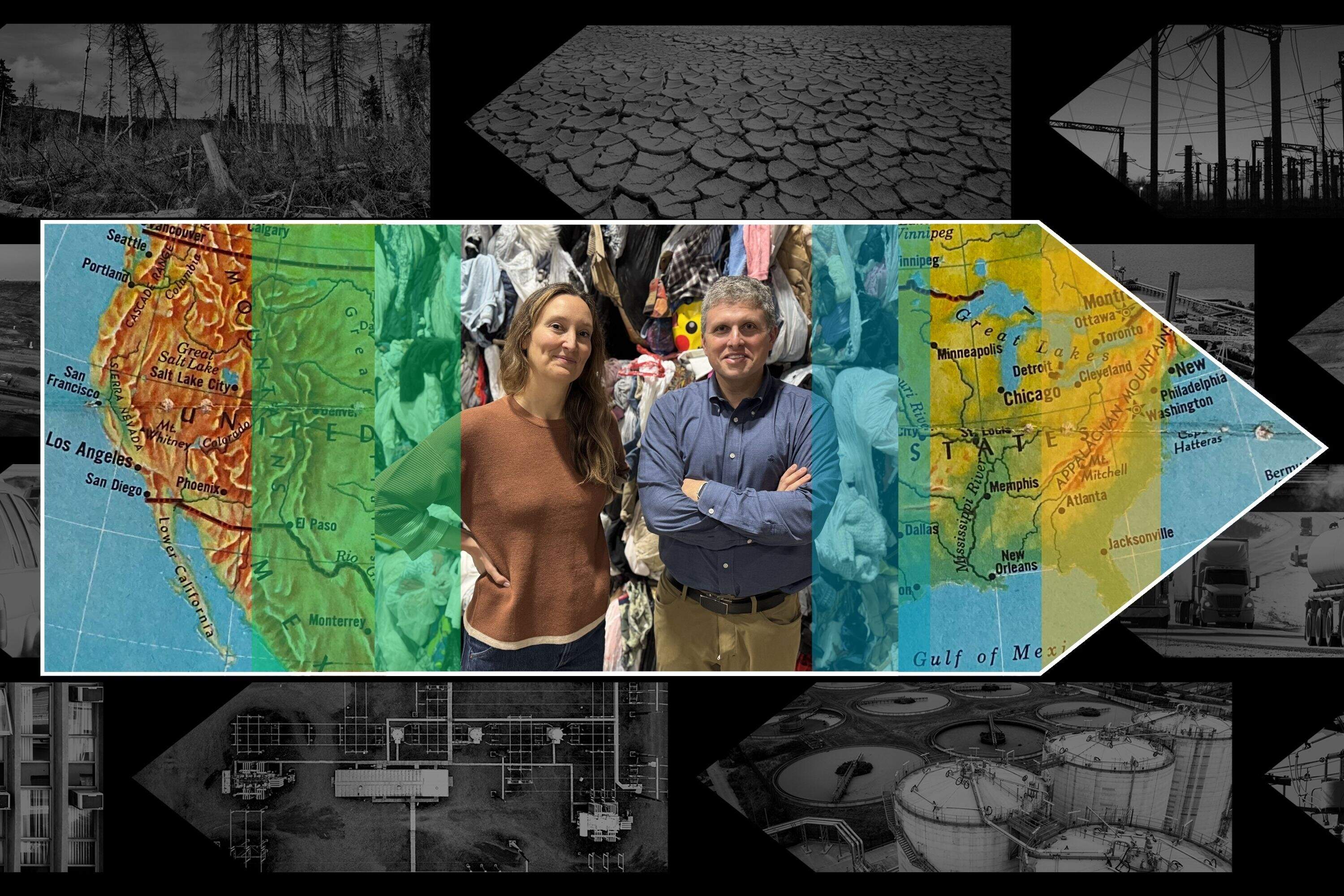
Fashion trends die quickly, but old clothes can live for years.
After it’s left your wardrobe, nearly every garment eventually winds up burned for fuel or tossed in a dump, oozing planet-warming greenhouse gasses and shedding microplastics.
The problem is getting worse. The Environmental Protection Agency says in 2018 Americans threw away more than 11 million tons of textiles, nearly twice as much by weight as they did in 2000.
There is a growing effort to fend off the tsunami of ultra-fast fashion currently flowing into landfills, from chemical recycling that can melt down modern fabric blends to boutique designers giving old clothes new life through upcycling. But the first stop for most used clothing is a donation bin, where it enters the global supply chain for secondhand items.
Global supply chain for secondhand clothes
Every year workers at the main warehouse of Whitehouse & Schapiro sift through more than 125,000 tons of used goods – unsold inventory passed on by retailers like Goodwill.
The conveyor belt in their plant outside Baltimore is like a moving garage sale; Electronics, kids’ toys and wall art flow past employees whose job is to sort goods for resale around the world.
About half of what they receive is clothing, according to Cyprienne Crowley, who oversees operations.
“The rest of it is all this other stuff: luggage, glassware, shoes, accessories that all have other markets as well,” she said. “They’re all perfectly usable items that have another life in them. If it can be reused and worn again that’s the most efficient thing that can be done with it.”
This is a family business. Crowley is married to the company’s president, Brian London, whose great-great-grandfather started what would become Whitehouse & Schapiro in 1907. In the decades since, the company has evolved from a local scrap collector to a global trader in used clothing.
“Some might look at this and be like, ‘Oh, it’s at its end of life.’ Well it’s at the end of life in the U.S., but I have a whole line of people outside a store in Nicaragua waiting for this stuff to come down there,” London said. “They’re ready to use it and they’ll wear it out, and at some point it’ll reach its end of life.”
In the warehouse, there are mountains of bags stamped with the label “GOOD SHOES,” and heaps of bulk clothing, bound and stacked like bales of hay.
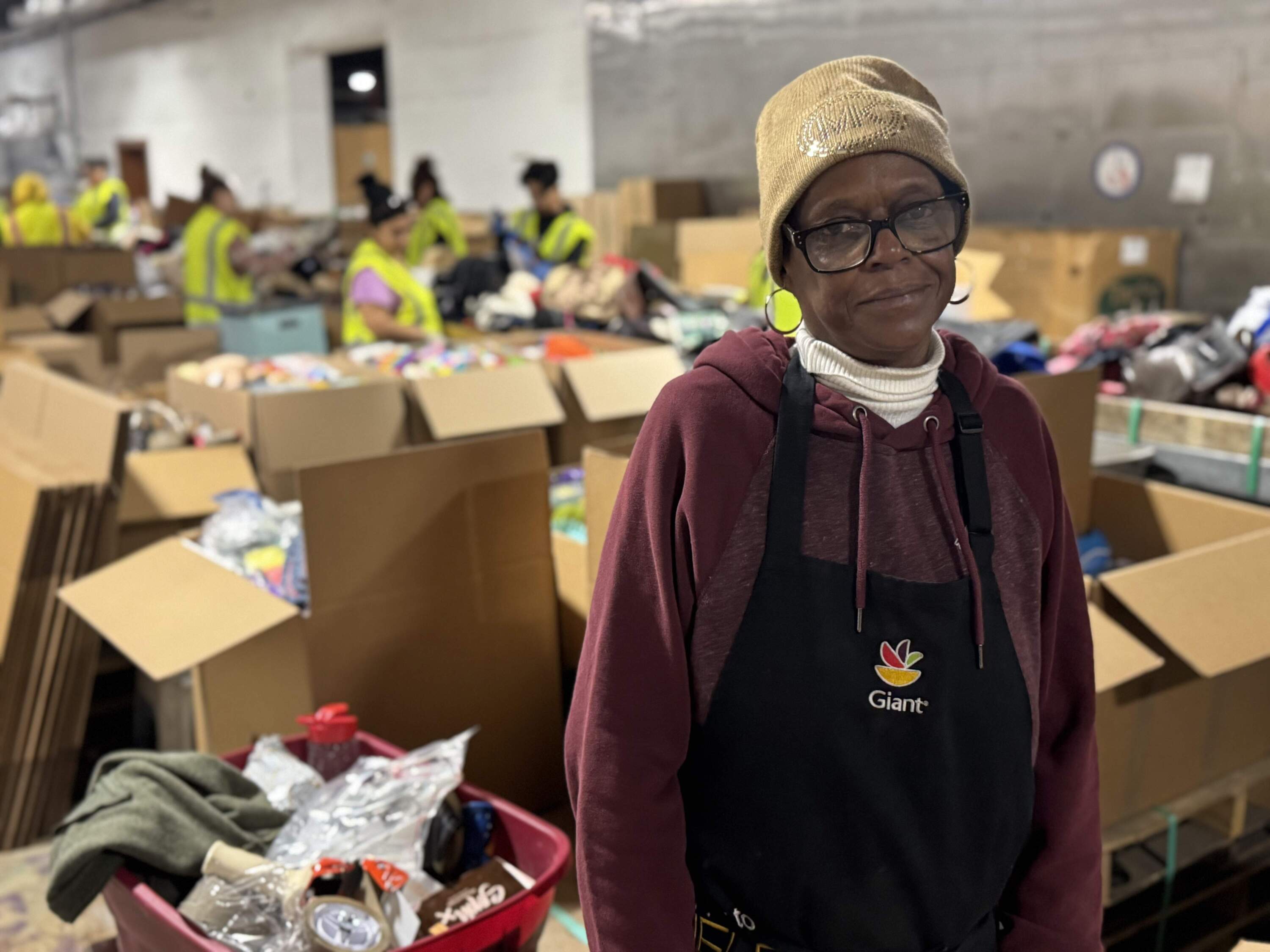
“People might think it’s trash, but it’s somebody else’s treasure. I mean the clothing that comes through is great. We even just had a fur that came in a few minutes ago,” said Windy Norman, who has been working the conveyor belt for more than 30 years. “A lot of people are really wasteful. A lot of that stuff has nothing wrong with it.”
Fur coats may come down the line sometimes, but more often these days, London said it’s ultra-fast fashion that is not made to last.
“Things are made to only be worn a few times,” he said. “As that lower-end stuff becomes more of the bale and you have less reusable stuff, at some point the economics of it wouldn’t make sense. As costs go up and the reusable items go down, you start getting to a problem point.
London is president of a trade group of clothing resellers and recyclers called S.M.A.R.T., whose members say about 45% of clothing that makes it to resellers finds a new buyer in the U.S. or abroad.
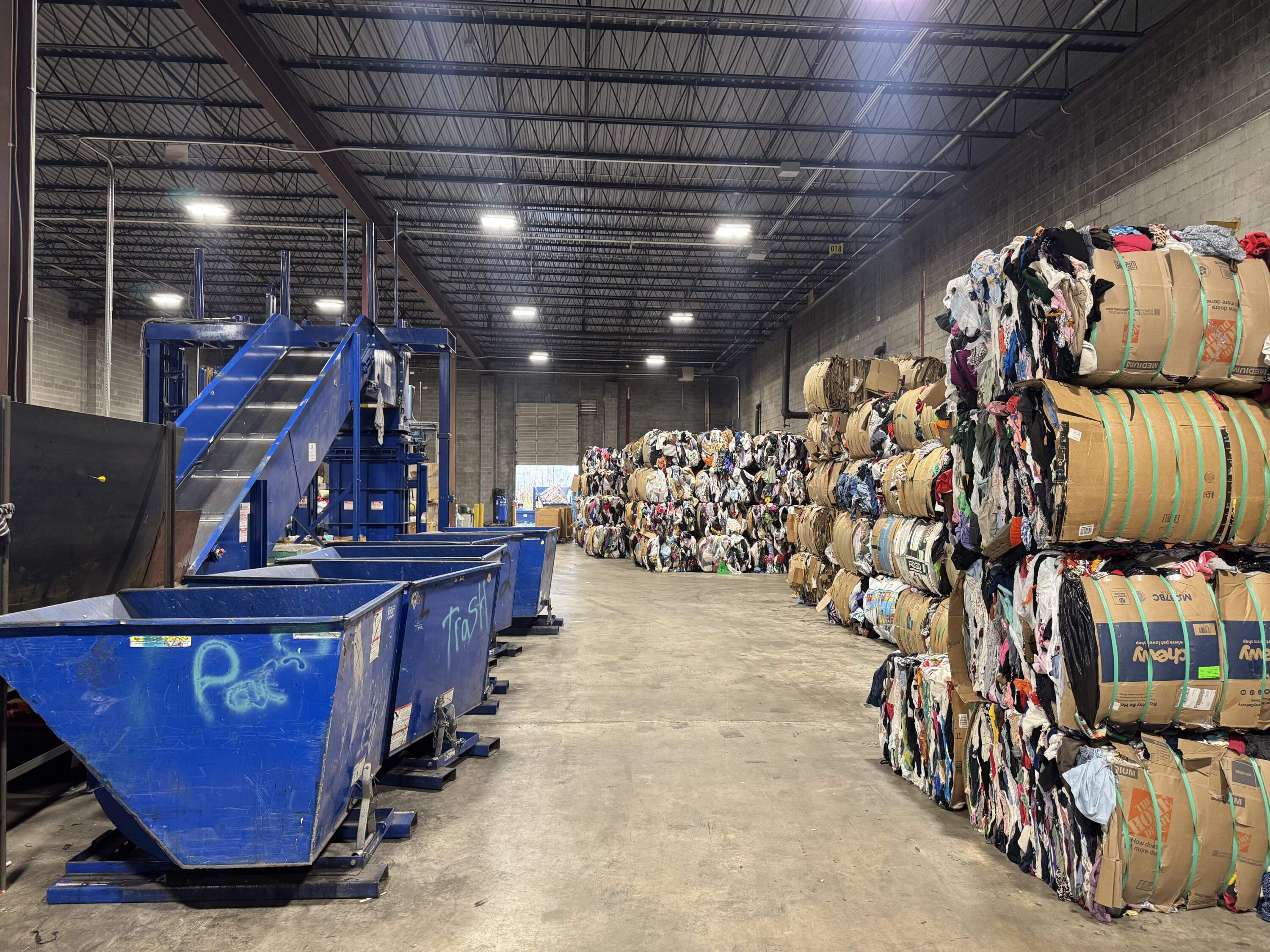
Clothes that can’t be resold can be downcycled into insulation or wiper rags for the restaurant and oil industries.
Still, according to the EPA, two-thirds of American textiles end up in the landfill. Another 19% is burned for energy, and just 15% gets recycled. That ratio is worse in many African countries that buy a lot of secondhand clothes, especially when clothes arrive in bad shape.
“There are some bad players in this industry who ship things that are basically almost trash. For us we always stand by our product, we look at everything we ship,” Crowley said. “Reputation is very important.”
Circular fashion
Reselling clothes can keep them out of the landfill for a few more years. But even secondhand clothes eventually end up as trash, whether it’s in the U.S. or abroad.
“The misconception is that these clothes are just being dumped somewhere. That’s not true, someone’s purchasing it. It’s just that with those materials getting lower and lower value, that system is having a lot of challenges,” said Rachel Kibbe, CEO of the trade group American Circular Textiles. “We see a solution and also an economic and job opportunity by figuring out how to recycle that which can’t be resold.”
American Circular Textiles helped draft California’s “extended producer responsibility” law, enacted last year, that aims to hold clothing makers accountable for their products’ entire life cycle. Regulators are hammering out the details of how it will work, and similar legislation is on the table in other states.
Kibbe wants Congress to pass a trade bill called the Americas Act that includes provisions on textile reuse and recycling. If it’s state-by-state, she says textile recycling could end up like recycling for plastics and paper, only capturing a fraction of the waste that’s out there.
“The reason recycling has been such an absolute failure is we don’t have unified laws in place,” Kibbe said. “We don’t have unified federal policy providing directions around what can we recycle, what can’t we recycle, what type of infrastructure to do we need, what kind of unit economics does that make? It has not been successful doing it piecemeal.”
You might have a shirt in your closet that says “made from recycled material.” If it’s polyester, that almost certainly means it’s made with plastic from recycled bottles, not other clothes.
One of the few places you can find textile-to-textile recycling in the U.S. is Danville, Virginia. Perched on the Dan River along the North Carolina border, Danville was once home to the largest textile firm in the South until the industry moved overseas.
Today, an old tobacco warehouse hosts the main plant of a company called Circ, whose mission is “to protect the planet from the cost of clothing.”
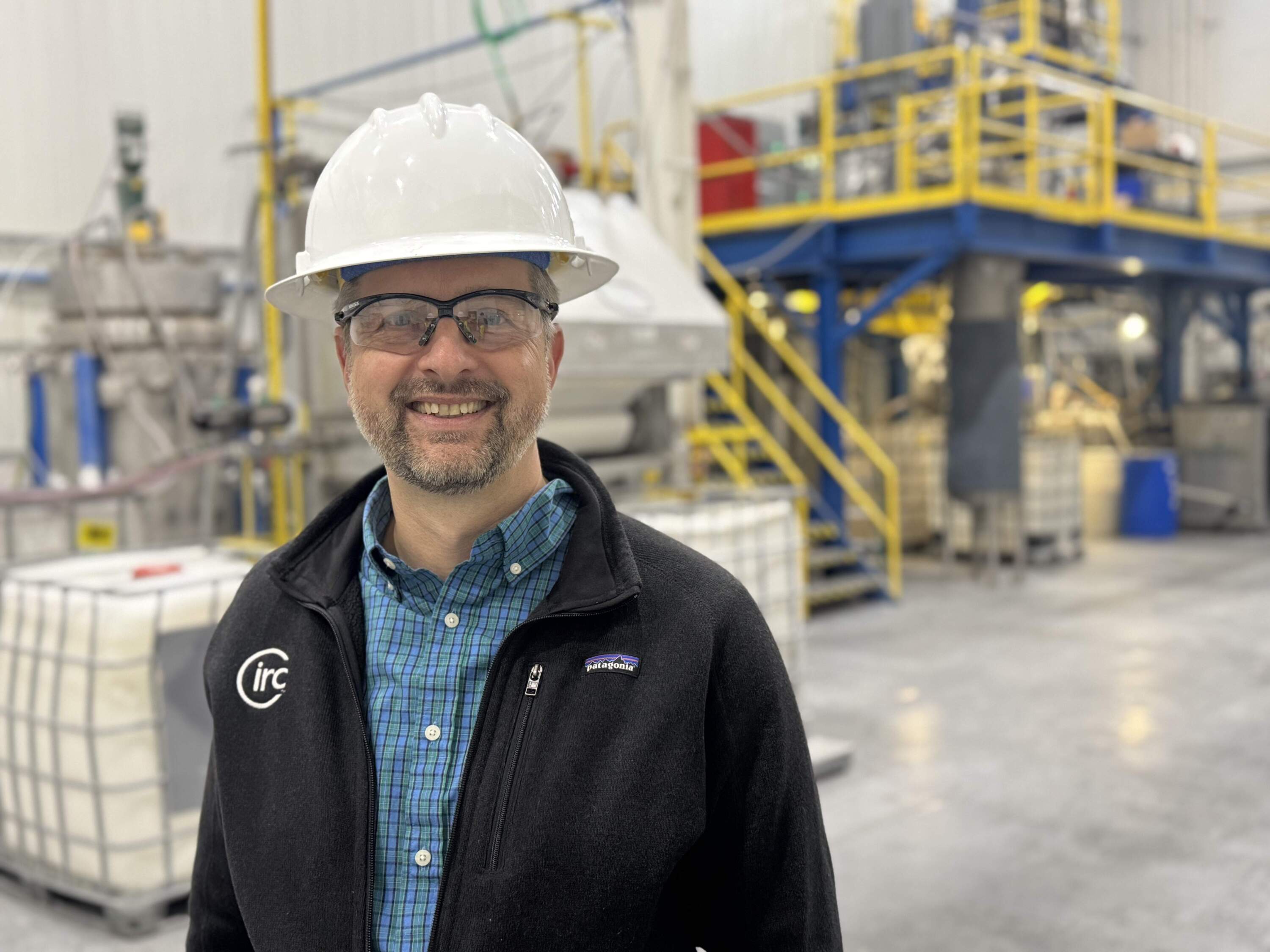
CEO and co-founder Peter Majeranowski said the fashion industry is ripe for change.
“It’s incredibly resource extractive, incredibly linear, and we need to change that and bring that material back,” he said. “A lot of people think clothing is recycled, but the reality is less than 1% of textiles are recycled back into new textiles. The main reason why it’s not happening is because the majority of our clothing is a blend of polyester and cotton — a plastic with a natural fiber.”
Those blends have to be separated before they can be used again. Circ shreds its old clothes and dunks them in a hot, pressurized bath of what Majeranowski calls “responsible chemicals” to render those modern fibers down into their building blocks.
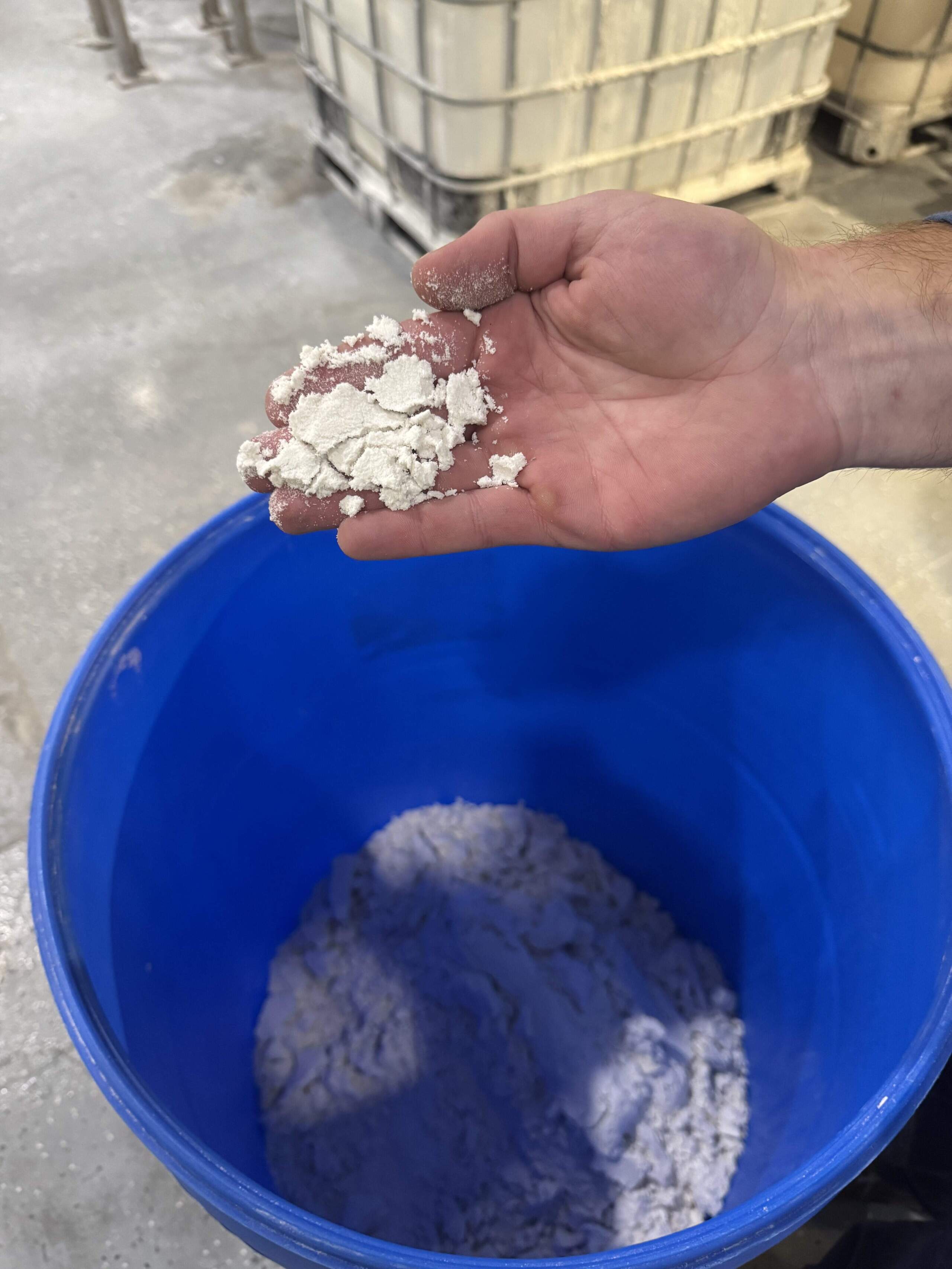
“That’s where the magic happens,” Majeranowski said, holding up a bottle of what looks like maple syrup. “This is what we call the liquor, but not the type you want to drink. It’s what’s left over from our process when we dissolve the polyester, remove the dyes. It’s this very dark liquid, but there’s gold in this liquid — it’s the polyester monomers.”
Those polyester monomers end up back in the supply chain, replacing virgin materials made from crude oil. Circ also recycles cellulose for use in fabrics like rayon, viscose and modal that otherwise come from trees.
Circ is not alone. There are other textile recyclers like Syre and RE&UP. Scientists are also developing new chemical recycling methods at the University of Delaware and elsewhere. Altogether, though, those efforts make up less than 1% of the more than 100 billion garments made each year.
While fashion retailers from H&M to Levi’s have said they want more recycled textiles, the industry has been slow to shift. Last year the promising recycler Renewcell declared bankruptcy shortly after opening its first major factory.
Majeranowski said Circ will avoid that fate and make recycled clothes as cheap as new ones, meeting a growing demand for sustainable fiber. Circ’s materials have made it into two collections by Zara and they are planning to scale up production with their first large-scale factory over the next few years.
Designers have to be involved, too, Majeranowski said. As hard as it is to deal with blended fabrics, recyclers also have to contend with new materials coming on the market. Circ’s latest challenge is what to do about the boom in stretchy athleisure clothing.
“Spandex is being blended into everything. We can handle small percentages but we’re not recycling it … It’s a very difficult compound to break down,” Majeranowski said. “We’re trying to solve that, but as we create new compounds and new molecules, I think end-of-use is now going to be much more front-of-mind.”
Today, fashion moves faster than ever. A 2016 McKinsey report found consumers keep clothes about half as long as they did in 2001. That industry trend has only accelerated with the rise of ultra-fast retailers like Shein, who churn out new lines constantly to feed hype on social media.
“The items that we’re producing are not long-term use items. They are much more treated as disposable items now, almost single-use,” said Marissa Adler, a senior consultant with Resource Recycling Systems. “People wear things a few times and then decide to either pass it on or get rid of it.”
Shein has acknowledged the problem of textile waste. The company recently announced the creation of a philanthropic foundation and pledged $5 million for clothing recycling efforts in Kenya.
What’s old is new again
There is another option for keeping old clothes out of the landfill that doesn’t involve expensive machinery or proprietary chemistry – one that’s arguably even more effective at reducing waste: Just don’t throw them out.
Lindsey Boland cuts a pair of jeans along the seam in her home-studio on the North Side of Chicago. She’s a boutique fashion designer working under the label Superficial Inc.
Today, she’s making something old new again, in more ways than one.
“So you know how skinny jeans are out? My kids at least, they just want really baggy, the barrel-shaped pant is in,” Boland said. “So I started adding found materials to old jeans and kind of upgrading them to a more modern style.”
With a few modifications, she updates the skinny jeans with a more relaxed fit.
Boland’s clothing rack is full of one-of-a-kind pieces that, as she puts it, “stand apart from factory-made fast fashion.” There are denim skirts made from a patchwork of old jeans, tops made from old drapes, and “Frankenstein” t-shirts made of several vintage finds sewn together.
While Boland did go to fashion school, she said you don’t need a lot of specialized skills or machinery to upcycle old clothes – just a sewing machine.
“Get on YouTube and learn how to stitch,” she said. “Have your clothes look the way you want them to look and last a little longer.”
Repairing and remaking clothes is a step up on the waste hierarchy: reduce, reuse, recycle. So, while Boland says the trillion-dollar fashion industry could use a lot more recycling, resale and upcycling, the best thing you can do to fight textile waste is just to buy less in the first place.
Rachel Kibbe with American Circular Textiles said she agrees.
“I’ve been in this space for almost 20 years,” she said. “Honestly, the more I know the simpler the answer gets, which is buy less, buy better.”
This segment aired on January 28, 2025.