Support WBUR
Revisionist history: ‘Civilization 7’ designers on the iconic game’s evolution
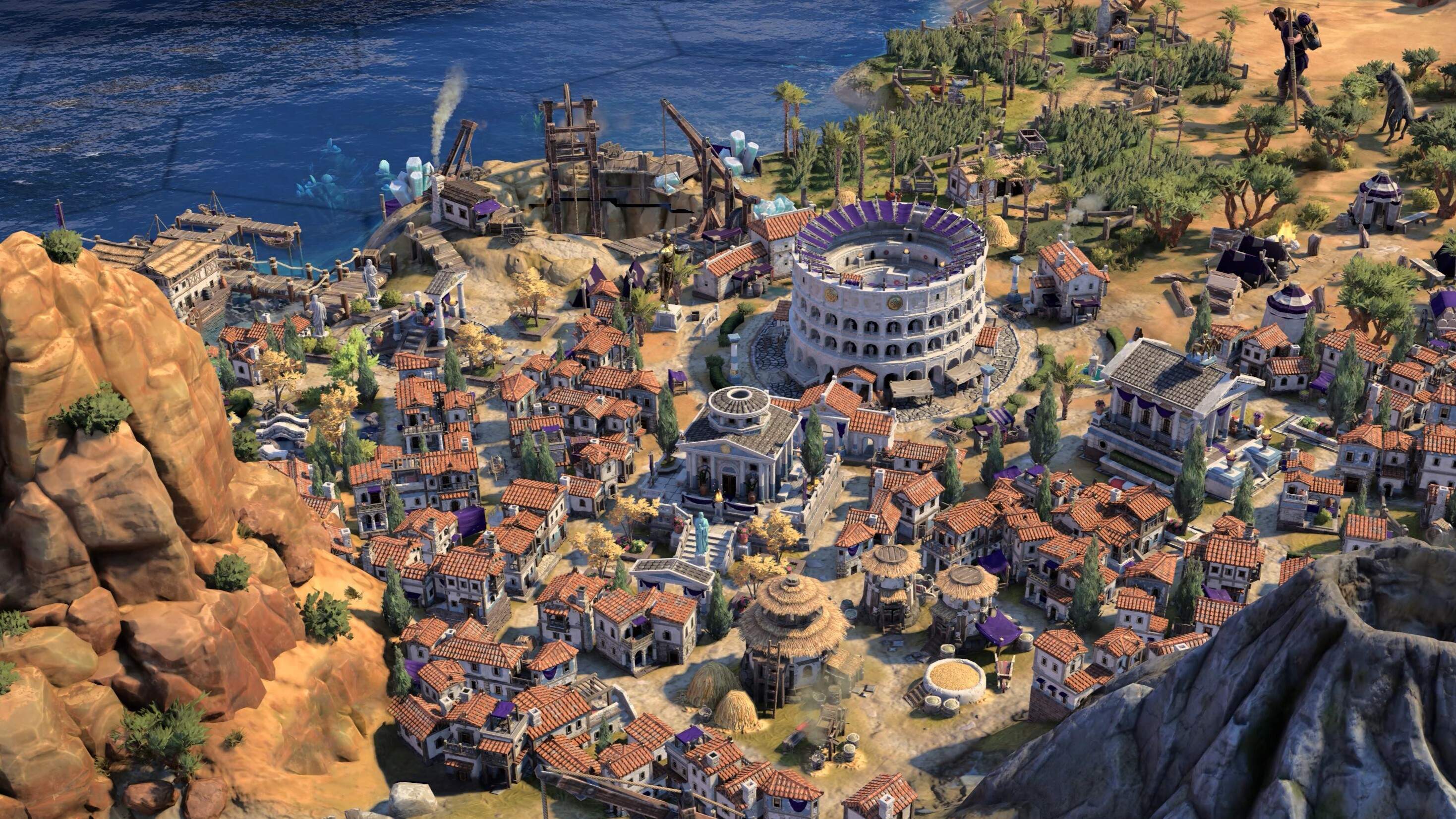
Harriet Tubman plots my downfall.
I’ve built Egypt from a single city to a continent-straddling empire. I’ve blazed lucrative trade routes with my neighbors and even allied myself with nearby Rome. But try as I might, Harriet Tubman rejects my friendly overtures. I see her forces massing near my borders — her ships invade as trumpets herald the end of the Antiquity Age. I’ve been saved by the bell, as I launch the next chapter of an epic game of “Civilization 7.”
“You don't want to run into Harriet Tubman in a particularly foul mood,” says Dennis Shirk, executive producer of “Civilization 7.” The abolitionist is one of many new additions in this latest edition of “Civilization,” produced by the Maryland-based Firaxis Games.
“When you talk about Harriet Tubman being a local legend around here, it was fascinating because we had a lot of ‘who is Harriet Tubman’ from somebody that was not from the United States — and it rippled outward,” says Shirk. “People were looking it up and then finding out who she is.”
The brainchild of groundbreaking game maker Sid Meier, the “Civilization” series has long blended entertainment and education. “We aim to encourage players to also be interested in the history behind what we do,” says Firaxis historian and narrative designer Rue Taylor. But more than three decades since its inception, the franchise is taking new steps to model humanity’s grand story more accurately.
Welcome to the new age
That overhauled philosophy begins with new leaders, global figures who may not have held political power in their own day, from Filipino writer José Rizal to renowned Moroccan explorer Ibn Battuta. But that’s just the first change players will encounter.
While you’ll lock in your leader for an entire game, your Civilization will morph between Antiquity, Exploration and Modern ages. In one game, I picked Marquis de Lafayette as a leader of a Greek civilization. I morphed into the Shawnee when the Exploration age dawned before ending my playthrough as Modern America.
“This is a big change that we've made after having looked at the way ‘Civilization’ games were structured in the past,” says lead designer Ed Beach. “The game in the past was this really, really long experience, maybe 10, 20 hours of play to get through it — and it just went on with sort of no climactic moment.”
“The Ages structure gives us sort of a better pacing, but what I love about it is it also represents world history better,” says Beach. “I love traveling to places like Britain and thinking about, ‘Hey, the Romans used to own this,’ and after the Romans were there, the Anglo-Saxons came through and then the Normans came through and then the English were finally established in England.”
That layered approach defines the arc of “Civilization 7.” By the Modern age, players can even win the entire game by unearthing artifacts from earlier eras. Ultimately, historian Rue Taylor hopes that this new structure opens minds to even broader connections.
“We've divided the game into ages, but history is a constant, flowing story,” says Taylor. “When we study history, we often study one civilization at a time in isolation – but the world is full of interactions.
“Once you step out,” mused Taylor. “You see that there is no kind of one through line, but rather all of these different branches that interweave with one another.”
3 questions for “Civilization 7” lead designer Ed Beach and executive producer Dennis Shirk
Past versions of “Civilization” featured “barbarians” to antagonize you in the game’s early turns. Now they’re called “independent powers” — is that an example of the change in this version?
Ed Beach: “It's been quite a few years since our last version came out. The world's changed over the last nine years, and we think about these things more deeply than we did before and calling people barbarians — I think we can do a little bit better than that. So now they are independent peoples. They are all identified as a certain historical grouping. They may be kind of that nasty military person who punches your Scout on the nose. They also might be somebody that you end up trading with, forming an alliance with. They can actually become a city-state and evolve to sort of a higher level of independent power. And so we feel like that's sort of a better way to represent those minor powers in the game, more respectful. And it's not casting them in that shadow of just calling them barbarians.”
You partnered with the Chief Ben Barnes of the real-world Shawnee Tribe to work on the game. Why?
Dennis Shirk: “Well, we've always followed the mantra if we're not doing the work and we're not representing it correctly, then why do we bother doing it? We've had a lot of times in the past because we've been doing this for a very long time. And so for somebody like the Shawnee, we were lucky enough to have Chief Barnes be a massive gamer. And he loves strategy games. He loves the stuff that we make. And he was all in.
“The architectural stylings, the outfits we even reworked because we didn't even have things quite right in the Tecumseh design in terms of what he looked like, what he was wearing. But we have all of these benefits coming out from that partnership.”
As a player, you get rewards for expanding your settlement, taking land. Some might call this the settler colonialism model. I imagine you've encountered this feedback, perhaps this criticism from some players?
Beach: “So that's one of the things that we are challenged with for sure. And it's great to have partners like the Shawnee. You talked about in your game, the Shawnee transition to America. Since we had the partnership with Chief Barnes and the Shawnee, we could ask him directly, how do you feel about that in the game? Does that feel disturbing to you or does it feel natural to you? And I was actually very surprised when we approached that.
“One thing that was very clear to him was that, you know if Tecumseh can get to the point where he becomes the leader of America. That's very cool to the Shawnee people to be able to have that type of realization, something that they can sort of see that one of their own people could lead America. And he was very comfortable with that. And we're trying to make sure we're respectful to not put you the player in situations where a colonial power is now in charge and you didn't want them to take over your lands, those kind of things.
“So that's why we carefully curated the system that we put in the game of how one civilization unlocks another or how another leader might unlock a civilization so that we can really be thoughtful about how the history is presented.”
James Perkins Mastromarino produced and edited this interview for broadcast with Todd Mundt. Perkins Mastromarino also adapted it for the web.
This article was originally published on February 11, 2025.
This segment aired on February 11, 2025.