Support WBUR
Farmers are under a 'cloud of uncertainty' with Trump administration changes
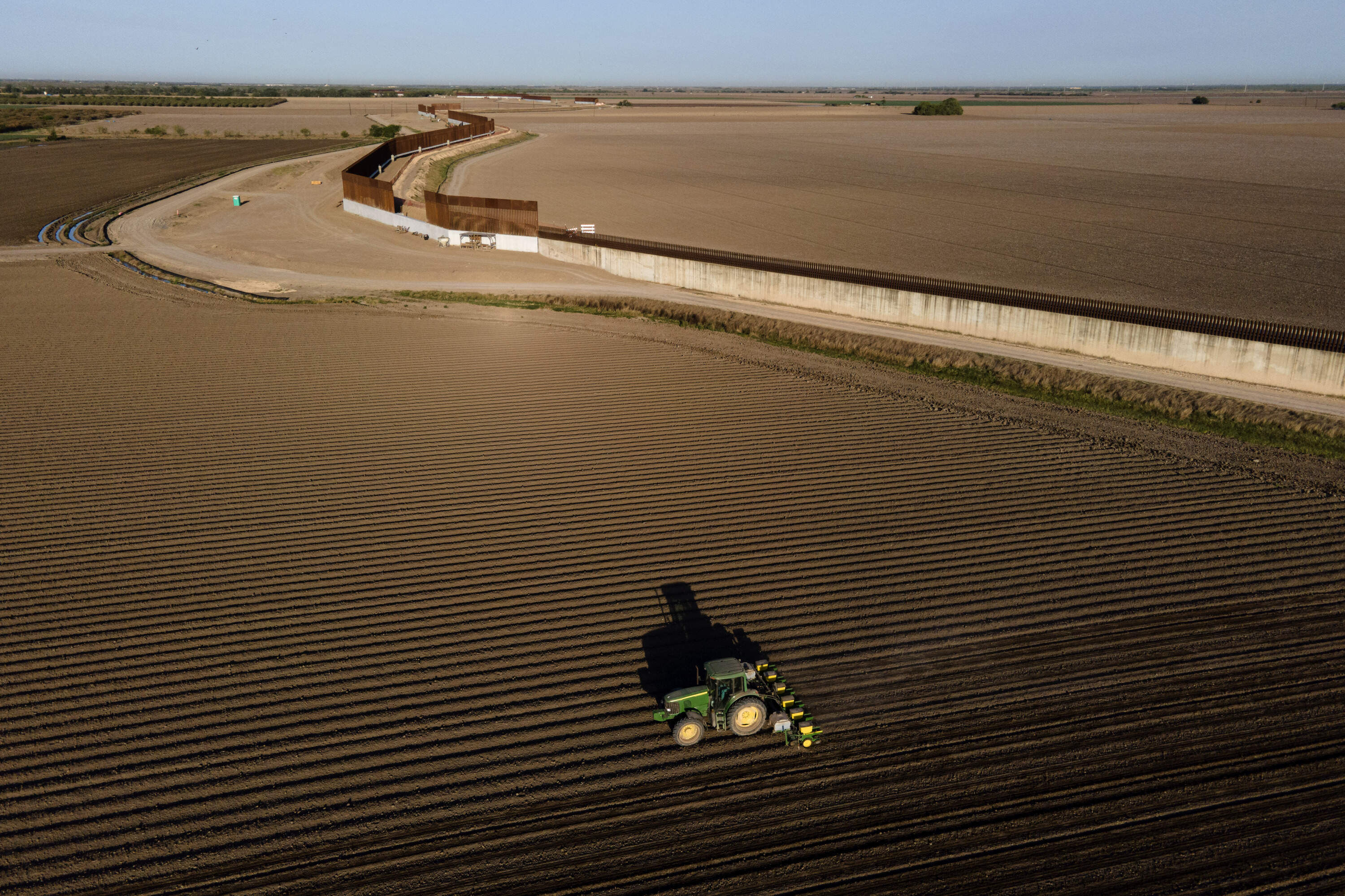
Avian flu, tariffs, frozen grants and funding, and the elimination of all federal diversity, equity, and inclusion programs are some of the challenges America's farmers face.
John Boyd Jr. is a fourth-generation farmer who grows corn, soybeans, wheat, and raises cattle and chickens in southern Virginia. He's also the founder and president of the National Black Farmers Association, and he says there's a cloud of uncertainty over farmers' heads. The uncertainty affects loans, financing and planning for the planting season that's right around the corner.
We spoke to Boyd about navigating this uncertainty.
7 questions with John Boyd Jr.
What's hard right now on your own farm?
“It's hard right now to hear what this administration is implementing on America's farmers. They came right into office and froze grants and other services and programs. And the administration has casted a lot of uncertainty for farmers like myself.
“So we have to approach a bank. They ask us, ‘Well, Mr. Boyd, what's the average you think you'll be selling your soybeans for or your corn and wheat?’ and have to be able to answer those questions. And since this administration came in and scared the bejesus out of everybody, and it's just like a black cloud over our heads of uncertainty of what American agriculture looks like and the future of farming, on my farm and every other farmer around the country.”
I understand that some grants were unfrozen, but it's unclear whether the money is actually going out. So for your members, perhaps you are a recipient of a grant. Is the reality that the money is not coming?
“The National Black Farmers Association did have a cooperative agreement, a grant and those funds are being frozen. We've done the work, billed the USDA, and now they're saying that basically they're not paying it, and that we're part of the DEI that the president boasts about cutting."
They say the grant falls under that executive order of cutting anything under diversity, equity and inclusion. What is this program that exists now that you're trying to draw down from?
"Yes. Well, the USDA has many, many agencies. And this particular grant was with an agency called the Natural Resources Conservation Service. The National Black Farmers Association has 140,000 members in the United States that we offer technical assistance and outreach to. We assist farmers when changes come about in the Farm Bill, all these things. So we applied for this particular type of grant. We got approved for it, and we put a budget in. We got funded, and then we submitted an invoice to the federal government to be reimbursed to pay staff and bills and expenses.
“And now they're saying that they're not going to honor that. So we see it as a broken promise. And the [National Black Farmers Association] is looking for law firms that can represent us and sue the government because what this government is doing to the American people and organizations like the National Black Farmers Association is they're breaking the law, people."
When a grant has been cut off, what does it mean for the day-to-day business on the farm?
“For me, we start putting in corn in about two weeks, people. Farmers are heading to the field. The president never asked America's farmers what they thought about the tariffs that he proposed in China: 10%. In Mexico, 25%. In Canada, 25%. The only thing that the United States does better than anybody else around the world is we still produce corn, wheat and soybeans. And China buys probably 85% to 90% of the soybeans, and Mexico buys the bulk of America's corn. When Trump came in last time, guess what he did? He imposed tariffs on China. The price went from $16.80 per bushel for soybeans, and it plummeted down to less than $6 a bushel.
Because of what? The retaliation from China, suddenly they didn't want it? And suddenly you have a lot less demand, and the price goes down?
“That's what's going on right now. And that's what the president did. He came in and did the same thing with the USAID program. And that creates a stockpile of grain that was already purchased by USAID. They haven't said what they're going to do with this grain. They're not loading it into containers. It's in stockpiles, people, and it's going to rot.”
Help me understand what how that impacts the farmer.
“Well, first of all, I feel sorry for the needy families and children that depend on this program. But for the American farmer, you're taking, I think, $4 billion of food out of production. On top of his proposed tariffs, when they happen, when they may not, all of these things are bad news for America's farmers that rely on a fair market to sell those three commodities (corn, wheat, soybeans).
“And farmers like myself, we have mortgage payments. I have a child in school. I have equipment payments. I have to make a decision here in the coming weeks, between $75,000 and $100,000 just for my seed bill alone. These decisions have to be made within two weeks, and I don't have the answers from this administration or this agriculture secretary. And guess what? I'm a relatively small farmer. 1,500 acres is still small for a grain producer in this country. For the guys out in the Midwest, in Iowa, and these other the places that are mega farmers, man they're hurting way more than I am from uncertainty.”
Help the rest of us understand what tough decisions farmers have to make.
“Some farmers are going to wind up losing their farms, people, because if you can't get good prices for your crop, you can't pay your bills. If you can't get a loan up front, you can't put a crop in the ground, which means you can't keep your farm. That's what this means.”
Julia Corcoran produced and edited this interview for broadcast with Todd Mundt. Cocoran adapted it for the web.
This article was originally published on February 25, 2025.
This segment aired on February 25, 2025.