Support WBUR
How noticing ‘glimmers’ helps you train your brain to not turn away from suffering
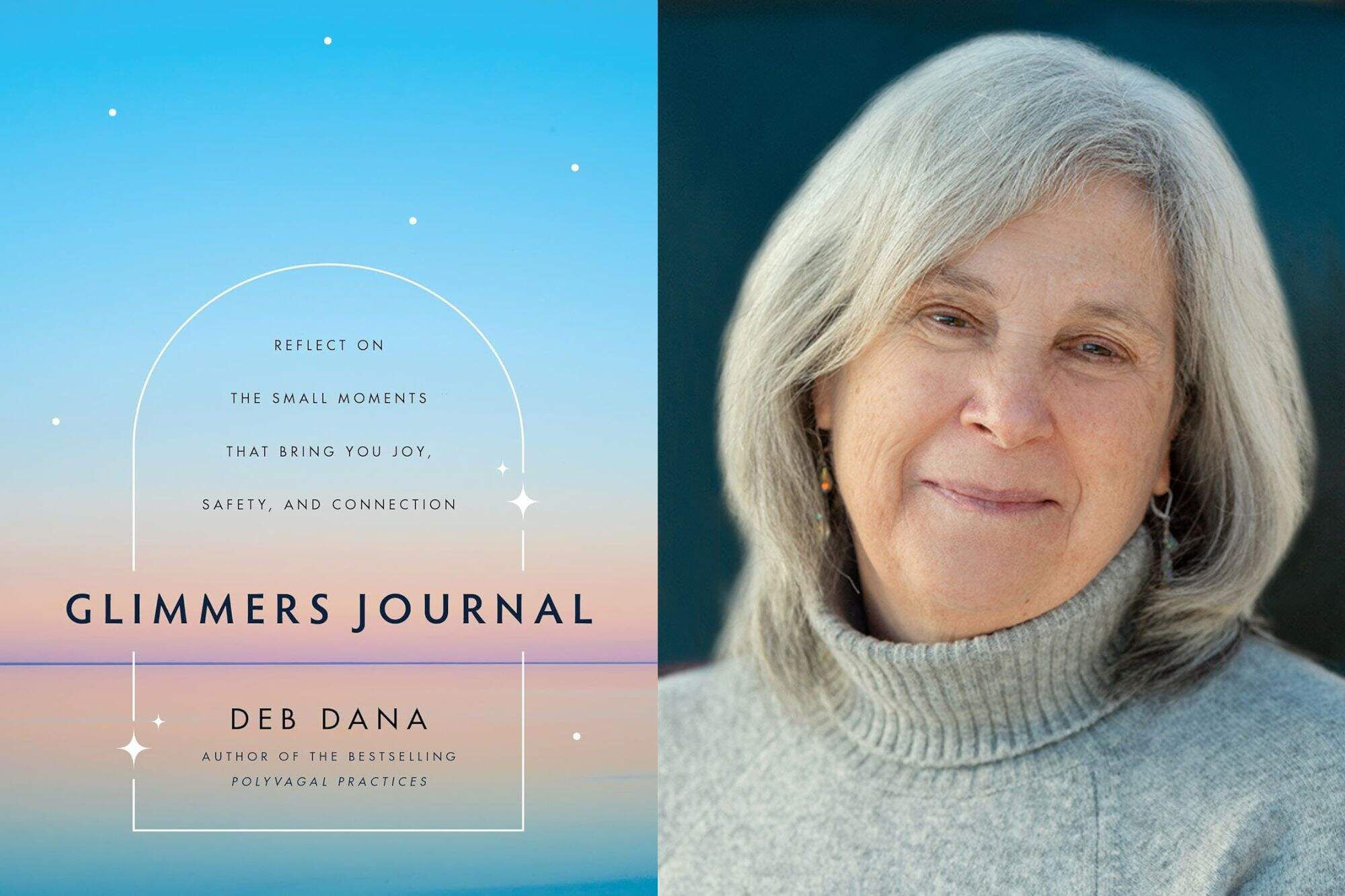
When you’re feeling anxious, reach for 'glimmers' — the tiny things in your day that bring you joy. It could be as simple as holding beach stones, listening to birds or snuggling with a pet.
Our brains aren’t wired to mark glimmers and share them with others, but embracing them can be a balm for your nervous system.
Deb Dana, a licensed clinical social worker who splits her time between Illinois and Maine, has been recognized for coining the term. She's the author of "Glimmers Journal: Reflect on the Small Moments That Bring You Joy, Safety, and Connection."
“The thing I love about glimmers is they're small, they're gentle,” she says. “And yet they powerfully shape our system toward safety and connection.”
Dana says appreciating glimmers in your life is not the same as toxic positivity.
“They're not so that you forget the challenges or look away from the suffering,” she says. “But what they do is they build capacity in your brain and body to be anchored enough in safety and connection so that you can turn toward the suffering and the challenges and not be pulled into them, not relive them, but just be able to reflect on them, be with them.”
Dana says she started writing her “Glimmers Journal” while her late husband, Bob, was dying.
“Bob had been sick for a long time and his ending was difficult,” she says. “And so for me, finding a tiny moment was all I could do.”
She says she was grateful to have a glimmer practice in her life already because being in the midst of a traumatic event is not the time to start.
“I thought, ‘It's gonna be okay,’” she says. “And then I could look at Bob differently because I could do this. And that's the power of these tiny moments.”

The practice begins with a simple prompt: see, stop, appreciate.
“The ‘see’ is, how do you know that you've bumped into a glimmer? That's where we have to start,” she says. “So how does your body tell you? Maybe you have a thought. Maybe there's a feeling that arises. I often feel something in my chest and I'm often stopped in my tracks and I look at something.”
Dana said this practice can also be used as a self-calming technique for children when families share their glimmers together.
“The beautiful thing about humans is we want to co-regulate with others,” she says. “So for parents and kids, I have some families in my world who say it in the evening, they [ask] what was a glimmer you found today? And they share it with each other and it comes alive again.”
Book excerpt: 'Glimmers Journal"
By Deb Dana
Reprinted with permission of the publisher, W.W. Norton. All rights reserved.
Ashley Locke produced and edited this interview for broadcast with Michael Scotto. Locke also adapted it for the web.
This segment aired on March 4, 2025.