Support WBUR
The Atlantic’s Jeffrey Goldberg says ‘public interest’ served by full Signal chat release
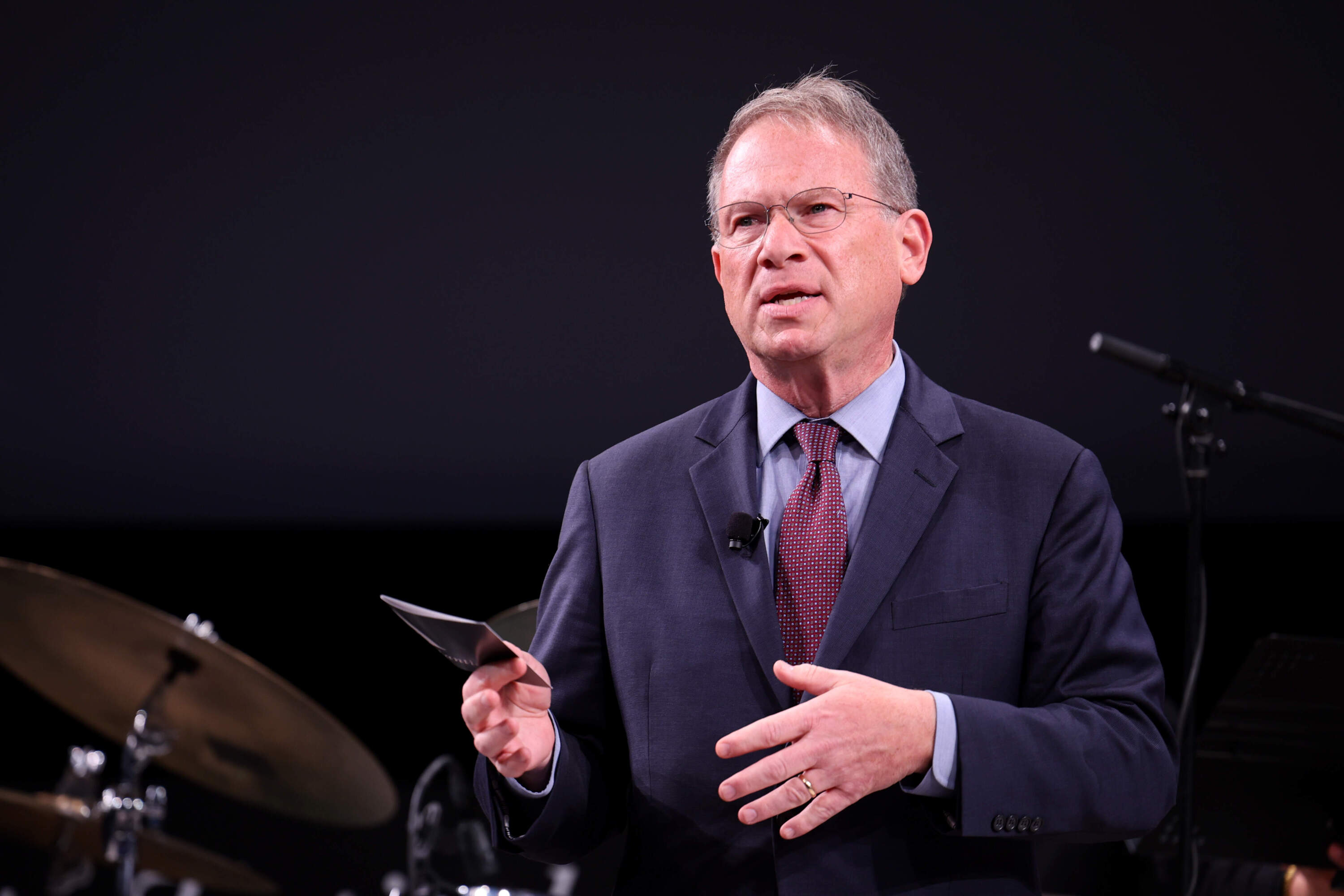
The Atlantic's editor-in-chief Jeffrey Goldberg has released nearly all of the transcript of the Signal group chat that he was included in, where Trump administration officials planned a deadly military strike on Yemen earlier this month.
In an interview with Here & Now’s Deepa Fernandes, Goldberg defended his decision to release the Signal chat that has put a spotlight on how the administration handles sensitive information.
“The White House issued some sort of anodyne statement about how this is sensitive and it shouldn't be out, but there was no specific request on data,” Goldberg said. “So we decided since they said that this is not a problem and that there's nothing secret or classified in it, we decided that we should put it out and let people decide for themselves.”
5 questions with Jeffrey Goldberg
The White House objected to the release of the transcript. Why did you release it?
“The White House is speaking with multiple voices. Let's call it that. [President] Donald Trump [on Tuesday] said there's nothing classified or dangerous in these texts, so did the director of national intelligence and the CIA director, all on down the line. So after they all said that, we went to them, we went to five different agencies: NSC [National Security Council], DOD [Department of Defense], CIA, DNI [Director of National Intelligence] and the White House spokesperson herself and said, ‘OK, look, we're in a dispute. You say this doesn't mean anything, we say it means something. We want the general public, Americans to see this for themselves. Let us know if there's really anything sensitive in here. Give us specific things from the chat that you don't want us to publish and we will seriously consider that.' CIA asked us to withhold one piece of information, and we did, but otherwise they didn't say that."
Why do you think the public interest is being served by releasing the transcript?
“First of all, the public interest is being served by the revelation of an enormous security breach in the United States' national security apparatus. Not just the fact that they were working on Signal, which they're not allowed to do for this kind of sensitive conversation, but that they don't even know who they're inviting into their chats, namely, you know, if you're inviting the editor-in-chief of The Atlantic magazine, you don't know who it is into your chat. That doesn't sound like great security. So the purpose of journalism is to expose government malfeasance, to hold government officials accountable. And so that's what we wanted to do. And since the White House, instead of saying, ‘Yeah, we made a mistake, we won't do it again,’ is arguing about it, we thought we have to move this conversation forward.”
Did you consider outing yourself, telling them you're a magazine editor?
"No, I never considered that.
"Everything crossed my mind, but I didn't weigh it. I didn't consider it seriously. It's not my job.
"My job is to find out what the government is doing and then write about it. And of course, actually. And point of fact, not in the chat, but then I let Mike Waltz know that ‘I'm writing about this, can we talk?’ I sent that to him on Signal actually, and he acted as if he had no idea who I was and then handed this off to other spokespeople, other officials. So in point of fact, I suppose I let the organizer of the chat know who I was."
What was it like waiting to see if bombs would drop?
“As someone who's written about national security for a long time, you know, we generally have a few golden rules, and one of those rules is you don't do anything that could inadvertently endanger American lives, American personnel, whether they're government personnel, military personnel, intelligence personnel. So I couldn't quite believe that this information was out there in the wild.
"Remember, of course, that I did believe that I was the target of a disinformation campaign. And so when I got the text at 11:44 a.m. saying that at 1:30 p.m. bombs will start falling in Yemen, I thought to myself, 'Well, if there is actually an American attack at 1:30 p.m., then I'll know that that this that the Signal chat is real and I have to I have to consider my next steps.' "
Are we burying the lead by not talking about the attack itself, which the Houthis said killed 53 people?
"I don't know if we're burying the lead because obviously huge breaches in national security and safety of information, that's a very, very important story, obviously. And one of the reasons you know it's a very important story is that the Republicans themselves consider that to be an important story when it's Hillary Clinton doing the deed, right, so that's obviously hugely important.
"I think that covering what's going on in Yemen. You have an Iran-backed terrorist organization, the Houthis, that are firing missiles at Israel and disrupting global shipping and occupy half of Yemen and all kinds of other things in the U.S. and the Trump administration is criticizing Biden’s response, and Europe wants Trump to do more. There's a huge story in Yemen, but Yemen, as you know, is one of the more inaccessible places for Western journalists, so maybe this becomes like a substitute for a discussion of Yemen."
Editor's note: Katherine Maher, the CEO of NPR, is chair of the board of the Signal Foundation.
Jill Ryan produced and edited this interview for broadcast with Michael Scotto. Scotto and Allison Hagan adapted it for the web.
This segment aired on March 26, 2025.