Support WBUR
What two autistic people want you to understand about autism
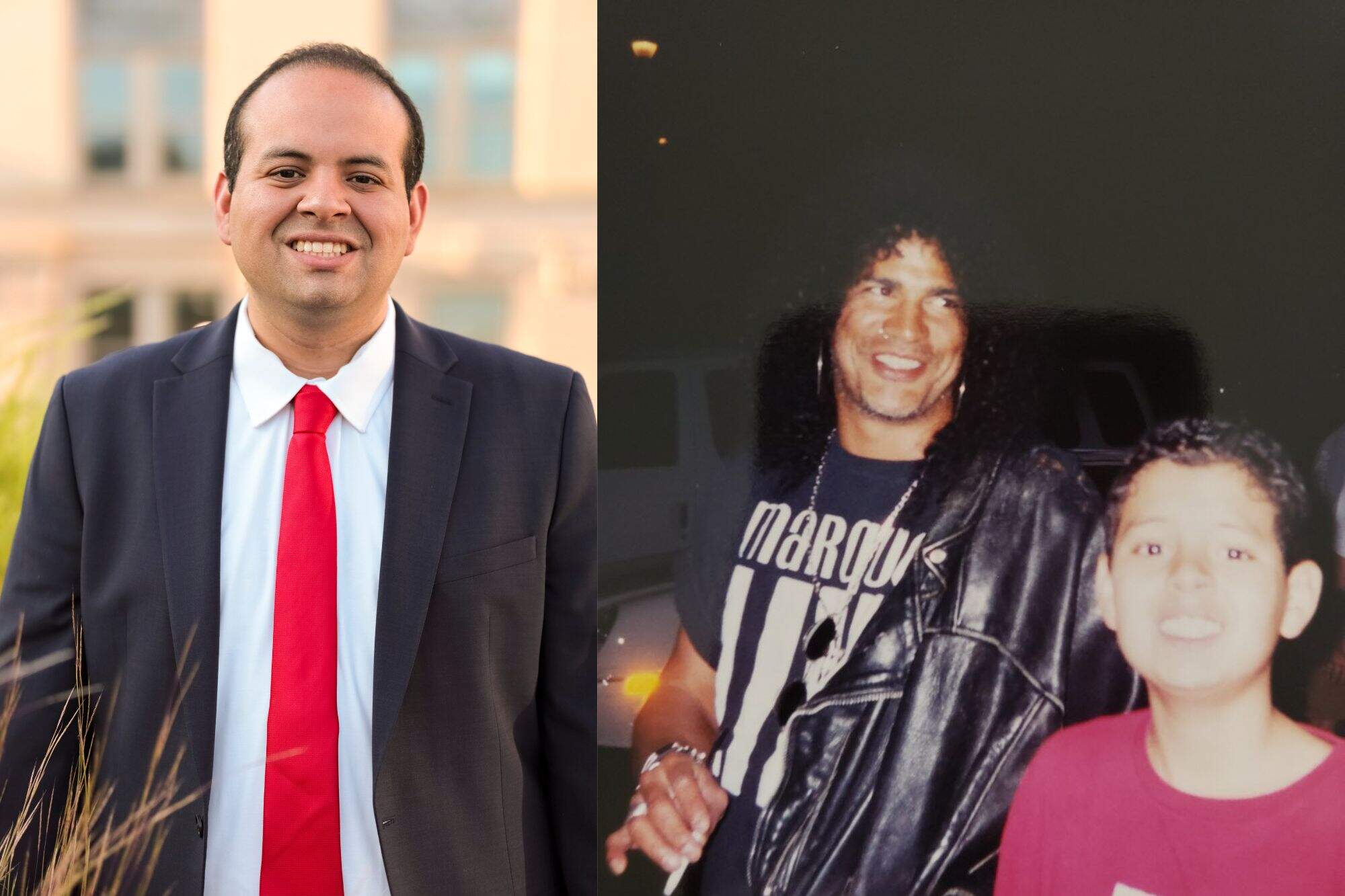
New data about autism should be celebrated, not feared. That's what autistic people like Eric Garcia want people to remember as Health and Human Services Secretary Robert F. Kennedy Jr. spreads misinformation about what he calls an “autism epidemic.”
“Telling parents that it will destroy their family isn’t what autistic people need and it’s not what their parents need either,” said Garcia, who works as the Washington bureau chief for The Independent and also wrote the book, “We’re Not Broken: Changing the Autism Conversation.”
Kennedy said at a press conference last week that autism prevalence is increasing at an alarming rate after new numbers from the Centers for Disease Control and Prevention found that 1 out of 31 kids was diagnosed with autism spectrum disorder by the time they turned 8.
Ari Ne’eman, an assistant professor at the Harvard School of Public Health who previously ran the Autistic Self Advocacy Network, says one thing to remember in this context is the process of diagnostic substitution.
“As we've seen autism diagnoses increase, we've seen other kinds of diagnoses like intellectual disability decrease,” he said. “So, what's actually happening here, rather than some sudden autism epidemic, is people who would have received a different diagnosis in the past shifting into the autism diagnosis due to broader diagnostic criteria.”
Both Garcia and Ne’eman say they were diagnosed with autism as children.
4 questions with Eric Garcia and Ari Ne’eman
Is there any harm in calling autism an epidemic?
Eric Garcia: “It's incredibly significant and it's incredibly worrying because at the actual event, he compared it to diabetes and other chronic illnesses and chronic diseases. It's worrying because there's going to be a focus more on trying to eradicate autism, rather than providing services, rather than trying to assist and accommodate autistic people, and he is misrepresenting what the actual CDC report says. If you look at what the actual CDC report concludes, it points out that one of the reasons for this is better detection amongst African American, Latino, Asian American, Pacific Islander communities, better access to services across the board.”
Ari Ne’eman: “I just want to add to that, this is both inaccurate and potentially very damaging. There is a large alternative medicine industry that is seeking to exploit families out of tens of thousands of dollars for pseudo-scientific quack therapies that are predicated under the idea that autism is caused by vaccines or some other environmental pollutant when the best available science really shows that it's genetic in nature, that it is not something that we should be trying to reverse or recover autistic children. And these pseudo-scientific therapies, they can be very harmful.”
What is the benefit of an autism diagnosis for a child as young as 2 years old?
Garcia: “The benefits of diagnoses cannot be overstated, especially if your child needs services. Take into account… if families want to get on, receive Medicaid home care — that means to have them receive care at home instead of in a congregate care setting — they need to get on a waitlist, and it could vary for being as long as 10 years to 5 years, depending on the state you live in. It is what is needed to get accommodations at public schools to ensure that students receive a free, appropriate public education. And more than anything, what it does is it gives parents a roadmap. It gives them something that they can look to… it creates community and more than that, when you have the autism diagnosis, it’s a disability. It's a legally designated disability…and that entitles you to certain rights.”
What could the federal government do to make it possible for all autistic people to thrive?
Ne’eman: “One thing we need to do is to change the autism research agenda. Historically, both public and private investment in autism research has focused overwhelmingly on biology, ideology, and causation, whereas there's been very little research investment in how to improve the quality of services or the needs of adults. So, there's a need of a rebalancing of the autism research agenda.
“At the same time, I would say we need to make fundamental changes to expand access to Medicaid home and community-based Services, as Eric mentioned. In many states, not every state, but in many states, people with all kinds of disabilities have to sit on waiting lists for years to get access to home care. So, we really need to shift the model from one that’s still predicated onto the idea that disabled people should be sent to institutions or other segregated congregate settings to one that makes available services in people's own homes as a matter of right.”
What did it feel like as an autistic person to hear Kennedy say things like, autistic people will never pay taxes, they'll never hold a job, they'll never play baseball, they'll never write a poem, they'll never go out on a date?
Garcia: “Literally my hands started to shake. Literally like my hands just couldn't stop shaking, and I think it was because I thought of how so many people who maybe have a newly diagnosed autistic child in their family, maybe they got a diagnosis themselves, maybe they're caring for a loved one – how they absorbed that. I thought about how they are now feeling like their child is a burden on them.
“I think that what I also would say that the flip side to… even if they never do any of these things, their lives would be worthy and their lives would be valuable…what I would say is that we have seen time and time again, non-speaking autistic people, autistic people with intellectual disabilities, autistic people with high support needs, when they are given acceptance, when society gives them an opportunity and gives them a chance, they are able to achieve many great things, and it's often the one of the biggest barriers is that society kind of lives by the soft bigotry of low expectations and doesn't assume that they'll amount to anything.”
This interview was edited for clarity.
Ashley Locke produced and edited this interview for broadcast with Michael Scotto. Locke also adapted it for the web.
This segment aired on April 22, 2025.