Support WBUR
Stay cool inside this summer with these 3 new board games, reviewed
A new wave of tariff threats is once again worrying board game makers. While the production of future games remains murky, stores are still stocked with hot games that shipped earlier this year or late last year. Here’s a diverse array of recent titles for every taste and player count.
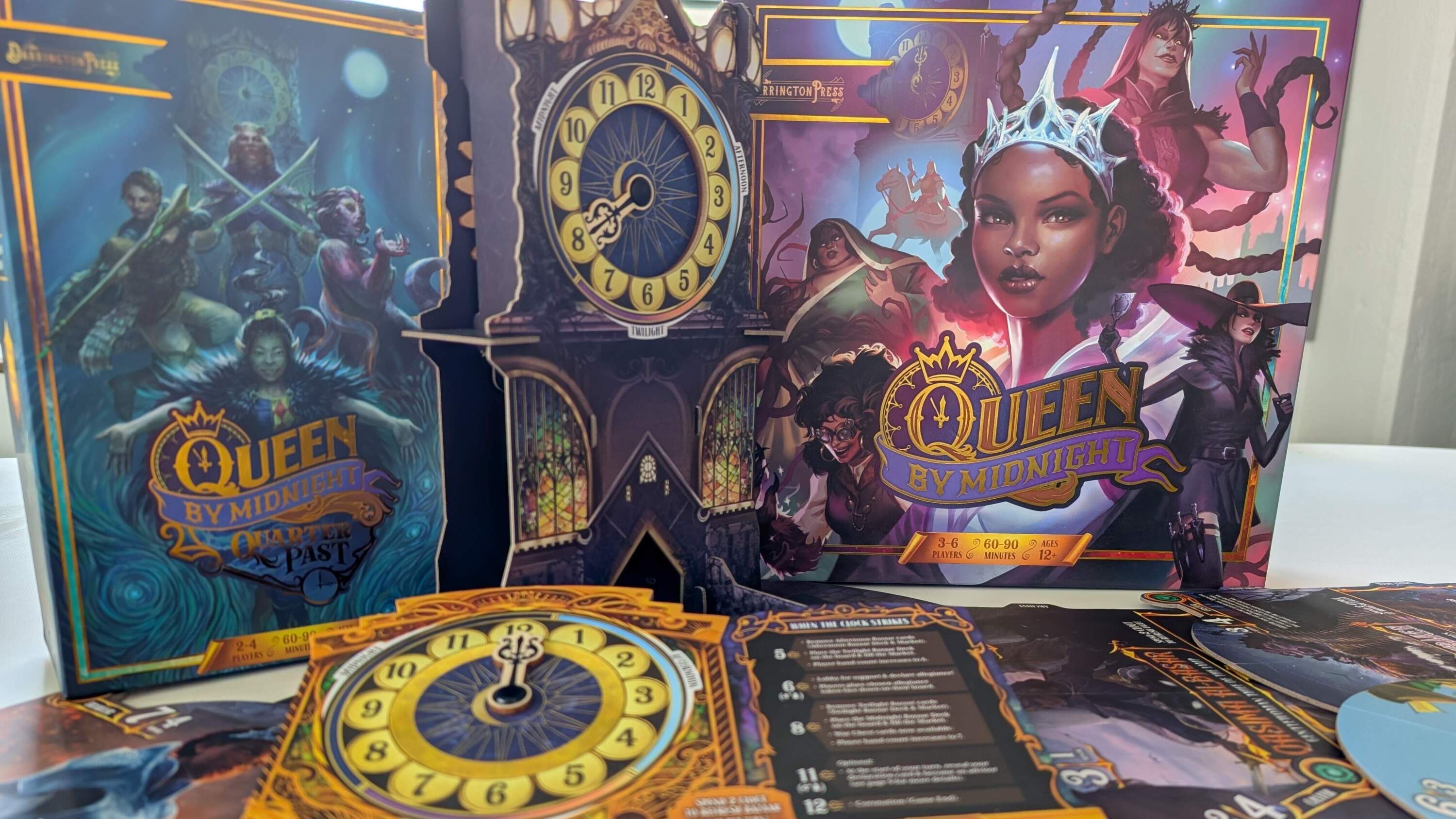
‘Queen By Midnight’ and ‘Queen By Midnight: Quarter Past’
From Darrington Press, the design house from the sprawling “Critical Role” media empire, “Queen By Midnight” is nothing if not indulgent. “Quarter Past,” a “Queen By Midnight” standalone expansion that debuted last fall, slims the base game down to a more manageable package.
Both regular and lite flavors feature a central clock tower that ticks down, turn by turn, with a winner ultimately crowned by the time the clock strikes 12. Each player (max six for the base game, max four if you’re only using the expansion) chooses a contender drawn from fairy tales and folklore. Hephesta, for example, is a battle-hardened twist on Cinderella. Boss No is a crimelord vaguely based on Snow White. “Quarter Past” adds more, like Qasima Al-Basar, a gender-bent Aladdin and Elise LeKraken, a monstrous Little Mermaid.
These characters stand firmly in the public domain, but carry just a whiff of Disney about them. Indeed, “Queen By Midnight” resembles “Villainous,” a long-running licensed game from Ravensburger headlined by big bads like Maleficent and Ursula. “Queen by Midnight” packs more style (at greater expense), but follows a similar card-slinging philosophy.
The game innovates by layering in some social deduction. Before the brawl begins, each player secretly chooses an opponent to support should they be eliminated. Once you’re knocked out, you’ll reveal your choice and team up with your rival (if they themselves haven’t been eliminated before you, that is.) This creates a bizarre incentive, however. If you suss out that an opponent secretly supports you, you’ll want to push them out first because the “Inner Circle” powers they bring can turn the tide — they’ve swung every game I’ve played.
But despite its glamor and maximalist design, I can’t recommend “Queen By Midnight” wholeheartedly; if you’re interested, try the cheaper, more compact “Quarter Past” first. The game’s intricate aesthetic can override usability — icons for each character are so subtle that it’s easy to mix their cards up. The game is also not balanced — some characters are far easier to pilot than others. But the evocative setting really encourages you to role-play. Even while my games of “Queen By Midnight” could drag on, their best moments put us in the bloody shoes of ruthless would-be royals, cackling at our enemy’s misfortunes as we schemed for the crown.
‘MonsDRAWsity: My Lil’ Monsters’ (and more)
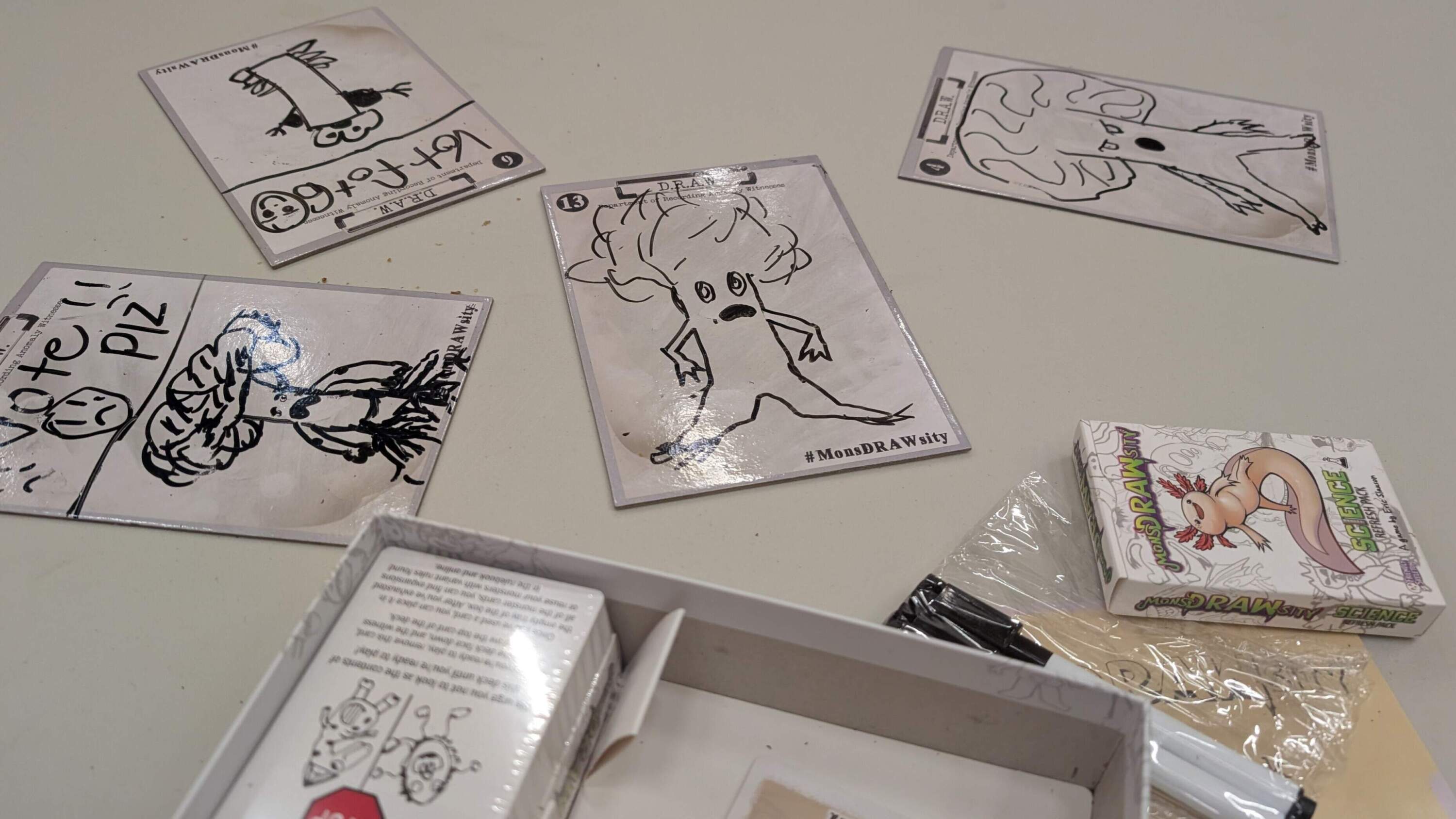
Meanwhile, if you want a short party game with a much wider player count (with expansions, you can take it up to 10), I can unreservedly recommend the “MonsDRAWsity” series. “My Lil’ Monsters” is the franchise’s latest standalone entry, geared towards young kids but accessible to all.
Here’s the pitch: Each turn, one player peeks at a card featuring a bizarre creature, designed to confound easy explanation. That player will then put the card away after 20 seconds and describe it from memory to the rest of the group, who’ll illustrate it on dry-erase boards. After three minutes elapse, these forensic artists reveal their work and the original “witness” secretly chooses which image best matches their memory. Then the original card is finally revealed, and each player guesses who they think the witness chose. Points go to the artist who won the vote — the witness gets a point if they chose the same artist as the majority.
“MonsDRAWsity” rewards keen communication skills as much as precise doodling. It’s also a great icebreaker, since it’s hard to be self-conscious when you’re tasked to illustrate a wild prompt. Here’s a made-up example: “Imagine a leafy tree, but with 12 googly eyes stalks, and five arms that sprout along its trunk, with three feet that appear to be wedged into tennis shoes,” etc.
“My Lil’ Monsters” simplifies the usual insanity, and it held the attention of a rowdy table of young kids I introduced it to. If you want more of a nerdy challenge, I’ve also enjoyed the “TerrorSaurs” and “Science” expansions.
‘Harmonies’
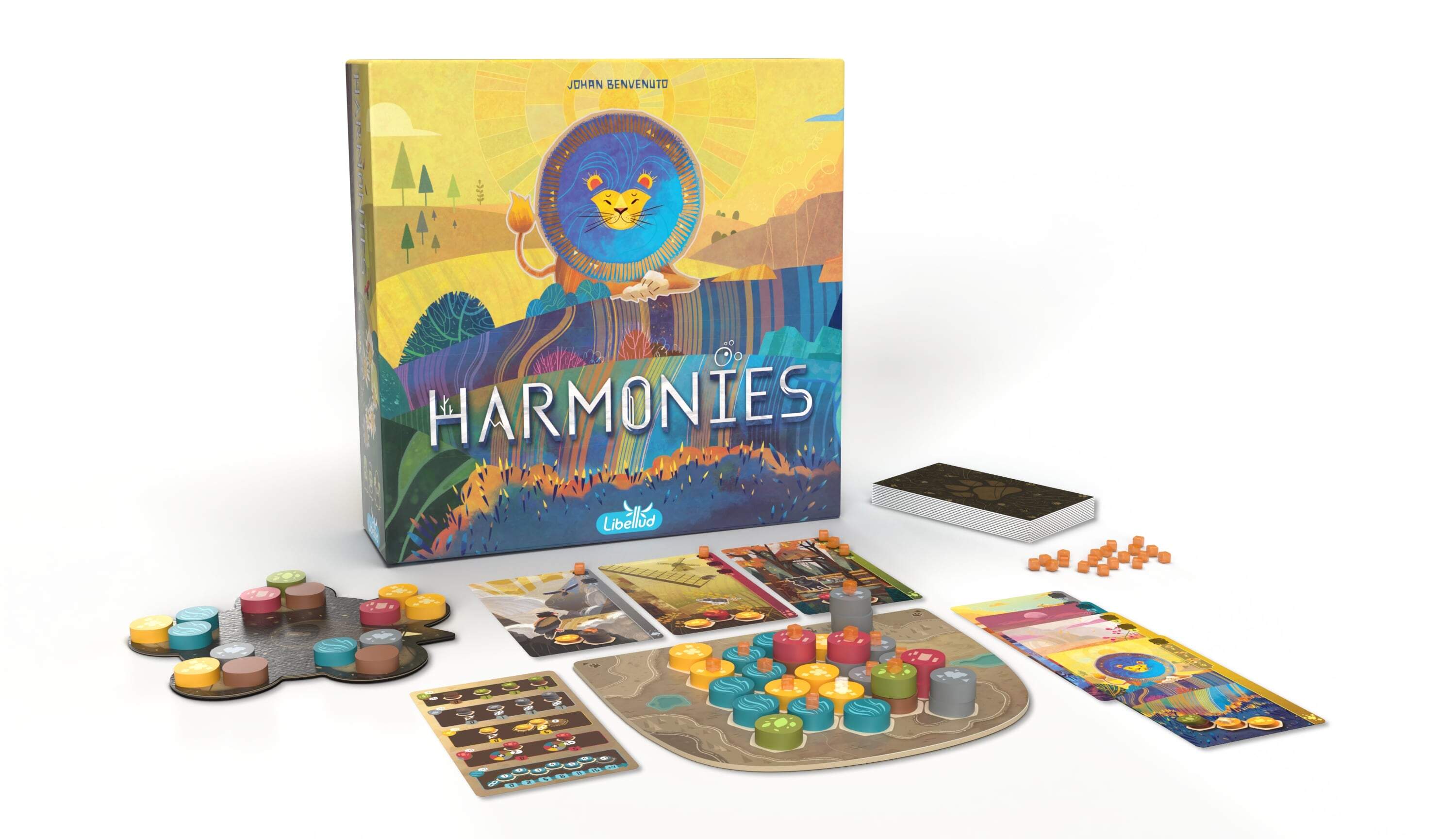
A mellow strategy game for one to four players, “Harmonies” has you build little habitats for a diverse array of critters that you’ll recruit from a central deck. Each turn, you’ll draft color-coded tokens from a central board and place them on a hex-grid in front of you. Certain arrangements — like a grassland piece next to a forest piece or two water pieces in line with a mountain — attract different animals, represented by clear plastic cubes, which sit atop tokens and score you points. The game ends once players have emptied the central bag of tokens.
Beautifully produced and easy to teach, “Harmonies” surprised me with its mechanical elegance. You’ll have to carefully pick between animal cards — if you saddle yourself with a difficult creature, then you may not score many points! Animals push you to specialize in certain kinds of terrain, but the token drafting system forces you to accommodate pieces you might not have planned for. Finally, you’ll also have to plan ahead — you can stack certain kinds of tokens on top of each other, but no more than one animal cube can occupy a space. You’ll have to find complementary animals to stay ahead as available real estate shrinks.
“Harmonies” may not have much direct player competition, but I still had to pay attention to opponents who might scoop up tokens I desperately needed to satisfy my parrots, butterflies, and otters. With games that rarely exceeded half an hour, “Harmonies” impressed me the more I played it and left me in awe of its wondrous illustrations.