Support WBUR
Six new tabletop games to ring in 2026
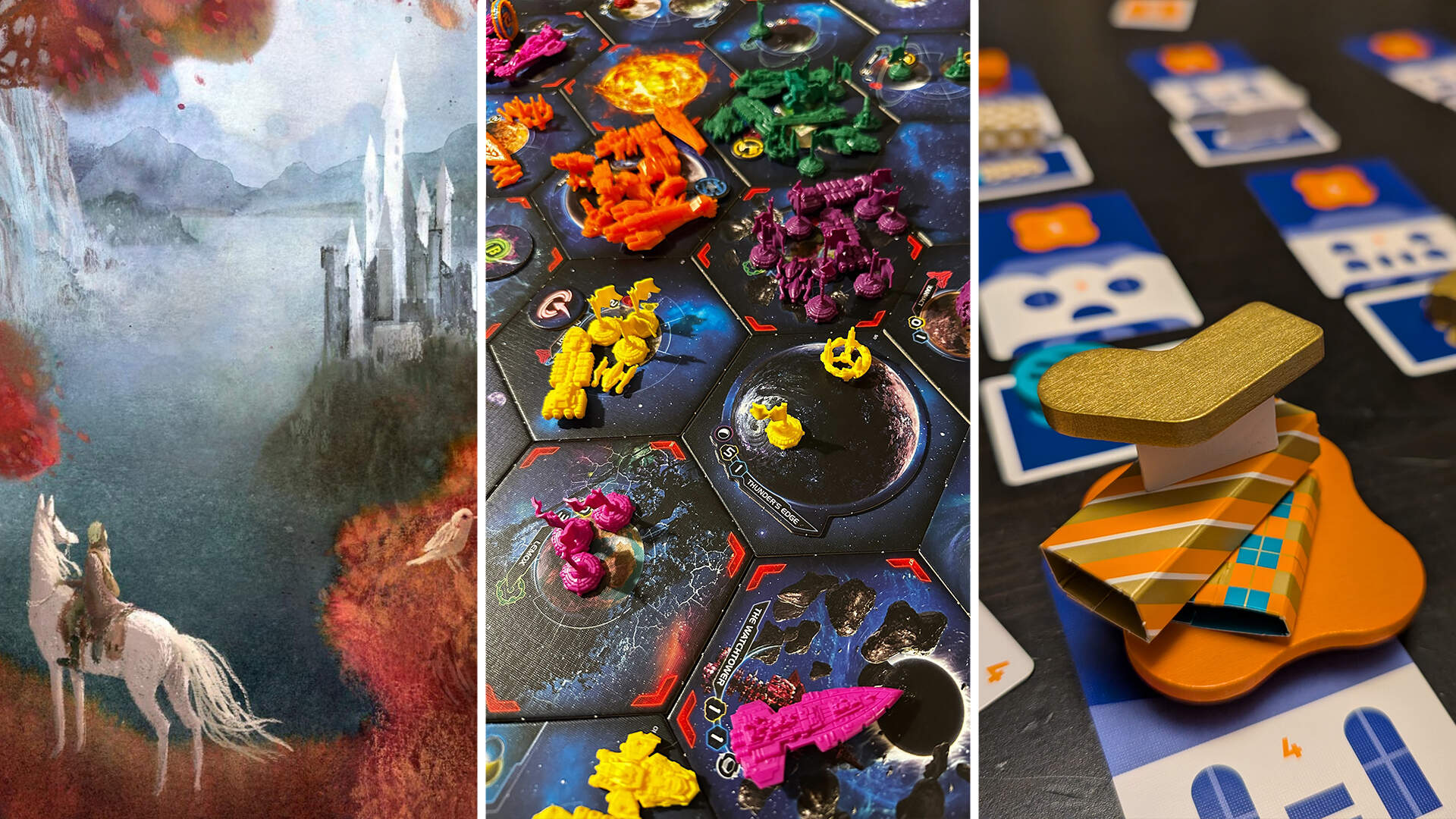
Tariffs thrashed the board game market in 2025, but we still got some inventive role-playing games and small box experiments. The NPR Games of the Year list I edited included tabletop darlings like “Molly House” and “The Old King’s Crown,” but they’re just the tip of the cardboard iceberg. My colleagues Vanessa McGinnis, Christopher Thomas and I reviewed six more games that have kept us busy this holiday season.
“Dolmenwood”
Reviewed by Christopher Thomas, associate producer, Morning Edition
An expansive Old School Revival RPG, “Dolmenwood” evokes mystery and adventure through imagery akin to the Brothers Grimm’s fairy tales and Arthurian myth. The random tables are fun to explore and allow for unique character concepts to emerge from the primordial soup of random dice rolls.
Like classic “Dungeons & Dragons,” “Dolmenwood” focuses on conquest and mostly uses a d20 system. You roll a twenty-sided die to attack a monster, but the big difference comes from skill checks, where you’ll instead roll a six-sided die to try to meet or exceed a target number. This keeps the game moving quickly. Smaller stat bonuses and health pools also give the game a sense of suspense and risk — any combat could be a character’s last. This makes players much more tentative to fight, encouraging creative solutions. Thankfully, if a battle does break out, it doesn’t take a long time to complete (unlike D&D, where battles can stretch for hours!).
I’ve only gotten the chance to play a tiny portion of the “Dolmenwood Campaign Book,” which is stuffed with locations and characters for players to meet. It also provides the referee (game master) with tons of materials to keep a campaign going for years without getting bored. All in all, “Dolmenwood” is an approachable entry into the kind of retro RPGs that have won publisher Exalted Funeral critical acclaim.
“Twilight Imperium 4th Edition: Thunder's Edge"
Reviewed by Vanessa McGinnis, digital campaign manager
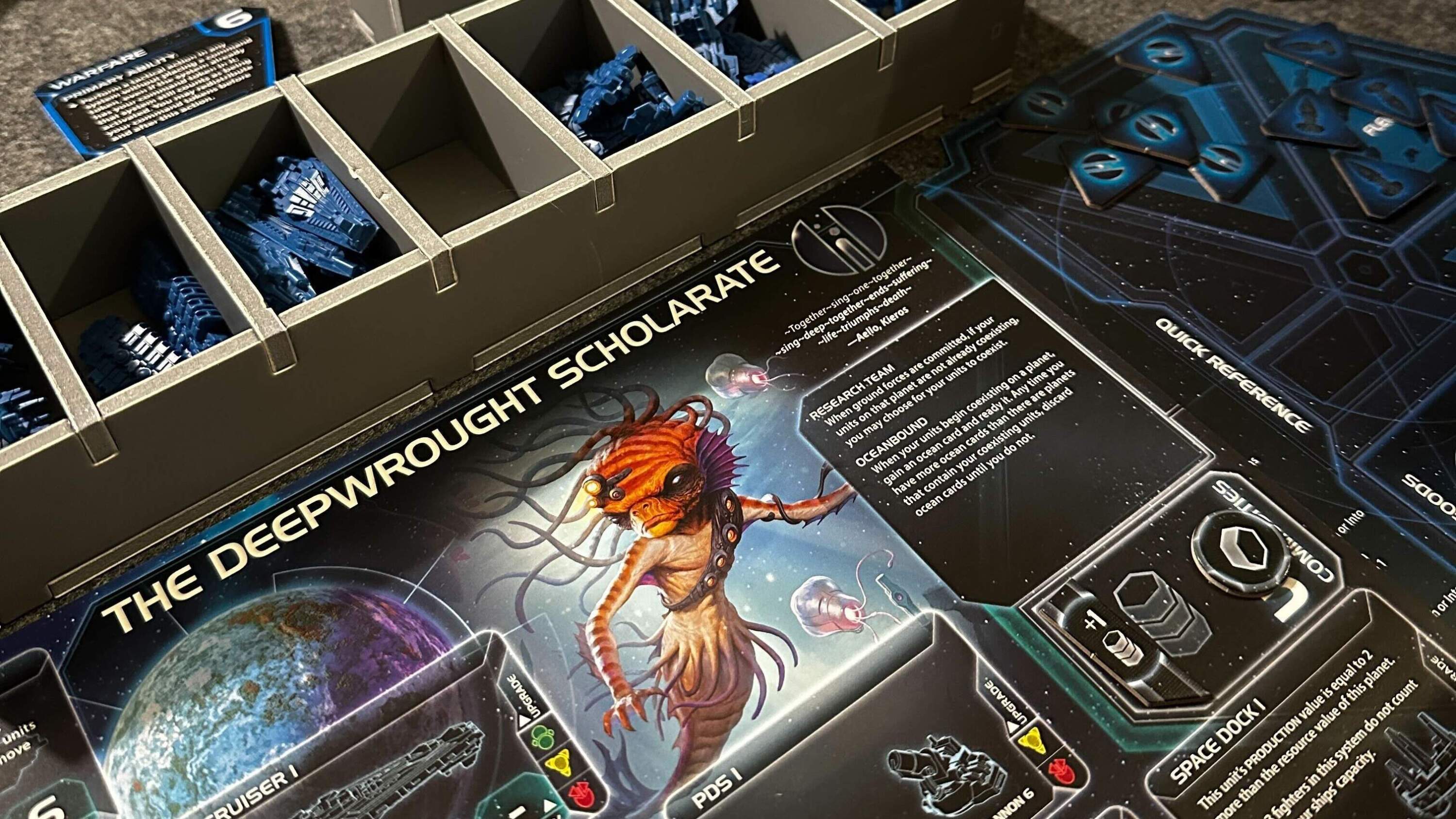
My friends and I love the extravagant space strategy game “Twilight Imperium” so much that we’ll reserve a day to play it weeks in advance, pile a potluck of snacks in the kitchen, and spend hours yelling and laughing at each other. This new expansion adds new factions and mechanics, but remarkably doesn’t make the game feel much more complicated or take longer to play (that is, much longer to play than the full day it already takes!).
“Thunder’s Edge” gives every faction, which includes myriad aliens and the obligatory human contingent, new abilities called Breakthroughs. These powerful abilities are nearly always worth unlocking. You'll need to adjust your strategy both to capitalize on your own and react to others. My favorite new mechanic is The Fracture, a new cluster of planets that comes stationed with enemy units not controlled by any player. Beat them, and you’ll be rewarded with a relic, or even a precious point to assure your ultimate victory! “Thunder's Edge” is a fantastic addition that adds even more strategic depth to an already massive game.
Picks from Here & Now's James Perkins Mastromarino
“Pick ‘n Packers”
Japanese publisher Oink Games somehow keeps shoving unexpected designs into their trademark tiny boxes. “Pick ‘n Packers” has two rotating players cooperate to fly a wooden “drone” to numbered houses, stacking minuscule packages and oddly shaped pieces as they go. This silly dexterity game gives you just enough plausible deniability for ineptitude — you can always blame your partner for not securing their end of the drone with the single finger they’re allowed to move it with!
Other players draft cards to bet on how many stops the drone-piloting pair can make — everyone always has some skin in the game! Festive and delightful, “Pick n’ Packers” may not be particularly deep, but it always gets everyone around a table to gasp, groan and laugh.
“Wiggle Roulette”
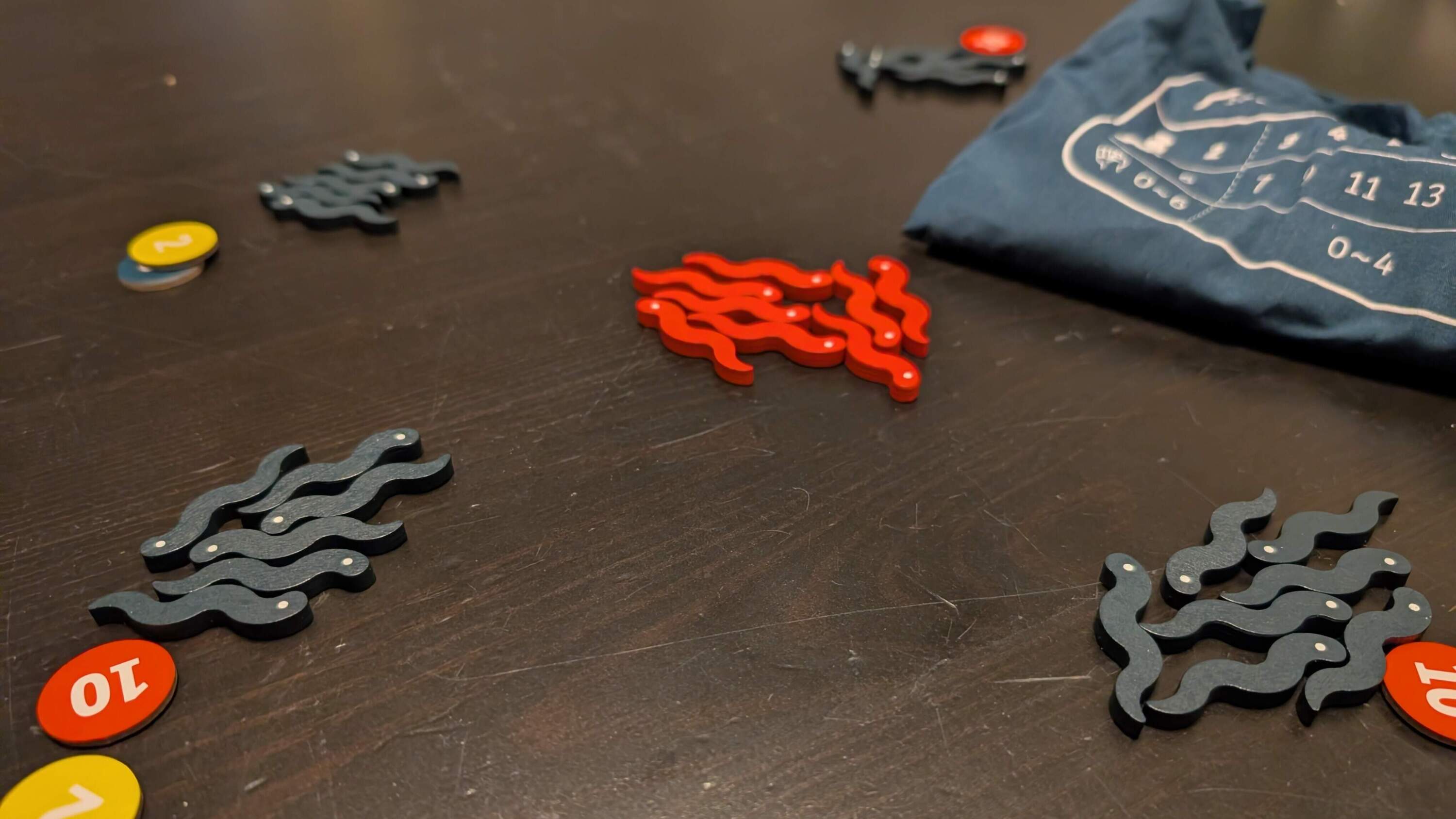
Another Oink Game, “Wiggle Roulette,” distills push-your-luck mechanics so simply that even a 5-year-old can compete (trust me, I tested it on my nephew). One by one, players blindly reach into a bag and pull out zero to four squiggly tokens. After everyone’s done so, you’ll reveal your hands to display black eels — worth a point apiece — or red snakes, which get placed in the center of the table.
If the snake count hits a threshold determined by the number of players, everyone who drew the most tokens that turn has to forfeit all the snakes they’ve acquired. The survivors then score their eels and reset the bag. Similarly, if you ever choose to take zero tokens, you cash in any eels you’ve gathered up to that point, returning them to the bag, while everyone else continues to pull.
The higher the player count, the more “Wiggle Roulette” becomes a chaotic party game. Its risks and rewards aren’t as sharp as those in the now decades-old “Incan Gold,” but it’s cute, efficient and wonderfully tactile.
“Petiquette”
Next: “Petiquette,” the most cerebral of this Oink trio. The game presents random sequences to two to five players and challenges them to secretly agree on how to fill in a blank.
“Petiquette” resembles other “groupthink” games like “The Mind” or “The Crew,” which also have players wordlessly collaborate, but it's lighter weight and behaves almost like a personality test. Initially, the groups I tried it on struggled to overlap at all. But by game two, we began to feel out our criteria for what made for the “most beautiful” (as the rulebook puts it) way to complete a sequence.
My sister and her husband liked to sum each “half” of the six-card run so they’d be equal. My brother-in-law wanted to distribute differently colored hats as evenly as possible. Over time, "Petiquette" becomes less about guesswork and more about aligning these subtle shades of preference and personality.
“The Hobbit: There and Back Again”
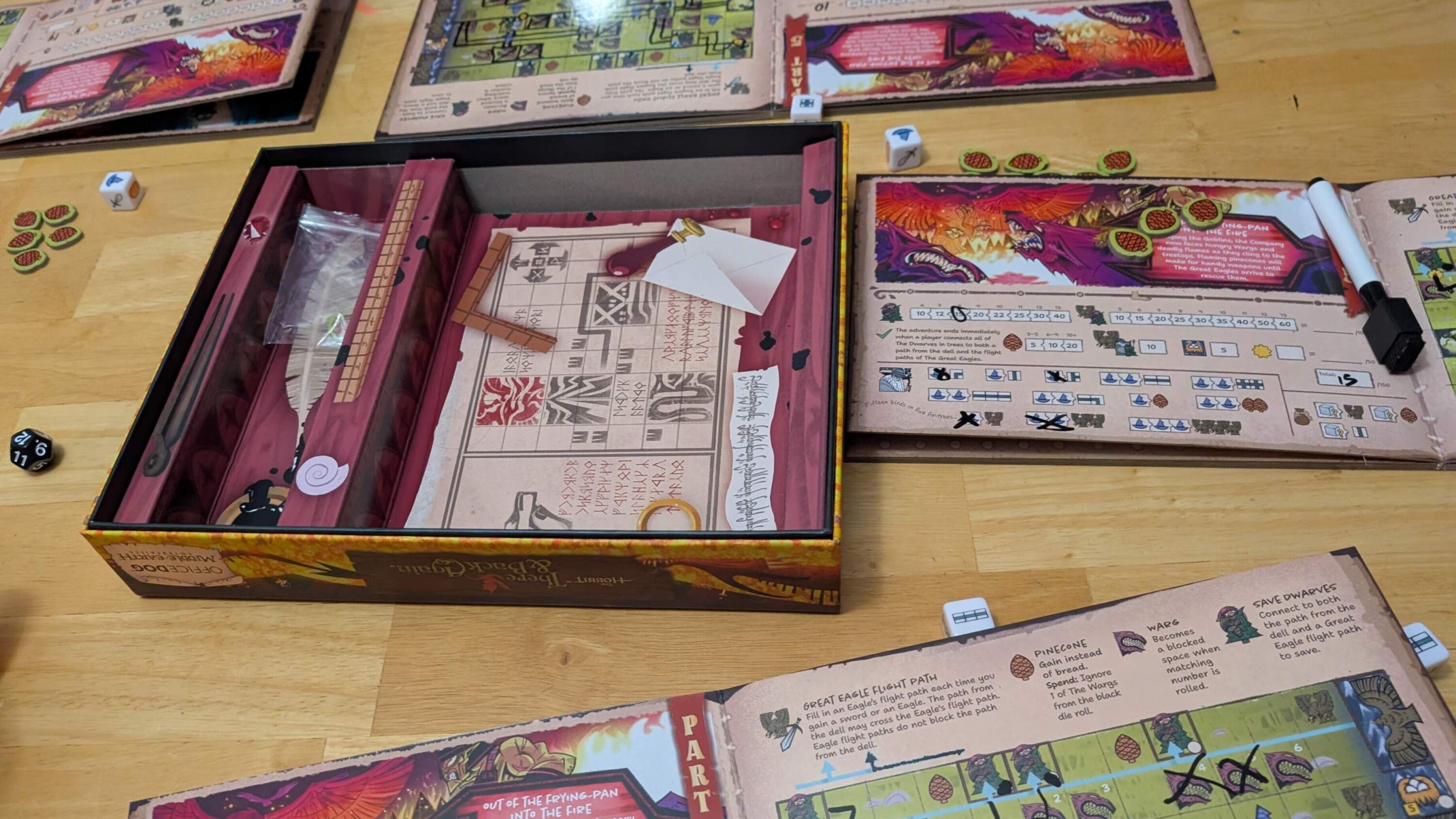
I’ve saved my favorite for last. “The Hobbit: There and Back Again” plays a bit like “Railroad Ink” — you race to complete routes through eight chapters that follow the plot of the novel. This isn’t just any licensed cash-grab, though. It’s designed by none other than Reiner Knizia, the German board game legend.
Like Knizia’s roll-and-write version of “Lost Cities,” Players take turns claiming dice to build their own personal paths to victory. If you hit certain milestones first, you’ll score additional points. If a player reaches the end condition, the game immediately stops for everyone. Beware! If you rush to this finale too eagerly, as I once did, you may have neglected to gather the points you’ll need to actually win.
Not every chapter in “There and Back Again” charms equally. Wargs hounded us a little too much in Chapter 5, for example. But I appreciate just how much mileage Knizia extracted from six dice, three handfuls of tokens and four dry-erase boards. Each chapter is essentially its own expansion. Some might invite replays more than others, but taken together, they tell quite the story.