Support WBUR
Light clothes and lots of water: Tips to help you stay safe during a heat wave
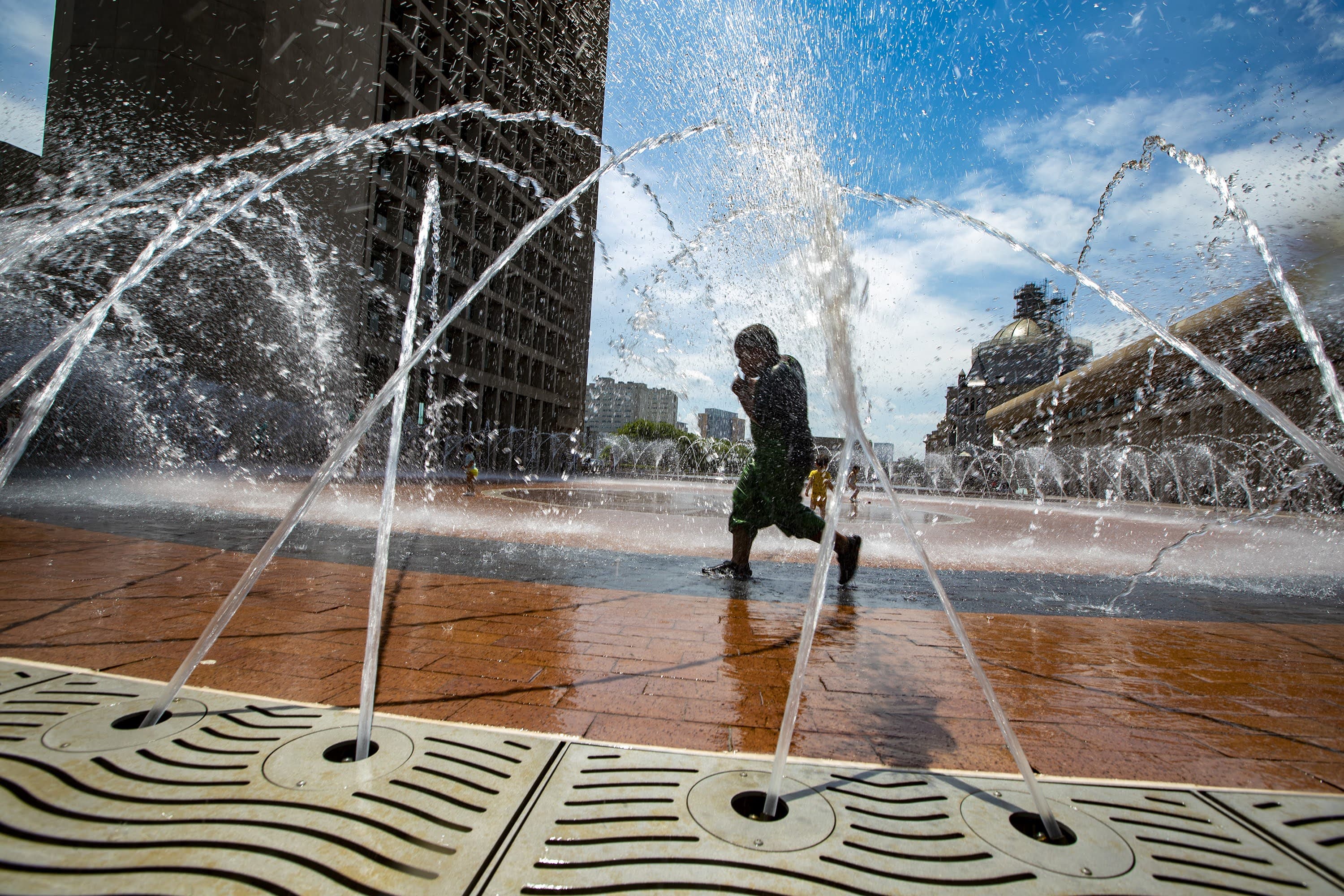
Heat has always been a fact of summer life in Boston. But the stretches of sweltering, sticky air have come earlier in recent years as climate change exacerbates extremes in our weather.
"It's important for us to connect the dots that climate change is making days like this more likely," said Dr. Gaurab Basu, a health equity researcher at Cambridge Health Alliance.
Whether the wave comes in the late spring, the depths of summer or the onset of fall, there are places to go and things to do to keep cool.
In Boston
Boston opens cooling centers (often at library branches) for folks who don't have working air conditioners. There are also city-owned splash parks and public pools you can visit during the day to help yourself or your kids beat the heat. You can find a the city's resources by clicking here.
Across Massachusetts
The state also provides plenty of outdoor recreational spaces and specific cooling centers during the hottest days of the year.
They include:
Watch for heat-related health problems
The trouble heat waves bring goes beyond just being uncomfortably hot. Basu said extreme heat poses a range of health risks.
"The things I think about is increased risk of cardiovascular disease, increased risks of strokes, increased risk of disregulation of diabetes," he said.
People should keep hydrated and stay indoors, he said. And if you begin to feel nauseous or light-headed, seek emergency medical care.
Anyone who starts to feel dizzy or otherwise is exhibiting symptoms of heat-related illnesses should call for medical care. EMTs will be out to help evaluate and treat people throughout the weekend and beyond, according to Boston EMS Deputy Superintendent Len Shubitowski.
If signs of heat stroke and exhaustion go unheeded, things can turn very serious.
"If you don't pay attention and start to intervene, your body loses the ability or it goes beyond its capacity to stay cool," he said. "And then you stop sweating. You get warm and dry and hot. Your temperature starts to climb. Your mental status starts to change. And now you're gone from having something which is serious but not life threatening to something that is life threatening."
EMTs have to remember to take care of themselves as they go out and care for others in this heat, he said. They'll also look for cool places to stay, and supervisors will carry extra water out to teams as they respond to calls.
"You do a lot of work in a very short period of time and exert a fair amount of of energy," Shubitowski said. "And the heat can affect how you do and how long it takes you to recover."
For people without homes, getting out of the heat can be a real challenge. Boston's Pine Street Inn will have an air conditioned lobby available 24/7 this weekend.
And for those who don't want to come indoors, Pine Street Spokesperson Barbara Trevisan said trained staff will hit the streets with sunblock and more.
"We are going to have increased outreach going out checking on people, bringing water, checking people for signs of dehydration [or] heat stroke, trying to encourage them to come in to the air conditioning but really keeping a close eye on people," she said.
To help you stay safe, the Massachusetts Emergency Management Agency has a list of things you should do during a heat wave:
- Take it easy: avoid "strenuous" activity outdoors.
- Light-colored clothing helps to reflect heat. If you can, wear something lightweight and loose-fitting, too. Wide-brimmed hats are a good idea, as is using proper sunscreen — Shubitowski recommends SPF 30 or higher.
- Unless otherwise ordered by a doctor, drink water. Lots of water, thirsty or not. And no, a cold beer or iced coffee isn't a substitute, because the alcohol and caffeine can actually accelerate dehydration.
- Watch what you eat. You want light, "well-balanced" meals.
- Do not leave kids or pets in a closed car. "Even with the windows cracked open, interior temperatures can rise almost 20°F within 10 minutes," according to MEMA.
- Stay inside if you can. Keep your pets indoors, too. If that's not an option, try to go out near morning or evening, and prepare for the sun with sunscreen. Wear a hat with a wide brim if you have one.
- No air conditioner? Let science be your friend: Heat rises, so try to take refuge in a lower floor. Fans won't drop the temperature, but the moving air will promote evaporation, making your skin feel cooler. And when in doubt, get to a public place that does have air conditioning, like a library, store, or public building.
- Check with your city or town to see if they've opened cooling centers near you. Here again is Boston's list of locations. And here are the state's.
- Pools and the beach are great places to cool down, but be sure you do so in a safe way. You can find public swimming areas here.
- If your power goes out, find a cooling center, a friend's house or somewhere else to try and stay cool.
- Heat stroke and other related problems can happen quickly. If you start feeling the symptoms, seek medical counseling or care, up to and including dialing 911.
- If you're in good relative health and are able to, check in on the sick or older residents nearby, who may need a little assistance to get through the extreme heat. That's especially important if they live alone or you know they don't have air conditioning.
This article was originally published on May 20, 2022.