Support WBUR
Boston's Morning Newsletter
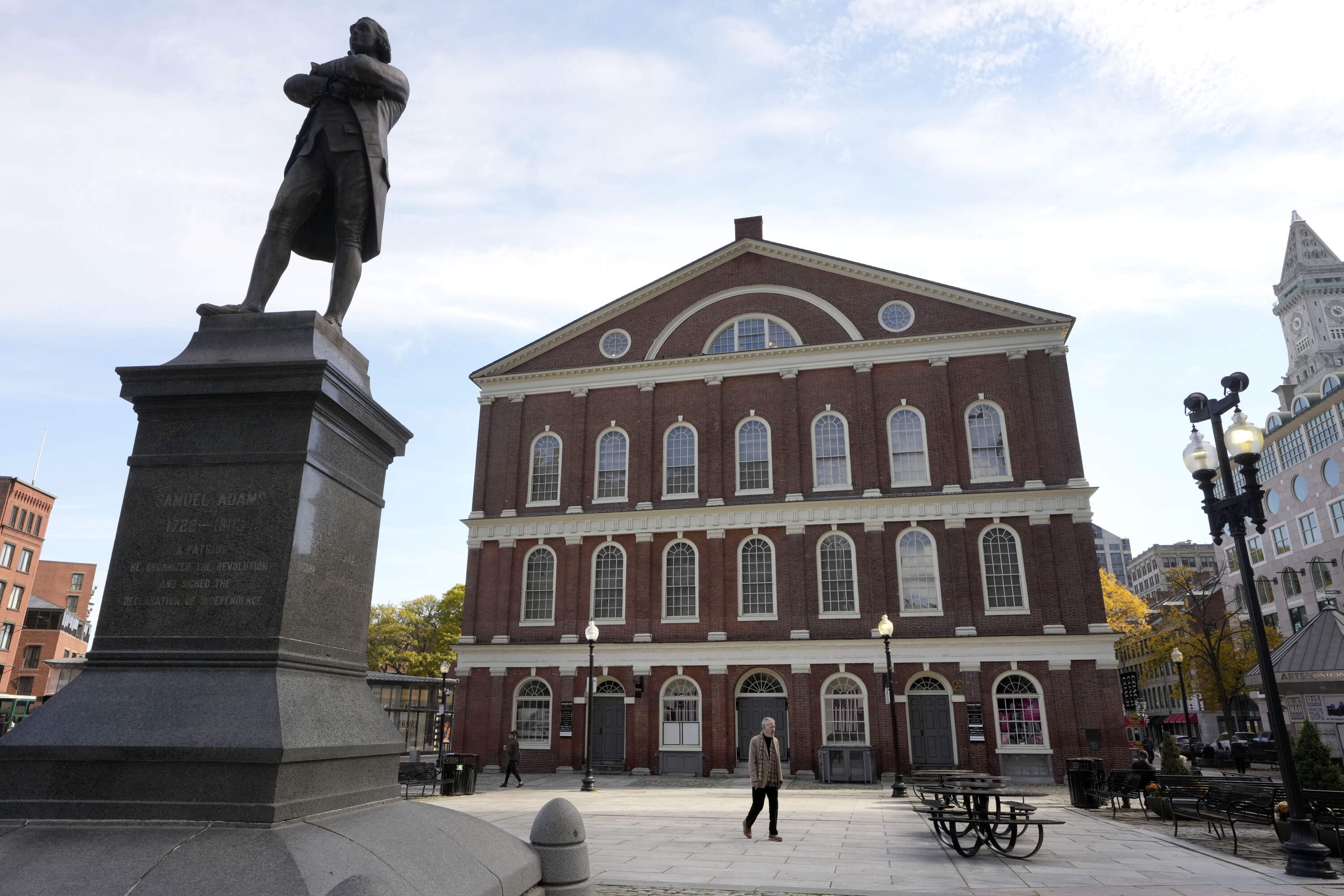
City Council backed the push to rename Faneuil Hall. What should it be called?
Editor's Note: This is an excerpt from WBUR's daily morning newsletter, WBUR Today. If you like what you read and want it in your inbox, sign up here.
What to call Faneuil Hall? Activists have pushed for years to rename Faneuil Hall over its namesake’s involvement in the slave trade. This week, they gained some traction across the street, specifically on the fifth floor of Boston City Hall. The City Council voted 10-3 Wednesday to back the calls to rename the historic meeting house and tourist attraction.
- It’s important to note: The City Council doesn’t have the power to rename Faneuil Hall; in 2013, the city put the little-known Public Facilities Commission in charge of naming municipal buildings. But supporters of the resolution say it elevates the conversation.
- The running list: The City Council’s resolution also included three suggestions on who should replace Peter Faneuil. Let’s have a mini-history lesson to review them:
- Crispus Attucks: Considered by historians as the first person killed by British soldiers during the 1770 Boston Massacre, Attucks was a Black and Indigenous sailor who spent years enslaved in Framingham before escaping to Boston under the pseudonym “Michael Johnson.” Following the massacre, Attucks’ body laid in Faneuil Hall before being buried in Boston’s Granary Burying Ground.
- Elizabeth Freeman: After spending years enslaved in Sheffield, Freeman became the first Black woman to petition for her freedom in Massachusetts by filing a lawsuit. Her win marked the beginning of a series of “freedom suits” by other enslaved people that would then lead to the state’s outlawing of slavery. Freeman spent her later years as a midwife and nurse.
- Frederick Douglass: When he was 20, Douglass escaped slavery in Baltimore and fled to New York City — and later, New Bedford — where he became a notable abolitionist and founder of The North Star newspaper. After the Civil War, Douglass held multiple positions in the federal government, serving under five presidents. He also has a park named after him in Lynn: Frederick Douglass Memorial Park.
The latest on Maine: A suspect in the mass shootings that rocked Lewiston, Maine, is still at large. Yesterday, Gov. Janet Mills announced 18 people were killed and 13 were wounded in what she called a “dark day for Maine.”
- What we know about the suspect: Police say Robert Card, 40, faces multiple arrest warrants for murder. Card “is a petroleum supply specialist in the Army Reserve,” a service spokesperson told NPR, and “has no combat deployments.” Card should considered armed and dangerous and should not be approached, law enforcement said.
- As of this morning, shelter-in-place orders remain in effect for Androscoggin County, home of Lewiston, and parts of Sagadahoc County. Last night, law enforcement executed a search warrant on the suspect’s home in Bowdoin, Maine, according to NPR. A Maine public safety spokeswoman said, “It is unknown whether Robert Card is in any of the homes law enforcement will search.” For more updates throughout the day, check back on our website.
- State agencies are urging Mainers to seek mental health support following the tragedy. Those in need of immediate support should call or text 988, the national suicide and behavioral health crisis line.
People living unsheltered in tents in Boston will need to find other shelter starting Nov. 1 (i.e. next Wednesday). The city will then begin to remove tents from the intersection of Massachusetts Avenue and Melnea Cass Boulevard, per an ordinance proposed by Boston Mayor Michelle Wu and approved this week by the City Council.
- How the city is preparing people: “Over the course of today and tomorrow, our teams will be offering people individualized exit plans with opportunities to transition into low-threshold housing sites, shelter, treatment or family reunification, where it makes sense,” said Wu during a press conference yesterday.
- The Boston Police Department also plans to deploy an additional 14 officers to patrol the area, but some public health officials fear the increased police presence will discourage those living in the encampments from getting help. “I think the police presence alone is not a public health solution,” Abigail Judge, clinical director of the Boston Human Exploitation and Trafficking program, told WBUR’s Radio Boston in this segment.
Heads up: Early voting for the Nov. 7 City Council election in Boston starts tomorrow. Check out The Common‘s recent interviews with candidates in several open races.
- Tomorrow is also the deadline to register to vote ahead of all the municipal elections this fall across Massachusetts. If you’re not already registered, you’ve got until 11:59 p.m. on Saturday to do so online. Check your voter registration status here!
P.S.— Do you know which building Boston officials are pushing to make an official landmark? Take our Boston News Quiz and see how closely you've been following our coverage this week.