Support WBUR
Boston City Council looks to protect workers during extreme heat
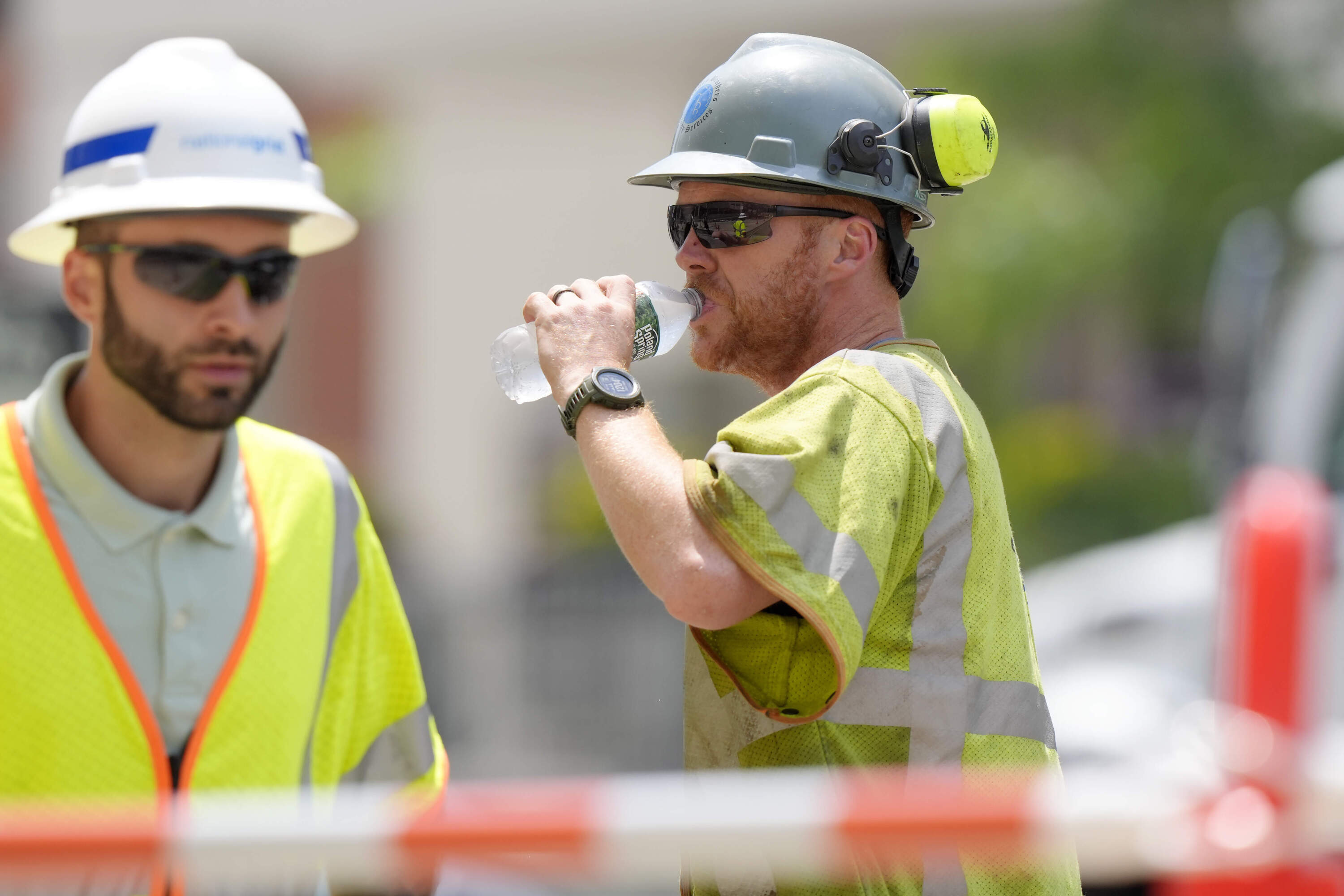
After Boston's recent heat emergency and record-breaking highs this summer, the city council is examining ways to protect workers from extreme heat.
The council's labor, workforce and economic development committee held a hearing Wednesday to discuss the matter with public health experts, workers' rights advocates and organized labor groups.
"When you hear about the harsh impacts on the body that you experience when forced to work in extremely hot conditions, I wanted us to do something," said Boston City Councilor Ben Weber, who chairs the labor committee and called for the hearing.
Extreme heat can cause various illnesses such as rash, muscle damage, heat exhaustion or heat stroke. It's a growing concern as summers get hotter. In Boston, average summertime temperatures have increased 1.4 degrees since 1970. Global warming also has upped the intensity and duration of extreme heat events, and heat waves now occur more frequently across the U.S.
"Many people — employers and workers — don't know the dangers of workplace heat. It just doesn't viscerally resonate as dangerous the way that frigid weather does, for example," Terri Gerstein, director of the NYU Wagner Labor Initiative, told city councilors. "People sometimes feel like, 'well, you know, it's the summer. It's hot. Get used to it.' But it's hotter than it used to be and it is extremely dangerous."
"Heat is the most deadly natural hazard. The data is showing more so than tornadoes, hurricanes, all of that. And it particularly is a hazard at work."
Jodi Sugerman-Brozan
The city's climate projections show Boston could get up to 60 days over 90 degrees in the next 50 years, according to Zoe Davis, a climate resilience project manager in Boston's Environment Department.
"We could see about 130 days over 80 degrees Fahrenheit in the next 50 years as well," Davis said.
Heat doesn't just affect outdoor workers like those in construction or landscaping. People who work indoors in places without air conditioning, like warehouses or kitchens, can also be impacted.
Nearly 1,000 workers died from heat exposure in the U.S. between 1992 and 2022, according to Jodi Sugerman-Brozan, the city's deputy chief of worker empowerment.
"Heat is the most deadly natural hazard," Sugerman-Brozan said. "The data is showing more so than tornadoes, hurricanes, all of that. And it particularly is a hazard at work."
Boston currently has no protections for employees forced to work during heat emergencies. The city does, however, have a heat resilience plan. There are also no federal or state standards for protecting workers in extreme heat, though some efforts are underway.
The Biden administration proposed a new rule that would require employers to address heat-related illness and hazards in the workplace. The rule, however, faces an uphill battle to get finalized in an election year.
"A federal heat standard would more clearly establish enforceable employer obligations and measures necessary to effectively protect employees from hazardous heat," said Amee Bhatt, assistant regional administrator for enforcement programs at the Occupational Safety and Health Administration's (OSHA) Boston office.
Bhatt said OSHA has issued guidance on heat safety to employers and done outreach in recent years.
The state has also issued guidance to employers. A working group with the state's Department of Labor Standards has focused on heat and worker safety for two years. The group has developed best practices for employers and is piloting a heat illness prevention program with a few municipalities.
Councilor Weber said it's important for the city to step in with its own rules to ensure workers receive adequate water, shade, breaks and other provisions in extreme heat conditions. He plans to file a city ordinance this fall to make sure employers have safety plans in place to prevent heat illness in the workplace.
"I want to put employers on notice that when conditions are extremely hot — as will be defined in the ordinance — that we provide water, rest, and shade for those workers," Weber said.
Frank Murray, president of Iron Workers Local 7, said the city should look to unions when crafting its heat safety protocols since the building trades already have practices in place as well as provisions like drinking water and shelter in their bargaining agreements.
"In my experience as a union member, it's always been promoted — your personal safety, your personal hydration ... like how you're feeling and your physical body," Murray said.
Rick Rabin of the workers' rights nonprofit Massachusetts Coalition for Occupational Safety and Health (MassCOSH) said it's important the city puts clear rules in place for working in heat.
"Far too many of the workers that we see don't know that they have these rights," said Rabin, a trainer and technical consultant at MassCOSH. "And if they know that they have the rights, they're afraid of retaliation, either being fired or being deported. So, having it in writing and having it enforced is absolutely crucial."
