Support WBUR
Jazz and poetry reunite when aja monet plays Newport Jazz Festival
In 1956, Langston Hughes appeared at a symposium during the Newport Jazz Festival. He would return regularly, and in 1960, Hughes hosted and curated a blues conversation and concert that found him writing lyrics for the Muddy Waters Band and arranging for Nina Simone’s Newport debut.
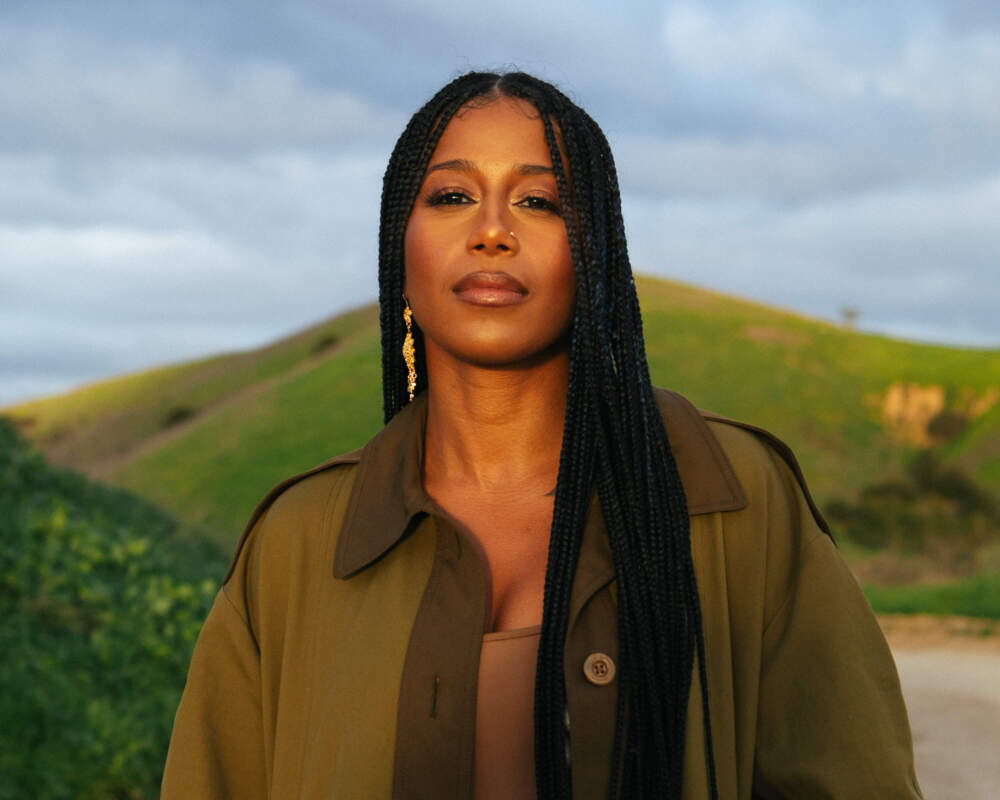
In the decades since then, singers and rappers have offered plenty of rhymes, but poetry itself has been largely absent during the famed festival. That’s changing this year with poet aja monet, who will be performing her poems on Friday, Aug. 2, along with her quartet: saxophonist Logan Richardson, bassist Jermaine Paul, drummer Justin Brown and pianist Javier Santiago.
Jazz fans may just be discovering monet, but she isn’t new to the poetry world. She won the Nuyorican Poets Cafe Grand Slam in 2007 and published her first book three years later. Last year, she released her debut recording under her own name, “when the poems do what they do,” and has since been touring with musicians who give monet’s words new rhythms and colors.
Becoming a poet bandleader “was always a vision and a dream. It was just a matter of practicality and resources,” she says during a phone call from her Los Angeles-area home. “Being a poet is one of the most accessible and affordable artforms. You just need a pen and paper. But when you want a band, you need to find folks who are in conversation with you who respect the craft. And I had to develop as I pursued this craft.”
monet is quick to point out that she’s “leaning into that rich tradition of poets collaborating with musicians.” Hughes and James Weldon Johnson were called “blues poets.” The beat poets of the 1950s were heavily influenced by bebop. And with her mix of socially conscious words and music that is in part inspired by her Afro-Caribbean heritage, coverage of monet frequently mentions how she is carrying on the tradition of the radical musical poets of the ‘60s and ‘70s like the Last Poets, the Watts Prophets and Nikki Giovanni.
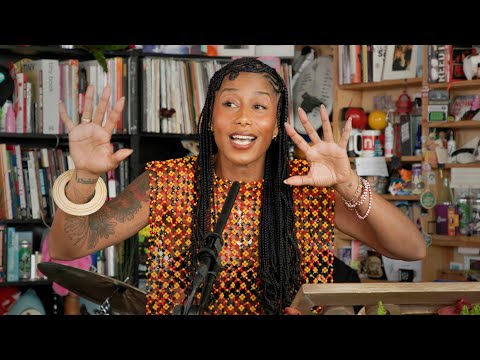
Brian Jackson, Gil Scott-Heron’s longtime keyboardist, appeared with monet when she became the first poet to appear on a Tiny Desk concert. These days, the lines between hip-hop, R&B, jazz and poetry are as blurred as ever, thanks to artists like Noname, who performs at Newport on Sunday, Aug. 4.
Calling herself a “surrealist blues poet,” monet says that she’s inspired both by surrealists who looked to break free from form, as well as literary greats like Hughes and Johnson who proved that the blues was far more than a musical language. “What did we have to overcome to express ourselves and to embody and pursue freedom? That’s where the blues comes in. ”
Last year, “when the poems do what they do” was nominated for a Best Spoken Word Poetry Album Grammy. monet politely corrects this reporter, who refers to what she does as spoken word. “It implies that poetry was not inherently an oral tradition,” she says. “It predates the printing press.”
While monet’s appearance at high-profile jazz events like Newport is noteworthy, she hasn’t been the only one connecting poetry with jazz in recent years. Former U.S. poet laureate and Boston Univerisity professor Robert Pinsky’s PoemJazz series has found him collaborating with a host of jazz artists, including pianist and Harvard professor Vijay Iyer, who has also appeared with monet.
“There’s a built-in democracy to jazz, because each voice is contributing, and there’s a respect for the individual built into jazz, and I believe that’s true of poetry too,” says Pinsky. “With the jazz musicians I work with, their art is never exactly the same thing twice.”
While the rhythmic relationship between poetry and jazz is often mentioned, Pinsky thinks that “possibly even more central is pitch.” Boston saxophonist and frequent Pinsky collaborator Stan Strickland has this “quiz about whether rhythm, melody or harmony came first, and everyone says rhythm, but he says it was melody, because babies and dogs sing. He adds, “With pitch, we can stretch a syllable, or we can make a sentence a question or a statement. We sing when we talk.”
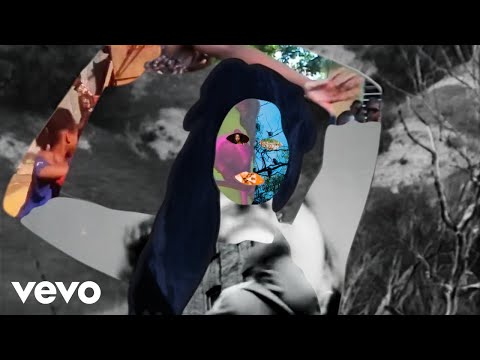
monet says she writes her poems first and then brings in the music. “I see words as symbols of sound, so for me, the poem is already inherently musical,” she says. “I’m not trying to find someone to force music into the poem or tell me the poem will sit on top of music. There has to be a conversation with what is internally happening in the poem, so I collaborate with musicians that respect and understand the music of poetry … what we’re trying to do is show the musicality of language.”
Being the rare poet to perform at Newport is “exciting, and a little bit nerve-wracking” monet says.
“We’re breaking new ground with poetry, and bringing it to places where it should have always been,” she says. “…I hope we’re providing what is needed, and being of service, and that we’re right on time.”
Waiting list tickets for the sold-out Newport Jazz Festival Aug. 2-4 are available at Newportjazz.org.